
BuddhistCatholicContemplativeEvangelicalGeneral ChristianHinduJewishLatter-day SaintMuslimNew VisionsProgressive Christian
Beliefs
- Buddhist
- Catholic
- Contemplative
- Evangelical
- General Christian
- Hindu
- Jewish
- Latter-day Saint
- More Voices
- Muslim
- New Visions
- Pagan
- Progressive Christian
Topics
- Religion News
- Food and Religion
- Sports and Religion
- Religious Art
- Religious Music and Entertainment
- Religious Events
- History and Religion
- Style and Religion
- Politics and Religion
- Women in Religion
- Recreation Outdoors and Religion
- Business Finance and Religion
- Careers Workplace and Religion
- Education and Religion
- Family Parenting and Religion
- Health Fitness and Religion
- Home and Religion
- Relationships and Religion
- Technology and Religion
- Travel and Religion
Columnists
- Buddhist Columnists
- Business Finance and Religion Columnists
- Careers Workplace and Religion Columnists
- Catholic Columnists
- Contemplative Columnists
- Education and Religion Columnists
- Evangelists Columnists
- Family Parenting and Religion Columnists
- General Christian Columnists
- Health Fitness and Religion Columnists
- Hindu Columnists
- History and Religion Columnists
- Home and Religion Columnists
- Jewish Columnists
- More Voices Columnists
- Latter Day Columnists
- Muslim Columnists
- New Visions Columnists
- Nonreligious Columnists
- Pagan Columnists
- Politics and Religion Columnists
- Progressive Columnists
- Recreation Outdoors and Religion Columnists
- Relationships and Religion Columnists
- Religion News Columnists
- Religious Art Columnists
- Religious Events Columnists
- Religious Music and Entertainment Columnists
- Sports and Religion Columnists
- Style and Religion Columnists
- Technology and Religion Columnists
- Travel and Religion Columnists
- Women in Religion Columnists
Resource Library
- 2026 Calendar
- Library of World Religions
- The 100 Most Holy Places on Earth
- Patheos Answers
- Podcasts
- Videos
- Faith Leaders Database
- Anglican Episcopalian
- Bahai
- Baptist
- Buddhism
- Christianity
- Confucianism
- Eastern Orthodoxy
- Hinduism
- Holiness and Pentecostal
- ISKCON
- Islam
- Judaism
- Lutheran
- Methodist
- The Church of Jesus Christ of Latter-day Saints
- New Age
- Paganism
- Presbytarian and Reformed
- Protestantism
- Religion Behind the Scenes
- Roman Catholic
- Scientology
- Shia Islam
- Sikhism
- Sufism
- Sunni Islam
- Taoism
- Zen
- See all religions
Research Tools
 Ad-Free & Subscriber Log-In Subscription Support
Ad-Free & Subscriber Log-In Subscription Support
Follow Patheos 

- Trending:
- Forgiveness
- |
- Marriage
- |
- Consciousness
- |
- Death Penalty
- |
- Election
- |
- Halloween
 Cry 'Woof'
-
Series
- Home
- Catholic
- A Little Perspective on Father Serra
A Little Perspective on Father Serra
Last updated on: February 18, 2015 at 8:00 am by willduquette
A Little Perspective on Father Serra 2015-02-14T15:12:41-05:00 willduquette
Patheos Explore the world's faith through different perspectives on religion and spirituality! Patheos has the views of the prevalent religions and spiritualities of the world.
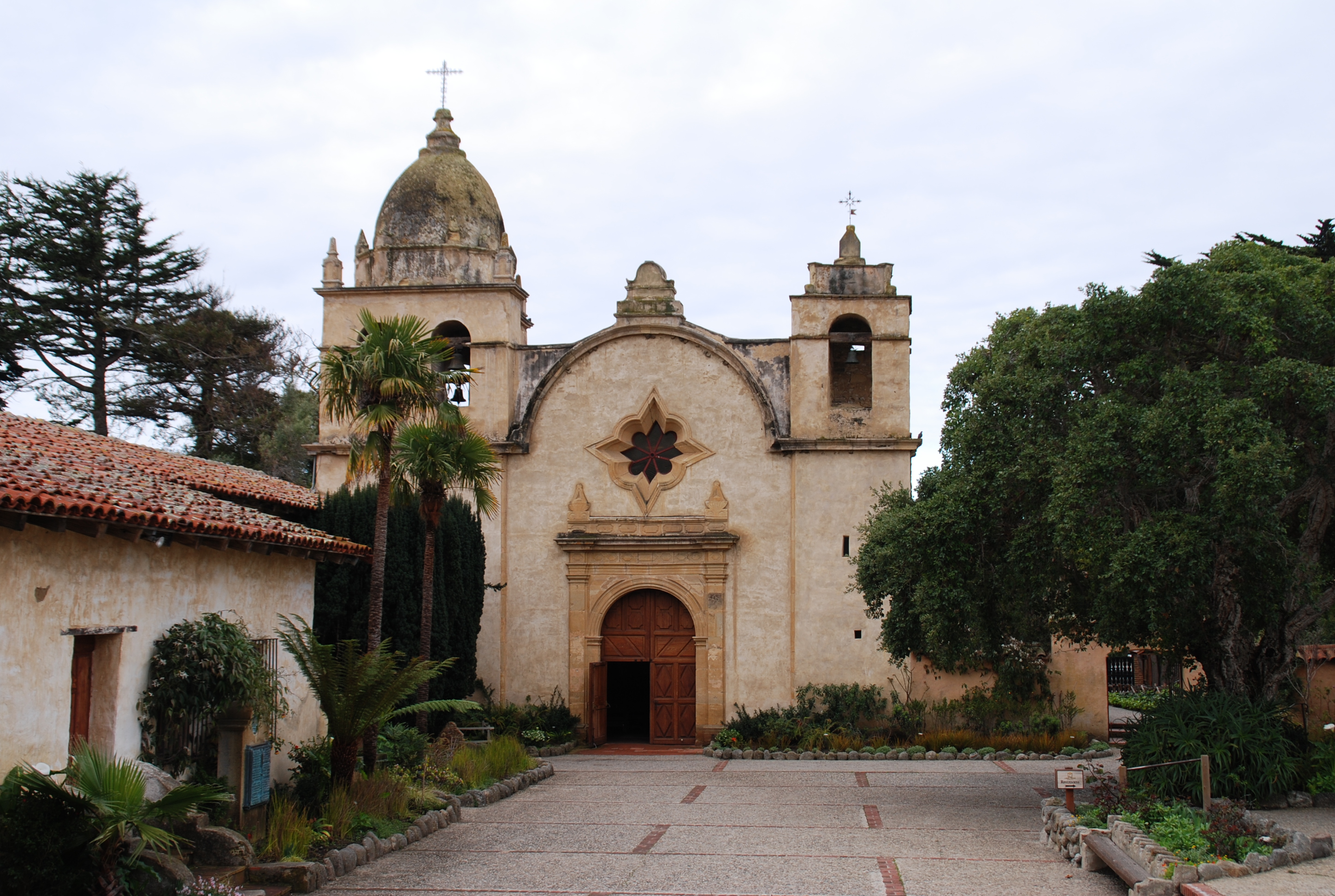
Mission San Carlos Borromeo
Being a California kid, I first became acquainted with Fr. Junipero Serra almost as soon as I got to school. I’ve visited many of the missions, and many of them many times, especially San Carlos Borromeo in Carmel, California, which was Fr. Serra’s home base. And being a resident of the Left Coast, I also here fairly regularly about Fr. Serra’s sins, how he dragooned the local Indians* into living at the missions and prevented them from leaving, how he exploited their labor, how he forced Christianity on them, and how awful and evil and horribly non-post-Christian he was.
It is a fact that to be ignorant of history is to be doomed to saying dumb things.
There is some truth among the nasty things that are said. Fr. Serra and his followers did establish missions. They did invite the locals to become Christian; and as complex as the Catholic faith is, I can hardly think that the mission Indians knew what they were getting into. He did prevent those who’d been baptized from leaving the missions and going back to their old ways in manner that seems high-handed and paternalistic to us.
But it’s always dangerous to judge the actions of the men of one era by the standards of our own. Do we sympathize with their goals? Only sometimes. Would we approach the same goals in the same way? Probably not. But if we have virtues they lacked, and if we can see their flaws clearly, the opposite is also true. We have besetting sins they lacked, and much of what we think right and proper would horrify them—and rightly so.
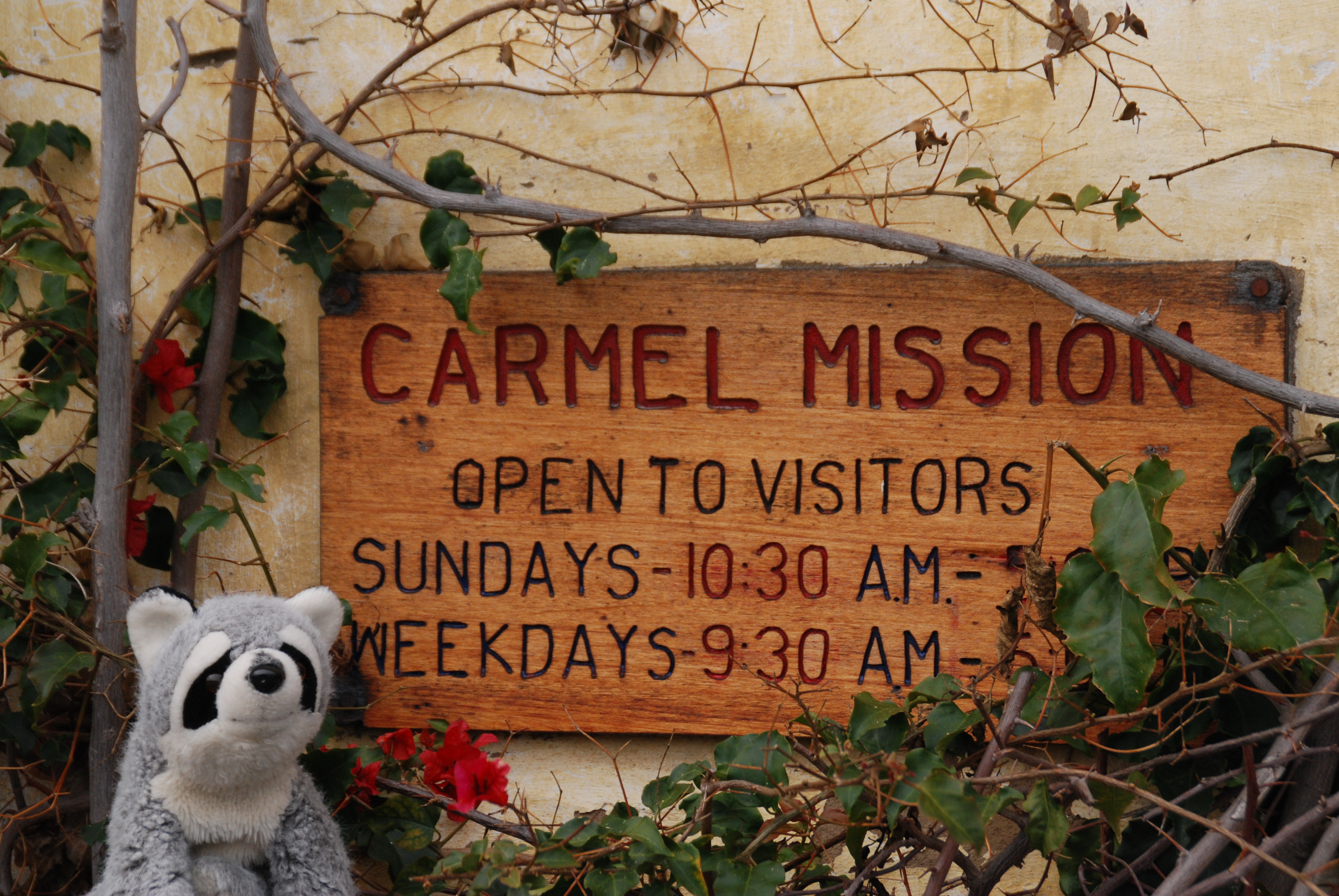
Thief visited Carmel Mission in 2009 as part of my son’s 4th grade mission project.
It’s even more dangerous to leave out the historical context.
In Fr. Serra’s day, Alta California was a Spanish colony, and the colonists were coming. The California Indians were largely hunter/gatherers, requiring large ranges to support a small population, and those ranges were going to be divided up into ranchos and given to Spaniards. The locals were going to be pushed aside, or more likely exploited as labor. The hunter/gatherer way of life was doomed whether the missions came or not.
Now, let’s look at the goal of the missions. Each mission was, effectively, a rancho run by the Franciscan priests. But it was not simply a rancho. The intent was to teach these hunter/gatherers the modern skills they would need to live in a Spanish world: wood-working and iron-working and agriculture and all manner of things. More than that: it was never intended that the Franciscans would be in charge in the long term. Once the Indians were adept at the skills needed to keep things running, the missions were to be handed over to them. That is, they would eventually be ranchos, but owned by the Indians instead of by Spaniards. Looked at that way, the missions seem shockingly progressive.
This, incidentally, is why the missions were founded by the mendicant orders, Franciscans in Alta California and Dominicans in Baja California: the powers that be trusted them not to acquire the property for their own use, as the Benedictines might have.
And in time the missions were indeed secularized and given to the Indians. In the event the mission property rarely stayed in Indian hands for long; but you can’t blame the friars for that, as the timing was political rather than being based on the Indian’s readiness to take over, and there was no shortage of Europeans eager to beg, borrow, or steal the land from them. (But sometimes it worked out; I seem to recall learning, on my last trip to Carmel Mission, that some of the mission property remains in the hands of descendants of mission Indians to this day.)
In short, the goal of the missions was to protect the Indians from the Spanish settlers, not to enslave them. As an instance of this, I’ll note that Mission San Carlos Borromeo was first built in Monterey, next to the Presidio. Very shortly after, disgusted with the way the Spanish soldiers at the Presidio were treating the mission Indians, Fr. Serra moved the mission over the hill to Carmel.
And now for the big accusation: that the Indians were forced to become Christian.
Fr. Serra, a faithful Catholic, believed that the Catholic faith is objectively true, that it is an accurate description of the cosmos. He acted accordingly, in the belief that each human soul is a priceless treasure, and that to be Catholic, to receive the sacraments and the salvation of Jesus Christ, was objectively and undeniably better than not. As a faithful Catholic myself, I agree with him. I might say (I have to ponder this some more, as it’s a new thought for me) that to bring a person to Christ is a goal worthy of any or all measures consistent with the person’s dignity as a human being.
I (and, I think, the modern Church in general) might draw the line in a different place than Fr. Serra did. The mission Indians were certainly treated as children in some ways; and as I said above, I rather doubt that they really understood what they were getting into as they were taught about Christ and the words to say to receive baptism,
at least not at first. Once baptized, they were caught and brought back if they tried to leave the mission, and might be beaten; but the friars, on their part, saw them running from the sacraments and to their own perdition. And I also expect that any corporal punishment administered by the friars was mild compared to what went on at the secular ranchos.
In short, the mission Indians got a better deal from Fr. Serra than they would have gotten from anyone else in the vicinity; and they got the Truth of Christ as well. For my part, I’m eager to see Blessed Junipero join St. Francis Xavier on the roll of saints.
____
* I dislike the term “Native American” as it is commonly used. My ancestors on both sides came to the New World shortly after the Pilgrims. I have no relatives in Europe, no particular home land their, and no place to call my native soil but right here in Los Angeles. I have nowhere else to be a native of. The term “Indian” might not be politically correct, but you all knew what I meant.
Previous Post

February 17, 2015
A Tour of Tim Powers: The Drawing of the Dark
Next Post
February 19, 2015 Leo Marks on Deciphering Mangled Codes
Browse Our Archives
Select a Category Admin App o' the Morning Ask the Dogmat Believing Thomas Bits of Fiction Blasts from the Past Bootstrapping the Interior Life Catholic Mom Christian Living Deep Thoughts from the Doghouse Dominicana Evangelii Gaudium Interviews It Was A Dark and Stormy Night Links to This and That Lumen Fidei Meme Watch On Writing Operation Gratitude Pedant Errant Photography Quill Random Barkings S'Mary's World Shakers of Salt Software Development The Dog Whistler The Dogmat Sez Third Orders Thomas Aquinas Uncategorized Vikings at Dinos Woof Guide to Cinema Woof Guide to History Woof Guide to Literature Woof Guide to Obscure Catholic Music Woof Guide to Philosophy Woof Guide to Popular Music Woof Guide to Technology Woof Guide to Theology Words I Wish I'd Written Works For Me
Select a Month September 2016 August 2016 June 2016 May 2016 April 2016 March 2016 February 2016 January 2016 December 2015 November 2015 October 2015 September 2015 August 2015 July 2015 June 2015 May 2015 April 2015 March 2015 February 2015 January 2015 December 2014 November 2014 October 2014 September 2014 August 2014 July 2014 June 2014 May 2014 April 2014 March 2014 February 2014 January 2014 December 2013 November 2013 October 2013
Follow Us!
TAKE THE
Religious Wisdom Quiz
Which prophet was told to eat a scroll in a vision?
Select your answer to see how you score.
Daniel Joel Obadiah Ezekiel
Related posts from Cry 'Woof'

Jimmy Stewart Shows Us How It's Done

They Also Serve Who Only Sit And Study

Tuesdays with the Talking Head

TRENDING AT PATHEOS Catholic

Rejecting Doom: Christian Hope And Human Action
Christianity is a religion of hope. We are to have hope and...

It’s What Comes From Within Which Matters
One of the most difficult things for us to understand is why...

Why I Choose the Eucharist Over the Sermon
Choose the Eucharist, Not the Sermon What are we supposed to get...

5 Design Elements Found in Spiritually Rooted Homes
Putting Spirituality Into Home Decor Our homes are more than our living...

Credo: A Story of God Told with the...
About 10 years ago, I began to imagine a personal "Credo" that...

The Anatomy of Divine Revelation in Catholic Thought
The claim that God has made Himself known to human beings is...
view all Catholic blogs
Ad-Free & Subscriber Log-In Subscription Support
- About Us
- 2026 Calendar
- Videos
- Podcasts
- Library of World Religions
- Faith In Media Tracker
- Advertise With Us
- Write for Us
- Privacy Policy
- Terms of Service
- Do Not Sell My Data
- Contact Us
- Radiant Digital
- Manage Newsletter Subscriptions
- Unsubscribe From Notifications
- Sitemap
Copyright 2008-2026, Patheos. All rights reserved.
Subscription Support Ad-Free & Subscriber Log-In
Follow Patheos