
BuddhistCatholicContemplativeEvangelicalGeneral ChristianHinduJewishLatter-day SaintMuslimNew VisionsProgressive Christian
Beliefs
- Buddhist
- Catholic
- Contemplative
- Evangelical
- General Christian
- Hindu
- Jewish
- Latter-day Saint
- More Voices
- Muslim
- New Visions
- Pagan
- Progressive Christian
Topics
- Religion News
- Food and Religion
- Sports and Religion
- Religious Art
- Religious Music and Entertainment
- Religious Events
- History and Religion
- Style and Religion
- Politics and Religion
- Women in Religion
- Recreation Outdoors and Religion
- Business Finance and Religion
- Careers Workplace and Religion
- Education and Religion
- Family Parenting and Religion
- Health Fitness and Religion
- Home and Religion
- Relationships and Religion
- Technology and Religion
- Travel and Religion
Columnists
- Buddhist Columnists
- Business Finance and Religion Columnists
- Careers Workplace and Religion Columnists
- Catholic Columnists
- Contemplative Columnists
- Education and Religion Columnists
- Evangelists Columnists
- Family Parenting and Religion Columnists
- General Christian Columnists
- Health Fitness and Religion Columnists
- Hindu Columnists
- History and Religion Columnists
- Home and Religion Columnists
- Jewish Columnists
- More Voices Columnists
- Latter Day Columnists
- Muslim Columnists
- New Visions Columnists
- Nonreligious Columnists
- Pagan Columnists
- Politics and Religion Columnists
- Progressive Columnists
- Recreation Outdoors and Religion Columnists
- Relationships and Religion Columnists
- Religion News Columnists
- Religious Art Columnists
- Religious Events Columnists
- Religious Music and Entertainment Columnists
- Sports and Religion Columnists
- Style and Religion Columnists
- Technology and Religion Columnists
- Travel and Religion Columnists
- Women in Religion Columnists
Resource Library
- 2026 Calendar
- Library of World Religions
- The 100 Most Holy Places on Earth
- Patheos Answers
- Podcasts
- Videos
- Faith Leaders Database
- Anglican Episcopalian
- Bahai
- Baptist
- Buddhism
- Christianity
- Confucianism
- Eastern Orthodoxy
- Hinduism
- Holiness and Pentecostal
- ISKCON
- Islam
- Judaism
- Lutheran
- Methodist
- The Church of Jesus Christ of Latter-day Saints
- New Age
- Paganism
- Presbytarian and Reformed
- Protestantism
- Religion Behind the Scenes
- Roman Catholic
- Scientology
- Shia Islam
- Sikhism
- Sufism
- Sunni Islam
- Taoism
- Zen
- See all religions
Research Tools
 Ad-Free & Subscriber Log-In Subscription Support
Ad-Free & Subscriber Log-In Subscription Support
Follow Patheos 

- Trending:
- Forgiveness
- |
- Marriage
- |
- Consciousness
- |
- Death Penalty
- |
- Election
- |
- Halloween
 Cry 'Woof'
-
Series
- Home
- Catholic
- The False Religion of Tomanāk
The False Religion of Tomanāk
Last updated on: January 20, 2015 at 8:00 am by willduquette
The False Religion of Tomanāk 2015-01-19T22:34:53-05:00 willduquette
Patheos Explore the world's faith through different perspectives on religion and spirituality! Patheos has the views of the prevalent religions and spiritualities of the world.
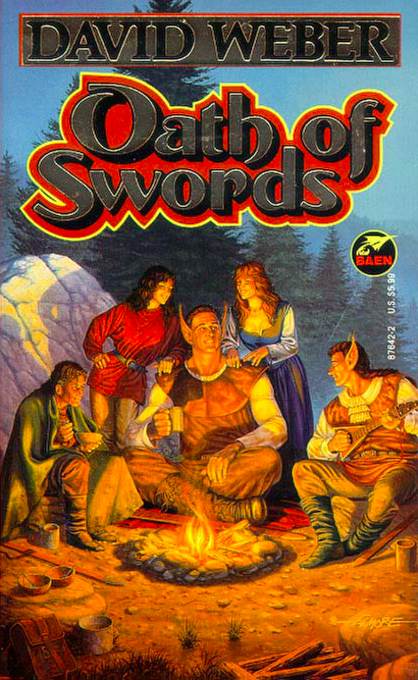 I’m always fascinated by the presentation of religion in fantasy and science fiction novels. Most such are fairly absurd, like the common combination of polytheism with Catholic trappings, absent any forces that make those trappings make sense. The author needed a bit of religion and cobbled something together from spare parts. David Weber’s “Church of Humanity Unchained” from the Honor Harrington series is another example of not taking very great care: in early books we are assured that the Church, centered on the planet of Grayson, threw out the New Testament and then gave the Old Testament its own spin—yet later we find the Graysons celebrating Christmas and going to confession.
Occasionally, though, you’ll find a book or series where an invented religion plays a big role, and where the author has really tried to make it all make sense. The best example of this I know is found in Lois McMaster Bujold’s Chalion
David Weber has attempted something similar in his tales of Bahzell Bahnakhson, also known as the “War God” series after the war god Tomanāk. (Capsule review: the first two novels of the series, Oath of Swords


But I’m wanting to talk about the theology of these books, what in the past I’ve referred to as the books’ theosphere.
The story, as we have it from the lips of Tomanāk himself (Tomanāk is a major character, not merely an absent deity) is this. Orr All-Father is the creator of the universe and the father (or grandfather) of all of the gods. Phrobus, Orr’s seventh son, rebelled, leading to a war between the Gods of Darkness (Phrobus and his get) and the Gods of Light (all the rest); and the result of that rebellion was the material world in which we humans live. The material universe is conceived in terms of the “Many Worlds” hypothesis: there is not one universe but many, with new ones coming into being at each decision point.
Now, here’s the gimmick. The gods cannot manifest in power in a material universe without possibly destroying that universe; and what effect that would have on the remainder none of them know. (So much for omniscience.) Thus, they must work through the human beings in each universe, and try to sway things toward the light or toward the dark, until either the Gods of Light or the Gods of Darkness are wholly banished from that universe. Thus, we have the Champions of Tomanāk openly leading men of good will to fight against the bad guys, who are generally being manipulated in secret by the servants of one or another of the Dark Gods. It’s a kind of divine Cold War: the great powers cannot contest directly, so they do so through puppets in smaller states; and the great powers are trying to take over the multiverse one time line at a time.
I find it interesting that both Bujold and Weber devised theologies that put a premium on human action and minimize divine intervention; but I suppose I shouldn’t be. After all, that’s the one thing in either theology that’s real: God really does prefer to work through men and women most of the time. Pace Bujold, God certainly can intervene when He chooses, as witness the Incarnation and countless small miracles; and Pace Weber, the Almighty has no equals or even near equals. But the Lord’s insistence on respecting our human dignity as rational creatures possessing both intellect and free will means that He will not override our wills; and so He draws us to Himself through our fellow men and women.
This is not to say that the book’s moral world view is entirely consistent with Catholicism. As usual, Weber pays tribute to most of 21st Century America’s sexual shibboleths; and there’s a recurring strain of consequentialism in Bahzell’s discussions with Tomanāk: Tomanāk wants Bahzell to do everything according to the rules (He is, after all, the god of justice), and Bahzell insists on bending them in the name of efficiency and pragmatism. (And, of course, Orr All-Father cannot be the First Cause of classic theism.)
Nevertheless, it’s refreshing to find a religion in fantasy fiction that’s neither vacuous nor presented as morally corrupt.
Deep Thoughts from the Doghouse
Previous Post

January 19, 2015
Today's Aquinas: There's Nothing Accidental about God
Next Post

January 21, 2015 Review: Kindle Voyage
Browse Our Archives
Select a Category Admin App o' the Morning Ask the Dogmat Believing Thomas Bits of Fiction Blasts from the Past Bootstrapping the Interior Life Catholic Mom Christian Living Deep Thoughts from the Doghouse Dominicana Evangelii Gaudium Interviews It Was A Dark and Stormy Night Links to This and That Lumen Fidei Meme Watch On Writing Operation Gratitude Pedant Errant Photography Quill Random Barkings S'Mary's World Shakers of Salt Software Development The Dog Whistler The Dogmat Sez Third Orders Thomas Aquinas Uncategorized Vikings at Dinos Woof Guide to Cinema Woof Guide to History Woof Guide to Literature Woof Guide to Obscure Catholic Music Woof Guide to Philosophy Woof Guide to Popular Music Woof Guide to Technology Woof Guide to Theology Words I Wish I'd Written Works For Me
Select a Month September 2016 August 2016 June 2016 May 2016 April 2016 March 2016 February 2016 January 2016 December 2015 November 2015 October 2015 September 2015 August 2015 July 2015 June 2015 May 2015 April 2015 March 2015 February 2015 January 2015 December 2014 November 2014 October 2014 September 2014 August 2014 July 2014 June 2014 May 2014 April 2014 March 2014 February 2014 January 2014 December 2013 November 2013 October 2013
Follow Us!
TAKE THE
Religious Wisdom Quiz
Who was the prophet after Moses?
Select your answer to see how you score.
Elijah Joshua Isaiah Samuel
Related posts from Cry 'Woof'

In which the Blogger is Very Truly Run...

When Amorous Leticia Met the Deacon...

The Glory of God and the Total Perspective...
TRENDING AT PATHEOS Catholic

The Parable Of The Sower And The Word...
One of Christ’s most famous parables is that of the sower who...

Rejecting Doom: Christian Hope And Human Action
Christianity is a religion of hope. We are to have hope and...

Why I Choose the Eucharist Over the Sermon
Choose the Eucharist, Not the Sermon What are we supposed to get...

5 Design Elements Found in Spiritually Rooted Homes
Putting Spirituality Into Home Decor Our homes are more than our living...

Credo: A Story of God Told with the...
About 10 years ago, I began to imagine a personal "Credo" that...

The Anatomy of Divine Revelation in Catholic Thought
The claim that God has made Himself known to human beings is...
view all Catholic blogs
Ad-Free & Subscriber Log-In Subscription Support
- About Us
- 2026 Calendar
- Videos
- Podcasts
- Library of World Religions
- Faith In Media Tracker
- Advertise With Us
- Write for Us
- Privacy Policy
- Terms of Service
- Do Not Sell My Data
- Contact Us
- Radiant Digital
- Manage Newsletter Subscriptions
- Unsubscribe From Notifications
- Sitemap
Copyright 2008-2026, Patheos. All rights reserved.
Subscription Support Ad-Free & Subscriber Log-In
Follow Patheos