
BuddhistCatholicContemplativeEvangelicalGeneral ChristianHinduJewishLatter-day SaintMuslimNew VisionsProgressive Christian
Beliefs
- Buddhist
- Catholic
- Contemplative
- Evangelical
- General Christian
- Hindu
- Jewish
- Latter-day Saint
- More Voices
- Muslim
- New Visions
- Pagan
- Progressive Christian
Topics
- Religion News
- Food and Religion
- Sports and Religion
- Religious Art
- Religious Music and Entertainment
- Religious Events
- History and Religion
- Style and Religion
- Politics and Religion
- Women in Religion
- Recreation Outdoors and Religion
- Business Finance and Religion
- Careers Workplace and Religion
- Education and Religion
- Family Parenting and Religion
- Health Fitness and Religion
- Home and Religion
- Relationships and Religion
- Technology and Religion
- Travel and Religion
Columnists
- Buddhist Columnists
- Business Finance and Religion Columnists
- Careers Workplace and Religion Columnists
- Catholic Columnists
- Contemplative Columnists
- Education and Religion Columnists
- Evangelists Columnists
- Family Parenting and Religion Columnists
- General Christian Columnists
- Health Fitness and Religion Columnists
- Hindu Columnists
- History and Religion Columnists
- Home and Religion Columnists
- Jewish Columnists
- More Voices Columnists
- Latter Day Columnists
- Muslim Columnists
- New Visions Columnists
- Nonreligious Columnists
- Pagan Columnists
- Politics and Religion Columnists
- Progressive Columnists
- Recreation Outdoors and Religion Columnists
- Relationships and Religion Columnists
- Religion News Columnists
- Religious Art Columnists
- Religious Events Columnists
- Religious Music and Entertainment Columnists
- Sports and Religion Columnists
- Style and Religion Columnists
- Technology and Religion Columnists
- Travel and Religion Columnists
- Women in Religion Columnists
Resource Library
- 2026 Calendar
- Library of World Religions
- The 100 Most Holy Places on Earth
- Patheos Answers
- Podcasts
- Videos
- Faith Leaders Database
- Anglican Episcopalian
- Bahai
- Baptist
- Buddhism
- Christianity
- Confucianism
- Eastern Orthodoxy
- Hinduism
- Holiness and Pentecostal
- ISKCON
- Islam
- Judaism
- Lutheran
- Methodist
- The Church of Jesus Christ of Latter-day Saints
- New Age
- Paganism
- Presbytarian and Reformed
- Protestantism
- Religion Behind the Scenes
- Roman Catholic
- Scientology
- Shia Islam
- Sikhism
- Sufism
- Sunni Islam
- Taoism
- Zen
- See all religions
Research Tools
 Ad-Free & Subscriber Log-In Subscription Support
Ad-Free & Subscriber Log-In Subscription Support
Follow Patheos 

- Trending:
- Forgiveness
- |
- Marriage
- |
- Consciousness
- |
- Death Penalty
- |
- Election
- |
- Halloween
 Cry 'Woof'
-
Series
- Home
- Catholic
- The Method in Aristotle’s Madness
The Method in Aristotle’s Madness
Last updated on: October 6, 2014 at 8:00 am by willduquette
The Method in Aristotle’s Madness 2014-10-04T12:42:38-05:00 willduquette
Patheos Explore the world's faith through different perspectives on religion and spirituality! Patheos has the views of the prevalent religions and spiritualities of the world.
Today I’m continuing last week’s discussion of Aristotle in response to Pascal-Emmanuel Gobry’s post “How our botched understanding of ‘science’ ruins everything.” Last week I discussed the questions Aristotle was trying to answer; this week I’m going to discuss his methods vs. the methods of modern scientists.
In Ancient Greece, the very type of true knowledge was mathematics. Here certainty was possible; and the Greeks were good at it, both arithmetic and (most especially) geometry. I’ve read that mathematics was the primary curriculum at Plato’s Academy, and was considered a necessary precursor to all other learning, precisely because of the intellectual rigor it requires.
Aristotle’s project, as we’ve seen, was to seek the ultimate causes of the things around him; and his method was to proceed by reasoning from essential first principles and his observations of the things around him by what’s called a demonstration: the philosophical equivalent of a mathematical proof. To this end he built up quite a large body of logical apparatus that was collectively known in ancient times as the Organon, the “Instrument”. It’s an effective instrument, and is (in several evolved forms) the basic tool of philosophers to this day.
The fault of Aristotle’s medieval followers was to apply this tool, this logical instrument, to any and all intellectual questions, rather than recognizing that each question, or each kind of question, has its own proper approach; and as PEG notes, some of them actively discouraged the development of alternative tools.
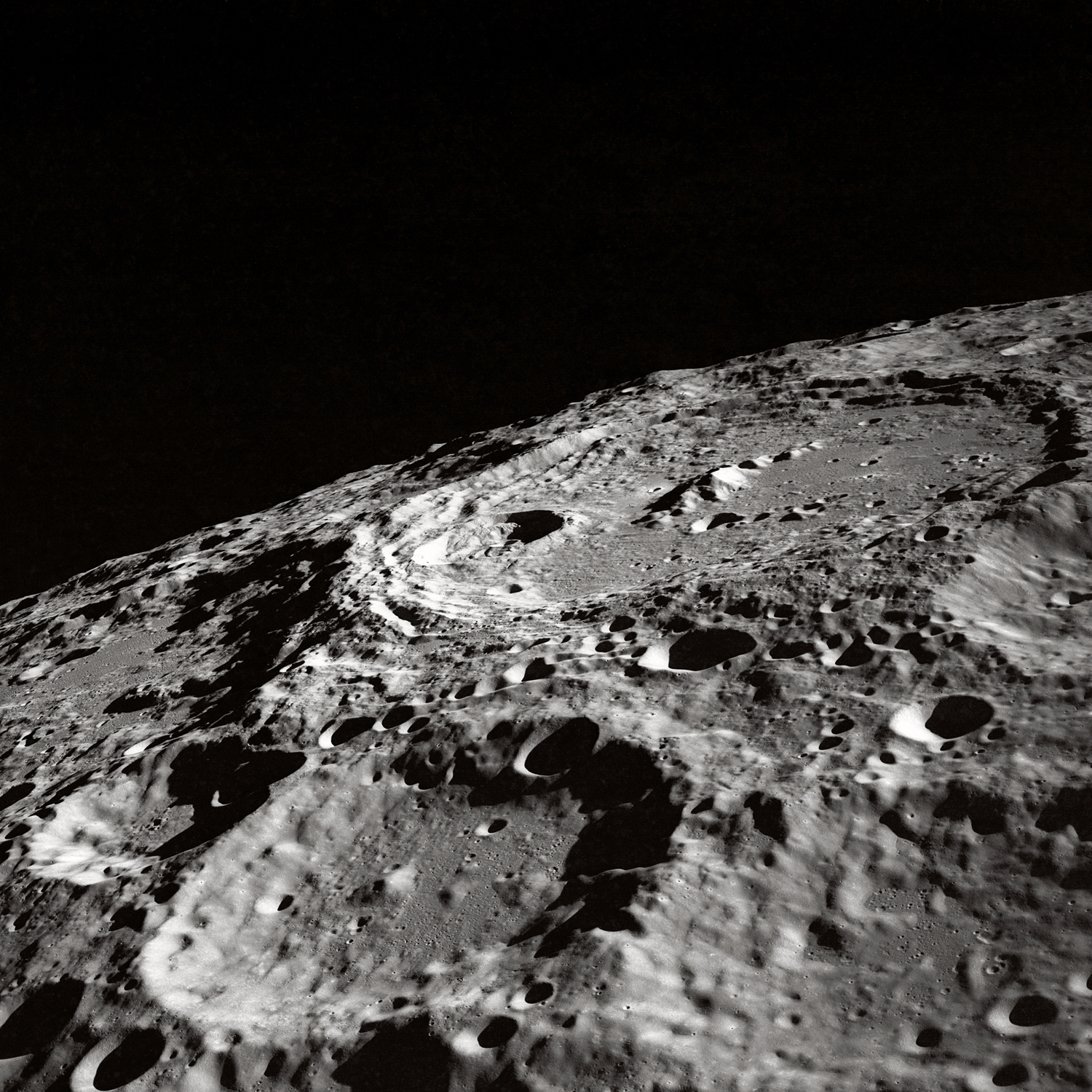
The moon: not at all what it seemed to the ancients.
The stalemate was finally broken by the invention of the telescope, and the discovery that the Moon and other heavenly bodies were not the perfect incorruptible spheres everyone had thought they were. Until that time, as Mike Flynn has documented in his fascinating “The Great Ptolemaic Smackdown“, astronomy was considered a branch of mathematics, entirely concerned with computing where the heavenly bodies would be at particular times. Any system that “saved the appearances” was as good as any other, with the key good being ease of computation. The telescope changed all this: the Moon, in particular, was observably not a smooth sphere, having mountains and craters, and this meant that perhaps the same physical laws that obtained here on Earth also applied in the heavens.
Let me say that again. This meant that perhaps the same physical laws that obtained here on Earth also applied in the heavens. This seems obvious to us now, but it was far from obvious to our ancestors. I would argue that this discovery had as much to do with the development of modern science as did the eventual rejection of Aristotle’s method of logical demonstration. Certainly it would have made Aristotle reconsider a few things.
This highlights one of the problems with Aristotle’s method: it’s hard. In mathematics, the entities about which you are reasoning are usually very simple and abstract—numbers, lengths, points, lines, and plains. Terms do not shift their meanings as you go. But when you apply this kind of reasoning to real world entities like men, dogs, trees, and stones you have to be extremely careful with the definition of your terms, and even then you might well go wrong. An ounce of observation is worth a pound of conjecture, as the man said, at least a pound; and if you can simply go look and find the answer it’s well worth your effort to do so. Hence, Aristotle’s method (and the modern methods that descend from it) have now been relegated to that area of endeavor where no other method will do, which is to say the field of philosophy. My point here, though, is that Aristotle’s method isn’t wrong on the face of it; it’s simply difficult, and to be avoided if there are better alternatives.
As PEG notes, experimental science is a much better alternative if your question is how to understand the workings of the physical world, especially with an eye toward manipulating it. But as PEG also notes, experimental science is always tentative, and subject to correction: “We conjectured this, and we tested it in this way, and we saw this, which supports/does not support our conjecture.” But we didn’t test every possible set of conditions (no one could) and so it’s possible that there are edge-cases we haven’t discovered yet. The move from Newtonian to Einsteinian physics is a prime example: in day-to-day life, Newtonian physics works so well that it’s still regularly taught in schools; it’s only in extreme conditions that relativistic effects come into play. Experimental science is an excellent tool, a very sharp and effective tool—but it is incapable of encompassing ultimate truth.
It doesn’t help that scientists, who generally understand this perfectly well, so often speak as though their current understanding is simply the fact of the matter, beyond doubt. It’s an occupational hazard, I think; you get tired of repeating the same qualifications over and over, and eventually (and especially when you’re explaining your ideas to outsiders) they truly do go without saying. But I digress.
So here we have two methods of acquiring knowledge (of many):
- The philosophical method, that seeks to discover ultimate truth and might (with great difficulty) attain it.
- The scientific method, that seeks to discover many proximate (and useful!) “truths” that are contingent on future discoveries, but is much easier to apply.
The fault of Aristotle’s medieval followers was that they were resolved on using the method they knew, and didn’t recognize that other methods might be more productive in certain areas.
The fault of many followers of science today is exactly the same: they expect the method they know to apply to the investigation of ultimate causes and ultimate truth, and don’t recognize the limitations of their method or the efficacy of other methods.
And therein lies the crux of my disagreement with PEG. In his article, he implies that the pursuit of ultimate truth and ultimate causes is wrong-headed, and both Aristotle’s followers and modern scientists have been led astray by it. I would say that it’s not the pursuit of ultimate truth that’s wrong; it’s the pursuit of knowledge by methods that are inappropriate to the kind of knowledge in question.
Deep Thoughts from the Doghouse
Previous Post

October 5, 2014
Christ Promised a Crown of Thorns, not a Bed of Roses
Next Post

October 7, 2014 Review: Desolation Island, by Patrick O'Brian
Browse Our Archives
Select a Category Admin App o' the Morning Ask the Dogmat Believing Thomas Bits of Fiction Blasts from the Past Bootstrapping the Interior Life Catholic Mom Christian Living Deep Thoughts from the Doghouse Dominicana Evangelii Gaudium Interviews It Was A Dark and Stormy Night Links to This and That Lumen Fidei Meme Watch On Writing Operation Gratitude Pedant Errant Photography Quill Random Barkings S'Mary's World Shakers of Salt Software Development The Dog Whistler The Dogmat Sez Third Orders Thomas Aquinas Uncategorized Vikings at Dinos Woof Guide to Cinema Woof Guide to History Woof Guide to Literature Woof Guide to Obscure Catholic Music Woof Guide to Philosophy Woof Guide to Popular Music Woof Guide to Technology Woof Guide to Theology Words I Wish I'd Written Works For Me
Select a Month September 2016 August 2016 June 2016 May 2016 April 2016 March 2016 February 2016 January 2016 December 2015 November 2015 October 2015 September 2015 August 2015 July 2015 June 2015 May 2015 April 2015 March 2015 February 2015 January 2015 December 2014 November 2014 October 2014 September 2014 August 2014 July 2014 June 2014 May 2014 April 2014 March 2014 February 2014 January 2014 December 2013 November 2013 October 2013
Follow Us!
TAKE THE
Religious Wisdom Quiz
Who was the patriarch whose faith led to the near-sacrifice of his son?
Select your answer to see how you score.
Abraham Joseph Isaac Jacob
Related posts from Cry 'Woof'


When Amorous Leticia Met the Deacon...

The Glory of God and the Total Perspective...

TRENDING AT PATHEOS Catholic

Rejecting Doom: Christian Hope And Human Action
Christianity is a religion of hope. We are to have hope and...

It’s What Comes From Within Which Matters
One of the most difficult things for us to understand is why...

Why I Choose the Eucharist Over the Sermon
Choose the Eucharist, Not the Sermon What are we supposed to get...

5 Design Elements Found in Spiritually Rooted Homes
Putting Spirituality Into Home Decor Our homes are more than our living...

Credo: A Story of God Told with the...
About 10 years ago, I began to imagine a personal "Credo" that...

The Anatomy of Divine Revelation in Catholic Thought
The claim that God has made Himself known to human beings is...
view all Catholic blogs
Ad-Free & Subscriber Log-In Subscription Support
- About Us
- 2026 Calendar
- Videos
- Podcasts
- Library of World Religions
- Faith In Media Tracker
- Advertise With Us
- Write for Us
- Privacy Policy
- Terms of Service
- Do Not Sell My Data
- Contact Us
- Radiant Digital
- Manage Newsletter Subscriptions
- Unsubscribe From Notifications
- Sitemap
Copyright 2008-2026, Patheos. All rights reserved.
Subscription Support Ad-Free & Subscriber Log-In
Follow Patheos