
BuddhistCatholicContemplativeEvangelicalGeneral ChristianHinduJewishLatter-day SaintMuslimNew VisionsProgressive Christian
Beliefs
- Buddhist
- Catholic
- Contemplative
- Evangelical
- General Christian
- Hindu
- Jewish
- Latter-day Saint
- More Voices
- Muslim
- New Visions
- Pagan
- Progressive Christian
Topics
- Religion News
- Food and Religion
- Sports and Religion
- Religious Art
- Religious Music and Entertainment
- Religious Events
- History and Religion
- Style and Religion
- Politics and Religion
- Women in Religion
- Recreation Outdoors and Religion
- Business Finance and Religion
- Careers Workplace and Religion
- Education and Religion
- Family Parenting and Religion
- Health Fitness and Religion
- Home and Religion
- Relationships and Religion
- Technology and Religion
- Travel and Religion
Columnists
- Buddhist Columnists
- Business Finance and Religion Columnists
- Careers Workplace and Religion Columnists
- Catholic Columnists
- Contemplative Columnists
- Education and Religion Columnists
- Evangelists Columnists
- Family Parenting and Religion Columnists
- General Christian Columnists
- Health Fitness and Religion Columnists
- Hindu Columnists
- History and Religion Columnists
- Home and Religion Columnists
- Jewish Columnists
- More Voices Columnists
- Latter Day Columnists
- Muslim Columnists
- New Visions Columnists
- Nonreligious Columnists
- Pagan Columnists
- Politics and Religion Columnists
- Progressive Columnists
- Recreation Outdoors and Religion Columnists
- Relationships and Religion Columnists
- Religion News Columnists
- Religious Art Columnists
- Religious Events Columnists
- Religious Music and Entertainment Columnists
- Sports and Religion Columnists
- Style and Religion Columnists
- Technology and Religion Columnists
- Travel and Religion Columnists
- Women in Religion Columnists
Resource Library
- 2026 Calendar
- Library of World Religions
- The 100 Most Holy Places on Earth
- Patheos Answers
- Podcasts
- Videos
- Faith Leaders Database
- Anglican Episcopalian
- Bahai
- Baptist
- Buddhism
- Christianity
- Confucianism
- Eastern Orthodoxy
- Hinduism
- Holiness and Pentecostal
- ISKCON
- Islam
- Judaism
- Lutheran
- Methodist
- The Church of Jesus Christ of Latter-day Saints
- New Age
- Paganism
- Presbytarian and Reformed
- Protestantism
- Religion Behind the Scenes
- Roman Catholic
- Scientology
- Shia Islam
- Sikhism
- Sufism
- Sunni Islam
- Taoism
- Zen
- See all religions
Research Tools
 Ad-Free & Subscriber Log-In Subscription Support
Ad-Free & Subscriber Log-In Subscription Support
Follow Patheos 

- Trending:
- Forgiveness
- |
- Marriage
- |
- Consciousness
- |
- Death Penalty
- |
- Election
- |
- Halloween
 Cry 'Woof'
-
Series
- Home
- Catholic
- Review: Desolation Island, by Patrick O’Brian
Review: Desolation Island, by Patrick O’Brian
Last updated on: December 23, 2014 at 4:10 pm by willduquette
Review: Desolation Island, by Patrick O’Brian 2014-12-23T16:10:31-05:00 willduquette
Patheos Explore the world's faith through different perspectives on religion and spirituality! Patheos has the views of the prevalent religions and spiritualities of the world.
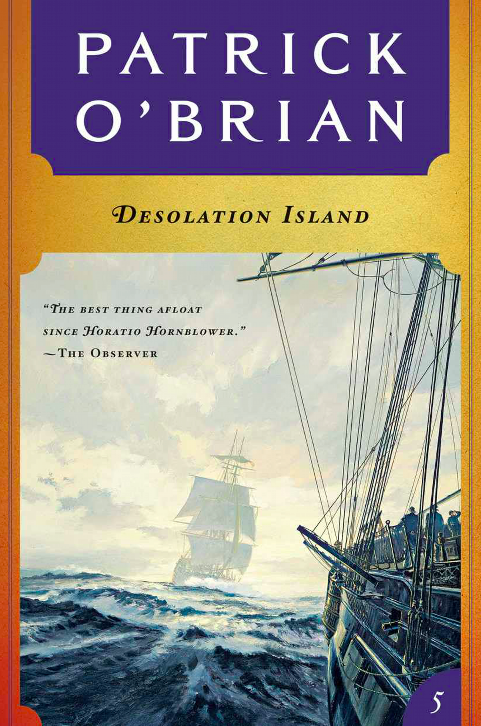 I’ve been working my way through Patrick O’Brian’s Aubrey/Maturin series over the last few weeks; and in a comment of my review of The Mauritius Command a reader asked me to say a few words about the “inner” and “outer” stories I was speaking of, as she wasn’t familiar with the terms. I replied directly to her comment; but on the principle that others might be confused as well, here’s my reply:
Those are my terms to describe what’s going on; I define them in my review of Master and Commander. In a nutshell: the outer story in an Aubrey/Maturin novel is a tale of sea-going adventure, and Jack Aubrey is its hero. It’s a classic romance: the action is external to the characters (Jack isn’t much given to introspection.) But there’s also an “inner” story, “inner” because it involves change within the characters, as in a classic novel. Stephen Maturin is always the viewpoint character of the “inner” story; sometimes he is its hero, and other times he’s simply the means by which we see it.
In terms of this novel, then, the outer story involves Jack taking a squadron to Mauritius and routing the French. The inner story involves Lord Clonfert’s reactions to Jack and his attempts to surpass Jack, from Stephen’s point of view.
I draw the distinction because it’s possible to read the books just for the outer story…but it’s sometimes confusing, because the divisions between books are usually determined by the inner story.
And in fact, it was while re-reading Desolation Island that I finally got an inkling of what was going on. On first reading the book took me quite aback, because it concludes with Jack Aubrey and his crew nearly shipwrecked on an island in the middle of the Great Southern Ocean (the “Desolation Island”) of the title. I hadn’t yet twigged to the “inner” story and the “outer” story in O’Brian’s books; but on further inspection I found that the book ends just at the climax of the inner story.
From Jack Aubrey’s point of view, the tale is quite simple. He’s ordered to bring the Leopard (known universally as the “horrible old Leopard in the service) to Australia and then the far East and attach it to the squadron there. The voyage is rife with incident, including “gaol fever” among some convicts being transported to Australia; the fever spreads to the crew, leaving her undermanned, and then there are storms and an encounter with a Dutch ship of 74 guns, and all of it ends up leaving captain and crew on the island for a period of time.
That’s the outer story; and for nautical flavor it can’t be beat.
But then there’s the inner story, in which Stephen Maturin, in his role as an agent of Naval Intelligence, plays cat and mouse with spies both French and American. If you ask how he can do that while on a relatively small vessel on route from England to the Far East, and I can but reply “Very well indeed.”
This is the first time we see the United States playing any significant role in the series; but by its internal chronology the War of 1812 is fast approaching. O’Brian chose the horrible old Leopard, a historical ship, to that precise end. In 1807 the captain of the Leopard fired upon and ultimately boarded the USS Chesapeake, looking for British deserters. This caused quite a ruckus at the time, and was one of the immediate causes of the war that followed.
Though it took me aback on first reading, Desolation Island has grown on me considerably since, as I’ve gained a deeper appreciation for the structure of the plot; and I’d say it’s now my second favorite of the early part of the series, right after H.M.S. Surprise.
Previous Post
October 6, 2014
The Method in Aristotle's Madness
Next Post

October 8, 2014 Think About These Things
Browse Our Archives
Select a Category Admin App o' the Morning Ask the Dogmat Believing Thomas Bits of Fiction Blasts from the Past Bootstrapping the Interior Life Catholic Mom Christian Living Deep Thoughts from the Doghouse Dominicana Evangelii Gaudium Interviews It Was A Dark and Stormy Night Links to This and That Lumen Fidei Meme Watch On Writing Operation Gratitude Pedant Errant Photography Quill Random Barkings S'Mary's World Shakers of Salt Software Development The Dog Whistler The Dogmat Sez Third Orders Thomas Aquinas Uncategorized Vikings at Dinos Woof Guide to Cinema Woof Guide to History Woof Guide to Literature Woof Guide to Obscure Catholic Music Woof Guide to Philosophy Woof Guide to Popular Music Woof Guide to Technology Woof Guide to Theology Words I Wish I'd Written Works For Me
Select a Month September 2016 August 2016 June 2016 May 2016 April 2016 March 2016 February 2016 January 2016 December 2015 November 2015 October 2015 September 2015 August 2015 July 2015 June 2015 May 2015 April 2015 March 2015 February 2015 January 2015 December 2014 November 2014 October 2014 September 2014 August 2014 July 2014 June 2014 May 2014 April 2014 March 2014 February 2014 January 2014 December 2013 November 2013 October 2013
Follow Us!
TAKE THE
Religious Wisdom Quiz
Who was thrown into a den of lions?
Select your answer to see how you score.
Daniel Joseph David Jonah
Related posts from Cry 'Woof'

In which the Blogger is Very Truly Run...

The Daughter of Time, by Josephine Tey
Book Review: Catholic Commentary on Sacred Scripture, The...

Steven Pressfield: The Lion's Gate
TRENDING AT PATHEOS Catholic

Rejecting Doom: Christian Hope And Human Action
Christianity is a religion of hope. We are to have hope and...

It’s What Comes From Within Which Matters
One of the most difficult things for us to understand is why...

Why I Choose the Eucharist Over the Sermon
Choose the Eucharist, Not the Sermon What are we supposed to get...

5 Design Elements Found in Spiritually Rooted Homes
Putting Spirituality Into Home Decor Our homes are more than our living...

Credo: A Story of God Told with the...
About 10 years ago, I began to imagine a personal "Credo" that...

The Anatomy of Divine Revelation in Catholic Thought
The claim that God has made Himself known to human beings is...
view all Catholic blogs
Ad-Free & Subscriber Log-In Subscription Support
- About Us
- 2026 Calendar
- Videos
- Podcasts
- Library of World Religions
- Faith In Media Tracker
- Advertise With Us
- Write for Us
- Privacy Policy
- Terms of Service
- Do Not Sell My Data
- Contact Us
- Radiant Digital
- Manage Newsletter Subscriptions
- Unsubscribe From Notifications
- Sitemap
Copyright 2008-2026, Patheos. All rights reserved.
Subscription Support Ad-Free & Subscriber Log-In
Follow Patheos