
BuddhistCatholicContemplativeEvangelicalGeneral ChristianHinduJewishLatter-day SaintMuslimNew VisionsProgressive Christian
Beliefs
- Buddhist
- Catholic
- Contemplative
- Evangelical
- General Christian
- Hindu
- Jewish
- Latter-day Saint
- More Voices
- Muslim
- New Visions
- Pagan
- Progressive Christian
Topics
- Religion News
- Food and Religion
- Sports and Religion
- Religious Art
- Religious Music and Entertainment
- Religious Events
- History and Religion
- Style and Religion
- Politics and Religion
- Women in Religion
- Recreation Outdoors and Religion
- Business Finance and Religion
- Careers Workplace and Religion
- Education and Religion
- Family Parenting and Religion
- Health Fitness and Religion
- Home and Religion
- Relationships and Religion
- Technology and Religion
- Travel and Religion
Columnists
- Buddhist Columnists
- Business Finance and Religion Columnists
- Careers Workplace and Religion Columnists
- Catholic Columnists
- Contemplative Columnists
- Education and Religion Columnists
- Evangelists Columnists
- Family Parenting and Religion Columnists
- General Christian Columnists
- Health Fitness and Religion Columnists
- Hindu Columnists
- History and Religion Columnists
- Home and Religion Columnists
- Jewish Columnists
- More Voices Columnists
- Latter Day Columnists
- Muslim Columnists
- New Visions Columnists
- Nonreligious Columnists
- Pagan Columnists
- Politics and Religion Columnists
- Progressive Columnists
- Recreation Outdoors and Religion Columnists
- Relationships and Religion Columnists
- Religion News Columnists
- Religious Art Columnists
- Religious Events Columnists
- Religious Music and Entertainment Columnists
- Sports and Religion Columnists
- Style and Religion Columnists
- Technology and Religion Columnists
- Travel and Religion Columnists
- Women in Religion Columnists
Resource Library
- 2026 Calendar
- Library of World Religions
- The 100 Most Holy Places on Earth
- Patheos Answers
- Podcasts
- Videos
- Faith Leaders Database
- Anglican Episcopalian
- Bahai
- Baptist
- Buddhism
- Christianity
- Confucianism
- Eastern Orthodoxy
- Hinduism
- Holiness and Pentecostal
- ISKCON
- Islam
- Judaism
- Lutheran
- Methodist
- The Church of Jesus Christ of Latter-day Saints
- New Age
- Paganism
- Presbytarian and Reformed
- Protestantism
- Religion Behind the Scenes
- Roman Catholic
- Scientology
- Shia Islam
- Sikhism
- Sufism
- Sunni Islam
- Taoism
- Zen
- See all religions
Research Tools
 Ad-Free & Subscriber Log-In Subscription Support
Ad-Free & Subscriber Log-In Subscription Support
Follow Patheos 

- Trending:
- Forgiveness
- |
- Marriage
- |
- Consciousness
- |
- Death Penalty
- |
- Election
- |
- Halloween
 Cry 'Woof'
-
Series
- Home
- Catholic
- Review: Post Captain, by Patrick O’Brian
Review: Post Captain, by Patrick O’Brian
Last updated on: September 16, 2014 at 8:00 am by willduquette
Review: Post Captain, by Patrick O’Brian 2014-09-15T18:48:40-05:00 willduquette
Patheos Explore the world's faith through different perspectives on religion and spirituality! Patheos has the views of the prevalent religions and spiritualities of the world.
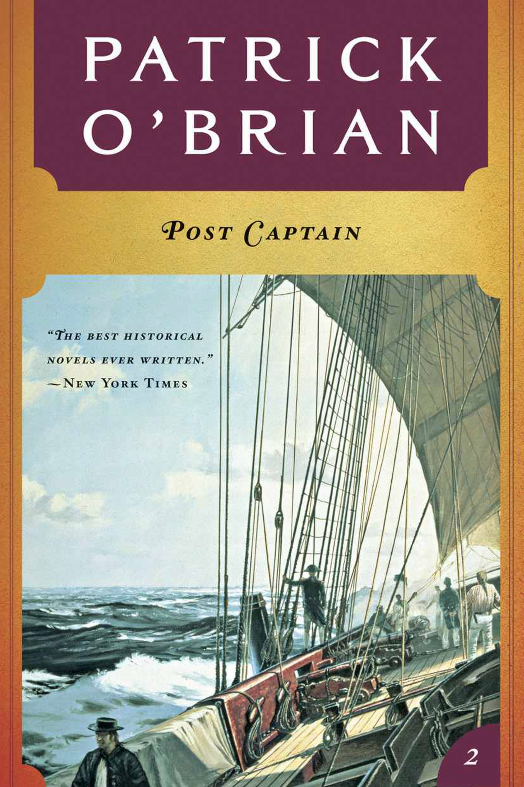 Post Captain
Do not get me wrong: Post Captain is not a bad book; I’ve read it with enjoyment a number of times, most recently this past week. But it’s also rather a hurdle, if you’re a particular type of reader.
If you’re primarily a reader of romances, in the classic sense, books in which most of the action is external, in the things the characters do, you might be able to just let the plot carry you along. That’s how I read it the first time: I was reading for the outer story, which involves Jack Aubrey and his career as an officer in the Royal Navy. If you’re primarily a reader of serious novels, though, where you’re used to looking for the deeper, inner story that parallels the outer story, you might be in trouble—because while there is an inner story, and indeed it’s what the book is truly about, the inner story and the outer story don’t match up well.
The inner story is, in fact, straightforward. (Be warned: possible minor spoilers lie ahead.) The Peace of Amiens comes about as the book begins, and Jack Aubrey finds himself thrown on the beach with lots of prize money for consolation. He and Stephen meet two lovely young women, Sophia Williams and her cousin, a young widow named Diana Villiers. Jack is immediately taken with Sophia (and she with him, though she’s too proper to lead him on), and Stephen with Diana—but our Diana is a serious piece of work. Raised in India by her adventurer father, and the widow of a young army officer, she feels stifled by the mores of the English country gentry with whom she is forced to live and is looking for a way out. Add to this that she has the morals of a cat and that Jack Aubrey is as susceptible as they come (and not over wise, by land), and you have a recipe for disaster. And indeed, the bulk of the book is about this love quadrangle: Jack, who is attracted to both women and understands neither; Sophie, who loves him and would genuinely make him a good wife; Stephen, who understands both and builds a real friendship with both, but desires Diana (who won’t have him); and Diana, who is charming, cold, and wicked by turns. O’Brian’s skill shows in his portrait of Diana; she isn’t simply a femme fatale, a bad girl to be avoided. She’s a truly complicated character, and one has the sense that even she doesn’t always approve of herself—that when she turns cold to Stephen is precisely when she’s loving him best, and trying to spare him future hurt.
That’s the inner story, and I remember one reader describing Post Captain as the book where O’Brian began to follow Jane Austen as well as C.S. Forester. It’s a reasonable comparison.
But then there’s the outer story…and, oh my, compared to the inner story the outer story is a hot mess. In the course of this book:
- The war ends, and Jack Aubrey is thrown on the beach, to live on his prize money.
- He loses his prize money, through no fault of his own.
- He flees to France, to avoid the creditors who would throw him into debtor’s prison.
- War begins, and he flees France to avoid being imprisoned for the duration.
- He impersonates a bear. (!)
- He recovers in Spain.
- He returns from Gibraltar to England on an Indiaman, and helps to fight off a privateer.
- He goes into hiding from his creditors while waiting to get a ship, which is not forthcoming.
- He is attempted to be robbed on the moor by a highwayman who is a failed translator of foreign books (!).
- Eventually, he is given command of an experimental ship that no one else wants.
- While playing the fool, and nearly sinking his own career (see the love quadrangle listed above), he manages to sink the privateer, and eventually wins another significant battle, while the experimental ship is sunk beneath him to the general satisfaction of all concerned.
- He’s still on the run from his creditors.
- He is given temporary command of a crack frigate, and in the course of an epic (and historical) battle wins enough prize money to set him to the end of his days. (Yeah, right. Narrative causality looms.)
It’s a long book, and there’s enough incident here for three or four; and as I say, it’s only loosely connected with the inner story; and some of it is simply farcical in a way that doesn’t appear on the remainder of the series. Be warned, therefore. There’s good stuff here, but you’ll enjoy it more if you’re reading both the inner and the outer story at the same time, while respecting their independence from each other.
Future novels in the series continue the outer/inner structure; but in most (perhaps all) of what follows the two stories run on more nearly parallel tracks.
After Post Captain comes H. M. S. Surprise
Bottom line: Post Captain is recommended, though not highly recommended; but it’s an essential basis for the appreciation of H.M.S. Surprise, one of my favorite books of all time.
Previous Post

September 15, 2014
CT 12: God Not Contained Under Any Genus
Next Post
September 17, 2014 The Family that Mines Together, Dines Together
Browse Our Archives
Select a Category Admin App o' the Morning Ask the Dogmat Believing Thomas Bits of Fiction Blasts from the Past Bootstrapping the Interior Life Catholic Mom Christian Living Deep Thoughts from the Doghouse Dominicana Evangelii Gaudium Interviews It Was A Dark and Stormy Night Links to This and That Lumen Fidei Meme Watch On Writing Operation Gratitude Pedant Errant Photography Quill Random Barkings S'Mary's World Shakers of Salt Software Development The Dog Whistler The Dogmat Sez Third Orders Thomas Aquinas Uncategorized Vikings at Dinos Woof Guide to Cinema Woof Guide to History Woof Guide to Literature Woof Guide to Obscure Catholic Music Woof Guide to Philosophy Woof Guide to Popular Music Woof Guide to Technology Woof Guide to Theology Words I Wish I'd Written Works For Me
Select a Month September 2016 August 2016 June 2016 May 2016 April 2016 March 2016 February 2016 January 2016 December 2015 November 2015 October 2015 September 2015 August 2015 July 2015 June 2015 May 2015 April 2015 March 2015 February 2015 January 2015 December 2014 November 2014 October 2014 September 2014 August 2014 July 2014 June 2014 May 2014 April 2014 March 2014 February 2014 January 2014 December 2013 November 2013 October 2013
Follow Us!
TAKE THE
Religious Wisdom Quiz
How many times did Peter deny Jesus?
Select your answer to see how you score.
5 3 2 4
Related posts from Cry 'Woof'

In which the Blogger is Very Truly Run...

The Daughter of Time, by Josephine Tey
Book Review: Catholic Commentary on Sacred Scripture, The...

Steven Pressfield: The Lion's Gate
TRENDING AT PATHEOS Catholic

Rejecting Doom: Christian Hope And Human Action
Christianity is a religion of hope. We are to have hope and...

It’s What Comes From Within Which Matters
One of the most difficult things for us to understand is why...

Why I Choose the Eucharist Over the Sermon
Choose the Eucharist, Not the Sermon What are we supposed to get...

5 Design Elements Found in Spiritually Rooted Homes
Putting Spirituality Into Home Decor Our homes are more than our living...

Credo: A Story of God Told with the...
About 10 years ago, I began to imagine a personal "Credo" that...

The Anatomy of Divine Revelation in Catholic Thought
The claim that God has made Himself known to human beings is...
view all Catholic blogs
Ad-Free & Subscriber Log-In Subscription Support
- About Us
- 2026 Calendar
- Videos
- Podcasts
- Library of World Religions
- Faith In Media Tracker
- Advertise With Us
- Write for Us
- Privacy Policy
- Terms of Service
- Do Not Sell My Data
- Contact Us
- Radiant Digital
- Manage Newsletter Subscriptions
- Unsubscribe From Notifications
- Sitemap
Copyright 2008-2026, Patheos. All rights reserved.
Subscription Support Ad-Free & Subscriber Log-In
Follow Patheos