
BuddhistCatholicContemplativeEvangelicalGeneral ChristianHinduJewishLatter-day SaintMuslimNew VisionsProgressive Christian
Beliefs
- Buddhist
- Catholic
- Contemplative
- Evangelical
- General Christian
- Hindu
- Jewish
- Latter-day Saint
- More Voices
- Muslim
- New Visions
- Pagan
- Progressive Christian
Topics
- Religion News
- Food and Religion
- Sports and Religion
- Religious Art
- Religious Music and Entertainment
- Religious Events
- History and Religion
- Style and Religion
- Politics and Religion
- Women in Religion
- Recreation Outdoors and Religion
- Business Finance and Religion
- Careers Workplace and Religion
- Education and Religion
- Family Parenting and Religion
- Health Fitness and Religion
- Home and Religion
- Relationships and Religion
- Technology and Religion
- Travel and Religion
Columnists
- Buddhist Columnists
- Business Finance and Religion Columnists
- Careers Workplace and Religion Columnists
- Catholic Columnists
- Contemplative Columnists
- Education and Religion Columnists
- Evangelists Columnists
- Family Parenting and Religion Columnists
- General Christian Columnists
- Health Fitness and Religion Columnists
- Hindu Columnists
- History and Religion Columnists
- Home and Religion Columnists
- Jewish Columnists
- More Voices Columnists
- Latter Day Columnists
- Muslim Columnists
- New Visions Columnists
- Nonreligious Columnists
- Pagan Columnists
- Politics and Religion Columnists
- Progressive Columnists
- Recreation Outdoors and Religion Columnists
- Relationships and Religion Columnists
- Religion News Columnists
- Religious Art Columnists
- Religious Events Columnists
- Religious Music and Entertainment Columnists
- Sports and Religion Columnists
- Style and Religion Columnists
- Technology and Religion Columnists
- Travel and Religion Columnists
- Women in Religion Columnists
Resource Library
- 2026 Calendar
- Library of World Religions
- The 100 Most Holy Places on Earth
- Patheos Answers
- Podcasts
- Videos
- Faith Leaders Database
- Anglican Episcopalian
- Bahai
- Baptist
- Buddhism
- Christianity
- Confucianism
- Eastern Orthodoxy
- Hinduism
- Holiness and Pentecostal
- ISKCON
- Islam
- Judaism
- Lutheran
- Methodist
- The Church of Jesus Christ of Latter-day Saints
- New Age
- Paganism
- Presbytarian and Reformed
- Protestantism
- Religion Behind the Scenes
- Roman Catholic
- Scientology
- Shia Islam
- Sikhism
- Sufism
- Sunni Islam
- Taoism
- Zen
- See all religions
Research Tools
 Ad-Free & Subscriber Log-In Subscription Support
Ad-Free & Subscriber Log-In Subscription Support
Follow Patheos 

- Trending:
- Forgiveness
- |
- Marriage
- |
- Consciousness
- |
- Death Penalty
- |
- Election
- |
- Halloween
 Cry 'Woof'
-
Series
- Home
- Catholic
- The Tale of the Sultan and the Sword Smith
The Tale of the Sultan and the Sword Smith
Last updated on: December 23, 2014 at 5:11 pm by willduquette
The Tale of the Sultan and the Sword Smith 2014-12-23T17:11:05-05:00 willduquette
Patheos Explore the world's faith through different perspectives on religion and spirituality! Patheos has the views of the prevalent religions and spiritualities of the world.
Of a time and of a time there was a sword smith, renowned throughout the land; and that no mean backwater, but the land of the Great Sultan, for the smith dwelt in Damascus, city of steel. His blades were the equal of any in the land, for he knew well that to craft a blade both strong and durable it must be heated to white heat—and then quenched in the body of a fat slave. He had mastered this skill long since, yet he yearned for more: he yearned to produce a blade of legend, and to present it to the Sultan, and so be renowned throughout the world as the greatest sword smith that had ever been or ever would be. And so he thought long and carefully.
And when his time of thinking was complete he took a sword newly forged, his finest work, complete but for the final quenching. And he bought a camel, and lade it with his needful things, and joined a caravan of hajjis on their way to the Holy City. The sword he wrapped carefully in silk, and hid among his belongings, and his face he covered; and so the days passed.
And far into the desert, yet still far from the City of the Kaaba, he turned aside in the night; and by a remote oasis built a fire and made a sacrifice and called upon the King of All Djinni to come to his aid: for he knew he had reached the peak of merely human dexterity and skill. While he awaited the coming of the King of All Djinni he unpacked his needful things: a portable forge, and charcoal to feed it, and a bellows, and the sword, which was carefully wrapped in silk for it was not yet quenched. And he put on his great gauntlets and heated the sword to white heat; and at dawn there was a wind, and a cloud of sand, and a great voice, and lo it was the King of All Djinni.
“Why have you summoned me, Son of Adam?” quoth the Djinn. “And why should I not kill you now for your temerity?”
The sword smith bowed low, lower than he ever bowed for his prayers, and then rising to his feet he said, “O Great Djinn, King of All Djinni, I am a sword smith, and reckoned the equal of any such in all of the lands of the Great Sultan; which is to say of any in the world. And yet I aspire to more. Should you help me in this, I shall be ever grateful, and never fail to give you credit for the excellence of this blade you see before you.” And he drew the sword from the forge, holding the hilt in his great gauntlets.
The cloud of sand subsided, and the King of all Djinni drew nearer to inspect the blade, which was burning the color of the whitest cloth.
“Indeed you have skill,” said the Djinn after a time. “It pleases me to assist you. I shall lay a great spell upon this blade”—but what the spell would have been, none ever knew. For taking the sword, the sword which was still at a white heat, the smith drove it in a flash into the body of the King of all Djinni, sliding it between the seventh and eight ribs and through the heart Djinn’s ruby heart, which (as all the world knows) is there placed. For a smith must always strike when the fire is hot.
And the Djinn, his heart pierced, perished swiftly, quenching the sword.
And taking the sword and the Djinn’s crown as proof, but leaving the forge, the smith mounted his camel and rode swiftly to Baghdad, city of the Great Sultan, and presented them to him as he had long desired.
The blade was indeed everything for which the smith had yearned, and the Sultan received it and its story with delight, taking it for his very own; and indeed it is still the very sword of the Sultan, passed down from that day to this. And the smith’s deed resounded throughout the lands of the Sultan, and all remembered the name of the one bold and brash enough to quench a white hot blade in the flesh of the King of All Djinni—for though saddened to so reward such a craftsman and such a kingly gift, the Sultan necessarily had him put to death as a regicide, and his fate published to the farthest end of his domains.
Previous Post

August 26, 2014
Review: Full Fathom Five, by Max Gladstone
Next Post
August 28, 2014 Terry Pratchett on Consumerism
Browse Our Archives
Select a Category Admin App o' the Morning Ask the Dogmat Believing Thomas Bits of Fiction Blasts from the Past Bootstrapping the Interior Life Catholic Mom Christian Living Deep Thoughts from the Doghouse Dominicana Evangelii Gaudium Interviews It Was A Dark and Stormy Night Links to This and That Lumen Fidei Meme Watch On Writing Operation Gratitude Pedant Errant Photography Quill Random Barkings S'Mary's World Shakers of Salt Software Development The Dog Whistler The Dogmat Sez Third Orders Thomas Aquinas Uncategorized Vikings at Dinos Woof Guide to Cinema Woof Guide to History Woof Guide to Literature Woof Guide to Obscure Catholic Music Woof Guide to Philosophy Woof Guide to Popular Music Woof Guide to Technology Woof Guide to Theology Words I Wish I'd Written Works For Me
Select a Month September 2016 August 2016 June 2016 May 2016 April 2016 March 2016 February 2016 January 2016 December 2015 November 2015 October 2015 September 2015 August 2015 July 2015 June 2015 May 2015 April 2015 March 2015 February 2015 January 2015 December 2014 November 2014 October 2014 September 2014 August 2014 July 2014 June 2014 May 2014 April 2014 March 2014 February 2014 January 2014 December 2013 November 2013 October 2013
Follow Us!
TAKE THE
Religious Wisdom Quiz
Who said, "I have been crucified with Christ and I no longer live, but Christ lives in me"?
Select your answer to see how you score.
James John Peter Paul
Related posts from Cry 'Woof'

Vikings at Dino's: Houston, We Have Ignition
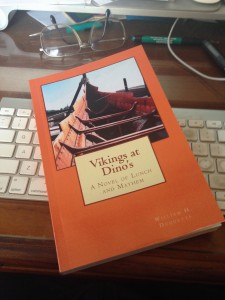
Vikings at Dino's: Done Proofreading!
Big Things Coming: Vikings at Dino's

Today's Aquinas: The Spirit is the Love of...
TRENDING AT PATHEOS Catholic

Rejecting Doom: Christian Hope And Human Action
Christianity is a religion of hope. We are to have hope and...

It’s What Comes From Within Which Matters
One of the most difficult things for us to understand is why...

Why I Choose the Eucharist Over the Sermon
Choose the Eucharist, Not the Sermon What are we supposed to get...

5 Design Elements Found in Spiritually Rooted Homes
Putting Spirituality Into Home Decor Our homes are more than our living...

Credo: A Story of God Told with the...
About 10 years ago, I began to imagine a personal "Credo" that...

The Anatomy of Divine Revelation in Catholic Thought
The claim that God has made Himself known to human beings is...
view all Catholic blogs
Ad-Free & Subscriber Log-In Subscription Support
- About Us
- 2026 Calendar
- Videos
- Podcasts
- Library of World Religions
- Faith In Media Tracker
- Advertise With Us
- Write for Us
- Privacy Policy
- Terms of Service
- Do Not Sell My Data
- Contact Us
- Radiant Digital
- Manage Newsletter Subscriptions
- Unsubscribe From Notifications
- Sitemap
Copyright 2008-2026, Patheos. All rights reserved.
Subscription Support Ad-Free & Subscriber Log-In
Follow Patheos