
BuddhistCatholicContemplativeEvangelicalGeneral ChristianHinduJewishLatter-day SaintMuslimNew VisionsProgressive Christian
Beliefs
- Buddhist
- Catholic
- Contemplative
- Evangelical
- General Christian
- Hindu
- Jewish
- Latter-day Saint
- More Voices
- Muslim
- New Visions
- Pagan
- Progressive Christian
Topics
- Religion News
- Food and Religion
- Sports and Religion
- Religious Art
- Religious Music and Entertainment
- Religious Events
- History and Religion
- Style and Religion
- Politics and Religion
- Women in Religion
- Recreation Outdoors and Religion
- Business Finance and Religion
- Careers Workplace and Religion
- Education and Religion
- Family Parenting and Religion
- Health Fitness and Religion
- Home and Religion
- Relationships and Religion
- Technology and Religion
- Travel and Religion
Columnists
- Buddhist Columnists
- Business Finance and Religion Columnists
- Careers Workplace and Religion Columnists
- Catholic Columnists
- Contemplative Columnists
- Education and Religion Columnists
- Evangelists Columnists
- Family Parenting and Religion Columnists
- General Christian Columnists
- Health Fitness and Religion Columnists
- Hindu Columnists
- History and Religion Columnists
- Home and Religion Columnists
- Jewish Columnists
- More Voices Columnists
- Latter Day Columnists
- Muslim Columnists
- New Visions Columnists
- Nonreligious Columnists
- Pagan Columnists
- Politics and Religion Columnists
- Progressive Columnists
- Recreation Outdoors and Religion Columnists
- Relationships and Religion Columnists
- Religion News Columnists
- Religious Art Columnists
- Religious Events Columnists
- Religious Music and Entertainment Columnists
- Sports and Religion Columnists
- Style and Religion Columnists
- Technology and Religion Columnists
- Travel and Religion Columnists
- Women in Religion Columnists
Resource Library
- 2026 Calendar
- Library of World Religions
- The 100 Most Holy Places on Earth
- Patheos Answers
- Podcasts
- Videos
- Faith Leaders Database
- Anglican Episcopalian
- Bahai
- Baptist
- Buddhism
- Christianity
- Confucianism
- Eastern Orthodoxy
- Hinduism
- Holiness and Pentecostal
- ISKCON
- Islam
- Judaism
- Lutheran
- Methodist
- The Church of Jesus Christ of Latter-day Saints
- New Age
- Paganism
- Presbytarian and Reformed
- Protestantism
- Religion Behind the Scenes
- Roman Catholic
- Scientology
- Shia Islam
- Sikhism
- Sufism
- Sunni Islam
- Taoism
- Zen
- See all religions
Research Tools
 Ad-Free & Subscriber Log-In Subscription Support
Ad-Free & Subscriber Log-In Subscription Support
Follow Patheos 

- Trending:
- Forgiveness
- |
- Marriage
- |
- Consciousness
- |
- Death Penalty
- |
- Election
- |
- Halloween
 Cry 'Woof'
-
Series
- Home
- Catholic
- Meme Watch: Economic Bullsh*t
Meme Watch: Economic Bullsh*t
Last updated on: August 5, 2014 at 3:08 am by willduquette
Meme Watch: Economic Bullsh*t 2014-08-03T10:10:48-05:00 willduquette
Patheos Explore the world's faith through different perspectives on religion and spirituality! Patheos has the views of the prevalent religions and spiritualities of the world.
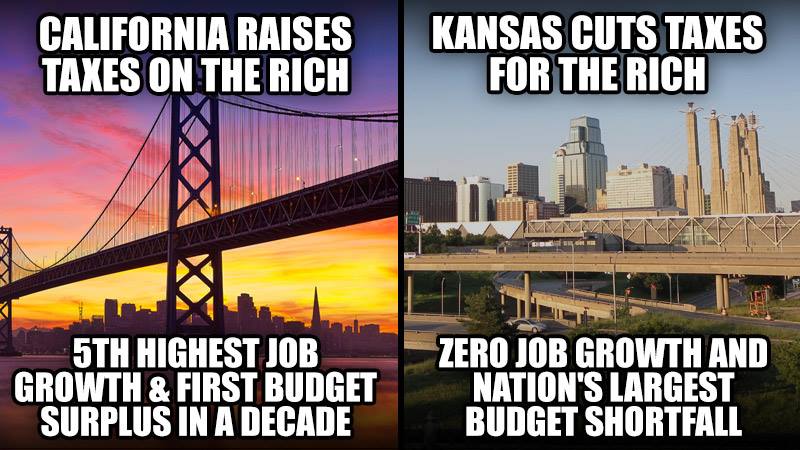
I hate memes like the above with a deep and fiery passion. Not because it is untrue, because I have no idea whether its immediate claims are true or not, but because it’s bullshit.
The word “bullshit” is a technical term in the philosophical community these days. It means speech used to persuade and manipulate others, with no concern for whether the speech is true or not. A bullshitter doesn’t necessarily lie to you; the essence of bullshitting is that he doesn’t care whether he’s lying to you or not. He just wants you to do what he wants you to do. I hate this because speech without reference to truth is perversion in its purest form. And this meme is a prime example of political and economic bullshit, spread on the Internet with the goal of manipulating the electorate.
This is hardly uncommon, mind you, but this one struck me as particularly egregious.
Please note: This is not a post about the political position (such as it is) supported by this meme; and it isn’t a post about economic theory. Instead, it’s a post about the use of memes for communication, and the particular defects I see in this meme. Comments that focus on the two former events, and any comment whose first line shows that the reader hasn’t read my post (but I repeat myself) will be summarily deleted.
Let’s take a look at its immediate claims.
California has raised taxes on the rich. Have they? I live in California, and I was unaware of this. Mind you, I’m married to an accountant, and she does our taxes; and so I don’t much pay attention. Still, suppose this is the case: what does it mean?
- How much were taxes raised? 1%? 10%? 30%?
- Define “rich”: people making over $1,000,000? $300,000? $100,000? $60,000?
- How many California taxpayers are “rich” in this sense?
- How much revenue was raised in this way?
California has its fifth highest job growth & first budget surplus in a decade Oh, do we?
- Fifth highest job growth compared to what? The immediate past in California? The nation as a whole?
- Was that job growth in fact positive? Or was it simply a decrease in the rate of job loss?
- Over which decade? When was this meme created?
- How was job growth measured? Was it measured the same way in each year over the period in question? Employment statistics are notorious for being cooked for political reasons.
- Budget surpluses depend on the size of the budget, which is set by the state government. How has the budget changed over the past decade?
- How has the “gross state product” changed over the past decade?
Kansas has cut taxes on the rich. Have they? I have no idea. But similar questions suggest themselves.
- How much were taxes cut?
- Define rich.
- How many Kansas taxpayers are “rich” in this sense?
- Is it the same sense used for California taxpayers?
Kansas has zero job growth and the nation’s largest budget shortfall. Do they? Again, when?
- Over what period?
- Is it the same period used for determining California’s job growth?
- How is the budget shortfall measured? In dollars? As a percentage of the gross state product? As a percentage of the budget?
- Were the measurements made in the same way as in California? (Almost certainly not.)
In short, a reasonable person can have no real idea exactly what these claims mean or whether they are truly comparable.
Now, let’s look at the meme’s implicit claims:
California and Kansas are directly comparable.
But they aren’t. The economic bases for the two states are entirely different, as are the regulatory environments for businesses within the state. Kansas is a smaller state, with a smaller population and a smaller economy, and I’d be shocked if the disparity between rich and poor in the state were as great as in California.
It might be possible to take statistics from both states and normalize them so that you could begin to compare numbers across the two states. But there are so many ways to measure “richness” and job growth that it’s liable to be quite a bit of work.
Did the author of the meme do this work? There’s nothing in the meme that leads me to think so.
Raising/lowering taxes on the rich has a direct effect on job growth and budget surpluses. Will changes in the tax structure affect the economy of the state? Certainly. But just how is complicated.
There’s a common notion in economics: ceteris paribus, all else held equal. For example, if the gross state product is higher, then, ceteris paribus, you’d expect tax revenue to be higher; and hence, budget shortfalls would be smaller and budget surpluses would be larger.
Similarly, in the short run raising taxes increases tax revenue; and ceteris paribus you’d expect smaller budget shortfalls and larger surpluses.
If all else is held equal; and in the short run. The usual effect of raising taxes is to depress business, which will decrease tax revenue in the long run. Are the gains in California (if they actually exist) long run gains? Or short run gains that will dissipate over time? I don’t know—and neither do you.
Here are some points that I claim are true on the face of it:
- When taxes were raised on the rich in California (however defined), all else was not held equal.
- When taxes were lowered on the rich in Kansas (however defined), all else was not held equal.
- Attributing the economic results in either state to the single cause of raising or lowering taxes is ingenuous at best. Many other things affected the outcome as well.
- California and Kansas are sufficiently different that an immediate comparison like this proves nothing.
- This meme, though pretending to educate, casts no light whatsoever on economic realities.
- This meme, on its own, panders to the sensibilities of a particular voting demographic without regard to the truth of its claims.
And hence, this meme is bullshit.
Please note: I’m not questioning the sincerity of those who respond to the meme and pass it along, or even the motives of the person who crafted it in the first place. I’m just saying that it’s a meme crafted for political effect based on emotional responses, which is to say that it’s bullshit—or, as Plato would have called it, sophistry.
Eschew sophistry wherever you find it; it’s poison for the body politic.
Previous Post

August 4, 2014
CT 8: Absence of Succession in God
Next Post

August 6, 2014 In Mosul, Crown Him with Many Thorns
Browse Our Archives
Select a Category Admin App o' the Morning Ask the Dogmat Believing Thomas Bits of Fiction Blasts from the Past Bootstrapping the Interior Life Catholic Mom Christian Living Deep Thoughts from the Doghouse Dominicana Evangelii Gaudium Interviews It Was A Dark and Stormy Night Links to This and That Lumen Fidei Meme Watch On Writing Operation Gratitude Pedant Errant Photography Quill Random Barkings S'Mary's World Shakers of Salt Software Development The Dog Whistler The Dogmat Sez Third Orders Thomas Aquinas Uncategorized Vikings at Dinos Woof Guide to Cinema Woof Guide to History Woof Guide to Literature Woof Guide to Obscure Catholic Music Woof Guide to Philosophy Woof Guide to Popular Music Woof Guide to Technology Woof Guide to Theology Words I Wish I'd Written Works For Me
Select a Month September 2016 August 2016 June 2016 May 2016 April 2016 March 2016 February 2016 January 2016 December 2015 November 2015 October 2015 September 2015 August 2015 July 2015 June 2015 May 2015 April 2015 March 2015 February 2015 January 2015 December 2014 November 2014 October 2014 September 2014 August 2014 July 2014 June 2014 May 2014 April 2014 March 2014 February 2014 January 2014 December 2013 November 2013 October 2013
Follow Us!
TAKE THE
Religious Wisdom Quiz
Who was taken up to heaven in a whirlwind?
Select your answer to see how you score.
Moses Samuel Elisha Elijah
Related posts from Cry 'Woof'
Meme Watch: The Fruit was Good for Food
A Tale of Two Financial Collapses: More BS?

Aphorism Watch: Do What You Love, Love What...

TRENDING AT PATHEOS Catholic

The Parable Of The Sower And The Word...
One of Christ’s most famous parables is that of the sower who...

Rejecting Doom: Christian Hope And Human Action
Christianity is a religion of hope. We are to have hope and...

Why I Choose the Eucharist Over the Sermon
Choose the Eucharist, Not the Sermon What are we supposed to get...

5 Design Elements Found in Spiritually Rooted Homes
Putting Spirituality Into Home Decor Our homes are more than our living...

Credo: A Story of God Told with the...
About 10 years ago, I began to imagine a personal "Credo" that...

The Anatomy of Divine Revelation in Catholic Thought
The claim that God has made Himself known to human beings is...
view all Catholic blogs
Ad-Free & Subscriber Log-In Subscription Support
- About Us
- 2026 Calendar
- Videos
- Podcasts
- Library of World Religions
- Faith In Media Tracker
- Advertise With Us
- Write for Us
- Privacy Policy
- Terms of Service
- Do Not Sell My Data
- Contact Us
- Radiant Digital
- Manage Newsletter Subscriptions
- Unsubscribe From Notifications
- Sitemap
Copyright 2008-2026, Patheos. All rights reserved.
Subscription Support Ad-Free & Subscriber Log-In
Follow Patheos