
BuddhistCatholicContemplativeEvangelicalGeneral ChristianHinduJewishLatter-day SaintMuslimNew VisionsProgressive Christian
Beliefs
- Buddhist
- Catholic
- Contemplative
- Evangelical
- General Christian
- Hindu
- Jewish
- Latter-day Saint
- More Voices
- Muslim
- New Visions
- Pagan
- Progressive Christian
Topics
- Religion News
- Food and Religion
- Sports and Religion
- Religious Art
- Religious Music and Entertainment
- Religious Events
- History and Religion
- Style and Religion
- Politics and Religion
- Women in Religion
- Recreation Outdoors and Religion
- Business Finance and Religion
- Careers Workplace and Religion
- Education and Religion
- Family Parenting and Religion
- Health Fitness and Religion
- Home and Religion
- Relationships and Religion
- Technology and Religion
- Travel and Religion
Columnists
- Buddhist Columnists
- Business Finance and Religion Columnists
- Careers Workplace and Religion Columnists
- Catholic Columnists
- Contemplative Columnists
- Education and Religion Columnists
- Evangelists Columnists
- Family Parenting and Religion Columnists
- General Christian Columnists
- Health Fitness and Religion Columnists
- Hindu Columnists
- History and Religion Columnists
- Home and Religion Columnists
- Jewish Columnists
- More Voices Columnists
- Latter Day Columnists
- Muslim Columnists
- New Visions Columnists
- Nonreligious Columnists
- Pagan Columnists
- Politics and Religion Columnists
- Progressive Columnists
- Recreation Outdoors and Religion Columnists
- Relationships and Religion Columnists
- Religion News Columnists
- Religious Art Columnists
- Religious Events Columnists
- Religious Music and Entertainment Columnists
- Sports and Religion Columnists
- Style and Religion Columnists
- Technology and Religion Columnists
- Travel and Religion Columnists
- Women in Religion Columnists
Resource Library
- 2026 Calendar
- Library of World Religions
- The 100 Most Holy Places on Earth
- Patheos Answers
- Podcasts
- Videos
- Faith Leaders Database
- Anglican Episcopalian
- Bahai
- Baptist
- Buddhism
- Christianity
- Confucianism
- Eastern Orthodoxy
- Hinduism
- Holiness and Pentecostal
- ISKCON
- Islam
- Judaism
- Lutheran
- Methodist
- The Church of Jesus Christ of Latter-day Saints
- New Age
- Paganism
- Presbytarian and Reformed
- Protestantism
- Religion Behind the Scenes
- Roman Catholic
- Scientology
- Shia Islam
- Sikhism
- Sufism
- Sunni Islam
- Taoism
- Zen
- See all religions
Research Tools
 Ad-Free & Subscriber Log-In Subscription Support
Ad-Free & Subscriber Log-In Subscription Support
Follow Patheos 

- Trending:
- Forgiveness
- |
- Marriage
- |
- Consciousness
- |
- Death Penalty
- |
- Election
- |
- Halloween
 Cry 'Woof'
-
Series
- Home
- Catholic
- Review: 1491, by Charles C. Mann
Review: 1491, by Charles C. Mann
Last updated on: June 17, 2014 at 3:00 am by willduquette
Review: 1491, by Charles C. Mann 2014-06-16T17:58:56-05:00 willduquette
Patheos Explore the world's faith through different perspectives on religion and spirituality! Patheos has the views of the prevalent religions and spiritualities of the world.
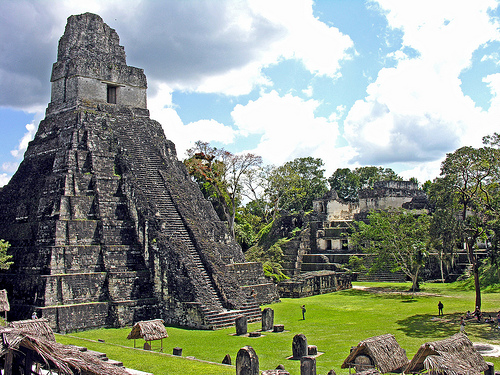 Subtitled “New Revelations of the Americas before Columbus”, Charles C. Mann’s 1491
I knew, for example, that smallpox brought by the Spaniards (and later colonists) had decimated the Indian* population across the Americas, and that New England had room for the Pilgrims only because the previous tenants were dead. But I didn’t know that the Indians of Pawtuxet (now Plymouth) were alive only a few years prior to 1620, or that the Squanto of Thanksgiving legend was perhaps the only survivor of Pawtuxet. Once a principle advisors to the village sachem (chief), Squanto was abducted and taken to Spain. He escaped to England, and then returned to North America; but it took him years to find his home, and when he did his people were gone and the Pilgrims had taken their place.
I knew that scholars had deciphered Maya writing; but I hadn’t heard all of the interesting bits of history they’ve learned since—or that the most recent glyphs, carved during the waning years of high Maya culture, are essentially gibberish, copies of previous carvings but making no sense.
I didn’t know that many of the Mesoamerican cultures not only had forms of writing but also produced books of various sorts…most of which were, tragically, burned by the Spanish.
I’d been taught that humans first came to the Americans over a land-bridge from Siberia during an ice age, about 15,000 years ago, and had slowly spread south from what is now Alaska. It now appears that there have been humans in the Americas for up to 30,000 years, and that likely they came in multiple waves.
I was most fascinated by the ecological parts of the story. We’re told that the Indians “lived in harmony with nature”; and so, in turns out, they did: they were land managers par excellence, managing the land to support the game and produce the nuts and fruits that they wanted.
It was once thought that the Amazon rain forest, for example, was completely unsuited to agriculture: if you cut down the trees to make fields, the hard rain pounds the top-soil and destroys it, leaving you with nothing. But that’s not the only kind of agriculture; and it is now thought that the Indians along the Amazon managed the rain forest as a kind of giant orchard, purposely growing all kinds of useful trees.
I could go on and on; it’s the sort of book that will be furnishing me with conversation fodder for years.
It’s too much to hope for, of course, that the subject of pre-Columbian times would be without its controversies. There have been many, and many remain; and Mann is remarkably even-handed, explaining both sides and then giving his view without becoming polemical.
In short, if this description has interested you at all you should get a copy of the book; because I certainly haven’t done it justice.
* Mann spends an appendix on the vexed question of how to refer to the peoples who lived here before Columbus came. He concludes that “Indian” is the best of a bad lot; the term “native American”, logically speaking, applies to everyone born in this hemisphere, and in any event is only used by English speakers; and many Indians don’t claim it, especially in South America.
____
photo credit: archer10 (Dennis) via photopin cc
Previous Post

June 16, 2014
CT 4.2: Another Principle of Change
Next Post

June 18, 2014 A Rising Tide Lifts All Boats—Or Does It?
Browse Our Archives
Select a Category Admin App o' the Morning Ask the Dogmat Believing Thomas Bits of Fiction Blasts from the Past Bootstrapping the Interior Life Catholic Mom Christian Living Deep Thoughts from the Doghouse Dominicana Evangelii Gaudium Interviews It Was A Dark and Stormy Night Links to This and That Lumen Fidei Meme Watch On Writing Operation Gratitude Pedant Errant Photography Quill Random Barkings S'Mary's World Shakers of Salt Software Development The Dog Whistler The Dogmat Sez Third Orders Thomas Aquinas Uncategorized Vikings at Dinos Woof Guide to Cinema Woof Guide to History Woof Guide to Literature Woof Guide to Obscure Catholic Music Woof Guide to Philosophy Woof Guide to Popular Music Woof Guide to Technology Woof Guide to Theology Words I Wish I'd Written Works For Me
Select a Month September 2016 August 2016 June 2016 May 2016 April 2016 March 2016 February 2016 January 2016 December 2015 November 2015 October 2015 September 2015 August 2015 July 2015 June 2015 May 2015 April 2015 March 2015 February 2015 January 2015 December 2014 November 2014 October 2014 September 2014 August 2014 July 2014 June 2014 May 2014 April 2014 March 2014 February 2014 January 2014 December 2013 November 2013 October 2013
Follow Us!
TAKE THE
Religious Wisdom Quiz
Who led a rebellion called "the men of Belial" against David near his end?
Select your answer to see how you score.
Sheba son of Bichri Absalom Adonijah Amasa
Related posts from Cry 'Woof'

In which the Blogger is Very Truly Run...

The Daughter of Time, by Josephine Tey

Book Review: Catholic Commentary on Sacred Scripture, The...

Steven Pressfield: The Lion's Gate
TRENDING AT PATHEOS Catholic

The Parable Of The Sower And The Word...
One of Christ’s most famous parables is that of the sower who...

Rejecting Doom: Christian Hope And Human Action
Christianity is a religion of hope. We are to have hope and...

Why I Choose the Eucharist Over the Sermon
Choose the Eucharist, Not the Sermon What are we supposed to get...

5 Design Elements Found in Spiritually Rooted Homes
Putting Spirituality Into Home Decor Our homes are more than our living...

Credo: A Story of God Told with the...
About 10 years ago, I began to imagine a personal "Credo" that...

The Anatomy of Divine Revelation in Catholic Thought
The claim that God has made Himself known to human beings is...
view all Catholic blogs
Ad-Free & Subscriber Log-In Subscription Support
- About Us
- 2026 Calendar
- Videos
- Podcasts
- Library of World Religions
- Faith In Media Tracker
- Advertise With Us
- Write for Us
- Privacy Policy
- Terms of Service
- Do Not Sell My Data
- Contact Us
- Radiant Digital
- Manage Newsletter Subscriptions
- Unsubscribe From Notifications
- Sitemap
Copyright 2008-2026, Patheos. All rights reserved.
Subscription Support Ad-Free & Subscriber Log-In
Follow Patheos