
BuddhistCatholicContemplativeEvangelicalGeneral ChristianHinduJewishLatter-day SaintMuslimNew VisionsProgressive Christian
Beliefs
- Buddhist
- Catholic
- Contemplative
- Evangelical
- General Christian
- Hindu
- Jewish
- Latter-day Saint
- More Voices
- Muslim
- New Visions
- Pagan
- Progressive Christian
Topics
- Religion News
- Food and Religion
- Sports and Religion
- Religious Art
- Religious Music and Entertainment
- Religious Events
- History and Religion
- Style and Religion
- Politics and Religion
- Women in Religion
- Recreation Outdoors and Religion
- Business Finance and Religion
- Careers Workplace and Religion
- Education and Religion
- Family Parenting and Religion
- Health Fitness and Religion
- Home and Religion
- Relationships and Religion
- Technology and Religion
- Travel and Religion
Columnists
- Buddhist Columnists
- Business Finance and Religion Columnists
- Careers Workplace and Religion Columnists
- Catholic Columnists
- Contemplative Columnists
- Education and Religion Columnists
- Evangelists Columnists
- Family Parenting and Religion Columnists
- General Christian Columnists
- Health Fitness and Religion Columnists
- Hindu Columnists
- History and Religion Columnists
- Home and Religion Columnists
- Jewish Columnists
- More Voices Columnists
- Latter Day Columnists
- Muslim Columnists
- New Visions Columnists
- Nonreligious Columnists
- Pagan Columnists
- Politics and Religion Columnists
- Progressive Columnists
- Recreation Outdoors and Religion Columnists
- Relationships and Religion Columnists
- Religion News Columnists
- Religious Art Columnists
- Religious Events Columnists
- Religious Music and Entertainment Columnists
- Sports and Religion Columnists
- Style and Religion Columnists
- Technology and Religion Columnists
- Travel and Religion Columnists
- Women in Religion Columnists
Resource Library
- 2026 Calendar
- Library of World Religions
- The 100 Most Holy Places on Earth
- Patheos Answers
- Podcasts
- Videos
- Faith Leaders Database
- Anglican Episcopalian
- Bahai
- Baptist
- Buddhism
- Christianity
- Confucianism
- Eastern Orthodoxy
- Hinduism
- Holiness and Pentecostal
- ISKCON
- Islam
- Judaism
- Lutheran
- Methodist
- The Church of Jesus Christ of Latter-day Saints
- New Age
- Paganism
- Presbytarian and Reformed
- Protestantism
- Religion Behind the Scenes
- Roman Catholic
- Scientology
- Shia Islam
- Sikhism
- Sufism
- Sunni Islam
- Taoism
- Zen
- See all religions
Research Tools
 Ad-Free & Subscriber Log-In Subscription Support
Ad-Free & Subscriber Log-In Subscription Support
Follow Patheos 

- Trending:
- Forgiveness
- |
- Marriage
- |
- Consciousness
- |
- Death Penalty
- |
- Election
- |
- Halloween
 Cry 'Woof'
-
Series
- Home
- Catholic
- Review: Killing Rommel, by Steven Pressfield
Review: Killing Rommel, by Steven Pressfield
Last updated on: May 27, 2014 at 3:00 am by willduquette
Review: Killing Rommel, by Steven Pressfield 2014-05-24T15:51:18-05:00 willduquette
Patheos Explore the world's faith through different perspectives on religion and spirituality! Patheos has the views of the prevalent religions and spiritualities of the world.
Most of Steven Pressfield’s war novels take place in the distant past; Killing Rommel takes place more recently, in the North African desert during the World War II British campaign against the Germans. Germany’s Afrika Korps was commanded by Field Marshal Erwin Rommel, the “Desert Fox“; a highly decorated veteran of World War I, Rommel was one of the most skilled commanders on either side of the war, and defeating him took the combined efforts of General George S. Patton, Field Marshall Montgomery, and (ultimately) Hitler himself—Rommel was implicated in the plot to assassinate Hitler, and in 1944 Hitler forced him to take poison.
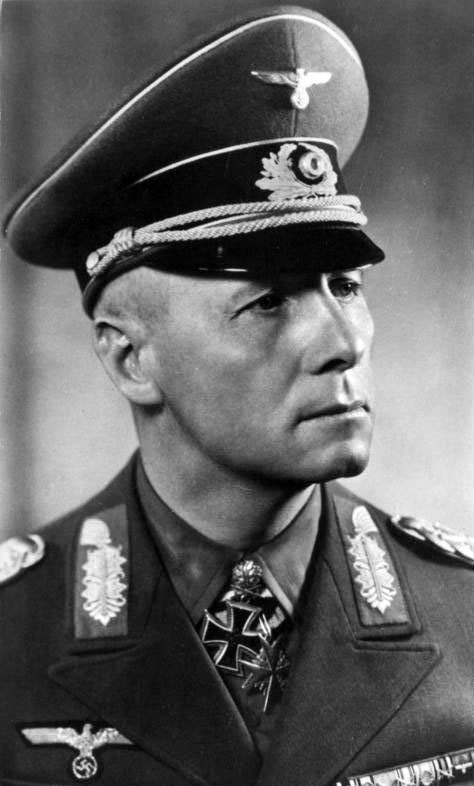
Field Marshall Rommel
Pressfield’s book purports to be the posthumous war memoirs of a British publisher named R. Lawrence Chapman, and is set in the years 1942 and 1943. (No Rommels are in fact killed in this book.) A tank officer, Chapman is seconded to a unit called the Long Range Desert Group. The LRDG is what we’d now call a “special forces” unit, tasked to infiltrate behind enemy lines and there to conduct all kinds of sabotage and other merriment.
In North Africa, infiltrating was both easy and hard, and for the same reason. The habitable zone in North Africa extends only a small distance from the shore; in order to infiltrate, all the LRDG needed to do was travel south into the deep desert, proceed east or west, as it might be, and then travel north again. Easily said; not easily done. The deep Sahara is one of the most inhospitable regions of the world.
The mission of the Long Range Desert Group was raiding and reconnaissance in the enemy’s rear. At the time I joined it, the unit operated in patrols of five or six trucks, with one officer and fifteen to twenty men. Patrols were entirely self-contained, carrying all their own petrol, water, rations, ammunition and spare parts. In addition to its own combat operations, the Long Range Desert Group conveyed spies and agents on covert assignments and provided transport and navigation for assault parties of the SAS and other commando outfits. The group’s greatest joy, however, was to work “beat-ups,” their slang term for attacks on enemy airfields, motor assembly areas and convoy routes.
Shortly after Chapman joins his new unit, the LRDG is given the mission of killing Rommel:
Rommel was notorious among his own junior officers, we were told, for materialising unannounced at forward positions, stepping down from his Fieseler Storch scout plane or his “Mammoth” Armoured Command Vehicle, occasionally from a tank or a staff car or even a motorcycle upon which he had hitched a ride. It was not exceptional for Rommel to issue orders directly to his regimental commanders or even, in the heat of the moment, to take personal command of units as small as infantry companies.
Such boldness had nearly got Rommel killed more than once. He set his plane down by accident one time amongst an Allied formation and winged away, barely, with bullets whizzing round his head. Another time he escaped capture when he ran out of fuel on the frontier wire, again amidst Commonwealth troops. Rommel was rescued a third time by the staff car carrying one of his own generals who happened, emulating his mentor, to be as far forward as Rommel was.
Rommel’s trademark aggressiveness, it was hoped, could render him vulnerable to a surprise thrust. If Allied raiders could use the deep desert routes to move undetected into the German rear; if they could manoeuvre forward undiscovered; if they could fix Rommel’s position…if a skilled and daring party could do all this, they might be able to land a blow that would change the course of the war.
And the rest of the book is Chapman’s story: a highly detailed, endlessly fascinating look and (sometimes excruciatingly) personal look at war in the desert. Chapman himself is fictitious, but the LRDG and most of the people Chapman meets in it were quite real; Pressfield has done his usual bang-up job of research. In the end, though, this is not simply a book about war; it’s a book about war between men of honor, and honor is a continual theme. All of the combatants in North Africa were accustomed to salvaging the abandoned and damaged vehicles of their enemies, so much so that when Rommel’s army came and surrounded Chapman’s truck, which had been camped (as they thought) in the middle of nowhere, Chapman and his men were able to quietly travel with Rommel’s forces for several days, just by doing what everyone else was doing. It was an English truck, but it hardly mattered. At the same time, there were limits: one might look through abandoned vehicles for tobacco, alcohol, food, or other supplies, but one stopped short at looting the pockets of the dead.
The book’s logic ultimately leads Chapman to an encounter with Field Marshall Rommel: an encounter that never happened, though it very while might have, and one that I found unexpectedly moving. War is an a ugly business, but it need not be dehumanizing. Highly recommended.
I might add: I gave it to my eldest son, the budding history buff, last week; he devoured it.
____
Photo Credit: Bundesarchiv, Bild 146-1973-012-43 / CC-BY-SA
Previous Post

May 26, 2014
CT 3.4: The End of the Causal Chain
Next Post
May 28, 2014 The Long and the Short of Infinite Regressions
Browse Our Archives
Select a Category Admin App o' the Morning Ask the Dogmat Believing Thomas Bits of Fiction Blasts from the Past Bootstrapping the Interior Life Catholic Mom Christian Living Deep Thoughts from the Doghouse Dominicana Evangelii Gaudium Interviews It Was A Dark and Stormy Night Links to This and That Lumen Fidei Meme Watch On Writing Operation Gratitude Pedant Errant Photography Quill Random Barkings S'Mary's World Shakers of Salt Software Development The Dog Whistler The Dogmat Sez Third Orders Thomas Aquinas Uncategorized Vikings at Dinos Woof Guide to Cinema Woof Guide to History Woof Guide to Literature Woof Guide to Obscure Catholic Music Woof Guide to Philosophy Woof Guide to Popular Music Woof Guide to Technology Woof Guide to Theology Words I Wish I'd Written Works For Me
Select a Month September 2016 August 2016 June 2016 May 2016 April 2016 March 2016 February 2016 January 2016 December 2015 November 2015 October 2015 September 2015 August 2015 July 2015 June 2015 May 2015 April 2015 March 2015 February 2015 January 2015 December 2014 November 2014 October 2014 September 2014 August 2014 July 2014 June 2014 May 2014 April 2014 March 2014 February 2014 January 2014 December 2013 November 2013 October 2013
Follow Us!
TAKE THE
Religious Wisdom Quiz
Who was the giant defeated by David?
Select your answer to see how you score.
Samson Goliath Herod Pharaoh
Related posts from Cry 'Woof'

In which the Blogger is Very Truly Run...

The Daughter of Time, by Josephine Tey
Book Review: Catholic Commentary on Sacred Scripture, The...

Steven Pressfield: The Lion's Gate
TRENDING AT PATHEOS Catholic

Rejecting Doom: Christian Hope And Human Action
Christianity is a religion of hope. We are to have hope and...

It’s What Comes From Within Which Matters
One of the most difficult things for us to understand is why...

Why I Choose the Eucharist Over the Sermon
Choose the Eucharist, Not the Sermon What are we supposed to get...

5 Design Elements Found in Spiritually Rooted Homes
Putting Spirituality Into Home Decor Our homes are more than our living...

Credo: A Story of God Told with the...
About 10 years ago, I began to imagine a personal "Credo" that...

The Anatomy of Divine Revelation in Catholic Thought
The claim that God has made Himself known to human beings is...
view all Catholic blogs
Ad-Free & Subscriber Log-In Subscription Support
- About Us
- 2026 Calendar
- Videos
- Podcasts
- Library of World Religions
- Faith In Media Tracker
- Advertise With Us
- Write for Us
- Privacy Policy
- Terms of Service
- Do Not Sell My Data
- Contact Us
- Radiant Digital
- Manage Newsletter Subscriptions
- Unsubscribe From Notifications
- Sitemap
Copyright 2008-2026, Patheos. All rights reserved.
Subscription Support Ad-Free & Subscriber Log-In
Follow Patheos