
BuddhistCatholicContemplativeEvangelicalGeneral ChristianHinduJewishLatter-day SaintMuslimNew VisionsProgressive Christian
Beliefs
- Buddhist
- Catholic
- Contemplative
- Evangelical
- General Christian
- Hindu
- Jewish
- Latter-day Saint
- More Voices
- Muslim
- New Visions
- Pagan
- Progressive Christian
Topics
- Religion News
- Food and Religion
- Sports and Religion
- Religious Art
- Religious Music and Entertainment
- Religious Events
- History and Religion
- Style and Religion
- Politics and Religion
- Women in Religion
- Recreation Outdoors and Religion
- Business Finance and Religion
- Careers Workplace and Religion
- Education and Religion
- Family Parenting and Religion
- Health Fitness and Religion
- Home and Religion
- Relationships and Religion
- Technology and Religion
- Travel and Religion
Columnists
- Buddhist Columnists
- Business Finance and Religion Columnists
- Careers Workplace and Religion Columnists
- Catholic Columnists
- Contemplative Columnists
- Education and Religion Columnists
- Evangelists Columnists
- Family Parenting and Religion Columnists
- General Christian Columnists
- Health Fitness and Religion Columnists
- Hindu Columnists
- History and Religion Columnists
- Home and Religion Columnists
- Jewish Columnists
- More Voices Columnists
- Latter Day Columnists
- Muslim Columnists
- New Visions Columnists
- Nonreligious Columnists
- Pagan Columnists
- Politics and Religion Columnists
- Progressive Columnists
- Recreation Outdoors and Religion Columnists
- Relationships and Religion Columnists
- Religion News Columnists
- Religious Art Columnists
- Religious Events Columnists
- Religious Music and Entertainment Columnists
- Sports and Religion Columnists
- Style and Religion Columnists
- Technology and Religion Columnists
- Travel and Religion Columnists
- Women in Religion Columnists
Resource Library
- 2026 Calendar
- Library of World Religions
- The 100 Most Holy Places on Earth
- Patheos Answers
- Podcasts
- Videos
- Faith Leaders Database
- Anglican Episcopalian
- Bahai
- Baptist
- Buddhism
- Christianity
- Confucianism
- Eastern Orthodoxy
- Hinduism
- Holiness and Pentecostal
- ISKCON
- Islam
- Judaism
- Lutheran
- Methodist
- The Church of Jesus Christ of Latter-day Saints
- New Age
- Paganism
- Presbytarian and Reformed
- Protestantism
- Religion Behind the Scenes
- Roman Catholic
- Scientology
- Shia Islam
- Sikhism
- Sufism
- Sunni Islam
- Taoism
- Zen
- See all religions
Research Tools
 Ad-Free & Subscriber Log-In Subscription Support
Ad-Free & Subscriber Log-In Subscription Support
Follow Patheos 

- Trending:
- Forgiveness
- |
- Marriage
- |
- Consciousness
- |
- Death Penalty
- |
- Election
- |
- Halloween
 Cry 'Woof'
-
Series
- Home
- Catholic
- Interview: Steven Pressfield
Interview: Steven Pressfield
Last updated on: May 21, 2014 at 3:00 am by willduquette
Interview: Steven Pressfield 2014-05-19T20:01:10-05:00 willduquette
Patheos Explore the world's faith through different perspectives on religion and spirituality! Patheos has the views of the prevalent religions and spiritualities of the world.
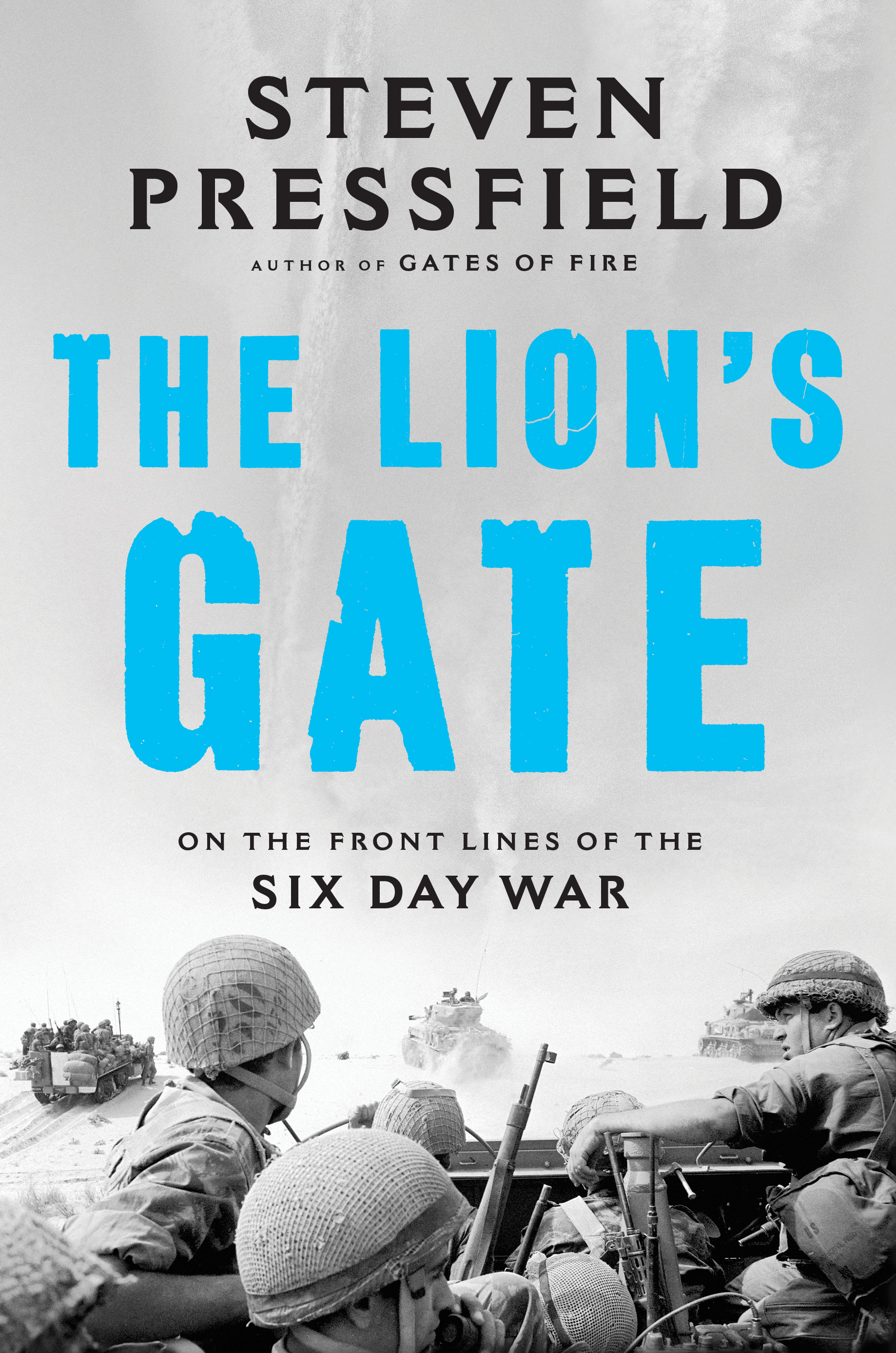 In conjunction with my review of Steven Pressfield’s The Lion’s Gate, I had the opportunity to do an e-mail interview with Pressfield himself.
Woof: You’re clearly a lover of history. How did history as a subject first grab you? In my case, I’d always been a science fiction reader, and one day it occurred to me that historical novels were (in a way) just low-tech science fiction: history had strange and exotic locales, people with unusual ways, and so on. Reading novels led me to reading actual history. How did it work for you? Did it come out of your time in the Marines?
SP: After my first book, The Legend of Bagger Vance, I had no idea what to do next. I had always been an enthusiastic reader of stuff about ancient Greece. I would read Herodotus and Thucydides just for fun. Suddenly I thought, Why not write about the battle of Thermopylae! No one can spell it, no one can pronounce it, no one’s ever heard of it. Perfect! So I started on Gates of Fire. Somehow that got me going on history.
Woof: Are you primarily interested in military history? Or are you interested in history in general?
SP: When a novelist or screenwriter is looking for a subject, the element he’s seeking is conflict. Conflict makes drama. Conflict produces great characters and memorable scenes. So war is a natural topic. Ask Shakespeare, Tolstoy, Hemingway. But beyond conflict and characters, a writer is looking for a THEME. A story that’s about something. And what could be about something more than a war? From either side in a conflict, there’s a protagonist and an antagonist; there’s an issue (or more than one) that’s being fought over. The last element in drama is high stakes. War, of course, is life and death—survival, not only for the story’s characters, but often for the society itself. That’s why I’m drawn to stories that are built around wars, even if they’re not technically “war stories.”
Woof: You’ve written a number of books about the ancient Greeks, one about World War II, and now one about the Six-Day War. Are there other periods in history that have caught your fancy? Are we likely to see anything about China, the Silk Road, or the Raj?
SP: That’s a question I’m debating a lot within my own heart these days. I’m not sure where the Muse will take me next. Now that you mention it, Will, the Silk Road sounds pretty interesting …
Woof: What is your writing process like? Clearly you have do a great deal of research for each book; how do you organize your notes? Do you outline your books in detail before you start to write, or, having gotten the research done, do you simply start writing with a general notion of where you are going?
SP: My best answer is to read my books The War of Art and Turning Pro. I go into excruciating detail in both of them.
Woof: In addition to your historical novels, you’ve written one near-future thriller, The Profession; how do you find that writing the one kind of book differs from writing the other?
SP: A contemporary or near-future book is much harder because you can’t fake the facts. There are people alive who know much more than you do about the subject. You have to really have your research together—and of course no one can know everything about a topic. The great thing about writing about the ancient Spartans or Athenians is that so much knowledge is no longer extant that no one, except maybe a Cambridge or Oxford don, can call you out and prove you wrong.
In Tides of War, I wrote a long, long descriptive scene about the Athenian war fleet pulling out of Athens’ port of Piraeus, bound for Sicily. There were something like 200 ships and I named them all and told where each one was, in which squadron, etc. I made the whole thing up, every name of every ship. The great part is that, even though the reader may realize that the writer is crafting the entire scene from his imagination (because no one has the actual Order of Sail from ancient Athens), he or she can still enjoy it, just like you’d enjoy a scene in a pure fantasy tale like Game of Thrones because he or she knows there was a moment like this, and there were ships doing this—and why shouldn’t we get the fun of experiencing it in imagination even if the ancient Admiralty documents from Athens didn’t happen to survive twenty-four centuries into the present?
Woof: I first saw your name in a review of your book The War of Art; and later a friend told me that you wrote the best military historical novels he’d read. I was surprised to discover that the two Steven Pressfields were the same person. How did you come to write a book about art and creativity?
SP: Every artist has to face his own demons and evolve his own method of working. Twyla Tharp, the dancer and choreographer, wrote The Creative Habit, which was great and which evolved directly out of her own unique experience in the studio and onstage. Stephen King did the same with On Writing.
The War of Art and Turning Pro are my personal, idiosyncratic version of what the creative process is like for me, what demons I face and how I deal with them.
Woof: My eldest son is currently fascinated by World War II history. He’s read four of Churchill’s books on the war, and is currently reading two books, one on submarines in World War II, and Georg von Trapp’s memoirs of being an Austrian U-Boat captain in World War I. I’ve pointed him at The Lion’s Gate and Killing Rommel; are there other books on that time period that you’d particularly recommend?
SP: Too many to tell, but here are a few (some pretty obscure): The Forgotten Soldier by Guy Sajer, Lost Victories by Gen. Erich von Manstein, Brazen Chariots by Maj. Robert Crisp, and Alan Moorehead’s The Desert War; also With the Old Breed by E.B. Sledge. So many more. I love memoirs, particularly obscure ones because the writer is usually a regular guy just telling what happened to him and to his friends. What these tales lack in artfulness they make up for in passion and authenticity. For a writer of fiction, they are solid gold. I have stolen so much from memoirs it’s ridiculous.
Woof: I’ve read a fair number of books on military history, but there were graphic details in the first person accounts in The Lion’s Gate that took me by surprise. I first encountered a tank “brewing up” in George MacDonald Fraser’s Quartered Safe Out Here, but your description of the injuries of the soldiers caught in burning tanks and halftracks were new to me. (And I won’t dwell on them here.) Were you similarly taken by these first person accounts? Were there aspects of front-line warfare in these accounts that were new to you?
SP: What was new to me was the Israeli doctrine of warfare, as practiced not just on the strategic level by the generals but on the tactical level by sergeants and privates, and which has arisen directly out of the geographic realities of Israel (the short distances from the enemies’ borders, the lack of natural defensive barriers like rivers or mountain ranges, the fact of being outnumbered by so many millions) and by the history of the Jewish people in conflict over millennia, against foes from the Egyptians and Babylonians to the Romans, to the Nazis and now to the Arabs, in that the wars of Israel are inevitably wars of survival, with their enemies vowing to “wipe them off the map” or “drive them into the sea” and refusing even to acknowledge Israel’s right to exist. So that concepts like En Brera (“No alternative”), Dvekut byMesima (“Adherence to the mission”) and many others that are unique to Israel evolved naturally and inevitably.
The other aspect that impressed me deeply is that the IDF is a reservist army. Virtually everyone (there were only three regular-army brigades prior to the outbreak of the Six Day War) has to be called up from their civilian jobs. The democratic ideal of the citizen-soldier is absolutely the reality in Israel, as opposed to the professional army or the “all-volunteer” services.
Woof: In the acknowledgements for The Lion’s Gate, you say, “Through Danny I began to see that Israeli pilots and tankers and paratroopers are not simply Americans who happen to speak Hebrew.” That was a surprise to me as well. Similarly, I tend to think of being Jewish as being cognate with Judaism (although I do know better), and I was surprised at the wide range of religious belief and practice among the Israelis, from the first settlers to the young men and women born on Israeli soil. Of the things you discovered in your research for The Lion’s Gate, what surprised you most?
SP: There’s a phrase you hear in Israel: “We’re not Jews, we’re Israelis.” What that means is that the stereotype we’re familiar with here in the States of the Diaspora Jew, i.e. Jews in America or Europe or Russia, etc. does not fit at all with the reality of the homegrown “sabras” of Israel. There’s no Jerry Seinfeld or Woody Allen-type humor, no self-mockery or self-denigration, and no sense of “assimilation” as one finds in countries other than Israel. This was an eye-opener to a U.S. Jew like me.
Woof: Do you have a project in hand at the moment? And if so, what can you tell us about it?
SP: I’m superstitious, Will. I keep mum while I’m working on something. (I was expecting that…—Ed.)
Woof: And finally…what should I have asked you, that I didn’t?
SP: For anyone who wants to know more about the research and writing process for The Lion’s Gate, I’m doing a series of blog posts called “The Book I’ve Been Avoiding Writing” on my blog, www.stevenpressfield.com. They’ve been running for a couple of weeks now, every Monday and Friday, and they’ll keep running all through June. They’re not bad!
Woof: Thanks very much!
Steven Pressfield also has a series of videos on YouTube about the writing of The Lion’s Gate; you can find them here.
Previous Post
May 20, 2014
Review: The Lion's Gate, by Steven Pressfield
Next Post

May 22, 2014 Levon Helm and the Dixie Hummingbirds: When I Go Away
Browse Our Archives
Select a Category Admin App o' the Morning Ask the Dogmat Believing Thomas Bits of Fiction Blasts from the Past Bootstrapping the Interior Life Catholic Mom Christian Living Deep Thoughts from the Doghouse Dominicana Evangelii Gaudium Interviews It Was A Dark and Stormy Night Links to This and That Lumen Fidei Meme Watch On Writing Operation Gratitude Pedant Errant Photography Quill Random Barkings S'Mary's World Shakers of Salt Software Development The Dog Whistler The Dogmat Sez Third Orders Thomas Aquinas Uncategorized Vikings at Dinos Woof Guide to Cinema Woof Guide to History Woof Guide to Literature Woof Guide to Obscure Catholic Music Woof Guide to Philosophy Woof Guide to Popular Music Woof Guide to Technology Woof Guide to Theology Words I Wish I'd Written Works For Me
Select a Month September 2016 August 2016 June 2016 May 2016 April 2016 March 2016 February 2016 January 2016 December 2015 November 2015 October 2015 September 2015 August 2015 July 2015 June 2015 May 2015 April 2015 March 2015 February 2015 January 2015 December 2014 November 2014 October 2014 September 2014 August 2014 July 2014 June 2014 May 2014 April 2014 March 2014 February 2014 January 2014 December 2013 November 2013 October 2013
Follow Us!
TAKE THE
Religious Wisdom Quiz
What did Esther risk by approaching the king without being summoned?
Select your answer to see how you score.
Her life Her reputation Her citizenship Her fortune
Related posts from Cry 'Woof'
The Eyes Draw You In: Portrait of an...

Steven Pressfield: The Lion's Gate
Arriving at Amen: An Interview with Leah Libresco
Review: Killing Rommel, by Steven Pressfield
TRENDING AT PATHEOS Catholic

Rejecting Doom: Christian Hope And Human Action
Christianity is a religion of hope. We are to have hope and...

It’s What Comes From Within Which Matters
One of the most difficult things for us to understand is why...

Why I Choose the Eucharist Over the Sermon
Choose the Eucharist, Not the Sermon What are we supposed to get...

5 Design Elements Found in Spiritually Rooted Homes
Putting Spirituality Into Home Decor Our homes are more than our living...

Credo: A Story of God Told with the...
About 10 years ago, I began to imagine a personal "Credo" that...

The Anatomy of Divine Revelation in Catholic Thought
The claim that God has made Himself known to human beings is...
view all Catholic blogs
Ad-Free & Subscriber Log-In Subscription Support
- About Us
- 2026 Calendar
- Videos
- Podcasts
- Library of World Religions
- Faith In Media Tracker
- Advertise With Us
- Write for Us
- Privacy Policy
- Terms of Service
- Do Not Sell My Data
- Contact Us
- Radiant Digital
- Manage Newsletter Subscriptions
- Unsubscribe From Notifications
- Sitemap
Copyright 2008-2026, Patheos. All rights reserved.
Subscription Support Ad-Free & Subscriber Log-In
Follow Patheos