
BuddhistCatholicContemplativeEvangelicalGeneral ChristianHinduJewishLatter-day SaintMuslimNew VisionsProgressive Christian
Beliefs
- Buddhist
- Catholic
- Contemplative
- Evangelical
- General Christian
- Hindu
- Jewish
- Latter-day Saint
- More Voices
- Muslim
- New Visions
- Pagan
- Progressive Christian
Topics
- Religion News
- Food and Religion
- Sports and Religion
- Religious Art
- Religious Music and Entertainment
- Religious Events
- History and Religion
- Style and Religion
- Politics and Religion
- Women in Religion
- Recreation Outdoors and Religion
- Business Finance and Religion
- Careers Workplace and Religion
- Education and Religion
- Family Parenting and Religion
- Health Fitness and Religion
- Home and Religion
- Relationships and Religion
- Technology and Religion
- Travel and Religion
Columnists
- Buddhist Columnists
- Business Finance and Religion Columnists
- Careers Workplace and Religion Columnists
- Catholic Columnists
- Contemplative Columnists
- Education and Religion Columnists
- Evangelists Columnists
- Family Parenting and Religion Columnists
- General Christian Columnists
- Health Fitness and Religion Columnists
- Hindu Columnists
- History and Religion Columnists
- Home and Religion Columnists
- Jewish Columnists
- More Voices Columnists
- Latter Day Columnists
- Muslim Columnists
- New Visions Columnists
- Nonreligious Columnists
- Pagan Columnists
- Politics and Religion Columnists
- Progressive Columnists
- Recreation Outdoors and Religion Columnists
- Relationships and Religion Columnists
- Religion News Columnists
- Religious Art Columnists
- Religious Events Columnists
- Religious Music and Entertainment Columnists
- Sports and Religion Columnists
- Style and Religion Columnists
- Technology and Religion Columnists
- Travel and Religion Columnists
- Women in Religion Columnists
Resource Library
- 2026 Calendar
- Library of World Religions
- The 100 Most Holy Places on Earth
- Patheos Answers
- Podcasts
- Videos
- Faith Leaders Database
- Anglican Episcopalian
- Bahai
- Baptist
- Buddhism
- Christianity
- Confucianism
- Eastern Orthodoxy
- Hinduism
- Holiness and Pentecostal
- ISKCON
- Islam
- Judaism
- Lutheran
- Methodist
- The Church of Jesus Christ of Latter-day Saints
- New Age
- Paganism
- Presbytarian and Reformed
- Protestantism
- Religion Behind the Scenes
- Roman Catholic
- Scientology
- Shia Islam
- Sikhism
- Sufism
- Sunni Islam
- Taoism
- Zen
- See all religions
Research Tools
 Ad-Free & Subscriber Log-In Subscription Support
Ad-Free & Subscriber Log-In Subscription Support
Follow Patheos 

- Trending:
- Forgiveness
- |
- Marriage
- |
- Consciousness
- |
- Death Penalty
- |
- Election
- |
- Halloween
 Cry 'Woof'
-
Series
- Home
- Catholic
- S’Mary’s World: Calendar
S’Mary’s World: Calendar
Last updated on: December 26, 2013 at 12:47 pm by willduquette
S’Mary’s World: Calendar 2013-12-26T12:47:30-05:00 willduquette
Patheos Explore the world's faith through different perspectives on religion and spirituality! Patheos has the views of the prevalent religions and spiritualities of the world.
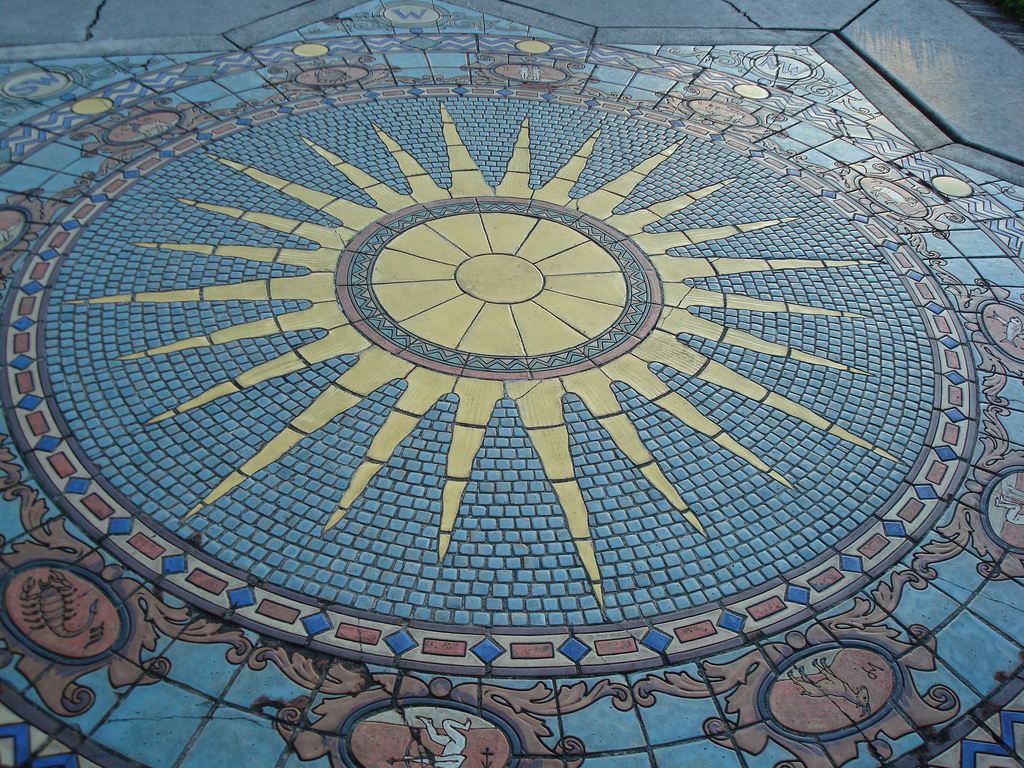 The calendar for S’Mary’s World was established by the Articles of Colonization, as was usual in the early colonial era. Every earth-like planet has slightly different periods of rotation and revolution, and practicality dictates that local matters are scheduled according to local time. Maintaining a proper chronology is essential to colonial success, and so practicality also dictates that the calendar be established and well understood prior to landing. In that era, prior to the discovery of wormhole gates, it was thought that times in different star systems could not be related in any meaningful way due to relativistic effects. As a result the nature of a colonial calendar was somewhat arbitrary and frequently subject to much wrangling and in some cases to out-and-out whimsy.
The Articles of Colonization for S’Mary’s World take a characteristically pragmatic approach, avoiding novelty for the sake of novelty. Freezer ship Our Lady of Loreto was intended for the world now known as Maria Victrix, or St. Mary’s-within-the-Arm. Maria Victrix has an orbital period of just 341 days, which were to be divided into the conventional twelve months, each of 28 or 29 days, with leap-days added to February as necessary. The day of landing was to be designated Sunday, December 1st, of Year of our Landing 1. The calendar was to use standard seven-day weeks.
As an explicitly Catholic colony, the expedition planners also had to accommodate the Church’s liturgical calendar, which is based on an explicitly 365-day solar calendar, with the date of Easter based on the lunar cycle. Taking the view that the events on the liturgical calendar commemorate events on Old Earth, the Articles of Colonization maintained the 365-day cycle for the liturgical year, though using local days rather than Old Earth days. The liturgical calendar was thus completely unsynchronized with the secular calendar at any period longer than a week, with the feasts of the Church moving through the secular year. Justification for this was taken from the precedent of Easter; the date of Easter is ultimately based on the Hebrew calendar in use in Christ’s day, and is in a sense an inclusion into the secular Roman calendar. On S’Mary’s World, the entire liturgical calendar was to be a similar inclusion into the secular calendar, and all feasts were thus movable feasts. The day of landing, December 1st, was to be taken not only as the first day of the secular year, but also, in Year of Our Landing 1, the first Sunday of Advent.
As matters transpired, the Loreto made landfall not at Maria Victrix, as planned, but at the planet now known as St. Mary’s-without-the-Arm, or S’Mary’s World. S’Mary’s Sun is slightly larger and hotter than that of Maria Victrix, and the planet’s year is 387 local days in length, and so the carefully designed secular calendar had to be scrapped. Some thought was given to basing S’Mary’s chronology purely on the liturgical calendar; but more practical heads overruled this notion, and a new secular calendar was designed following the Day of Landing, on December 1st of Year of Our Exile 1. Because determining the precise orbital period took time, December and January have 28 days in the Exilic Calendar, as specified in the Articles of Colonization; the remaining ten months have 33 or 34 days each.
The Times of Exile ended with the coming of the wormhole exploration teams in 633 YOE, at which time S’Mary’s World adopted the Galactic Coordinated Universal Time (GUTC) calendar and clock for all matters involving interstellar trade and governance, and resynchronized its liturgical calendar with that of Old Earth. For all local matters and day to day life, however, the people of S’Mary’s World continue to use the Exilic Calendar and dating.
____
photo credit: Clexow via photopin cc
Previous Post

December 26, 2013
Words I Wish I'd Written: Provision for Discourse
Next Post
December 27, 2013 Woof Guide to Popular Music: Sisters, Andrews, Boswell, and Puppini
Browse Our Archives
Select a Category Admin App o' the Morning Ask the Dogmat Believing Thomas Bits of Fiction Blasts from the Past Bootstrapping the Interior Life Catholic Mom Christian Living Deep Thoughts from the Doghouse Dominicana Evangelii Gaudium Interviews It Was A Dark and Stormy Night Links to This and That Lumen Fidei Meme Watch On Writing Operation Gratitude Pedant Errant Photography Quill Random Barkings S'Mary's World Shakers of Salt Software Development The Dog Whistler The Dogmat Sez Third Orders Thomas Aquinas Uncategorized Vikings at Dinos Woof Guide to Cinema Woof Guide to History Woof Guide to Literature Woof Guide to Obscure Catholic Music Woof Guide to Philosophy Woof Guide to Popular Music Woof Guide to Technology Woof Guide to Theology Words I Wish I'd Written Works For Me
Select a Month September 2016 August 2016 June 2016 May 2016 April 2016 March 2016 February 2016 January 2016 December 2015 November 2015 October 2015 September 2015 August 2015 July 2015 June 2015 May 2015 April 2015 March 2015 February 2015 January 2015 December 2014 November 2014 October 2014 September 2014 August 2014 July 2014 June 2014 May 2014 April 2014 March 2014 February 2014 January 2014 December 2013 November 2013 October 2013
Follow Us!
TAKE THE
Religious Wisdom Quiz
My beloved is mine and I am his; he browses among these flowers. What flowers represent purity and beauty?
Select your answer to see how you score.
Wildflowers Lilies Crocus Roses
Related posts from Cry 'Woof'




TRENDING AT PATHEOS Catholic

Rejecting Doom: Christian Hope And Human Action
Christianity is a religion of hope. We are to have hope and...

It’s What Comes From Within Which Matters
One of the most difficult things for us to understand is why...

Why I Choose the Eucharist Over the Sermon
Choose the Eucharist, Not the Sermon What are we supposed to get...

5 Design Elements Found in Spiritually Rooted Homes
Putting Spirituality Into Home Decor Our homes are more than our living...

Credo: A Story of God Told with the...
About 10 years ago, I began to imagine a personal "Credo" that...

The Anatomy of Divine Revelation in Catholic Thought
The claim that God has made Himself known to human beings is...
view all Catholic blogs
Ad-Free & Subscriber Log-In Subscription Support
- About Us
- 2026 Calendar
- Videos
- Podcasts
- Library of World Religions
- Faith In Media Tracker
- Advertise With Us
- Write for Us
- Privacy Policy
- Terms of Service
- Do Not Sell My Data
- Contact Us
- Radiant Digital
- Manage Newsletter Subscriptions
- Unsubscribe From Notifications
- Sitemap
Copyright 2008-2026, Patheos. All rights reserved.
Subscription Support Ad-Free & Subscriber Log-In
Follow Patheos