
BuddhistCatholicContemplativeEvangelicalGeneral ChristianHinduJewishLatter-day SaintMuslimNew VisionsProgressive Christian
Beliefs
- Buddhist
- Catholic
- Contemplative
- Evangelical
- General Christian
- Hindu
- Jewish
- Latter-day Saint
- More Voices
- Muslim
- New Visions
- Pagan
- Progressive Christian
Topics
- Religion News
- Food and Religion
- Sports and Religion
- Religious Art
- Religious Music and Entertainment
- Religious Events
- History and Religion
- Style and Religion
- Politics and Religion
- Women in Religion
- Recreation Outdoors and Religion
- Business Finance and Religion
- Careers Workplace and Religion
- Education and Religion
- Family Parenting and Religion
- Health Fitness and Religion
- Home and Religion
- Relationships and Religion
- Technology and Religion
- Travel and Religion
Columnists
- Buddhist Columnists
- Business Finance and Religion Columnists
- Careers Workplace and Religion Columnists
- Catholic Columnists
- Contemplative Columnists
- Education and Religion Columnists
- Evangelists Columnists
- Family Parenting and Religion Columnists
- General Christian Columnists
- Health Fitness and Religion Columnists
- Hindu Columnists
- History and Religion Columnists
- Home and Religion Columnists
- Jewish Columnists
- More Voices Columnists
- Latter Day Columnists
- Muslim Columnists
- New Visions Columnists
- Nonreligious Columnists
- Pagan Columnists
- Politics and Religion Columnists
- Progressive Columnists
- Recreation Outdoors and Religion Columnists
- Relationships and Religion Columnists
- Religion News Columnists
- Religious Art Columnists
- Religious Events Columnists
- Religious Music and Entertainment Columnists
- Sports and Religion Columnists
- Style and Religion Columnists
- Technology and Religion Columnists
- Travel and Religion Columnists
- Women in Religion Columnists
Resource Library
- 2026 Calendar
- Library of World Religions
- The 100 Most Holy Places on Earth
- Patheos Answers
- Podcasts
- Videos
- Faith Leaders Database
- Anglican Episcopalian
- Bahai
- Baptist
- Buddhism
- Christianity
- Confucianism
- Eastern Orthodoxy
- Hinduism
- Holiness and Pentecostal
- ISKCON
- Islam
- Judaism
- Lutheran
- Methodist
- The Church of Jesus Christ of Latter-day Saints
- New Age
- Paganism
- Presbytarian and Reformed
- Protestantism
- Religion Behind the Scenes
- Roman Catholic
- Scientology
- Shia Islam
- Sikhism
- Sufism
- Sunni Islam
- Taoism
- Zen
- See all religions
Research Tools
 Ad-Free & Subscriber Log-In Subscription Support
Ad-Free & Subscriber Log-In Subscription Support
Follow Patheos 

- Trending:
- Forgiveness
- |
- Marriage
- |
- Consciousness
- |
- Death Penalty
- |
- Election
- |
- Halloween
 Crux Sola: Formed by Scripture to Live like Christ
-
Blog Series
- Home
- Evangelical
- The “Wicked Problem” of Violence in the Old Testament (Guest Post: Dr. Matthew J. Lynch)
The “Wicked Problem” of Violence in the Old Testament (Guest Post: Dr. Matthew J. Lynch)
Last updated on: February 28, 2023 at 7:11 am by Nijay Gupta
The “Wicked Problem” of Violence in the Old Testament (Guest Post: Dr. Matthew J. Lynch) 2023-02-28T07:11:34-08:00 Nijay Gupta
Patheos Explore the world's faith through different perspectives on religion and spirituality! Patheos has the views of the prevalent religions and spiritualities of the world.
My friend Dr. Matt Lynch (Regent College, CAN) has written an excellent new book FLOOD AND FURY. Matt was kind enough to write some of his thoughts out in brief. Check it out and then read the book! ~Nijay
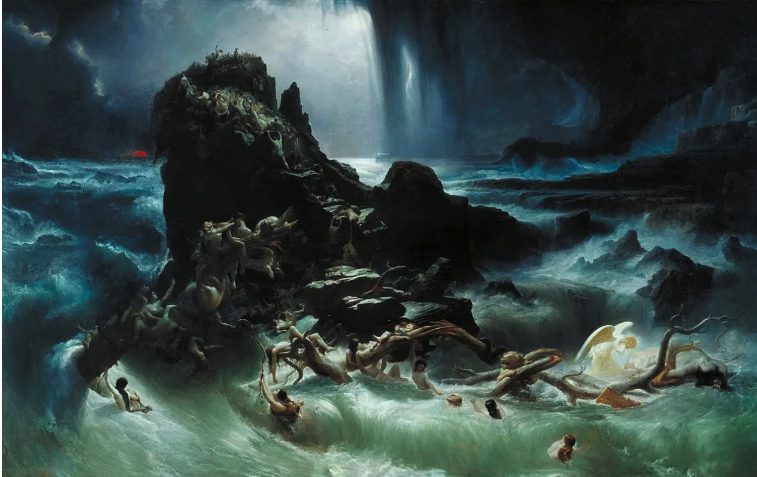 The “Wicked Problem” of Violence in the Old Testament
By Matthew J. Lynch
I’ve sometimes asked my students what comes to mind when they hear the phrase “The God of the Old Testament.” Words like wrath, anger, violence, judgement, and even hate are often shared. To be sure, some also associate God with mercy and salvation, but the imbalance toward the “negative” attributes is telling. This image of an angry and violent God features prominently in the intro to Christianity Today’s podcast The Rise and Fall of Mars Hill, where Mark Driscoll expresses his desire to “go Old Testament” on a few members of his church—an overt reference to violence.
Many would balk at the idea of equating Old Testament with violence. But what of the many texts that show God acting violently or commending violence within Israel? Isn’t the idea of God drowning 99.999% of his creatures in the Flood, or commanding the destruction of the Canaanites, inimical to the teachings of Jesus?
The rush to resolve this perceived disconnect between the violence of God in the Old Testament can lead to two major missteps that I aim to address in my book Flood and Fury.


Second, some allow questions about violence set all the terms of the discussion. If you start with the question—How can a loving God command genocide against entire people groups?—you’ve already made several decisions about the command, the inclusion of all people groups, the nature of Joshua’s violence, and so on. The risk here is that our questions distort our field of vision, leading us to misconstrue the problem itself.
Against these missteps I suggest the following: First, we need field-adaptive flexibility that draws from various models but attends to the model-defying qualities of the Old Testament. It’s full of surprises, and should be approached with an expectation of the unexpected! Second, we need to ensure that our questions don’t over-determine our findings by attending carefully to the text itself. That helps us avoid using the misdiagnosing the problem. Giving someone CPR when they need the Heimlich ain’t too helpful!
Flood and Fury
I focus on the Great Flood (Gen 6-8) and Canaanite Conquest (Josh 1-12) as case studies. In my teaching, they’re the stories that most often pose challenges for students. Attending carefully to these stories does indeed yield surprises!
For example, the flood narrative never mentions divine anger or judgement, only grief (Gen 6:6-7). Moreover, the story insists that the earth was ruined before the flood. Notice Genesis 6:11-12:
The earth was ruined in God’s sight. The earth was full of violence.
God saw the earth, and behold, it was ruined,
because all flesh had ruined its ways upon the earth.
This assessment represents an inversion of Genesis 1:31, where we read:
God saw all that he had made, and behold, it was very good.
According to Genesis 6:11-12, creation-consuming violence destroyed creation before the flood even began. That puts the significance of the flood in a different light. Of course, questions remain about God’s role in these events (6:13), the historicity of the flood, and much more that I discuss in the book.
A careful read of Joshua raises serious questions that challenge a surface-level genocidal reading of the book. If the threat of Canaanite idolatry provided the justification for the conquest, why do we find out at the end of the book that Israel still had idols among them (Josh 24:14, 23)? If circumcision was the sign of the covenant, without which people were to be cut off from the community (Gen 17:14), why did Israel enter the land uncircumcised (Josh 5)? Why does Joshua suggest on the one hand that the conquest was utterly complete and successful (Josh 11:23; 21:43-45; 24:11), yet on the other hand, Canaanites were still everywhere, and vast areas unconquered (Josh 13:1; 16:10; 17:12)? Why do some texts suggest a slow process of Canaanite displacement (Josh 11:18) and others a Blitzkrieg (10:42)? Why does the story feature Rahab so prominently (Josh 2, 6)? What happens when we read Joshua in the light of Egypt’s ongoing control of Canaan in the Late Bronze Age?
Attending to Joshua’s rich and complex story complicates binary questions like, Was it genocide or not? Did it happen or not? I argue in the book that Joshua is designed to be read multiple times. Second and third readings challenge many impressions that a quick reading might give. For example, Joshua 24:11 suggests that Jericho may have attacked Israel, initiating the battle. This scenario fits with how the book portrays all other battles except against Ai. Joshua 10:40 claims that Israel left nothing alive that breathes in Hebron, yet Joshua and Judges later indicate that Canaanites still held the city after those battles (Josh 15:14; Judg 1:10-11, 17). These are just a few examples of the book’s tendency to speak in totalizing terms and then add bombshell caveats. Wrestling with these conflicting claims about violence formed a significant part of my section on Joshua.
A Wicked Problem
Part of what I hope my book achieves is an appreciation for the rich and nuanced stories that bear the very problems we seek to confront. A correlate of that appreciation is a healthy suspicion toward single-model solutions to the problems of violence in the Old Testament. Straightforward solutions have serious hidden costs, that I hope readers can grapple with. Rather than single-model solutions, I propose reckoning with the problem of violence as a wicked problem. Wicked problems aren’t wicked because they’re evil, but because they’re resistant to resolution. Unlike a benign problem, like a math equation, wicked problems don’t yield to single strategies or methods. For instance, poverty is a wicked problem because of its complex interconnection with education, economics, health, geography, politics and policies, race and gender, and so on. There’s no agreement on how to define poverty or its lead causes. And how would we know if we solved it?
But in the face of wicked problems like poverty, we don’t just relinquish responsibility and say, “There’s no use trying!” The choice is not between a tight solution and total resignation. My book wrestles through the wicked problem of violence in the Old Testament as a wicked problem, and aims to show that there are gains to be made besides solving that problem. Perhaps we discover that the Bible’s violent stories aren’t as straightforwardly horrific as we thought. Or perhaps we find companions who share our concerns with the Bible. Or perhaps we find that stories like the Flood and Conquest hold more Good News than we ever imagined.
So let’s abandon the hunt for a single strategy to the problem of violence and enter the real world of Scripture’s violence. If such Old Testament stories formed part of the curriculum for Jesus’ education, they might even lead us toward the shalom-engendering vision he embraced and taught.
Previous Post

February 8, 2023
Help Dr. Chris Spinks Fight Cancer
Next Post

March 7, 2023 Continuing the Story: Tell Her Story Around the Web
Recent Comments
"Thanks for joining us, memorable experience for me too"
"Loved being part of the Tell Her Story launch team, and my daughter lover her ..."
"It is interesting that conservative Christians are open to demon possession around the world, but ..."
Demon Problems, the Bible, and Enchanted ..."
"The power of belief is phenomenal. Scientists call it the placebo effect.When my mom was ..."
Demon Problems, the Bible, and Enchanted ..."
Browse Our Archives
Select a Category (Mis)Understanding Philippians 10 Things I Can't Live Without 2023 New Books 30 OT HB Scholars to Read and Follow 5 Books Series 50-2-Follow Academia Christian Theologians to Read and Follow Cruciform Scripture: Contributor Reflections Crux Sola TV Editors Behind Great Books in NT Studies Education Gendering the Holy Spirit Gupta FB Live Lectures In Faith and Doubt In Their Own Words Living the King Jesus Gospel My Top 6 OT Commentaries New Testament Resource Guide New Word Biblical Themes Nijay's A Very Library Christmas Shopping Guide Notes from an Editor Notes on New Books NTRG OT in the NT Paul Seminary Now The Bible in God's World The Word Felt Among Us SPENCER Translating Philippians Uncategorized Why I Use Accordance Women in Ministry
Select a Month March 2024 February 2024 January 2024 December 2023 November 2023 October 2023 September 2023 August 2023 May 2023 March 2023 February 2023 January 2023 December 2022 November 2022 October 2022 September 2022 August 2022 July 2022 June 2022 May 2022 March 2022 February 2022 January 2022 December 2021 November 2021 October 2021 September 2021 August 2021 July 2021 June 2021 May 2021 April 2021 March 2021 February 2021 January 2021 December 2020 November 2020 October 2020 September 2020 August 2020 July 2020 June 2020 May 2020 April 2020 March 2020 February 2020 January 2020 December 2019 November 2019 October 2019 September 2019 August 2019 July 2019 June 2019 May 2019 April 2019 March 2019 February 2019 January 2019 October 2018 September 2018 August 2018 July 2018 June 2018 April 2018 March 2018 February 2018 January 2018 December 2017 October 2017 September 2017 August 2017 July 2017 June 2017 May 2017 April 2017 March 2017 February 2017 January 2017 December 2016 November 2016 October 2016 September 2016 August 2016 July 2016 June 2016 May 2016 April 2016 March 2016 February 2016 January 2016 December 2015 November 2015 October 2015 September 2015 August 2015 July 2015 June 2015 May 2015 April 2015 March 2015 February 2015 January 2015 December 2014 November 2014 October 2014 September 2014 August 2014 July 2014 June 2014 May 2014 April 2014 March 2014 February 2014 January 2014 December 2013 November 2013 October 2013 September 2013 August 2013 July 2013 June 2013 May 2013 April 2013 March 2013 February 2013 January 2013 December 2012 November 2012 October 2012 September 2012 August 2012 July 2012 June 2012 May 2012 April 2012 March 2012 February 2012 January 2012 December 2011 November 2011 October 2011 September 2011 August 2011 July 2011 June 2011 May 2011 April 2011 March 2011 February 2011 January 2011 December 2010 November 2010 October 2010 September 2010 August 2010 July 2010 June 2010 May 2010 April 2010 March 2010 February 2010 January 2010 December 2009 November 2009 October 2009 September 2009 August 2009 July 2009 June 2009 May 2009 April 2009 March 2009 February 2009 January 2009 December 2008 November 2008 October 2008 September 2008 August 2008 July 2008 June 2008 May 2008 April 2008 March 2008 February 2008 January 2008 December 2007 November 2007 October 2007 September 2007 August 2007 July 2007 April 2007 March 2007 February 2007 January 2007
Follow Us!
TAKE THE
Religious Wisdom Quiz
What city's walls fell after the Israelites marched around them?
Select your answer to see how you score.
Jericho Ai Jerusalem Bethel
Related posts from Crux Sola: Formed by Scripture to Live like Christ
Demon Problems, the Bible, and Enchanted Eyewitnesses
Crux Sola: Formed by Scripture to Live like Christ
Darwin and the Bible, by Dru Johnson
Crux Sola: Formed by Scripture to Live like Christ
Let's Stop Celebrating Arrogance (by Dr. Dennis Edwards)
Crux Sola: Formed by Scripture to Live like Christ

Removing Evil's Mask (Ingrid Faro)
Crux Sola: Formed by Scripture to Live like Christ
TRENDING AT PATHEOS Evangelical

Looking at the Largest Orthodox Cathedral on Earth
There is often a considerable amount of anger and, shall we...

The Problem with False Prophets
Miller’s Station UMC| 10/18/26| Anchor Verse: Jeremiah 23: 1, 9-23 I...

Emotion in Early Christianity by Andrew Crislip
Andrew Crislip’s Emotion in Early Christianity examines an often overlooked dimension of...

16 Spiritual Touchstones for a More Grounded Life
After decades of spiritual study, here are 16 principles I try...

Catholic Evangelization: Sharing Your Faith Every Day
Welcome back to the Graceful Awakening mini-series called, “From Faith to Mission.” ...

The Pillar of the Boatmen: the Ancient Monument...
The Pillar of the Boatmen is a Romano-Gaulish sculpture that dates from...
view all Evangelical blogs
Ad-Free & Subscriber Log-In Subscription Support
- About Us
- 2026 Calendar
- Videos
- Podcasts
- Library of World Religions
- Faith In Media Tracker
- Advertise With Us
- Write for Us
- Privacy Policy
- Terms of Service
- Do Not Sell My Data
- Contact Us
- Radiant Digital
- Manage Newsletter Subscriptions
- Unsubscribe From Notifications
- Sitemap
Copyright 2008-2026, Patheos. All rights reserved.
Subscription Support Ad-Free & Subscriber Log-In
Follow Patheos