
BuddhistCatholicContemplativeEvangelicalGeneral ChristianHinduJewishLatter-day SaintMuslimNew VisionsProgressive Christian
Beliefs
- Buddhist
- Catholic
- Contemplative
- Evangelical
- General Christian
- Hindu
- Jewish
- Latter-day Saint
- More Voices
- Muslim
- New Visions
- Pagan
- Progressive Christian
Topics
- Religion News
- Food and Religion
- Sports and Religion
- Religious Art
- Religious Music and Entertainment
- Religious Events
- History and Religion
- Style and Religion
- Politics and Religion
- Women in Religion
- Recreation Outdoors and Religion
- Business Finance and Religion
- Careers Workplace and Religion
- Education and Religion
- Family Parenting and Religion
- Health Fitness and Religion
- Home and Religion
- Relationships and Religion
- Technology and Religion
- Travel and Religion
Columnists
- Buddhist Columnists
- Business Finance and Religion Columnists
- Careers Workplace and Religion Columnists
- Catholic Columnists
- Contemplative Columnists
- Education and Religion Columnists
- Evangelists Columnists
- Family Parenting and Religion Columnists
- General Christian Columnists
- Health Fitness and Religion Columnists
- Hindu Columnists
- History and Religion Columnists
- Home and Religion Columnists
- Jewish Columnists
- More Voices Columnists
- Latter Day Columnists
- Muslim Columnists
- New Visions Columnists
- Nonreligious Columnists
- Pagan Columnists
- Politics and Religion Columnists
- Progressive Columnists
- Recreation Outdoors and Religion Columnists
- Relationships and Religion Columnists
- Religion News Columnists
- Religious Art Columnists
- Religious Events Columnists
- Religious Music and Entertainment Columnists
- Sports and Religion Columnists
- Style and Religion Columnists
- Technology and Religion Columnists
- Travel and Religion Columnists
- Women in Religion Columnists
Resource Library
- 2026 Calendar
- Library of World Religions
- The 100 Most Holy Places on Earth
- Patheos Answers
- Podcasts
- Videos
- Faith Leaders Database
- Anglican Episcopalian
- Bahai
- Baptist
- Buddhism
- Christianity
- Confucianism
- Eastern Orthodoxy
- Hinduism
- Holiness and Pentecostal
- ISKCON
- Islam
- Judaism
- Lutheran
- Methodist
- The Church of Jesus Christ of Latter-day Saints
- New Age
- Paganism
- Presbytarian and Reformed
- Protestantism
- Religion Behind the Scenes
- Roman Catholic
- Scientology
- Shia Islam
- Sikhism
- Sufism
- Sunni Islam
- Taoism
- Zen
- See all religions
Research Tools
 Ad-Free & Subscriber Log-In Subscription Support
Ad-Free & Subscriber Log-In Subscription Support
Follow Patheos 

- Trending:
- Forgiveness
- |
- Marriage
- |
- Consciousness
- |
- Death Penalty
- |
- Election
- |
- Halloween
 Crux Sola: Formed by Scripture to Live like Christ
-
Blog Series
- Home
- Evangelical
- GUEST SERIES: “And the Word ‘Felt’ Among Us” (F. Scott Spencer)
GUEST SERIES: “And the Word ‘Felt’ Among Us” (F. Scott Spencer)
Last updated on: May 18, 2021 at 7:57 am by Nijay Gupta
GUEST SERIES: “And the Word ‘Felt’ Among Us” (F. Scott Spencer) 2021-05-18T07:57:35-08:00 Nijay Gupta
Patheos Explore the world's faith through different perspectives on religion and spirituality! Patheos has the views of the prevalent religions and spiritualities of the world.
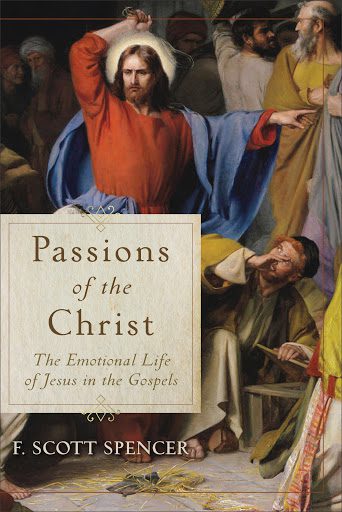
Folks, I am pleased to introduce you to my friend, Dr. F. Scott Spencer, NT scholar and author of the new book, THE PASSIONS OF THE CHRIST: THE EMOTIONAL LIFE OF JESUS. Spencer presents this new blog series as a way to introduce to you some of the key issues and ideas involved in his work on Jesus and emotions. Spencer is a great scholar, and an even better writer. Enjoy!
 And the WORD “Felt” Among Us
F. Scott Spencer
I confess that the lead title of my new book, Passions of the Christ, plays on Mel Gibson’s infamous movie to create a little buzz, and I devote a chapter to probing Jesus’s final hours of agonizing prayer at Gethsemane and excruciating death at Golgotha. But my focus in these “Passion” scenes and elsewhere in the Gospels falls on Jesus’s Emotional Life (subtitle), the range of passions Jesus experiences as he carries out his messianic mission.
Yet clarifying that this book investigates Jesus’s emotions immediately triggers some critical questions. We will talk about (3) big questions in this series. Here is number (1):
Is It Possible that God and Christ Are “Passible”?
Traditionally the God of the Bible has been thought to be “impassible”—not subject to vulgar passions, not moved by volatile feelings, like the testy (and horny) gods of Greek mythology and like faulty and fickle human beings. Of course God loves, in fact is Love. But divine love is often quickly qualified as pure and perfect, on a totally different plane from our capricious loves. Likewise, God’s anger is always righteous, unlike our kneejerk outbursts. Moreover, all of God’s apparent “passions” remain firmly under God’s control. In short, God affects earthly creatures and events but is not affected by them.
As the unique God-Man who “became flesh and dwelt among us” (John 1:14), Jesus melds the full “natures” of God and humanity into one person. What does this mean for Jesus’s experience of emotion? Many Christians presume that his cool, calm, collected God-ness keeps his impulsive emotional humanity in check, sort of like Commander Spock’s Vulcan equanimity (usually) constrains his human emotionality.
But in the wake of two twentieth-century world wars wreaking unprecedented hell on earth, Christian theology engaged the matter of God’s and Christ’s passions anew. Where are God and Christ amid such body-and-soul-crushing events? Don’t the core biblical themes of creation and incarnation stress that God and God-in-Christ are truly in our messy world with us struggling creatures in deep sympathy, gut-level compassion? The hands-in-the earth God (Gen 2:7–9) plunges into the creational process, moves with creation, and is moved by it. Early on God becomes “sorry” about getting into this whole world-making business because of humanity’s obsession with violence (Gen 6:5–6, 11–12). But God opts to see the creational project through to restoration, to feel God’s way, as it were, in and through it all.
The Hebrew prophets voiced God’s intense, impassioned responses to various crises engulfing Israel, as the Jewish scholar Abraham Joshua Heschel echoed in his magisterial two-volume work, The Prophets. Jeremiah in particular “convulsed with the divine pathos” reflecting “the dramatic tension in the inner life of God.”
Likewise, the NT Gospels vividly attest to Jesus’s embodiment of the “passion of the passionate God,” as the theologian Jürgen Moltmann unpacks in his landmark work, The Crucified God. Though the Gospels provide no psychological profile of Jesus or theory of his “two natures,” they show and tell the dynamic story of the God-man speaking, acting, responding—feeling his way through the broken world which finally breaks him on the cross. To gloss over the passions of the incarnate Christ is to sanitize his humanity beyond reasonable belief. A dispassionate Jesus is simply not believable.
Nijay: Stay tunes for Question (2) coming in the next post: “Is It ‘Reasonable’ to be Emotional?”
Oh, and check out Spencer’s new book while you wait

The Word Felt Among Us SPENCER
Previous Post

May 17, 2021
My Top 6 Commentaries (Exodus)
Next Post
May 19, 2021 "My Top 6": General OT Resources (Dr. Cyndi Parker)
Browse Our Archives
Select a Category (Mis)Understanding Philippians 10 Things I Can't Live Without 2023 New Books 30 OT HB Scholars to Read and Follow 5 Books Series 50-2-Follow Academia Christian Theologians to Read and Follow Cruciform Scripture: Contributor Reflections Crux Sola TV Editors Behind Great Books in NT Studies Education Gendering the Holy Spirit Gupta FB Live Lectures In Faith and Doubt In Their Own Words Living the King Jesus Gospel My Top 6 OT Commentaries New Testament Resource Guide New Word Biblical Themes Nijay's A Very Library Christmas Shopping Guide Notes from an Editor Notes on New Books NTRG OT in the NT Paul Seminary Now The Bible in God's World The Word Felt Among Us SPENCER Translating Philippians Uncategorized Why I Use Accordance Women in Ministry
Select a Month March 2024 February 2024 January 2024 December 2023 November 2023 October 2023 September 2023 August 2023 May 2023 March 2023 February 2023 January 2023 December 2022 November 2022 October 2022 September 2022 August 2022 July 2022 June 2022 May 2022 March 2022 February 2022 January 2022 December 2021 November 2021 October 2021 September 2021 August 2021 July 2021 June 2021 May 2021 April 2021 March 2021 February 2021 January 2021 December 2020 November 2020 October 2020 September 2020 August 2020 July 2020 June 2020 May 2020 April 2020 March 2020 February 2020 January 2020 December 2019 November 2019 October 2019 September 2019 August 2019 July 2019 June 2019 May 2019 April 2019 March 2019 February 2019 January 2019 October 2018 September 2018 August 2018 July 2018 June 2018 April 2018 March 2018 February 2018 January 2018 December 2017 October 2017 September 2017 August 2017 July 2017 June 2017 May 2017 April 2017 March 2017 February 2017 January 2017 December 2016 November 2016 October 2016 September 2016 August 2016 July 2016 June 2016 May 2016 April 2016 March 2016 February 2016 January 2016 December 2015 November 2015 October 2015 September 2015 August 2015 July 2015 June 2015 May 2015 April 2015 March 2015 February 2015 January 2015 December 2014 November 2014 October 2014 September 2014 August 2014 July 2014 June 2014 May 2014 April 2014 March 2014 February 2014 January 2014 December 2013 November 2013 October 2013 September 2013 August 2013 July 2013 June 2013 May 2013 April 2013 March 2013 February 2013 January 2013 December 2012 November 2012 October 2012 September 2012 August 2012 July 2012 June 2012 May 2012 April 2012 March 2012 February 2012 January 2012 December 2011 November 2011 October 2011 September 2011 August 2011 July 2011 June 2011 May 2011 April 2011 March 2011 February 2011 January 2011 December 2010 November 2010 October 2010 September 2010 August 2010 July 2010 June 2010 May 2010 April 2010 March 2010 February 2010 January 2010 December 2009 November 2009 October 2009 September 2009 August 2009 July 2009 June 2009 May 2009 April 2009 March 2009 February 2009 January 2009 December 2008 November 2008 October 2008 September 2008 August 2008 July 2008 June 2008 May 2008 April 2008 March 2008 February 2008 January 2008 December 2007 November 2007 October 2007 September 2007 August 2007 July 2007 April 2007 March 2007 February 2007 January 2007
Follow Us!
TAKE THE
Religious Wisdom Quiz
What does "Golgotha" mean?
Select your answer to see how you score.
House of Bread Place of the Skull Mountain of God Valley of Death
Related posts from Crux Sola: Formed by Scripture to Live like Christ
Part 3: "And the WORD 'Felt' Among Us":...
Crux Sola: Formed by Scripture to Live like Christ
Check out the SeminaryNow Holy Week (2024) Video...
Crux Sola: Formed by Scripture to Live like Christ
Get Seminary Credit through SeminaryNow Live Courses
Crux Sola: Formed by Scripture to Live like Christ
My New Fiction Series ("Strange Encounter")
Crux Sola: Formed by Scripture to Live like Christ
TRENDING AT PATHEOS Evangelical

The Sermon on the Mount, Part I: Matthew...
The Sermon on the Mount, Part I (Matthew 4:12-5:12) St. Matthew moves...

What's up from Crossway: Reviewing some of their latest A few weeks...

Janie Learns the Way of the Cross: A...
Teaching children about Jesus' Passion can be challenging. Many parents and educators...

Looking For Good Catholic Writing - October 2026
He alone extends the heavens, and he walks upon the waves of...

In "Irreplaceable," our book on vocation and technology, Trevor Sutton and I...

I was strolling through the top floor of the brand new Parthenon...
view all Evangelical blogs
Ad-Free & Subscriber Log-In Subscription Support
- About Us
- 2026 Calendar
- Videos
- Podcasts
- Library of World Religions
- Faith In Media Tracker
- Advertise With Us
- Write for Us
- Privacy Policy
- Terms of Service
- Do Not Sell My Data
- Contact Us
- Radiant Digital
- Manage Newsletter Subscriptions
- Unsubscribe From Notifications
- Sitemap
Copyright 2008-2026, Patheos. All rights reserved.
Subscription Support Ad-Free & Subscriber Log-In
Follow Patheos