
BuddhistCatholicContemplativeEvangelicalGeneral ChristianHinduJewishLatter-day SaintMuslimNew VisionsProgressive Christian
Beliefs
- Buddhist
- Catholic
- Contemplative
- Evangelical
- General Christian
- Hindu
- Jewish
- Latter-day Saint
- More Voices
- Muslim
- New Visions
- Pagan
- Progressive Christian
Topics
- Religion News
- Food and Religion
- Sports and Religion
- Religious Art
- Religious Music and Entertainment
- Religious Events
- History and Religion
- Style and Religion
- Politics and Religion
- Women in Religion
- Recreation Outdoors and Religion
- Business Finance and Religion
- Careers Workplace and Religion
- Education and Religion
- Family Parenting and Religion
- Health Fitness and Religion
- Home and Religion
- Relationships and Religion
- Technology and Religion
- Travel and Religion
Columnists
- Buddhist Columnists
- Business Finance and Religion Columnists
- Careers Workplace and Religion Columnists
- Catholic Columnists
- Contemplative Columnists
- Education and Religion Columnists
- Evangelists Columnists
- Family Parenting and Religion Columnists
- General Christian Columnists
- Health Fitness and Religion Columnists
- Hindu Columnists
- History and Religion Columnists
- Home and Religion Columnists
- Jewish Columnists
- More Voices Columnists
- Latter Day Columnists
- Muslim Columnists
- New Visions Columnists
- Nonreligious Columnists
- Pagan Columnists
- Politics and Religion Columnists
- Progressive Columnists
- Recreation Outdoors and Religion Columnists
- Relationships and Religion Columnists
- Religion News Columnists
- Religious Art Columnists
- Religious Events Columnists
- Religious Music and Entertainment Columnists
- Sports and Religion Columnists
- Style and Religion Columnists
- Technology and Religion Columnists
- Travel and Religion Columnists
- Women in Religion Columnists
Resource Library
- 2026 Calendar
- Library of World Religions
- The 100 Most Holy Places on Earth
- Patheos Answers
- Podcasts
- Videos
- Faith Leaders Database
- Anglican Episcopalian
- Bahai
- Baptist
- Buddhism
- Christianity
- Confucianism
- Eastern Orthodoxy
- Hinduism
- Holiness and Pentecostal
- ISKCON
- Islam
- Judaism
- Lutheran
- Methodist
- The Church of Jesus Christ of Latter-day Saints
- New Age
- Paganism
- Presbytarian and Reformed
- Protestantism
- Religion Behind the Scenes
- Roman Catholic
- Scientology
- Shia Islam
- Sikhism
- Sufism
- Sunni Islam
- Taoism
- Zen
- See all religions
Research Tools
 Ad-Free & Subscriber Log-In Subscription Support
Ad-Free & Subscriber Log-In Subscription Support
Follow Patheos 

- Trending:
- Forgiveness
- |
- Marriage
- |
- Consciousness
- |
- Death Penalty
- |
- Election
- |
- Halloween
 Crux Sola: Formed by Scripture to Live like Christ
-
Blog Series
- Home
- Evangelical
- Taking Back 1-3 John for the Church (Guest Post: Thomas Andrew Bennett)
Taking Back 1-3 John for the Church (Guest Post: Thomas Andrew Bennett)
Last updated on: April 15, 2021 at 5:59 am by Nijay Gupta
Taking Back 1-3 John for the Church (Guest Post: Thomas Andrew Bennett) 2021-04-15T05:59:25-08:00 Nijay Gupta
Patheos Explore the world's faith through different perspectives on religion and spirituality! Patheos has the views of the prevalent religions and spiritualities of the world.
Dr. Thomas Andrew Bennett has published the 1-3 John volume in the Two Horizons New Testament series. Eerdmans kindly sent me a copy and I appreciated some of Bennett’s fresh thinking on approaching these letters. In the past, scholars have spent a ridiculous amount of time and energy “reconstructing” the so-called Johannine community, and then fitting 1-3 John into elaborate situational theories. Is that the best way to approach these texts? Bennett says “no.” I asked Bennett to write up some thoughts on this—enjoy!
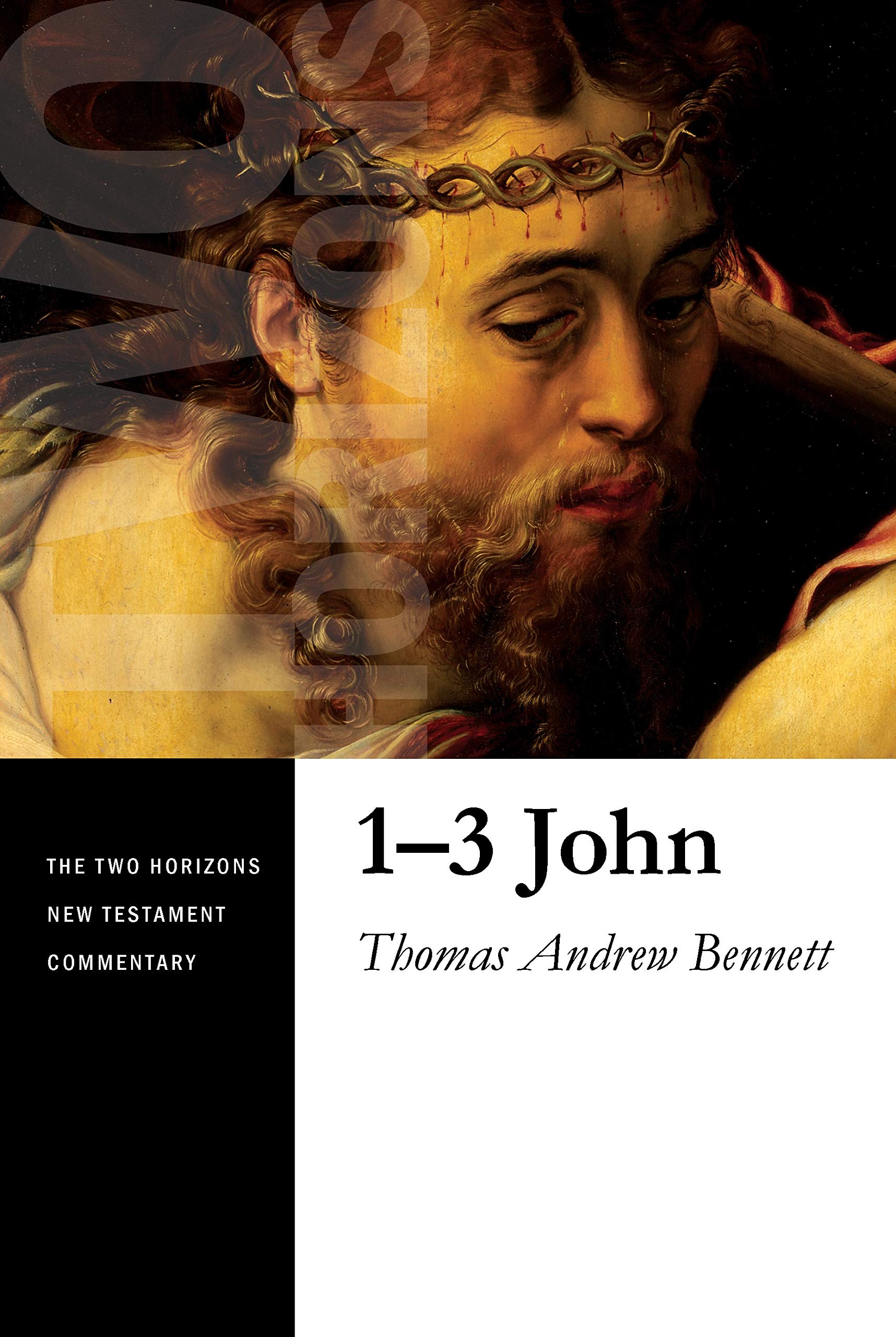
Taking Back 1-3 John for the Church (Thomas Andrew Bennett)
The Problem
When I began seminary in 2005, the crumbling conventional wisdom was that the job of biblical studies was—through the careful application of historical-critical methods—to discover “what really happened.” The assumption was an academic (and secular) one: the Bible, like any other ancient document, is riddled with errors and fantasies and the job of the academic study of the text was to separate truth from fiction, cross over the gaps of history, mine the texts and whatever archeological findings to grasp once and for all what the biblical authors were hiding and what it all meant. The job of the preacher, then, was to sort through the assured findings of modern scholarship and figure out what it might mean now.
It was a disaster.
Seminarians who enjoyed this kind of study would give up quickly on actually serving the church, would take the academic track, and produce more volumes trying to figure out whether Jonah was a fairy tale (Consensus: yes), if it really took three days to cross Nineveh on foot in ~750 BCE (Consensus: it didn’t), and if there was a sea creature capable of sustaining human life in its belly (Consensus: there’s not). The seminarians who wished to preach preached, but did so mostly ignoring the work of their former classmates-turned-PhDs.
I say the conventional wisdom was “crumbling” because a cadre of ecumenical and confessing scholars were busy taking a sledgehammer to it on account of the revolutionary notion that the Bible should be for the church and that whatever scholars are doing with it should be of benefit to real, practicing Christians. The goal was not to leave the search for the truth behind, but to make it subservient to the “theological interpretation of Scripture,” that is, Scripture study that develops actual knowledge of and love for the God the texts were pointing out.
A noble end, to be sure, but it is taking some time to work out exactly how this should all work. And, over the last twenty or so years, everything from the academically rigorous approaches to methods mined from lay study have been tried: attending to the church Fathers, reinvigorating allegorical exegesis, spiritual exegesis, the canonical approach, etc. My own approach is highly syncretic, but we’ll get to that in a moment.
The result has been extremely promising. Fresh (or freshly recovered) ways of engaging texts have begun leading to whole new vistas of bible reading that nourishes the life of faith. Sometimes classical historical methods are tossed by the wayside; sometimes they are integrated with others; sometimes they take center stage. What drives theological interpretation and ultimately unifies it is its creedalism. All theological interpretation assumes from the outset that the Bible is meant to bless and nurture and convict and affirm readers because it testifies to the Triune God, the Father who sends the Son, the Son who, in the person of Jesus of Nazareth fully reveals the divine nature, and the Holy Spirit, who vivifies, guides, and empowers the church to witness to the world. When interpretation leads us to know and worship and love this God, there is a good chance that it is aiming in the right direction. Now, what does all this have to do with 1-3 John?
The Sermon and the Letters
1-3 John are some of the more enigmatic texts in the New Testament. 1 John has usually been classified as a letter, but it doesn’t read like one. 2 and 3 John are very short missives to a Patroness and her church and to “Gaius” and his church respectively. Moreover, these three texts bear strong linguistic and thematic links to the fourth gospel and Revelation. The church traditionally believed that “John,” the beloved disciple who followed Jesus and knew him wrote 1-3 John to the small churches in and near Ephesus where he lived and preached. But as we have just seen, what interested modern scholarship was not what the texts say, but what they hide. Who was John really? Was it really the same person who wrote the gospel? What kind of community did he lead? What did they believe and how was it different from churches Paul founded? Did the author really know Jesus? Why is the fourth gospel so different from the synoptics and what does that mean for 1-3 John? What occasioned 1 John? Who were the secessionists in 1 John 2:19 and why did they leave? The questions multiply themselves, not in the least part because, apart from 1-3 John, the Gospel of John, and Revelation, we have zero historical evidence on which to rely.
And so the most elaborate speculations were raised. 1 John is a commentary on the fourth gospel, meant to address theological problems raised by its idiosyncrasies. No, 1 John is a warning to churches not to succumb to incipient Docetism. No, 1 John is a manual written to identify heretics. No, 1 John gives us insight into the theological beliefs of the “Johannine community.” And what of 2 and 3 John? Of little note and certainly no historical value except insofar as they might have been cover letters for the main tract. All this is of incredible interest, no doubt, but not unfortunately to preachers and Christians who thought that there might be some Eternal Life to be gleaned from texts in which, unbelievably and incomprehensibly we are told, “Anyone who does not love does not know God, because God is love” (1 John 4:8). So how does the church take 1-3 John back?
The Solution
My commentary on 1-3 John proceeds from two closely related assumptions. The first is theological: because the church past, present, and future is One in the Spirit, the same Spirit who inspired John—whoever he (or she or they) may have been—to write these texts lives in the community of faith today and breathes into us the same Life. Because we share the same Spirit, 1-3 John is just as much to us as it is to those who first received it. You see, from a theological perspective, that is, from an ontological one, we are them and they are us. There are not “Johannine Christians” and “Pauline Christians,” there are just all those who share in the Spirit. Whatever was written was not written “for them” so we can find out how it might still be “for us.” No, it was written to us today because God the Holy Spirit binds us and makes us catholic.
The second assumption is philosophical: the text and only the text is the arbiter of meaning. Meaning is not “what really happened.” The meaning is the portrait of God that this text paints. This bears some further explanation. 20thCentury linguistic philosopher Paul Ricoeur developed a theory of meaning that I’ve called the “hypothesis of the text.”[1] Ricoeur thinks that every text, really every piece of art, projects a novel world. By attending closely to language, syntax, history, culture, etc., the reader can function as a kind of scientist, projecting what sort of world the text evokes. In effect, every interpretation of a text is a hypothesis. This text of this world is like this and not like that for reasons, a, b, and c. Ricoeur stands on the shoulders of Hans Georg Gadamer, an early 20th Century theorist who suggested something similar, that every text projects a horizon and that we bring our own horizon to it. Interpretation takes place when the horizon of the text begins to merge with and push back and be corrected by the one(s) we bring. When we bring this philosophical perspective to 1-3 John our concerns are less about what really happened and a lot more about Who is God in 1 John? And who does this text say we are? And how is that the same or different from what we normally think? How does that compare and contrast with other biblical texts? And if we were to adopt 1 John’s vision, how would that change the way we live?
Such an approach is no less academically rigorous than hard-nosed historicism. It might even be more so since it compels us to listen to the Fathers and contemporary sciences and literature and Greek and any other possible resource that might give us a handle on the world John tells. My prayer is that such an approach can give 1-3 John back to the church, back to sermons, that it can once again speak the truth to us now. And in that, I pray, we may once again be shocked by and conformed and united to the God who is love and so join in the storied and faithful communion of the saints.
[1] See Thomas Andrew Bennett, “Paul Ricoeur and the Hypothesis of the Text in Theological
Interpretation,” JTI 5 (2011): 211-30.
NKG: Check out Bennett’s new book

Previous Post
April 12, 2021
Flawed Man? No. Doubt and the Genuine Humanity of Jesus
Next Post

April 20, 2021 Northern Seminary Launches Women's Studies Program and Podcast
Browse Our Archives
Select a Category (Mis)Understanding Philippians 10 Things I Can't Live Without 2023 New Books 30 OT HB Scholars to Read and Follow 5 Books Series 50-2-Follow Academia Christian Theologians to Read and Follow Cruciform Scripture: Contributor Reflections Crux Sola TV Editors Behind Great Books in NT Studies Education Gendering the Holy Spirit Gupta FB Live Lectures In Faith and Doubt In Their Own Words Living the King Jesus Gospel My Top 6 OT Commentaries New Testament Resource Guide New Word Biblical Themes Nijay's A Very Library Christmas Shopping Guide Notes from an Editor Notes on New Books NTRG OT in the NT Paul Seminary Now The Bible in God's World The Word Felt Among Us SPENCER Translating Philippians Uncategorized Why I Use Accordance Women in Ministry
Select a Month March 2024 February 2024 January 2024 December 2023 November 2023 October 2023 September 2023 August 2023 May 2023 March 2023 February 2023 January 2023 December 2022 November 2022 October 2022 September 2022 August 2022 July 2022 June 2022 May 2022 March 2022 February 2022 January 2022 December 2021 November 2021 October 2021 September 2021 August 2021 July 2021 June 2021 May 2021 April 2021 March 2021 February 2021 January 2021 December 2020 November 2020 October 2020 September 2020 August 2020 July 2020 June 2020 May 2020 April 2020 March 2020 February 2020 January 2020 December 2019 November 2019 October 2019 September 2019 August 2019 July 2019 June 2019 May 2019 April 2019 March 2019 February 2019 January 2019 October 2018 September 2018 August 2018 July 2018 June 2018 April 2018 March 2018 February 2018 January 2018 December 2017 October 2017 September 2017 August 2017 July 2017 June 2017 May 2017 April 2017 March 2017 February 2017 January 2017 December 2016 November 2016 October 2016 September 2016 August 2016 July 2016 June 2016 May 2016 April 2016 March 2016 February 2016 January 2016 December 2015 November 2015 October 2015 September 2015 August 2015 July 2015 June 2015 May 2015 April 2015 March 2015 February 2015 January 2015 December 2014 November 2014 October 2014 September 2014 August 2014 July 2014 June 2014 May 2014 April 2014 March 2014 February 2014 January 2014 December 2013 November 2013 October 2013 September 2013 August 2013 July 2013 June 2013 May 2013 April 2013 March 2013 February 2013 January 2013 December 2012 November 2012 October 2012 September 2012 August 2012 July 2012 June 2012 May 2012 April 2012 March 2012 February 2012 January 2012 December 2011 November 2011 October 2011 September 2011 August 2011 July 2011 June 2011 May 2011 April 2011 March 2011 February 2011 January 2011 December 2010 November 2010 October 2010 September 2010 August 2010 July 2010 June 2010 May 2010 April 2010 March 2010 February 2010 January 2010 December 2009 November 2009 October 2009 September 2009 August 2009 July 2009 June 2009 May 2009 April 2009 March 2009 February 2009 January 2009 December 2008 November 2008 October 2008 September 2008 August 2008 July 2008 June 2008 May 2008 April 2008 March 2008 February 2008 January 2008 December 2007 November 2007 October 2007 September 2007 August 2007 July 2007 April 2007 March 2007 February 2007 January 2007
Follow Us!
TAKE THE
Religious Wisdom Quiz
"For all have sinned, and all have fallen short of the ______ of God."
Select your answer to see how you score.
Glory Standards Expectations Sight
Related posts from Crux Sola: Formed by Scripture to Live like Christ
Demon Problems, the Bible, and Enchanted Eyewitnesses
Crux Sola: Formed by Scripture to Live like Christ
Darwin and the Bible, by Dru Johnson
Crux Sola: Formed by Scripture to Live like Christ
Let's Stop Celebrating Arrogance (by Dr. Dennis Edwards)
Crux Sola: Formed by Scripture to Live like Christ

Removing Evil's Mask (Ingrid Faro)
Crux Sola: Formed by Scripture to Live like Christ
TRENDING AT PATHEOS Evangelical

The Problem with False Prophets
Miller’s Station UMC| 10/18/26| Anchor Verse: Jeremiah 23: 1, 9-23 I...

Emotion in Early Christianity by Andrew Crislip
Andrew Crislip’s Emotion in Early Christianity examines an often overlooked dimension of...

16 Spiritual Touchstones for a More Grounded Life
After decades of spiritual study, here are 16 principles I try...

Catholic Evangelization: Sharing Your Faith Every Day
Welcome back to the Graceful Awakening mini-series called, “From Faith to Mission.” ...

The Pillar of the Boatmen: the Ancient Monument...
The Pillar of the Boatmen is a Romano-Gaulish sculpture that dates from...

In one sense walking into Westminster Abbey is like walking down the...
view all Evangelical blogs
Ad-Free & Subscriber Log-In Subscription Support
- About Us
- 2026 Calendar
- Videos
- Podcasts
- Library of World Religions
- Faith In Media Tracker
- Advertise With Us
- Write for Us
- Privacy Policy
- Terms of Service
- Do Not Sell My Data
- Contact Us
- Radiant Digital
- Manage Newsletter Subscriptions
- Unsubscribe From Notifications
- Sitemap
Copyright 2008-2026, Patheos. All rights reserved.
Subscription Support Ad-Free & Subscriber Log-In
Follow Patheos