
BuddhistCatholicContemplativeEvangelicalGeneral ChristianHinduJewishLatter-day SaintMuslimNew VisionsProgressive Christian
Beliefs
- Buddhist
- Catholic
- Contemplative
- Evangelical
- General Christian
- Hindu
- Jewish
- Latter-day Saint
- More Voices
- Muslim
- New Visions
- Pagan
- Progressive Christian
Topics
- Religion News
- Food and Religion
- Sports and Religion
- Religious Art
- Religious Music and Entertainment
- Religious Events
- History and Religion
- Style and Religion
- Politics and Religion
- Women in Religion
- Recreation Outdoors and Religion
- Business Finance and Religion
- Careers Workplace and Religion
- Education and Religion
- Family Parenting and Religion
- Health Fitness and Religion
- Home and Religion
- Relationships and Religion
- Technology and Religion
- Travel and Religion
Columnists
- Buddhist Columnists
- Business Finance and Religion Columnists
- Careers Workplace and Religion Columnists
- Catholic Columnists
- Contemplative Columnists
- Education and Religion Columnists
- Evangelists Columnists
- Family Parenting and Religion Columnists
- General Christian Columnists
- Health Fitness and Religion Columnists
- Hindu Columnists
- History and Religion Columnists
- Home and Religion Columnists
- Jewish Columnists
- More Voices Columnists
- Latter Day Columnists
- Muslim Columnists
- New Visions Columnists
- Nonreligious Columnists
- Pagan Columnists
- Politics and Religion Columnists
- Progressive Columnists
- Recreation Outdoors and Religion Columnists
- Relationships and Religion Columnists
- Religion News Columnists
- Religious Art Columnists
- Religious Events Columnists
- Religious Music and Entertainment Columnists
- Sports and Religion Columnists
- Style and Religion Columnists
- Technology and Religion Columnists
- Travel and Religion Columnists
- Women in Religion Columnists
Resource Library
- 2026 Calendar
- Library of World Religions
- The 100 Most Holy Places on Earth
- Patheos Answers
- Podcasts
- Videos
- Faith Leaders Database
- Anglican Episcopalian
- Bahai
- Baptist
- Buddhism
- Christianity
- Confucianism
- Eastern Orthodoxy
- Hinduism
- Holiness and Pentecostal
- ISKCON
- Islam
- Judaism
- Lutheran
- Methodist
- The Church of Jesus Christ of Latter-day Saints
- New Age
- Paganism
- Presbytarian and Reformed
- Protestantism
- Religion Behind the Scenes
- Roman Catholic
- Scientology
- Shia Islam
- Sikhism
- Sufism
- Sunni Islam
- Taoism
- Zen
- See all religions
Research Tools
 Ad-Free & Subscriber Log-In Subscription Support
Ad-Free & Subscriber Log-In Subscription Support
Follow Patheos 

- Trending:
- Forgiveness
- |
- Marriage
- |
- Consciousness
- |
- Death Penalty
- |
- Election
- |
- Halloween
 Crux Sola: Formed by Scripture to Live like Christ
-
Blog Series
- Home
- Evangelical
- Introducing the Pseudepigrapha of Second Temple Judaism (Gurtner)
Introducing the Pseudepigrapha of Second Temple Judaism (Gurtner)
Last updated on: February 12, 2021 at 6:36 am by Nijay Gupta
Introducing the Pseudepigrapha of Second Temple Judaism (Gurtner) 2021-02-12T06:36:32-08:00 Nijay Gupta
Patheos Explore the world's faith through different perspectives on religion and spirituality! Patheos has the views of the prevalent religions and spiritualities of the world.
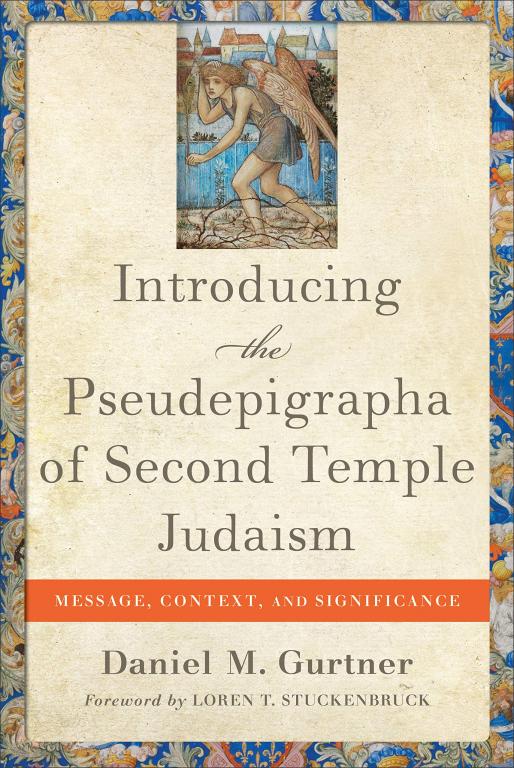
Daniel M. Gurtner, Introducing the Pseudepigrapha of Second Temple Judaism: Message, Context, and Significance (Baker Academic, 2020).
Dr. Daniel Gurtner has written a helpful textbook on the Jewish Pseudepigrapha, a set of texts of used and misused in New Testament studies. Learn more from Gurtner about his new book in this interview.
-
What is the Pseudepigrapha?
-
DMG: Generally, these are writings that celebrate some figure from Israel’s past. I say “generally” because this by no means accounts for them. Technically, the term “pseudepigrapha” refers to writings that claim to be written by one person but are in fact written by another. This too only partly accounts for the facts, and also casts an unnecessarily pejorative light on the texts. So, how does one determine whether something is a “pseudepigrapha”? That’s complicated. Typically these writings are not classified by what they are, but what they are not. They are not generally found in the Greek writings in the major codices which do not have corresponding Hebrew Bible texts (i.e., the “Apocrypha”), nor are they among the Dead Sea Scrolls, Philo, Josephus, or the rabbis. But here again there are exceptions to these rules.
-
Perhaps returning to my general comment above, they may utilize the narrative significance of figures such as Abraham from the Hebrew Bible, and recast his life and experience into a new setting, as one finds in the Apocalypse of Abraham. In this way Abraham, as well as other figures like Moses, Job, Enoch, Baruch, etc., are pressed into service in a new setting by Jews who recognized the significance of these figures and utilized their respective prominence to relate their own message(s) based on something from that figure’s past. The ones I examine in my book are Jewish and date prior to the Bar Kochba revolt (ca. 135 CE). There are many that are Jewish but date later, others that are Christian, and still others that are Jewish in origin but in the course of their transmission by Christians essentially become Christian texts or in some way render the Jewish original inaccessible. Among the fundamental problems in studying these writings for those not deeply familiar with the scholarly discourse is discerning which writings belong to which contexts. For the student of the New Testament, the problem becomes: which ones are suitable for use as Jewish “background”?
Why should students of the New Testament be interested in the OT Pseudepigrapha?
DMG: At the outset I want to clarify that while my book is intended to be useful for interpreters of New Testament texts, it is primarily about the Pseudepigrapha themselves. That is, I did not write it so that one can understand the New Testament better by use of the Pseudepigrapha, but so that the Pseudepigrapha can be better understood in their own contexts. In my view, this is prolegomena to any secondary usage of this material, whether for Old Testament, New Testament, rabbinic Judaism, or some other context.
So, why read and study the OT Pseudepigrapha? First, I think people teaching these subjects may find this book useful for themselves. It is difficult for those teaching in early Christianity to delve into the depths of technical studies on an obscure aspect of Second Temple Judaism. Part of the aim of my book is to furnish readers – teachers and students – with a robust point of entry. This is suitable for those teaching New Testament, but also early Judaism, Rabbinics, or any related field. Second, I think students can gain an appreciation for just how diverse Judaism was in antiquity. Reading the Aramaic Levi Document is quite different from the Sibylline Oracles, which is itself quite distinct from the Book of Jubilees. All have different purposes, emphases, and features, and help students to recognize the complexities exhibited by one subsection of Jewish primary sources from antiquity. Legend has it that Martin Hengel used to say, “If all you know is the New Testament, you don’t know the New Testament.” His point was that the literary context of the New Testament is a vital component of understanding the New Testament itself. Third, for scholars who research and write in New Testament, there is a tendency to treat Second Temple texts in general, and those classified as Pseudepigrapha in particular, in a rather monolithic way as “background” to the New Testament. But these texts were not written as background; they conveyed the ideas of real people in real contexts, and should be understood as such prior to any secondary usage as background to NT or anything else.
There are plenty of examples that could illustrate their significance. Among my favorites is the “Son of David” in the Psalms of Solomon, chapter 17. Psalm 17 recalls God’s promise of David’s kingship to his descendants (17:4). But Israel’s sins have caused “sinners” to rise up against it and establish a monarchy (Hasmoneans) while despoiling the throne of David in arrogance (17:5–6). But God raised a man “alien to our race” (i.e., the Roman gentile Pompey) who hunted them all down to bring about judgment on them (17:7–10). This “lawless one” (Pompey entered the Holy of Holies; cf. Pss. Sol. 2:2; Josephus, J.W. 1.7.6 §152; Ant. 14.4.4 §72) laid waste to the land and expelled its inhabitants (17:11–13), doing in Jerusalem what gentiles do for their gods elsewhere (17:14). Even the Israelites living among the “gentile rabble” adopted these practices (17:15). The pious did not remain in Jerusalem but fled to the wilderness (17:16–17), while the wicked in Jerusalem continued to practice their iniquity, appointing commoners to leadership and criminals to rule (17:18–20). The psalmist then implores the Lord to raise up the king, the son of David, to rule over Israel, asking him to destroy unrighteous rulers and purge Jerusalem of gentiles (17:21–24). He will cause nations to flee and gather a holy people (17:25–26). He will not tolerate unrighteousness among them and will distribute them upon the land (17:27–28). He will judge the peoples and have the gentile nations serve him (17:29–30a). He will purge Jerusalem and make it holy, and nations will come from the ends of the earth to see its glory (17:30b–31). The Lord Messiah will be a righteous king, and his strength will come from hope in God (17:32–34a, 37–40a). He will be compassionate to the nations that revere him and bless the Lord’s people (17:34b–35), while he himself will be free from sin in order to rule well and drive out sinners (17:36). He will shepherd the Lord’s flock in holiness and discipline the house of Israel with pure words (17:40b–43). The psalmist concludes by pronouncing a blessing on those born in that day, asking God to deliver Israel from the pollution of profane enemies, and acknowledging the eternal kingship of the Lord (17:44–46). This obvious reminds readers of the ascription of “Son of David” to Jesus, in the Gospel of Matthew (Matt 1:1, 20; 9:27; 12:23; 15:22; 20:30, 31; 21:9, 15; 22:42), where there are kingly overtures drawn from 2 Sam 7, but nothing of the violence or militarism espoused by the Psalms of Solomon, which date between 63 bce and the turn of the era. It gives us a window into the kinds of messianism which were in circulation even before the birth of Christ.
What inspired you to write this book?
DMG: In addition to the comments made above, my interest in the subject came from my own ignorance. In my own work I found that I knew very little about this category of material, and soon realized I was not alone. I also knew about the excellent book on the Apocrypha by David DeSilva and thought there could be a companion one for the Pseudepigrapha. My book is to some degree like that, yet it is intended to be a bit more technical since the nature of this literature in general and the specific problems raised by the respective texts in particular tend to be more complex. I really wanted to dig into these texts to have a degree of first-hand expertize in them myself. As a New Testament scholar, I want to be sure I use all my materials as responsibly as possible. And it is very easy to make use of this material for NT interpretation without really understanding it on its own terms. So my book was to fill a void in my own thinking and hopefully do the same for others. There is also a general cloud of ambiguity about what exactly the Pseudepigrapha are, and while the very nature of the subject matter precludes the degree of clarity we may want, I hope to take readers some way in broadening their understanding.
Did you discover anything that surprised you?
DMG: Not really surprised me, but a great deal that intrigued me. One of the main burdens of the book is to help readers – beginning with myself! – gain an appreciation for the context and setting of these diverse texts. I think the diversity is the aspect that most intrigues me. There are texts that are steeped in the OT and focused on very particular concerns related to it, while others largely draw from diaspora contexts where Gentile genres are used with a smattering of Jewish figures and ideas brought in. Another thing that intrigues me is the manner in which one can see disagreements among differing groups of Jews emerge over what may seem to use to be petty issues. Calendar was a big issue – a solar or lunar calendar. And, while we may think that that Jewish Maccabean revolt that overthrew the Gentile Seleucids would be a great thing for most Jews, subsequent generations had real misgivings about the legitimacy of the Maccabean descendants, the Hasmoneans, on the throne and in the high priesthood.
What are some common misuses or misconceptions of the OT Pseudepigrapha?
DMG: There are many, especially among students of the New Testament. A few myths that come to mind are:
-
They are always falsely attributed and that there is a de facto intent to deceive readers about the real authors.
-
That they are a coherent set of texts, almost like a “canon” of texts enshrined in the Charlesworth volumes. Yet they are seldom preserved together in any single manuscript in antiquity and they depict views that sometimes overlap while at other times contradict others. One gains from these texts an appreciation for the diversity of Judaism at the time. Interpreters really cannot responsibly make claims about what “the Jews” believed without some qualification about which Jews are in view, and what documents are under consideration.
-
Among more critical scholars, there’s often a de facto assumption that since pseudepigraphy was accepted in Judaism, it was surely practiced among Christians. I find that among the Jewish pseudepigrapha there is very little if any concern to determine the actual authors of documents, as that seems to be relatively unimportant. Yet among early Christians authentic authorship, especially apostolic authorship, seems to be a pretty big deal. I’ve not (yet?) developed this further, but there is a distinction between how the practice was received in differing contexts that needs to be considered.
-
Finally, I find that students frequently presume these texts share our interests. For example, what is their view of salvation? Many texts have little or no interest in a notion of life after death in a heavenly existence. What did they expect of the messiah? Again, only some texts touch on the subject. The important thing is to allow the text to raise its own concerns, and understand it on its own terms before asking questions of it that it may or may not intend to answer. This is a useful outlook for the study of any ancient text, including the New Testament, but especially ones that are in some ways so foreign to us.
Buy the Book

Previous Post
February 11, 2021
Why I Use Accordance Every Day: Part 6 (Which Packages to Buy?)
Next Post

February 16, 2021 Gendering the Holy Spirit? A New Blog Series (Part 1)
Browse Our Archives
Select a Category (Mis)Understanding Philippians 10 Things I Can't Live Without 2023 New Books 30 OT HB Scholars to Read and Follow 5 Books Series 50-2-Follow Academia Christian Theologians to Read and Follow Cruciform Scripture: Contributor Reflections Crux Sola TV Editors Behind Great Books in NT Studies Education Gendering the Holy Spirit Gupta FB Live Lectures In Faith and Doubt In Their Own Words Living the King Jesus Gospel My Top 6 OT Commentaries New Testament Resource Guide New Word Biblical Themes Nijay's A Very Library Christmas Shopping Guide Notes from an Editor Notes on New Books NTRG OT in the NT Paul Seminary Now The Bible in God's World The Word Felt Among Us SPENCER Translating Philippians Uncategorized Why I Use Accordance Women in Ministry
Select a Month March 2024 February 2024 January 2024 December 2023 November 2023 October 2023 September 2023 August 2023 May 2023 March 2023 February 2023 January 2023 December 2022 November 2022 October 2022 September 2022 August 2022 July 2022 June 2022 May 2022 March 2022 February 2022 January 2022 December 2021 November 2021 October 2021 September 2021 August 2021 July 2021 June 2021 May 2021 April 2021 March 2021 February 2021 January 2021 December 2020 November 2020 October 2020 September 2020 August 2020 July 2020 June 2020 May 2020 April 2020 March 2020 February 2020 January 2020 December 2019 November 2019 October 2019 September 2019 August 2019 July 2019 June 2019 May 2019 April 2019 March 2019 February 2019 January 2019 October 2018 September 2018 August 2018 July 2018 June 2018 April 2018 March 2018 February 2018 January 2018 December 2017 October 2017 September 2017 August 2017 July 2017 June 2017 May 2017 April 2017 March 2017 February 2017 January 2017 December 2016 November 2016 October 2016 September 2016 August 2016 July 2016 June 2016 May 2016 April 2016 March 2016 February 2016 January 2016 December 2015 November 2015 October 2015 September 2015 August 2015 July 2015 June 2015 May 2015 April 2015 March 2015 February 2015 January 2015 December 2014 November 2014 October 2014 September 2014 August 2014 July 2014 June 2014 May 2014 April 2014 March 2014 February 2014 January 2014 December 2013 November 2013 October 2013 September 2013 August 2013 July 2013 June 2013 May 2013 April 2013 March 2013 February 2013 January 2013 December 2012 November 2012 October 2012 September 2012 August 2012 July 2012 June 2012 May 2012 April 2012 March 2012 February 2012 January 2012 December 2011 November 2011 October 2011 September 2011 August 2011 July 2011 June 2011 May 2011 April 2011 March 2011 February 2011 January 2011 December 2010 November 2010 October 2010 September 2010 August 2010 July 2010 June 2010 May 2010 April 2010 March 2010 February 2010 January 2010 December 2009 November 2009 October 2009 September 2009 August 2009 July 2009 June 2009 May 2009 April 2009 March 2009 February 2009 January 2009 December 2008 November 2008 October 2008 September 2008 August 2008 July 2008 June 2008 May 2008 April 2008 March 2008 February 2008 January 2008 December 2007 November 2007 October 2007 September 2007 August 2007 July 2007 April 2007 March 2007 February 2007 January 2007
Follow Us!
TAKE THE
Religious Wisdom Quiz
The Old Testament prophet Joel spoke of "wonders in the heavens and the earth, blood, fire, and pillars of smoke before the great and terrible day of the Lord." (Joel 2:30) Which one of the disciples quoted him in the book of Acts?
Select your answer to see how you score.
Peter John James Andrew
Related posts from Crux Sola: Formed by Scripture to Live like Christ
Ten New Books in Biblical Studies (October 2021)
Crux Sola: Formed by Scripture to Live like Christ
Book Notice: Jesus and the Empire of God...
Crux Sola: Formed by Scripture to Live like Christ
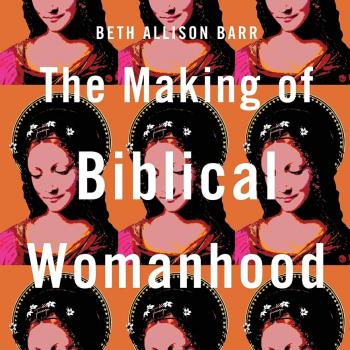
Barr's The Making of Biblical Womanhood—My Reflections
Crux Sola: Formed by Scripture to Live like Christ
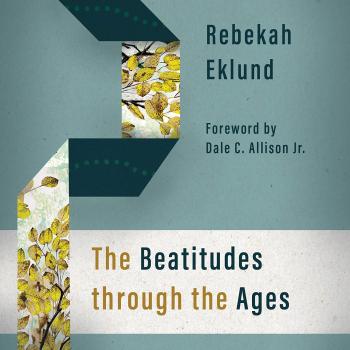
Interview with Rebekah Eklund: Beatitudes through the Ages
Crux Sola: Formed by Scripture to Live like Christ
TRENDING AT PATHEOS Evangelical

When Halloween Unmasks Married Hearts
Written by Dr. David K. Ewen from Eternal Truth Bible College Behind...

Aristotle. He’s been called the father of logic, the father of the...

Methodist Central Hall and Westminster Abbey
Situated on the same square is Methodist Central Hall and Westminster Abbey. ...

57th Dove Awards Honor Dolly Parton, Crown New...
On gospel music’s biggest night, the 57th annual GMA Dove Awards honored...

The First Eucharistic Controversy: Christ’s Real Presence
For Catholics, the Eucharist is the source and summit of the Christian...

What a Stop Sign Can Teach Us About...
How to Make a Decision When You Can't Hear God Main point:...
view all Evangelical blogs
Ad-Free & Subscriber Log-In Subscription Support
- About Us
- 2026 Calendar
- Videos
- Podcasts
- Library of World Religions
- Faith In Media Tracker
- Advertise With Us
- Write for Us
- Privacy Policy
- Terms of Service
- Do Not Sell My Data
- Contact Us
- Radiant Digital
- Manage Newsletter Subscriptions
- Unsubscribe From Notifications
- Sitemap
Copyright 2008-2026, Patheos. All rights reserved.
Subscription Support Ad-Free & Subscriber Log-In
Follow Patheos