
BuddhistCatholicContemplativeEvangelicalGeneral ChristianHinduJewishLatter-day SaintMuslimNew VisionsProgressive Christian
Beliefs
- Buddhist
- Catholic
- Contemplative
- Evangelical
- General Christian
- Hindu
- Jewish
- Latter-day Saint
- More Voices
- Muslim
- New Visions
- Pagan
- Progressive Christian
Topics
- Religion News
- Food and Religion
- Sports and Religion
- Religious Art
- Religious Music and Entertainment
- Religious Events
- History and Religion
- Style and Religion
- Politics and Religion
- Women in Religion
- Recreation Outdoors and Religion
- Business Finance and Religion
- Careers Workplace and Religion
- Education and Religion
- Family Parenting and Religion
- Health Fitness and Religion
- Home and Religion
- Relationships and Religion
- Technology and Religion
- Travel and Religion
Columnists
- Buddhist Columnists
- Business Finance and Religion Columnists
- Careers Workplace and Religion Columnists
- Catholic Columnists
- Contemplative Columnists
- Education and Religion Columnists
- Evangelists Columnists
- Family Parenting and Religion Columnists
- General Christian Columnists
- Health Fitness and Religion Columnists
- Hindu Columnists
- History and Religion Columnists
- Home and Religion Columnists
- Jewish Columnists
- More Voices Columnists
- Latter Day Columnists
- Muslim Columnists
- New Visions Columnists
- Nonreligious Columnists
- Pagan Columnists
- Politics and Religion Columnists
- Progressive Columnists
- Recreation Outdoors and Religion Columnists
- Relationships and Religion Columnists
- Religion News Columnists
- Religious Art Columnists
- Religious Events Columnists
- Religious Music and Entertainment Columnists
- Sports and Religion Columnists
- Style and Religion Columnists
- Technology and Religion Columnists
- Travel and Religion Columnists
- Women in Religion Columnists
Resource Library
- 2026 Calendar
- Library of World Religions
- The 100 Most Holy Places on Earth
- Patheos Answers
- Podcasts
- Videos
- Faith Leaders Database
- Anglican Episcopalian
- Bahai
- Baptist
- Buddhism
- Christianity
- Confucianism
- Eastern Orthodoxy
- Hinduism
- Holiness and Pentecostal
- ISKCON
- Islam
- Judaism
- Lutheran
- Methodist
- The Church of Jesus Christ of Latter-day Saints
- New Age
- Paganism
- Presbytarian and Reformed
- Protestantism
- Religion Behind the Scenes
- Roman Catholic
- Scientology
- Shia Islam
- Sikhism
- Sufism
- Sunni Islam
- Taoism
- Zen
- See all religions
Research Tools
 Ad-Free & Subscriber Log-In Subscription Support
Ad-Free & Subscriber Log-In Subscription Support
Follow Patheos 

- Trending:
- Forgiveness
- |
- Marriage
- |
- Consciousness
- |
- Death Penalty
- |
- Election
- |
- Halloween
 Crux Sola: Formed by Scripture to Live like Christ
-
Blog Series
- Home
- Evangelical
- Cruciform Scripture: Interviews with Contributors—Dr. Sherri Brown
Cruciform Scripture: Interviews with Contributors—Dr. Sherri Brown
Last updated on: January 13, 2021 at 6:41 am by Nijay Gupta
Cruciform Scripture: Interviews with Contributors—Dr. Sherri Brown 2021-01-13T06:41:06-08:00 Nijay Gupta
Patheos Explore the world's faith through different perspectives on religion and spirituality! Patheos has the views of the prevalent religions and spiritualities of the world.
This is a blog series featuring contributors to the new book, Cruciform Scripture. Today we have Dr. Sherri Brown. Cruciform Scripture is a book in the field of New Testament theology, the work is written in honor of the scholarship of Dr. Michael J. Gorman.
Dr. Sherri Brown (Creighton University)
Chapter Ten: “‘Follow Me’: The Mandate for Mission in the Gospel of John”

Tell us about your connection to the honoree, Michael Gorman.
I did not have the fortune to have Michael Gorman as a professor, but met him early in my career as a scholar and teacher through Christopher Skinner. Chris and I are “doctor-sibs” under the mentorship of Frank Moloney, and Chris had the great fortune of adjuncting at St. Mary’s as we concluded our doctorates. Chris introduced me to Mike at an SBL confererence, then I participated in a conference on John’s Gospel at St. Mary’s where Mike was the consummate host. In the meantime, I was using his textbook on Paul as the “Apostle of the Crucified Lord” in both my upper undergrad and lower grad courses on Paul and his Letters. Mike immediately included me into his community of peers. Our conversations at conferences from then on have been part of my maturing as a scholar. Indeed, while reviewing one of his books on Paul’s cruciform gospel of mission, I found his quote of 2 Peter 1:4 as a halmark of theosis in the New Testament. At the time I had been commissioned to contribute the entry on 2 Peter for the Paulist Biblical Commentary, and he quite inadvertantly gave me my way into the letter and its substance. When I later published an article on 2 Peter, he was one of the first to congratulate me. I, in turn, reminded him of his inspiration for my way in. He has been an enormously generous and kind colleague and I consider it my good fortune to count him a friend as well.
How did you choose your topic for the book, mission in John?
Beyond brief forays into the Catholic Epistles (as above) and Paul, the primary work of my career has been studying the Johannine Literature. When Chris Skinner told me that he and his fellow editors were endeavoring to produce what would be a surprise essay collection honoring Mike, I shared my enthusiasm for the project and, while acknowledging that I was neither a student nor a long-standing peer, I would love to express my respect for Mike if a contribution was needed. Some time later, Chris contacted me to say they could include something from me, especially if it was on John. Mike had recently published his foray into the Johannine world entitled, Abide and Go: Missional Theosis in the Gospel of John, which I loved, and I was about to embark upon a small volume on Johannine discipleship. I knew I could use this as an opportunity for double-duty: pay a bit of homage to Mike, his fantastic work, and his collegiality, as well as articulate my thoughts on Johannine discipleship in an article that would serve as a precis of sorts for the monograph.

Can you share more about your essay on John?
In recent years, scholars of the Johannine Literature have begun exploring the ethical implications of these texts with renewed interest, often challenging long-standing stereotypes of the absence of such mandates in favor of Christological and/or sectarian concerns. A corresponding extension of this developing interest lies in the study of Johannine spirituality. These interpreters have moved away from a focus on a spiritual interiority that is disconnected from concrete this-worldly existence to explore the Johannine approach to mission. In his important contribution to the discussion, Michael Gorman identifies such an approach as reading John through a “missional hermeneutic.” That is to say, transformative participation in the life of God through the incarnation of the divine into the earthly (by way of believing that Jesus is the Christ and Son of God and entering into the resulting relationship [1:10–14]) bestows a union of divine indwelling that, then, creates an outward-turning toward mission, inclusion, and active, justice-seeking discipleship.
The current essay builds upon this scholarly interest and tracks the narrative unfolding of John’s establishment of what it means to be children of God and the invitations and imperatives that ensue for all disciples that culminate in a mandate for mission in the new covenant. Through both narration and direct summons, characters in and audiences of the Gospel of John are beckoned to deeper relationship with God through Jesus as he challenges them to open themselves to what God is doing in their lives now. Indeed, Jesus’s first words of the Gospel, the query “what are you seeking?” set the tone for the invitation-as-imperative (or, imperative-as-invitation): “come and see,” made to both his first and all potential disciples (1:38–39).
The primary commandments presented across the narrative are to receive and believe Jesus as Christ and Son of God, which is manifested in abiding and loving one another in community (1:12; 13:34–35). Further, Jesus tasks inquisitors to know the truth so that it will set them free (8:31–32; 19:37–38). Some respond positively; others do not, but the hope for those who do is to have life in Jesus’s name (20:30–31). Jesus’s final challenge of the Gospel, then, is for those who believe and love to “follow me”—the underlying imperative of the entire Gospel (21:22), punctuated in the lives of real disciples who must live by Jesus’s command to believe without seeing. But this is not just a call to an interior spirituality; rather, it is a challenge to participate in the divine indwelling relationship by living the way Jesus lived: a life of concrete action through receiving, loving, and abiding with others in this world. This is the Gospel’s mandate for mission, and its purpose is to prepare audiences to do just that.
Brown has co-written a handbook to studying the Johannine Literature:
Interpreting the Gospel and Letters of John, Brown and Francis J. Moloney

Cruciform Scripture is now available at an affordable price, check out Brown’s essay and more

Cruciform Scripture: Contributor Reflections

Next Post
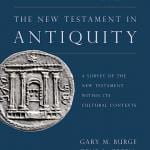
January 14, 2021 The New Testament in Antiquity (2nd ed)—Gary M. Burge and Gene L. Green
Browse Our Archives
Select a Category (Mis)Understanding Philippians 10 Things I Can't Live Without 2023 New Books 30 OT HB Scholars to Read and Follow 5 Books Series 50-2-Follow Academia Christian Theologians to Read and Follow Cruciform Scripture: Contributor Reflections Crux Sola TV Editors Behind Great Books in NT Studies Education Gendering the Holy Spirit Gupta FB Live Lectures In Faith and Doubt In Their Own Words Living the King Jesus Gospel My Top 6 OT Commentaries New Testament Resource Guide New Word Biblical Themes Nijay's A Very Library Christmas Shopping Guide Notes from an Editor Notes on New Books NTRG OT in the NT Paul Seminary Now The Bible in God's World The Word Felt Among Us SPENCER Translating Philippians Uncategorized Why I Use Accordance Women in Ministry
Select a Month March 2024 February 2024 January 2024 December 2023 November 2023 October 2023 September 2023 August 2023 May 2023 March 2023 February 2023 January 2023 December 2022 November 2022 October 2022 September 2022 August 2022 July 2022 June 2022 May 2022 March 2022 February 2022 January 2022 December 2021 November 2021 October 2021 September 2021 August 2021 July 2021 June 2021 May 2021 April 2021 March 2021 February 2021 January 2021 December 2020 November 2020 October 2020 September 2020 August 2020 July 2020 June 2020 May 2020 April 2020 March 2020 February 2020 January 2020 December 2019 November 2019 October 2019 September 2019 August 2019 July 2019 June 2019 May 2019 April 2019 March 2019 February 2019 January 2019 October 2018 September 2018 August 2018 July 2018 June 2018 April 2018 March 2018 February 2018 January 2018 December 2017 October 2017 September 2017 August 2017 July 2017 June 2017 May 2017 April 2017 March 2017 February 2017 January 2017 December 2016 November 2016 October 2016 September 2016 August 2016 July 2016 June 2016 May 2016 April 2016 March 2016 February 2016 January 2016 December 2015 November 2015 October 2015 September 2015 August 2015 July 2015 June 2015 May 2015 April 2015 March 2015 February 2015 January 2015 December 2014 November 2014 October 2014 September 2014 August 2014 July 2014 June 2014 May 2014 April 2014 March 2014 February 2014 January 2014 December 2013 November 2013 October 2013 September 2013 August 2013 July 2013 June 2013 May 2013 April 2013 March 2013 February 2013 January 2013 December 2012 November 2012 October 2012 September 2012 August 2012 July 2012 June 2012 May 2012 April 2012 March 2012 February 2012 January 2012 December 2011 November 2011 October 2011 September 2011 August 2011 July 2011 June 2011 May 2011 April 2011 March 2011 February 2011 January 2011 December 2010 November 2010 October 2010 September 2010 August 2010 July 2010 June 2010 May 2010 April 2010 March 2010 February 2010 January 2010 December 2009 November 2009 October 2009 September 2009 August 2009 July 2009 June 2009 May 2009 April 2009 March 2009 February 2009 January 2009 December 2008 November 2008 October 2008 September 2008 August 2008 July 2008 June 2008 May 2008 April 2008 March 2008 February 2008 January 2008 December 2007 November 2007 October 2007 September 2007 August 2007 July 2007 April 2007 March 2007 February 2007 January 2007
Follow Us!
TAKE THE
Religious Wisdom Quiz
What is the main literary style of Psalms and Proverbs?
Select your answer to see how you score.
Historical narrative Poetry Apocalypse Prophecy
Related posts from Crux Sola: Formed by Scripture to Live like Christ

Cruciform Scripture: Interviews with Contributors—Ben Blackwell on Galatians
Crux Sola: Formed by Scripture to Live like Christ

Cruciform Scripture: Interviews with Contributors—Andy Johnson
Crux Sola: Formed by Scripture to Live like Christ

Cruciform Scripture: Interviews with Contributors—Drew Strait
Crux Sola: Formed by Scripture to Live like Christ

Cruciform Scripture: Interviews with Contributors—Frank Dicken on Luke
Crux Sola: Formed by Scripture to Live like Christ
TRENDING AT PATHEOS Evangelical

Letters on Living the Faith by C.S. Lewis
Most of us met C.S. Lewis as a public intellectual. Mere Christianity....

When Halloween Unmasks Married Hearts
Written by Dr. David K. Ewen from Eternal Truth Bible College Behind...

Aristotle. He’s been called the father of logic, the father of the...

Methodist Central Hall and Westminster Abbey
Situated on the same square is Methodist Central Hall and Westminster Abbey. ...

57th Dove Awards Honor Dolly Parton, Crown New...
On gospel music’s biggest night, the 57th annual GMA Dove Awards honored...

The First Eucharistic Controversy: Christ’s Real Presence
For Catholics, the Eucharist is the source and summit of the Christian...
view all Evangelical blogs
Ad-Free & Subscriber Log-In Subscription Support
- About Us
- 2026 Calendar
- Videos
- Podcasts
- Library of World Religions
- Faith In Media Tracker
- Advertise With Us
- Write for Us
- Privacy Policy
- Terms of Service
- Do Not Sell My Data
- Contact Us
- Radiant Digital
- Manage Newsletter Subscriptions
- Unsubscribe From Notifications
- Sitemap
Copyright 2008-2026, Patheos. All rights reserved.
Subscription Support Ad-Free & Subscriber Log-In
Follow Patheos