
BuddhistCatholicContemplativeEvangelicalGeneral ChristianHinduJewishLatter-day SaintMuslimNew VisionsProgressive Christian
Beliefs
- Buddhist
- Catholic
- Contemplative
- Evangelical
- General Christian
- Hindu
- Jewish
- Latter-day Saint
- More Voices
- Muslim
- New Visions
- Pagan
- Progressive Christian
Topics
- Religion News
- Food and Religion
- Sports and Religion
- Religious Art
- Religious Music and Entertainment
- Religious Events
- History and Religion
- Style and Religion
- Politics and Religion
- Women in Religion
- Recreation Outdoors and Religion
- Business Finance and Religion
- Careers Workplace and Religion
- Education and Religion
- Family Parenting and Religion
- Health Fitness and Religion
- Home and Religion
- Relationships and Religion
- Technology and Religion
- Travel and Religion
Columnists
- Buddhist Columnists
- Business Finance and Religion Columnists
- Careers Workplace and Religion Columnists
- Catholic Columnists
- Contemplative Columnists
- Education and Religion Columnists
- Evangelists Columnists
- Family Parenting and Religion Columnists
- General Christian Columnists
- Health Fitness and Religion Columnists
- Hindu Columnists
- History and Religion Columnists
- Home and Religion Columnists
- Jewish Columnists
- More Voices Columnists
- Latter Day Columnists
- Muslim Columnists
- New Visions Columnists
- Nonreligious Columnists
- Pagan Columnists
- Politics and Religion Columnists
- Progressive Columnists
- Recreation Outdoors and Religion Columnists
- Relationships and Religion Columnists
- Religion News Columnists
- Religious Art Columnists
- Religious Events Columnists
- Religious Music and Entertainment Columnists
- Sports and Religion Columnists
- Style and Religion Columnists
- Technology and Religion Columnists
- Travel and Religion Columnists
- Women in Religion Columnists
Resource Library
- 2026 Calendar
- Library of World Religions
- The 100 Most Holy Places on Earth
- Patheos Answers
- Podcasts
- Videos
- Faith Leaders Database
- Anglican Episcopalian
- Bahai
- Baptist
- Buddhism
- Christianity
- Confucianism
- Eastern Orthodoxy
- Hinduism
- Holiness and Pentecostal
- ISKCON
- Islam
- Judaism
- Lutheran
- Methodist
- The Church of Jesus Christ of Latter-day Saints
- New Age
- Paganism
- Presbytarian and Reformed
- Protestantism
- Religion Behind the Scenes
- Roman Catholic
- Scientology
- Shia Islam
- Sikhism
- Sufism
- Sunni Islam
- Taoism
- Zen
- See all religions
Research Tools
 Ad-Free & Subscriber Log-In Subscription Support
Ad-Free & Subscriber Log-In Subscription Support
Follow Patheos 

- Trending:
- Forgiveness
- |
- Marriage
- |
- Consciousness
- |
- Death Penalty
- |
- Election
- |
- Halloween
 Crux Sola: Formed by Scripture to Live like Christ
-
Blog Series
- Home
- Evangelical
- Interview with Lisa M. Bowens: African American Readings of Paul
Interview with Lisa M. Bowens: African American Readings of Paul
Last updated on: November 9, 2020 at 11:51 am by Nijay Gupta
Interview with Lisa M. Bowens: African American Readings of Paul 2020-11-09T11:51:56-08:00 Nijay Gupta
Patheos Explore the world's faith through different perspectives on religion and spirituality! Patheos has the views of the prevalent religions and spiritualities of the world.
I am excited to share with you this interview I conducted with Dr. Lisa M. Bowens (Princeton Theological Seminary). Her new book is really well written and deeply insightful.

Lisa M. Bowens, Princeton Theological Seminary
What inspired you to write this book? And why Paul as a figure of focus?
A couple of things happened over the course of time. First, I was working on my dissertation on 2 Corinthians 12, Paul’s ascent, which became my first book, An Apostle in Battle: Paul and Spiritual Warfare in 2 Corinthians 12:1-10, and I wanted to include a chapter on African American interpretation of that passage in my dissertation. My doktorvater (doctoral supervisor) suggested that chapter should be its own separate work apart from the dissertation.
About the same time this conversation was taking place, I kept attending different conferences in which the story of Howard Thurman’s grandmother, Nancy Ambrose, repeatedly came up and the assumption seemed to be that this story was the primary way African Americans approached Paul and his letters (By the way I begin the book with this important and provocative story). Both of these events, my advisor’s suggestion and these conference meetings, converged for me and I began to wonder if Nancy Ambrose’s story represented the way most African Americans felt about Paul. So, I decided to do an investigation and just see what I could find. I wasn’t sure what the outcome would be but I was curious.
Thus, I decided not to just focus on African American interpretations of 2 Corinthians 12 but African Americans’ use of Paul more broadly. As it turns out, my research shows that Paul was a central figure for African Americans throughout history as indicated by the amount of times they reference or cite him and his letters. In addition, I found that a majority of these interpreters view Paul in a positive light and use him to argue for justice, freedom and equality. This book, then, is a result of this investigative journey. On a personal note, I’ve been interested in the apostle Paul and his letters since I was little. He has fascinated me for quite some time.
Research is always full of surprises. What surprised you in your research on this subject? What did you encounter that was unexpected?
When I decided to expand my research and focus on African American interpretations of Paul more broadly, I naively assumed that I could cover most of the material from the 1700s to the present and that I could cover most, if not all, African American interpreters who utilized Paul in their work. However, it became clear to me the more I did my research that such an endeavor was impossible—there are too many interpreters and too many sources. That was a nice surprise because it shows that the relationship between African Americans and Paul is strong and that this relationship spans centuries and genres. It also points to the complex nature of that relationship.
Consequently, I had to shorten the time frame for the book, 1700s to mid-twentieth century, and I had to limit the amount of sources and interpreters I focused on as well. I was also surprised that I did not find many African Americans who disliked Paul or rejected his letters. I discuss two such interpreters in my book, but I thought there would be more who followed this trajectory, especially considering how proponents of slavery used Paul to justify slavery.
Do you have any favorite African-American interpreters or favorite specific African-American texts that you encountered in this research?
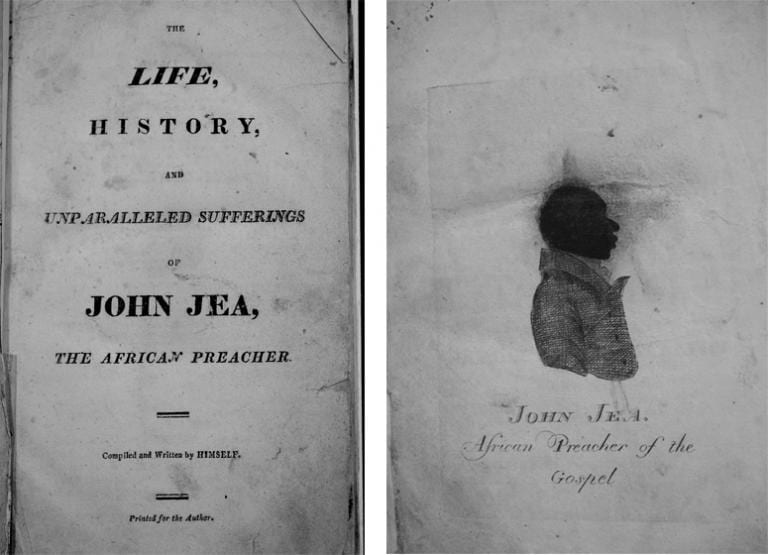 Hmmm….This is a hard question because as I researched and studied each of these interpreters I found myself drawn into their writings and into their worlds, so to speak. I have a deep appreciation for all of them, for they are all profound and insightful. So, it is difficult to choose one. I think one interpreter I can lift up is John Jea, an enslaved African, born in the 18th century and whose autobiography is powerful on so many levels. In his narrative, he tells of how God taught him to read. It’s an amazing story of faith and liberation. Likewise, many of the African American women I talk about in the book had extraordinary divine encounters with God. For instance, Zilpha Elaw, a 19th century preacher, says of one of her encounters that she cannot tell whether she was in the body or out of the body. The remarkable descriptions of these events by these women bear witness to God’s power.
When I was reading your wonderful book, I wasn’t prepared for how powerfully emotional it is to read such harrowing accounts of racism, discrimination, abuse, etc. Did that affect you? How did you handle it?
Yes, reading these writings were difficult at moments. At various points I cried, I experienced disappointment, and anger. For me these works compelled a range of emotions. There were times when I had to take some time away and other times I decompressed by talking to my family about what I was reading and I discussed with them the different interpreters I happened to be studying at the moment. At the same time, I also experienced great inspiration and hope from these African Americans and their writings. While these texts challenged me, they filled me with hope. I was encouraged by these interpreters’ tenacity, their unshakeable faith, and their relentless belief in the power of God and the power of the gospel, if adhered to faithfully, to transform individuals, communities, and the nation. Their stories and their writings have definitely left an imprint upon me and I hope that readers also feel connected to them when they read the book.
My fear with a book as important as yours is that it will be treated as a “niche” topic, only of interest to those interested in African-American interpretation or reception studies. But I hope a much broader audience reads this book—I assume you do too. How do you think a study like this benefits how we study the Bible, and in particular how we study Paul, today?
I think these interpreters leave us a legacy of how scripture is God’s word and is a word on target for the contexts in which we find ourselves. They offer us insight into ways forward in the current climate in which we are now living in which issues of race, racism, the church, and Christianity are again at the forefront. Can Paul speak to these issues? Can one view Paul as a figure of resistance and protest? When we read these writings, we see that these hermeneuts (interpreters) answer affirmatively to such queries. Also, what does it mean to interpret scripture well and faithfully? Again, I think these authors show us ways to do that. I would also add that the research included in the book involves a three-layered nexus of historical, theological, and biblical work so I hope that those interested in history and theology will find it compelling as well. In addition, the book discusses different genres in which African American interpreters utilized Paul to protest racism, oppression, and injustice—ranging from enslaved petitions to essays to sermons to conversion narratives. They show us that the Bible is relevant and is a source against racism, injustice, and oppression, all issues which believers need to address in living out the gospel. And finally, I hope that the interpreters featured in the monograph become important conversation partners in Pauline studies and that their voices become a part of the discussions around apocalyptic thought in Paul, protest and resistance hermeneutics, hermeneutics of trust, and the art of biblical interpretation.
Get the Book


Browse Our Archives
Select a Category (Mis)Understanding Philippians 10 Things I Can't Live Without 2023 New Books 30 OT HB Scholars to Read and Follow 5 Books Series 50-2-Follow Academia Christian Theologians to Read and Follow Cruciform Scripture: Contributor Reflections Crux Sola TV Editors Behind Great Books in NT Studies Education Gendering the Holy Spirit Gupta FB Live Lectures In Faith and Doubt In Their Own Words Living the King Jesus Gospel My Top 6 OT Commentaries New Testament Resource Guide New Word Biblical Themes Nijay's A Very Library Christmas Shopping Guide Notes from an Editor Notes on New Books NTRG OT in the NT Paul Seminary Now The Bible in God's World The Word Felt Among Us SPENCER Translating Philippians Uncategorized Why I Use Accordance Women in Ministry
Select a Month March 2024 February 2024 January 2024 December 2023 November 2023 October 2023 September 2023 August 2023 May 2023 March 2023 February 2023 January 2023 December 2022 November 2022 October 2022 September 2022 August 2022 July 2022 June 2022 May 2022 March 2022 February 2022 January 2022 December 2021 November 2021 October 2021 September 2021 August 2021 July 2021 June 2021 May 2021 April 2021 March 2021 February 2021 January 2021 December 2020 November 2020 October 2020 September 2020 August 2020 July 2020 June 2020 May 2020 April 2020 March 2020 February 2020 January 2020 December 2019 November 2019 October 2019 September 2019 August 2019 July 2019 June 2019 May 2019 April 2019 March 2019 February 2019 January 2019 October 2018 September 2018 August 2018 July 2018 June 2018 April 2018 March 2018 February 2018 January 2018 December 2017 October 2017 September 2017 August 2017 July 2017 June 2017 May 2017 April 2017 March 2017 February 2017 January 2017 December 2016 November 2016 October 2016 September 2016 August 2016 July 2016 June 2016 May 2016 April 2016 March 2016 February 2016 January 2016 December 2015 November 2015 October 2015 September 2015 August 2015 July 2015 June 2015 May 2015 April 2015 March 2015 February 2015 January 2015 December 2014 November 2014 October 2014 September 2014 August 2014 July 2014 June 2014 May 2014 April 2014 March 2014 February 2014 January 2014 December 2013 November 2013 October 2013 September 2013 August 2013 July 2013 June 2013 May 2013 April 2013 March 2013 February 2013 January 2013 December 2012 November 2012 October 2012 September 2012 August 2012 July 2012 June 2012 May 2012 April 2012 March 2012 February 2012 January 2012 December 2011 November 2011 October 2011 September 2011 August 2011 July 2011 June 2011 May 2011 April 2011 March 2011 February 2011 January 2011 December 2010 November 2010 October 2010 September 2010 August 2010 July 2010 June 2010 May 2010 April 2010 March 2010 February 2010 January 2010 December 2009 November 2009 October 2009 September 2009 August 2009 July 2009 June 2009 May 2009 April 2009 March 2009 February 2009 January 2009 December 2008 November 2008 October 2008 September 2008 August 2008 July 2008 June 2008 May 2008 April 2008 March 2008 February 2008 January 2008 December 2007 November 2007 October 2007 September 2007 August 2007 July 2007 April 2007 March 2007 February 2007 January 2007
Follow Us!
TAKE THE
Religious Wisdom Quiz
Who is the author of the Book of Revelation?
Select your answer to see how you score.
Paul John Peter Ezekiel
Related posts from Crux Sola: Formed by Scripture to Live like Christ
Ten New Books in Biblical Studies (October 2021)
Crux Sola: Formed by Scripture to Live like Christ
Book Notice: Jesus and the Empire of God...
Crux Sola: Formed by Scripture to Live like Christ
Barr's The Making of Biblical Womanhood—My Reflections
Crux Sola: Formed by Scripture to Live like Christ
Interview with Rebekah Eklund: Beatitudes through the Ages
Crux Sola: Formed by Scripture to Live like Christ
TRENDING AT PATHEOS Evangelical

Looking at the Largest Orthodox Cathedral on Earth
There is often a considerable amount of anger and, shall we...

The Problem with False Prophets
Miller’s Station UMC| 10/18/26| Anchor Verse: Jeremiah 23: 1, 9-23 I...

Emotion in Early Christianity by Andrew Crislip
Andrew Crislip’s Emotion in Early Christianity examines an often overlooked dimension of...

16 Spiritual Touchstones for a More Grounded Life
After decades of spiritual study, here are 16 principles I try...

Catholic Evangelization: Sharing Your Faith Every Day
Welcome back to the Graceful Awakening mini-series called, “From Faith to Mission.” ...

The Pillar of the Boatmen: the Ancient Monument...
The Pillar of the Boatmen is a Romano-Gaulish sculpture that dates from...
view all Evangelical blogs
Ad-Free & Subscriber Log-In Subscription Support
- About Us
- 2026 Calendar
- Videos
- Podcasts
- Library of World Religions
- Faith In Media Tracker
- Advertise With Us
- Write for Us
- Privacy Policy
- Terms of Service
- Do Not Sell My Data
- Contact Us
- Radiant Digital
- Manage Newsletter Subscriptions
- Unsubscribe From Notifications
- Sitemap
Copyright 2008-2026, Patheos. All rights reserved.
Subscription Support Ad-Free & Subscriber Log-In
Follow Patheos