
BuddhistCatholicContemplativeEvangelicalGeneral ChristianHinduJewishLatter-day SaintMuslimNew VisionsProgressive Christian
Beliefs
- Buddhist
- Catholic
- Contemplative
- Evangelical
- General Christian
- Hindu
- Jewish
- Latter-day Saint
- More Voices
- Muslim
- New Visions
- Pagan
- Progressive Christian
Topics
- Religion News
- Food and Religion
- Sports and Religion
- Religious Art
- Religious Music and Entertainment
- Religious Events
- History and Religion
- Style and Religion
- Politics and Religion
- Women in Religion
- Recreation Outdoors and Religion
- Business Finance and Religion
- Careers Workplace and Religion
- Education and Religion
- Family Parenting and Religion
- Health Fitness and Religion
- Home and Religion
- Relationships and Religion
- Technology and Religion
- Travel and Religion
Columnists
- Buddhist Columnists
- Business Finance and Religion Columnists
- Careers Workplace and Religion Columnists
- Catholic Columnists
- Contemplative Columnists
- Education and Religion Columnists
- Evangelists Columnists
- Family Parenting and Religion Columnists
- General Christian Columnists
- Health Fitness and Religion Columnists
- Hindu Columnists
- History and Religion Columnists
- Home and Religion Columnists
- Jewish Columnists
- More Voices Columnists
- Latter Day Columnists
- Muslim Columnists
- New Visions Columnists
- Nonreligious Columnists
- Pagan Columnists
- Politics and Religion Columnists
- Progressive Columnists
- Recreation Outdoors and Religion Columnists
- Relationships and Religion Columnists
- Religion News Columnists
- Religious Art Columnists
- Religious Events Columnists
- Religious Music and Entertainment Columnists
- Sports and Religion Columnists
- Style and Religion Columnists
- Technology and Religion Columnists
- Travel and Religion Columnists
- Women in Religion Columnists
Resource Library
- 2026 Calendar
- Library of World Religions
- The 100 Most Holy Places on Earth
- Patheos Answers
- Podcasts
- Videos
- Faith Leaders Database
- Anglican Episcopalian
- Bahai
- Baptist
- Buddhism
- Christianity
- Confucianism
- Eastern Orthodoxy
- Hinduism
- Holiness and Pentecostal
- ISKCON
- Islam
- Judaism
- Lutheran
- Methodist
- The Church of Jesus Christ of Latter-day Saints
- New Age
- Paganism
- Presbytarian and Reformed
- Protestantism
- Religion Behind the Scenes
- Roman Catholic
- Scientology
- Shia Islam
- Sikhism
- Sufism
- Sunni Islam
- Taoism
- Zen
- See all religions
Research Tools
 Ad-Free & Subscriber Log-In Subscription Support
Ad-Free & Subscriber Log-In Subscription Support
Follow Patheos 

- Trending:
- Forgiveness
- |
- Marriage
- |
- Consciousness
- |
- Death Penalty
- |
- Election
- |
- Halloween
 Crux Sola: Formed by Scripture to Live like Christ
-
Blog Series
- Home
- Evangelical
- Doctrina Est Formatio: Teaching the Whole Person (My Tips and Tricks)
Doctrina Est Formatio: Teaching the Whole Person (My Tips and Tricks)
Last updated on: September 6, 2020 at 5:25 am by Nijay Gupta
Doctrina Est Formatio: Teaching the Whole Person (My Tips and Tricks) 2020-09-06T05:25:15-08:00 Nijay Gupta
Patheos Explore the world's faith through different perspectives on religion and spirituality! Patheos has the views of the prevalent religions and spiritualities of the world.
Teaching is Formation
I have been “off the grid” for a while as I have been teaching a week-long face-to-face intensive in Chicago for Northern Seminary. So, right now I am in the airport, processing the exciting week of learning, conversation, and community that just ended.
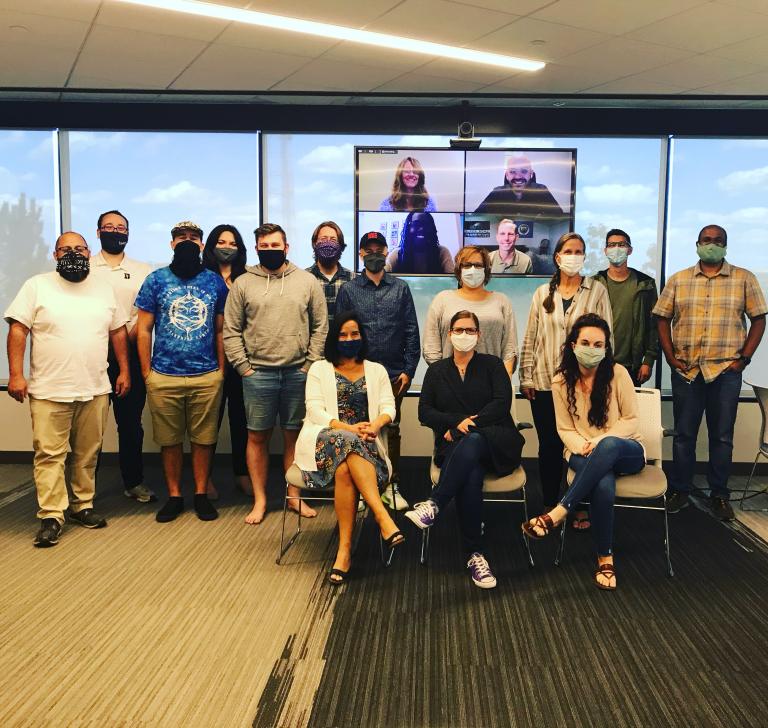
Galatians: Text, Context, Theology (Sept 2020)
I am in my twelfth year of full-time teaching, mostly at the seminary level. I have learned a lot in that time. Unfortunately most of the profs that taught me in seminary did not seem to put a whole lot of thought into a well-rounded pedagogy that seeks to form the whole person. While I value that I learned a ton of information and I received expert instruction in languages and traditional biblical interpretation, by and large a 3-hour course session consisted almost entirely of lecturing.
In no way do I feel that I have arrived as a teacher, but I turned a corner a few years ago towards taking whole-person teaching more seriously. So, I want to offer some of my tips and tricks in hopes of inspiring others, and I invite you to share your own techniques here or on social media. While this blog post focuses on seminary teaching, I think a lot of what I am saying will be relevant to teaching pastors as well.
Before we get into that, I want to talk about the academic seminary culture in the US and how it hindered me from taking risks and experimenting with pedagogy in the classroom.
What Does It Mean To Be “Academic”?
When I was in seminary, there was a kind of assumption that a professor who lectured for 150 minutes straight is a “serious” scholar and teacher; and those faculty who gave time for discussion and used object lessons were on some kind of lower tier. Some students would complain when the professor tried to engage in the material in fresh ways. I tried to share some of my techniques with a new colleague recently and he told me bluntly, “My students would riot!”
That makes me think that we need to revisit what we think counts as “academic.” And I want to say that the administration and especially the faculty should determine what is academic, not the students. They can have voice, but if they are given the social power to control the conversation, then professors like me will be afraid to experiment and do things that are “out of the box.” But there are many students who value whole-person instruction and have encouraged me in this.
Silence and Centering
Thanks especially to my experiences at Portland Seminary/George Fox (2014-2020), I learned a lot about the power of silence and centering prayer at the beginning and end of class. Just a few minutes of focused silence and centering really helps students to be present. Too few of us get real silence in our day, so it is a gift and blessing. It is a chance to invite God into the classroom (i.e., acknowledge his presence). It also naturally lowers stress and anxiety for most people. Sometimes I give a centering image or verse, but most of the time I simply encourage silencing the mouth and heart and concentrating on being fully present. (Credit to MaryKate Morse and Darla Tillman-Samuelson for inspiration)
Class Ethos
Every time I teach a new course, I give my students a class ethos: RICE (I’m a good Indian!): Respect, Integrity, Care, Enthusiasm.
Here is what I tell students:
Respect: Listen and respect everyone. Ask clarifying questions and “believe the best” in the other. Don’t be defensive, but generate conversation. Be a “learner” at all times.
Integrity: Be fully present. Set aside distractions, social media, email. Be yourself and be your whole self in this place.
Care: you are not a customer or “consumer.” You are a person in community. You are not individuals in a classroom. You are people in relationship. So look after one another. Learn from one another. Care for one another. Minister to one another. Keep your eyes open—is someone tired? Upset? Having a hard day? Need prayer? Need a smiling face?
This kind of ethos really helps to set up an inviting culture from the start.
Less is More
In my early years of teaching, Jack Levison took me under his wing and gave me lots of great tips about teaching and thriving in the academic world. I vividly recall him saying, “I am learning to do more and more on less and less.” By that he meant he was trying not to cram lots of information into the class to “get through the material.” Rather, he was aiming for depth in a few big ideas, rather than covering a lot of stuff on the surface level. I admit, I kinda dismissed his wisdom at the time, but now I am finally coming around. Students can get the breadth from the textbooks. What they benefit from in the classroom is the professor leaving their passion-imprint on the students. You (professors) have precious little time to pass down your convictions and passions to the students. They can learn dates and figures elsewhere. The classroom is a precious commodity and the rule of thumb taught to me by Jack and others is: do in the classroom ONLY what you can’t do outside of the classroom. Spend that time wisely.
So, I encourage you to decide early in the course: what are the ten big ideas or values that I want to transfer from my heart to the students? Then build your classroom time around that. Resist the temptation to do more. Do less, but deploy a comprehensive learning plan to drill those “big ten” in.
Small Group Discussion
I encourage very small groups (2-3 people) for discussion, and I don’t “sit in” on them because I want students to not feel like they have to impress me. In a 3-hour block, students might have 2 or 3 20-minute discussion times. Students need to process what they are learning. It is not a gimmick and we can’t assume they are verbally processing outside of class. This is important. The fact that some students don’t want discussion time is a sign of unhealthy attitudes towards learning. Peer learning and conversation is crucial to “thinking out loud” about the implications and dynamics of the material we are teaching.
Journaling in Class
This is a new feature I have been introducing more recently in my career. Our students’ lives are so busy. They have school. They have work. Some have families. Some take care of relatives. Some have health challenges. Some have long commutes. In all the busyness and noise, reflective journalism is sometimes hard to maintain and achieve outside of class. I am becoming a believer in the idea of using the classroom time as a laboratory for nurturing certain “learning habits” or “virtues.” So, I make time for 5 minutes of journaling at the end of every teaching “session” (~3 hour block). They can write, doodle, pray, or sit quietly and think. Nothing is collected from this journal. They can write as much or as little as they want. It is a time for prayer, reflection, self-examination, and making the material person to themselves and their community.
Make it Beautiful
As much as I can, I try to use music, art, and poetry to give life to some of the ideas and theories we discuss. That is because (1) it reinforces the importance of imagination for learning and creating, (2) it jars students into thinking about the material in fresh ways, and (3) it gives the material an aesthetic texture. I really want my students to engage with the course material creatively in their discussions and assignments, so it offers some inspiration to learn from professional artists of different kinds.
For example, I used a “freedom” sculpture in Philadelphia to talk about the theme of freedom in Galatians.

Final Thoughts
Again, I don’t pretend to know it all, but students this week responded well to many of these “out-of-the-box” features of class-room time. I encourage you to experiment, take risks, and think about what kind of fully-formed pastors you want in churches; not just eggheads or well-informed preachers, but people who are also socially and emotionally healthy, and formed to love God and love neighbor with their whole selves. It’s time to change the seminary culture. Let me empower you to make some changes for the better of your learning community.
Previous Post
August 28, 2020
NT Wright and Michael Bird launch New Testament World Podcast
Next Post
September 12, 2020 A-J Levine's Sermon on the Mount: A Short and Engaging Read
Browse Our Archives
Select a Category (Mis)Understanding Philippians 10 Things I Can't Live Without 2023 New Books 30 OT HB Scholars to Read and Follow 5 Books Series 50-2-Follow Academia Christian Theologians to Read and Follow Cruciform Scripture: Contributor Reflections Crux Sola TV Editors Behind Great Books in NT Studies Education Gendering the Holy Spirit Gupta FB Live Lectures In Faith and Doubt In Their Own Words Living the King Jesus Gospel My Top 6 OT Commentaries New Testament Resource Guide New Word Biblical Themes Nijay's A Very Library Christmas Shopping Guide Notes from an Editor Notes on New Books NTRG OT in the NT Paul Seminary Now The Bible in God's World The Word Felt Among Us SPENCER Translating Philippians Uncategorized Why I Use Accordance Women in Ministry
Select a Month March 2024 February 2024 January 2024 December 2023 November 2023 October 2023 September 2023 August 2023 May 2023 March 2023 February 2023 January 2023 December 2022 November 2022 October 2022 September 2022 August 2022 July 2022 June 2022 May 2022 March 2022 February 2022 January 2022 December 2021 November 2021 October 2021 September 2021 August 2021 July 2021 June 2021 May 2021 April 2021 March 2021 February 2021 January 2021 December 2020 November 2020 October 2020 September 2020 August 2020 July 2020 June 2020 May 2020 April 2020 March 2020 February 2020 January 2020 December 2019 November 2019 October 2019 September 2019 August 2019 July 2019 June 2019 May 2019 April 2019 March 2019 February 2019 January 2019 October 2018 September 2018 August 2018 July 2018 June 2018 April 2018 March 2018 February 2018 January 2018 December 2017 October 2017 September 2017 August 2017 July 2017 June 2017 May 2017 April 2017 March 2017 February 2017 January 2017 December 2016 November 2016 October 2016 September 2016 August 2016 July 2016 June 2016 May 2016 April 2016 March 2016 February 2016 January 2016 December 2015 November 2015 October 2015 September 2015 August 2015 July 2015 June 2015 May 2015 April 2015 March 2015 February 2015 January 2015 December 2014 November 2014 October 2014 September 2014 August 2014 July 2014 June 2014 May 2014 April 2014 March 2014 February 2014 January 2014 December 2013 November 2013 October 2013 September 2013 August 2013 July 2013 June 2013 May 2013 April 2013 March 2013 February 2013 January 2013 December 2012 November 2012 October 2012 September 2012 August 2012 July 2012 June 2012 May 2012 April 2012 March 2012 February 2012 January 2012 December 2011 November 2011 October 2011 September 2011 August 2011 July 2011 June 2011 May 2011 April 2011 March 2011 February 2011 January 2011 December 2010 November 2010 October 2010 September 2010 August 2010 July 2010 June 2010 May 2010 April 2010 March 2010 February 2010 January 2010 December 2009 November 2009 October 2009 September 2009 August 2009 July 2009 June 2009 May 2009 April 2009 March 2009 February 2009 January 2009 December 2008 November 2008 October 2008 September 2008 August 2008 July 2008 June 2008 May 2008 April 2008 March 2008 February 2008 January 2008 December 2007 November 2007 October 2007 September 2007 August 2007 July 2007 April 2007 March 2007 February 2007 January 2007
Follow Us!
TAKE THE
Religious Wisdom Quiz
Which Gospel is addressed to "Theophilus"?
Select your answer to see how you score.
John Matthew Luke Mark
Related posts from Crux Sola: Formed by Scripture to Live like Christ
Check out the SeminaryNow Holy Week (2024) Video...
Crux Sola: Formed by Scripture to Live like Christ
Get Seminary Credit through SeminaryNow Live Courses
Crux Sola: Formed by Scripture to Live like Christ
My New Fiction Series ("Strange Encounter")
Crux Sola: Formed by Scripture to Live like Christ
"Strange Religious Texts": Get the Bonus Essay FREE
Crux Sola: Formed by Scripture to Live like Christ
TRENDING AT PATHEOS Evangelical

In one sense walking into Westminster Abbey is like walking down the...

'Super Scam Me' Exposes AI Jon Bon Jovi...
Leslie Pickett believed she was in a relationship with Jon Bon Jovi....

The Brazilian Remake of Kendricks' 'Flywheel' Opens in...
“Flywheel,” the story that launched the Kendrick Brothers’ filmmaking career is getting...

The Dangers of Gradual Accommodation (Winking at Sin)
Recently, the “law of gradualness” resurfaced during the opening of a weeklong,...

The Iron Gates and the Lion of the...
Yesterday, I didn't finish my report about, well, yesterday. So I'll...

The Image: On the Horror of Capitalism and...
The Image Then went the Pharisees, and took counsel how they might...
view all Evangelical blogs
Ad-Free & Subscriber Log-In Subscription Support
- About Us
- 2026 Calendar
- Videos
- Podcasts
- Library of World Religions
- Faith In Media Tracker
- Advertise With Us
- Write for Us
- Privacy Policy
- Terms of Service
- Do Not Sell My Data
- Contact Us
- Radiant Digital
- Manage Newsletter Subscriptions
- Unsubscribe From Notifications
- Sitemap
Copyright 2008-2026, Patheos. All rights reserved.
Subscription Support Ad-Free & Subscriber Log-In
Follow Patheos