
BuddhistCatholicContemplativeEvangelicalGeneral ChristianHinduJewishLatter-day SaintMuslimNew VisionsProgressive Christian
Beliefs
- Buddhist
- Catholic
- Contemplative
- Evangelical
- General Christian
- Hindu
- Jewish
- Latter-day Saint
- More Voices
- Muslim
- New Visions
- Pagan
- Progressive Christian
Topics
- Religion News
- Food and Religion
- Sports and Religion
- Religious Art
- Religious Music and Entertainment
- Religious Events
- History and Religion
- Style and Religion
- Politics and Religion
- Women in Religion
- Recreation Outdoors and Religion
- Business Finance and Religion
- Careers Workplace and Religion
- Education and Religion
- Family Parenting and Religion
- Health Fitness and Religion
- Home and Religion
- Relationships and Religion
- Technology and Religion
- Travel and Religion
Columnists
- Buddhist Columnists
- Business Finance and Religion Columnists
- Careers Workplace and Religion Columnists
- Catholic Columnists
- Contemplative Columnists
- Education and Religion Columnists
- Evangelists Columnists
- Family Parenting and Religion Columnists
- General Christian Columnists
- Health Fitness and Religion Columnists
- Hindu Columnists
- History and Religion Columnists
- Home and Religion Columnists
- Jewish Columnists
- More Voices Columnists
- Latter Day Columnists
- Muslim Columnists
- New Visions Columnists
- Nonreligious Columnists
- Pagan Columnists
- Politics and Religion Columnists
- Progressive Columnists
- Recreation Outdoors and Religion Columnists
- Relationships and Religion Columnists
- Religion News Columnists
- Religious Art Columnists
- Religious Events Columnists
- Religious Music and Entertainment Columnists
- Sports and Religion Columnists
- Style and Religion Columnists
- Technology and Religion Columnists
- Travel and Religion Columnists
- Women in Religion Columnists
Resource Library
- 2026 Calendar
- Library of World Religions
- The 100 Most Holy Places on Earth
- Patheos Answers
- Podcasts
- Videos
- Faith Leaders Database
- Anglican Episcopalian
- Bahai
- Baptist
- Buddhism
- Christianity
- Confucianism
- Eastern Orthodoxy
- Hinduism
- Holiness and Pentecostal
- ISKCON
- Islam
- Judaism
- Lutheran
- Methodist
- The Church of Jesus Christ of Latter-day Saints
- New Age
- Paganism
- Presbytarian and Reformed
- Protestantism
- Religion Behind the Scenes
- Roman Catholic
- Scientology
- Shia Islam
- Sikhism
- Sufism
- Sunni Islam
- Taoism
- Zen
- See all religions
Research Tools
 Ad-Free & Subscriber Log-In Subscription Support
Ad-Free & Subscriber Log-In Subscription Support
Follow Patheos 

- Trending:
- Forgiveness
- |
- Marriage
- |
- Consciousness
- |
- Death Penalty
- |
- Election
- |
- Halloween
 Crux Sola: Formed by Scripture to Live like Christ
-
Blog Series
- Home
- Evangelical
- My Top 10 New Books In New Testament Studies (August/September 2020)
My Top 10 New Books In New Testament Studies (August/September 2020)
Last updated on: August 26, 2020 at 7:50 am by Nijay Gupta
My Top 10 New Books In New Testament Studies (August/September 2020) 2020-08-26T07:50:08-08:00 Nijay Gupta
Patheos Explore the world's faith through different perspectives on religion and spirituality! Patheos has the views of the prevalent religions and spiritualities of the world.
Here are my top picks for new books releasing in August and September. Enjoy!
August 2020
Amy-Jill Levine, Sermon on the Mount: A Beginner’s Guide to the Kingdom of Heaven (Abingdon Press)

Book Description:
The Sermon on the Mount, Matthew 5-7, contains some of Jesus most profound and most memorable teachings. What might these teachings have mean to his disciples, and to the others who first heard them? How do they enhance our reading of the rest of the Gospel of Matthew, and how do they speak across the centuries to listeners today? How, if we pay careful attention to his words, does Jesus provide us a road map to living as God would have us live?
In Sermon on the Mount: A Beginner’s Guide to the Kingdom of Heaven, Dr. Amy-Jill Levine introduces the major topics in the Sermon on the Mount, explains historical and theological contexts, and shows how the words of Jesus echo his Jewish tradition and speak forward to reach hearts and minds today.
This book provides a rich and challenging learning experience for the individual reader and also makes a wonderful, six-week group study with the additional Leader Guide, DVD, and 40-day readings
![]()
 Eve-Marie Becker, Paul on Humility (Baylor University Press)
description:
Humility in the modern world is neither well understood nor well received. Many see it as a sign of weakness; others decry it as a Western construct whose imposition onto marginalized persons only perpetuates oppression. This skepticism has a long pedigree: Aristotle, for instance, pointed to humility as a shameless front. What then are we to make of the New Testament’s valorization of this trait?
Translated from German into English for the first time, Paul on Humility seeks to reclaim the original sense of humility as an ethical frame of mind that shapes community, securing its centrality in the Christian faith. This exploration of humility begins with a consideration of how the concept plays into current cultural crises before considering its linguistic and philosophical history in Western culture. In turning to the roots of Christian humility, Eve-Marie Becker focuses on Philippians 2, a passage in which Paul appeals to the lowliness of Christ to encourage his fellow Christians to persevere. Becker shows that humility both formed the basis of the ethic Paul instilled in churches and acted as a mimetic device centered on Jesus’ example that was molded into the earliest Christian identity and community.
Becker resists the urge to cheapen humility with mere moralism. In the vision of Paul, the humble individual is one immersed in a complex, transformative way of being. The path of humility does not constrain the self; rather, it guides the self to true freedom in fellowship with others. Humility is thus a potent concept that speaks to our contemporary anxieties and discomforts.
Sean A. Adams, Greek Genres and Jewish Authors: Negotiating Literary Culture in the Greco-Roman Era (Baylor University Press)
Description:
The ancient world, much like our own, thrived on cultural diversity and exchange. The riches of this social reality are evident in the writings of Jews in the Hellenistic and Roman eras. Jewish authors drew on the wide range of Greek literary conventions and gave fresh expressions to the proud traditions of their faith and ethnic identity. They did not hesitate to modify and adapt the forms they received from the surrounding culture, but their works stand as legitimate participants in Greco-Roman literary tradition.
In Greek Genres and Jewish Authors, Sean Adams argues that a robust understanding of ancient genre facilitates proper textual interpretation. This perspective is vital for insight on the author, the work’s original purpose, and how the original readers would have received it. Adopting a cognitive-prototype theory of genre, Adams provides a detailed discussion of Jewish authors writing in Greek from ca. 300 BCE to ca. 135 CE―including New Testament authors―and their participation in Greek genres. The nine chapters focus on broad genre divisions (e.g., poetry, didactic, philosophy) to provide studies on each author’s engagement with Greek genres, identifying both representative and atypical expressions and features.
The book’s most prominent contribution lies in its data synthesis to provide a macroperspective on the ways in which Jewish authors participated in and adapted Greek genres―in other words, how members of a minority culture intentionally engaged with the dominant culture’s literary practices alongside traditional Jewish features, resulting in unique text expressions. Greek Genres and Jewish Authors provides a rich resource for Jewish, New Testament, and classical scholars, particularly those who study cultural engagement, development of genres, and ancient education.
Ben Witherington and Jason Myers, Voices and Views on Paul: Exploring Scholarly Trends (IVP Academic)
This is basically The Paul Quest for a new era of scholarship. A quick read with great insight into the hot debates of the field.
Here is my endorsement:
“The academic study of the apostle is a world unto itself―a world in which it would be very easy to get lost without guidance. Witherington and Myers know the terrain well and offer much insight into the major trends, debates, and crosscurrents of the last two decades. Whether you are a new explorer to Pauline studies or a seasoned traveler, Voices and Views on Paul has much to offer in the big picture as well as the finer details.” (Nijay K. Gupta, professor of New Testament at Northern Seminary)
September 2020
![]()
 Dennis R. Edwards, Might from the Margins: The Gospel’s Power to Turn the Tables on Injustice (Herald Press)
God has empowered marginalized Christians to transform the church.
Here is my endorsement for this great book:
“The apostle Paul tells the Corinthians that God chose the marginalized, the “nobodies,” to rob the elite and popular, the “somebodies,” of their status (1 Cor 1:28). That is what MIGHT FROM THE MARGINS is all about. Edwards highlights how the gospel is God’s power to lift up every valley and make low every mountain. Some readers will find this book troubling and upsetting, others will be filled with hope and courage. What a bold, beautiful, and incisive message for a Church that God wants to transform! ” (Nijay K. Gupta)
![]()
 Willie James Jennings, After Whiteness: An Education in Belonging
I got interested in Jennings after an OnScript podcast interview. This book looks great—timely and fresh.
Description:
On forming people who form communion
Theological education has always been about formation: first of people, then of communities, then of the world. If we continue to promote whiteness and its related ideas of masculinity and individualism in our educational work, it will remain diseased and thwart our efforts to heal the church and the world. But if theological education aims to form people who can gather others together through border-crossing pluralism and God-drenched communion, we can begin to cultivate the radical belonging that is at the heart of God’s transformative work.
In this inaugural volume of the Theological Education between the Times series, Willie James Jennings shares the insights gained from his extensive experience in theological education, most notably as the dean of a major university’s divinity school—where he remains one of the only African Americans to have ever served in that role. He reflects on the distortions hidden in plain sight within the world of education but holds onto abundant hope for what theological education can be and how it can position itself at the front of a massive cultural shift away from white, Western cultural hegemony. This must happen through the formation of what Jennings calls erotic souls within ourselves—erotic in the sense that denotes the power and energy of authentic connection with God and our fellow human beings.
After Whiteness is for anyone who has ever questioned why theological education still matters. It is a call for Christian intellectuals to exchange isolation for intimacy and embrace their place in the crowd—just like the crowd that followed Jesus and experienced his miracles. It is part memoir, part decolonial analysis, and part poetry—a multimodal discourse that deliberately transgresses boundaries, as Jennings hopes theological education will do, too.
Dana Harris, An Introduction to Biblical Greek (Zondervan Academic)
Another Greek book, you ask? This one is really good. Harris is a clear and engaging writer and offers the latest linguistic-oriented approach to Greek studies.
Here is my endorsement:
A great Greek textbook is up-to-date on Greek studies and linguistics, but functions as a simple and clear guide for (often intimidated) beginning students. It ought to be visually appealing with assignments that are challenging but not overwhelming. It should include plenty of examples and illustrations without a back-breaking page count. Impressively, Harris’ introduction accomplishes all of these things. Students can be relieved that this textbook will introduce Greek plainly; instructors can rest assured that the material is reliable and represents the state of biblical Greek scholarship.” (Nijay K. Gupta)
Francis Moloney, Apocalypse of John: A Commentary (Baker Academic)
Moloney is a great commentary writer and knows the Johannine literature well. You might be wondering, will Moloney offer anything “new”? Absolutely: from the description: “Challenging the assumed consensus among New Testament scholars, Moloney reads Revelation not as an exhortation to faithfulness in a period of persecution but as a celebration of the ongoing effects of Jesus’s death and resurrection. “
Douglas Harink, Resurrecting Justice: Reading Romans for the Life of the World (IVP)
A fresh look at the theme of justice in Romans. Here is my endorsement:
“What is Romans about? We know the traditional answers: justification by faith, forgiveness of sins, personal salvation. Harink doesn’t throw these out the window but puts the spotlight on the thematic thread of justice that runs all through Romans. I admit that I had my initial hesitations and doubts about reading Romans as a treatise on justice, but by the end I was a believer! Harink joins together what has often been torn asunder today―the relationships between personal and corporate, individual and communal, and personal justification and social justice in Christian thought and theology―with the resurrection of Christ at the center of it all.” (Nijay K. Gupta, professor of New Testament at Northern Seminary)
Esau McCaulley, Reading While Black: African American Biblical Interpretation as an Exercise in Hope (IVP Academic)
This is an important book, written by a powerful voice, coming at a pivotal time in American history. Read this.
My endorsement:
“When I was a student, I was explicitly and implicitly trained to focus exclusively on the ancient context of Scripture and read ‘objectively.’ Bible study could easily become a disembodied experience. McCaulley makes a compelling case, in this engagement with African American biblical interpretation, that not only is the reader’s culture and experience not a hindrance to interpretation per se but can enrich it greatly. Reading While Black is a unique and successful blend of biblical hermeneutics, autobiography, black history and spirituality, incisive cultural commentary on race matters in America, and insightful exegesis of select New Testament texts.” (Nijay K. Gupta, professor of New Testament at Northern Seminary)

Next Post
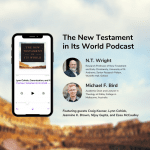
August 28, 2020 NT Wright and Michael Bird launch New Testament World Podcast
Browse Our Archives
Select a Category (Mis)Understanding Philippians 10 Things I Can't Live Without 2023 New Books 30 OT HB Scholars to Read and Follow 5 Books Series 50-2-Follow Academia Christian Theologians to Read and Follow Cruciform Scripture: Contributor Reflections Crux Sola TV Editors Behind Great Books in NT Studies Education Gendering the Holy Spirit Gupta FB Live Lectures In Faith and Doubt In Their Own Words Living the King Jesus Gospel My Top 6 OT Commentaries New Testament Resource Guide New Word Biblical Themes Nijay's A Very Library Christmas Shopping Guide Notes from an Editor Notes on New Books NTRG OT in the NT Paul Seminary Now The Bible in God's World The Word Felt Among Us SPENCER Translating Philippians Uncategorized Why I Use Accordance Women in Ministry
Select a Month March 2024 February 2024 January 2024 December 2023 November 2023 October 2023 September 2023 August 2023 May 2023 March 2023 February 2023 January 2023 December 2022 November 2022 October 2022 September 2022 August 2022 July 2022 June 2022 May 2022 March 2022 February 2022 January 2022 December 2021 November 2021 October 2021 September 2021 August 2021 July 2021 June 2021 May 2021 April 2021 March 2021 February 2021 January 2021 December 2020 November 2020 October 2020 September 2020 August 2020 July 2020 June 2020 May 2020 April 2020 March 2020 February 2020 January 2020 December 2019 November 2019 October 2019 September 2019 August 2019 July 2019 June 2019 May 2019 April 2019 March 2019 February 2019 January 2019 October 2018 September 2018 August 2018 July 2018 June 2018 April 2018 March 2018 February 2018 January 2018 December 2017 October 2017 September 2017 August 2017 July 2017 June 2017 May 2017 April 2017 March 2017 February 2017 January 2017 December 2016 November 2016 October 2016 September 2016 August 2016 July 2016 June 2016 May 2016 April 2016 March 2016 February 2016 January 2016 December 2015 November 2015 October 2015 September 2015 August 2015 July 2015 June 2015 May 2015 April 2015 March 2015 February 2015 January 2015 December 2014 November 2014 October 2014 September 2014 August 2014 July 2014 June 2014 May 2014 April 2014 March 2014 February 2014 January 2014 December 2013 November 2013 October 2013 September 2013 August 2013 July 2013 June 2013 May 2013 April 2013 March 2013 February 2013 January 2013 December 2012 November 2012 October 2012 September 2012 August 2012 July 2012 June 2012 May 2012 April 2012 March 2012 February 2012 January 2012 December 2011 November 2011 October 2011 September 2011 August 2011 July 2011 June 2011 May 2011 April 2011 March 2011 February 2011 January 2011 December 2010 November 2010 October 2010 September 2010 August 2010 July 2010 June 2010 May 2010 April 2010 March 2010 February 2010 January 2010 December 2009 November 2009 October 2009 September 2009 August 2009 July 2009 June 2009 May 2009 April 2009 March 2009 February 2009 January 2009 December 2008 November 2008 October 2008 September 2008 August 2008 July 2008 June 2008 May 2008 April 2008 March 2008 February 2008 January 2008 December 2007 November 2007 October 2007 September 2007 August 2007 July 2007 April 2007 March 2007 February 2007 January 2007
Follow Us!
TAKE THE
Religious Wisdom Quiz
Which king's name appears as an author in Proverbs, apart from Solomon?
Select your answer to see how you score.
Hezekiah David Lemuel Saul
Related posts from Crux Sola: Formed by Scripture to Live like Christ
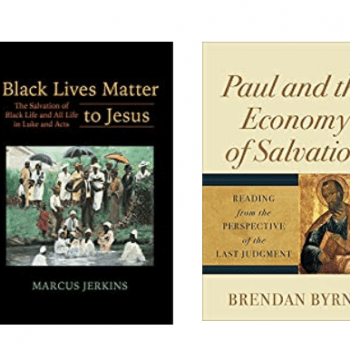
Ten New Books in Biblical Studies (October 2021)
Crux Sola: Formed by Scripture to Live like Christ
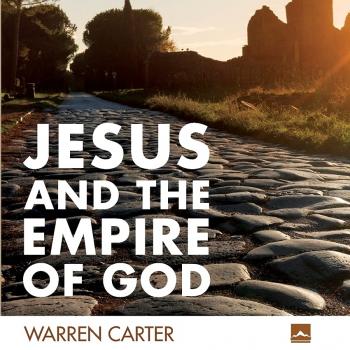
Book Notice: Jesus and the Empire of God...
Crux Sola: Formed by Scripture to Live like Christ
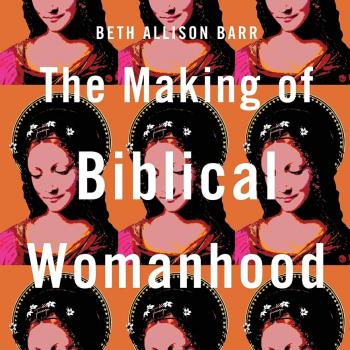
Barr's The Making of Biblical Womanhood—My Reflections
Crux Sola: Formed by Scripture to Live like Christ
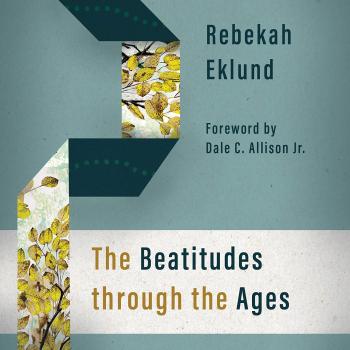
Interview with Rebekah Eklund: Beatitudes through the Ages
Crux Sola: Formed by Scripture to Live like Christ
TRENDING AT PATHEOS Evangelical

Jad Gillies on New Hillsong Worship Songs and...
For worship leader Jad Gillies, Hillsong Worship’s next chapter is not about...

Looking at the Largest Orthodox Cathedral on Earth
There is often a considerable amount of anger and, shall we...

The Problem with False Prophets
Miller’s Station UMC| 10/18/26| Anchor Verse: Jeremiah 23: 1, 9-23 I...

Emotion in Early Christianity by Andrew Crislip
Andrew Crislip’s Emotion in Early Christianity examines an often overlooked dimension of...

16 Spiritual Touchstones for a More Grounded Life
After decades of spiritual study, here are 16 principles I try...

Catholic Evangelization: Sharing Your Faith Every Day
Welcome back to the Graceful Awakening mini-series called, “From Faith to Mission.” ...
view all Evangelical blogs
Ad-Free & Subscriber Log-In Subscription Support
- About Us
- 2026 Calendar
- Videos
- Podcasts
- Library of World Religions
- Faith In Media Tracker
- Advertise With Us
- Write for Us
- Privacy Policy
- Terms of Service
- Do Not Sell My Data
- Contact Us
- Radiant Digital
- Manage Newsletter Subscriptions
- Unsubscribe From Notifications
- Sitemap
Copyright 2008-2026, Patheos. All rights reserved.
Subscription Support Ad-Free & Subscriber Log-In
Follow Patheos