
BuddhistCatholicContemplativeEvangelicalGeneral ChristianHinduJewishLatter-day SaintMuslimNew VisionsProgressive Christian
Beliefs
- Buddhist
- Catholic
- Contemplative
- Evangelical
- General Christian
- Hindu
- Jewish
- Latter-day Saint
- More Voices
- Muslim
- New Visions
- Pagan
- Progressive Christian
Topics
- Religion News
- Food and Religion
- Sports and Religion
- Religious Art
- Religious Music and Entertainment
- Religious Events
- History and Religion
- Style and Religion
- Politics and Religion
- Women in Religion
- Recreation Outdoors and Religion
- Business Finance and Religion
- Careers Workplace and Religion
- Education and Religion
- Family Parenting and Religion
- Health Fitness and Religion
- Home and Religion
- Relationships and Religion
- Technology and Religion
- Travel and Religion
Columnists
- Buddhist Columnists
- Business Finance and Religion Columnists
- Careers Workplace and Religion Columnists
- Catholic Columnists
- Contemplative Columnists
- Education and Religion Columnists
- Evangelists Columnists
- Family Parenting and Religion Columnists
- General Christian Columnists
- Health Fitness and Religion Columnists
- Hindu Columnists
- History and Religion Columnists
- Home and Religion Columnists
- Jewish Columnists
- More Voices Columnists
- Latter Day Columnists
- Muslim Columnists
- New Visions Columnists
- Nonreligious Columnists
- Pagan Columnists
- Politics and Religion Columnists
- Progressive Columnists
- Recreation Outdoors and Religion Columnists
- Relationships and Religion Columnists
- Religion News Columnists
- Religious Art Columnists
- Religious Events Columnists
- Religious Music and Entertainment Columnists
- Sports and Religion Columnists
- Style and Religion Columnists
- Technology and Religion Columnists
- Travel and Religion Columnists
- Women in Religion Columnists
Resource Library
- 2026 Calendar
- Library of World Religions
- The 100 Most Holy Places on Earth
- Patheos Answers
- Podcasts
- Videos
- Faith Leaders Database
- Anglican Episcopalian
- Bahai
- Baptist
- Buddhism
- Christianity
- Confucianism
- Eastern Orthodoxy
- Hinduism
- Holiness and Pentecostal
- ISKCON
- Islam
- Judaism
- Lutheran
- Methodist
- The Church of Jesus Christ of Latter-day Saints
- New Age
- Paganism
- Presbytarian and Reformed
- Protestantism
- Religion Behind the Scenes
- Roman Catholic
- Scientology
- Shia Islam
- Sikhism
- Sufism
- Sunni Islam
- Taoism
- Zen
- See all religions
Research Tools
 Ad-Free & Subscriber Log-In Subscription Support
Ad-Free & Subscriber Log-In Subscription Support
Follow Patheos 

- Trending:
- Forgiveness
- |
- Marriage
- |
- Consciousness
- |
- Death Penalty
- |
- Election
- |
- Halloween
 Crux Sola: Formed by Scripture to Live like Christ
-
Blog Series
- Home
- Evangelical
- Katya Covrett (Zondervan Academic): The Editors behind the Great Books in New Testament Studies
Katya Covrett (Zondervan Academic): The Editors behind the Great Books in New Testament Studies
Last updated on: August 13, 2020 at 12:40 pm by Nijay Gupta
Katya Covrett (Zondervan Academic): The Editors behind the Great Books in New Testament Studies 2020-08-13T12:40:17-08:00 Nijay Gupta
Patheos Explore the world's faith through different perspectives on religion and spirituality! Patheos has the views of the prevalent religions and spiritualities of the world.
I have known Katya for a good long while. I enjoy our yearly SBL meal (sad we have to skip this year). She knows a ton about the academic publishing world and I have learned a lot from her insight and experience. She helped me with my Zondervan Critical Introduction to the New Testament 1-2 Thessalonians volume, and we are working together on a few new things. Katya is professional, witty, and collegial—take notes on her wise counsel. Enjoy!
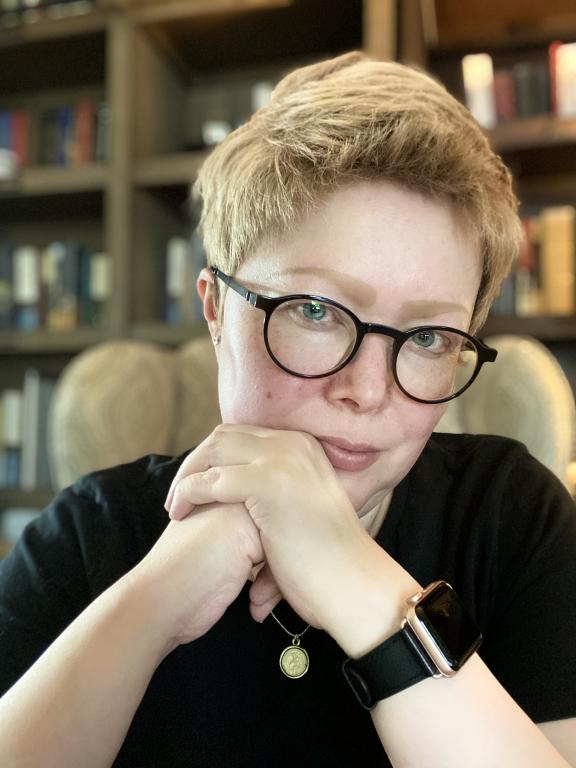
Katya Covrett, Zondervan Academic
Tell us about yourself.
You know this, Nijay, but your readers might be surprised that English is not my first language. Russian is. I was born and raised in Russia. In my twenties, I moved across the Pacific to the US (that way was a much shorter trip) and have now lived in Grand Rapids for over twenty-two years. I was not raised a Christian and only came to faith as a young adult at university, where I was studying English linguistics. After I graduated, Far East Russia Bible College asked me to be their interpreter (the majority of their faculty were English-only speakers). Say you went to Russia to teach; I’d be that person next to you, translating between you and the students in class. I did that for a few years. I enjoyed the work itself, but even more I cherished the opportunity to study the Bible and theology since I was still a very young Christian then. It was at FERBC that I decided to pursue my own theological education. Russia did not have master’s level Bible and theology programs then, so, since I was fluent in English, I came here to study at Grand Rapids Theological Seminary. My degree, an MTS, was evenly split between biblical studies (mostly NT) and theology. My whole reason for going to school was to become a translator of biblical-theological literature, much needed in the Russian Bible colleges and seminaries. Well, that is not how it all worked out.
Few editors I know aspired to be in publishing. They sort of wandered into it and ended up enjoying it. How did you become an editor? What do you enjoy about it?
Indeed. I had no plans to be an editor, much less to be in “acquisitions” (what the heck is that and how contagious is it?). I stumbled into publishing because, well, I needed a job. Opportunities for translation work were slim and turned out an unreliable source of livelihood. With a master’s degree in Bible and theology of all things, I was overqualified for most “regular” jobs. I could teach, but colleges who would allow someone to teach with just a master’s degree, won’t even consider a woman; schools that want a woman, want her with a doctorate. I was in no way ready to pursue a PhD then, not after four years of grad school!
It was in August 2002, three months after graduation, that Zondervan put up a job posting for an editorial assistant. Now, I had applied for many jobs at Zondervan by then, unsuccessfully, but I figured I’d give it one last shot. The job posting was rather generic, just an assistant to proper editors. What I did not know is that they were looking for two assistants—one for trade, one for academic. Because of my degree, I was hired within three weeks and the rest, as they say, is history.
Starting out at “Zee,” I supported four acquiring editors in the church, academic, and reference division in whatever they needed, learning what this “acquisitions” thing was all about. Within two years I was acquiring an occasional book myself and within three years I was promoted to acquisitions editor. Two years after I assumed my new role, we established the Zondervan Academic brand and I have been its primary acquiring editor ever since. While I acquire broadly in biblical studies, theology, philosophy, history, etc., biblical studies has always been my first love.
Since I clearly did not have enough to do as an editor, I recently started a PhD in New Testament at the University of Aberdeen, supervised by Steve Walton through Trinity College Bristol. It is a part-time and distance program and I am still fairly early in it, so it will take me a few years to complete. I should mention here that, after I finish, I have no plans to leave publishing. I am not doing a PhD to change careers but to do what I do better (dv). I simply love what I do.
One of the most satisfying things in my work is partnering with authors to develop their ideas. I love to see a book born from a mere spark of imagination and to walk alongside the author in the journey. But books are not ends in themselves. Seeing books I have acquired and edited have an impact in the academy and the church around the world is the ultimate satisfaction for an editor. It is mission.
What are some things that stand out to you in a book conversation with an author or a book proposal that grab your interest?
First, of course, is your grasp of the subject on which you propose a book to me and your expertise in the relevant area of biblical studies. That’s a key element. I need to know that you are the person to do this book. This might seem rather basic to you, but, trust me, you’d be surprised what some people propose to us sometimes as “biblical studies.”
There is something about the way you hold and present your ideas. I used to say an important thing I like to see is your passion for the book, that burning idea within you that has to get out. But having been in academic publishing “a few” years now, I would temper that with humility and charity with which you hold your ideas.
Personality does play a role. Academic publishing is not all dry and theoretically serious (though I know some will disagree). G. K. Chesterton once said that the test of a good religion is whether one can joke about it. I think that goes for the Christian academy and academic publishing as well. Part of this, too, is not taking oneself too seriously (back to that humility thing). Having some fun with academic publishing is certainly something that appeals to me and that will stand out to me in my interaction with prospective authors.
Acquisitions is a personal business and a good relationship between the author and the editor goes a long way to establishing a long-term and fruitful publishing partnership. Because of this, the author’s willingness to listen to the editor is an important factor in the initial contact between us. It can prove significant not only for the success of a proposal with a given press but also for the later editing process. Editors who have been in the business for a long time know what works in a book or book proposal and what doesn’t. Listen to them.
What are your book proposal pet peeves? And what are common, but correctable mistakes that authors make when trying to pitch their book idea?
Where do I begin?! Just kidding. (Maybe.)
Proposal Pet Peeve #1: Proposal in the body of the email. Just. Don’t. Surely you have an actual word processing program on your computer, no? If not, you might have bigger problems than getting published…
Proposal Pet Peeve #2: Another publisher’s editor addressed in the proposal. Quoting the eminent Dan Reid (retired editor of IVP Academic), “When shopping book proposals to publishers, be sure to delete the name of the last editor/publisher you tried. No matter how prestigious they are.”
Proposal Pet Peeve #3: No comparative literature assessment. Do your research on the competition beforehand and be fair, and honest with yourself, in the assessment of just how much what you are writing overlaps/competes with the lot that’s already out there.
Proposal Pet Peeve #4: Audience too broad and/or not clearly identified. “This book will be read by scholars, students, pastors, all Christians everywhere, teenagers—goodness, even toddlers’ lives will be changed!” I am exaggerating, of course (but you’d be surprised how not far off this is). It is far more common for academic authors to overestimate who will actually read their book and, as a corollary to that, the level at which they write. Be realistic with identifying your audience; overinflating your expected readership will only make the publisher leery to take you on as an author when your expectations are far beyond what any publisher can fulfill.
Proposal Pet Peeve #5: Typos. Proofread your proposal and any included documents before you hit send. Typos and grammatical errors do not make a good first impression, especially on editors.
When you draw up a proposal, keep it brief (3-5 pages) and to the point. An editor can generally tell from looking at a proposal for just a few minutes whether a given book will work for our press and whether we want to take a deeper look. We can also tell whether the author has done their homework. Editors are busy people; the easier you make it for us to review your proposal and get the point of what you are trying to say, the faster you get a reply and the better your chances for publishing success—that is, an offered contract. I’ll leave it at that since have written elsewhere on putting together a proposal and increasing your chances of getting published (https://womenbiblicalscholars.com/2016/06/02/a-not-entirely-foolproof-guide-to-getting-published-for-academics-part-i/).
Talk about one or two books that you acquired or edited that you are especially proud of and why.
Oh, come on. You cannot expect me to pick just one or two??? Which one of your children is your favorite, Nijay? (NKG: touché)
I am going to be sneaky and highlight one … series. But seriously, quite apart from my little cheat to get around your (rather unreasonable) limit, of all my projects, this series is probably nearest and dearest to my heart and the project I am most proud of having acquired and edited: Biblical Theology for Life. The series editor Jon Lunde and I have been working on it since 2007. Every BTFL volume explores a theme through the Scriptures, with a view not only to describing what the Bible has to say about a given topic but why it is (or should be) relevant today. Already published are volumes by Jon Lunde (discipleship), Chris Wright (mission), Craig Blomberg (wealth), Brian Rosner (personal identity), Douglas Moo and Jonathan Moo (creation care), Nick Perrin (kingdom of God). Forthcoming ones will speak to social justice (Mariam Kovalishyn), alcohol (John Dunne), hope (Murray Smith), sexuality (Nate Collins), faith (Jeanette Hagen Pifer), race and ethnicity, violence, and other themes. The way each and every BTFL volume came about has a unique story I could tell, though probably not for this interview. This has been an exciting series and a superb team of contributors I have ever had the privilege to work with.
There are many good pieces of scholarship by biblical scholars, but we are not necessarily good at the art of writing. If you were to help an author improve their writing and communication skills, what would you recommend?
To improve your writing you must do two things: read a lot and write a lot. I am certainly not the first one to point out the connection between these activities.
Even if you write primarily for the academy—and perhaps because you do—you need to read broadly and learn from good writers in other genres. Just because you are writing for other academics does not mean it must be dry, long, boring, or follow some, often unspoken, convention. A well-written academic work is a joy to read (and to edit).
Certainly academics know that you learn to write, well, by writing. But for many scholars, the greatest hurdle to writing is not simply honing your writing skill but finding time and space to write in the first place.
There are two books I would recommend for scholars who wish to improve their writing craft and to find time to write: Helen Sword’s Stylish Academic Writing and Air and Light and Time and Space: How Successful Academics Write. The former focuses on the craft, the latter on the essential habits of successful academic writers. I can’t recommend these two books enough. They have helped to inform and improve my own writing skills and habits and I hope they will do so for you.

Explain how you define and interpret “success” in your industry?
I think that, in publishing, success is or should always be about great content, scholarly or otherwise. We are nothing if what we publish is not good enough. That’s the baseline, the assumption, the cornerstone of all we do. It needn’t even be a question—great content is where we start.
Next, I would say longevity, standing the test of time. A book that makes a splash and is forgotten a year after, is not, to me, a success. Our books are “successful” if year and after year they are being read and are meeting the needs of scholars, students, and pastors who use them.
Lastly, sales. How many copies a book sells in the first year(s) of its life and how well it settles into its longevity is definitely a metric of success, though admittedly, not always the determinative one. The two elements above have to be the foundation of it.
Can you give some thoughts and predictions about how publishing in biblical studies can and/or should change in the next 10 years?
So much to say, so little space! Since I am already pushing beyond the limits of my word count—editor, heal thyself—I will offer one reflection.
I hope and pray that publishing in biblical studies will become more diverse. Historically, the discipline has been dominated by white men (please understand that I have nothing against white men; many of my best friends among authors are white guys), but this must change. It is changing, however slowly, and yet there is a lot of work to do. When I think back to when I started in publishing nearly twenty years ago, the thought Oh, shouldn’t our publishing be more diverse? was a concern hardly articulated with any regularity. Today, it is a question we mull over at nearly every acquisitions meeting. As I have written elsewhere, for the representation of women and minority scholars in Christian academic publishing to change, “it has to be a publishing vision upfront—not an afterthought—and a commitment in the publisher’s acquisitions strategy and throughout the life of the edited work or a series” (https://womenbiblicalscholars.com/2016/05/19/what-i-learned-about-gender-and-diversity-from-christian-academic-publishing/). Zondervan Academic has made this commitment and, as our friendly competitors do so as well, we will begin to see the tide change for the better.
If you were wanting to invite “fresh talent” to publish with your press, what is your pitch (right here and right now!)? How do you express your press’ identity and purpose and how do you want to shape biblical studies?
I love my team at Zondervan Academic. We see ourselves as bunch of Bible and theology nerds who love books and love to create books for others who wish to grow in their understanding and their faith. But we also take our mission seriously. In everything we publish, we seek to reflect the great Christian tradition’s breadth and diversity both theological and global; this much you can read on our website. But there are a couple of things you won’t learn there—what makes Zondervan Academic tick.
One of the highest values that was drilled into me early on at “Zee” was what we term editorial excellence. In the movie Genius, a story about the legendary editor Maxwell Perkins, based on Scott Berg’s biography Max Perkins: Editor of Genius, there is a quote with which I deeply resonate. Colin Firth, as Perkins, says, “That’s what we editors lose sleep over, you know. Are we really making books better or just making them different?” It goes back to that essential success metric of great content.
Zondervan Academic’s goal is to make our authors’ books better. Whatever we choose to publish, we want to do so excellently. For this reason, each author’s book at Zondervan Academic is cared for by not one but two in-house editors: the acquisitions editor (me) who together with you develops a publishing strategy and then works closely with you through the substantive edit, and a production editor who sees the book through its final stages of editing, composition, and production to that newly minted book in your hand.
But writing and editing a great book is only the beginning of its path to finding its readers. We have a veritable army of publishing professionals—editorial managers, designers, compositors, production specialists—to shepherd your book through a carefully designed publishing process. And, once the book is out, we have the best marketing team for getting your book into the hands of its readers. Our marketers are as innovative as they are fun. They get involved with each book and author months before publication and work tirelessly on your behalf to amplify your voice. And they love when our author community receives regular additions of fresh, new voices.
The importance of publishing fresh talent was impressed upon me early on in my acquisitions career by my then-boss, Lyn Cryderman. Shortly after I entered acquisitions, he called me into his office. “I have a challenge for you,” he said. (I did not pass out, but it was a close call.) “Over the years, Zondervan has published numerous premier scholars in biblical-theological studies. What are we doing to seek out and publish those who will be premier scholars in ten, fifteen, twenty years?” The question stuck with me and I have made an intentional effort since to seek out young scholars, as you well know, Nijay. Indeed, my lingering question since that day has been of the role we publishers have played in the making of today’s premier scholars by giving them opportunities to get published. I think our academic catalog speaks for itself in how well we have been able to achieve publishing fresh voices alongside seasoned one. Here is your invitation to add your voice to the chorus.
Editors Behind Great Books in NT Studies

Browse Our Archives
Select a Category (Mis)Understanding Philippians 10 Things I Can't Live Without 2023 New Books 30 OT HB Scholars to Read and Follow 5 Books Series 50-2-Follow Academia Christian Theologians to Read and Follow Cruciform Scripture: Contributor Reflections Crux Sola TV Editors Behind Great Books in NT Studies Education Gendering the Holy Spirit Gupta FB Live Lectures In Faith and Doubt In Their Own Words Living the King Jesus Gospel My Top 6 OT Commentaries New Testament Resource Guide New Word Biblical Themes Nijay's A Very Library Christmas Shopping Guide Notes from an Editor Notes on New Books NTRG OT in the NT Paul Seminary Now The Bible in God's World The Word Felt Among Us SPENCER Translating Philippians Uncategorized Why I Use Accordance Women in Ministry
Select a Month March 2024 February 2024 January 2024 December 2023 November 2023 October 2023 September 2023 August 2023 May 2023 March 2023 February 2023 January 2023 December 2022 November 2022 October 2022 September 2022 August 2022 July 2022 June 2022 May 2022 March 2022 February 2022 January 2022 December 2021 November 2021 October 2021 September 2021 August 2021 July 2021 June 2021 May 2021 April 2021 March 2021 February 2021 January 2021 December 2020 November 2020 October 2020 September 2020 August 2020 July 2020 June 2020 May 2020 April 2020 March 2020 February 2020 January 2020 December 2019 November 2019 October 2019 September 2019 August 2019 July 2019 June 2019 May 2019 April 2019 March 2019 February 2019 January 2019 October 2018 September 2018 August 2018 July 2018 June 2018 April 2018 March 2018 February 2018 January 2018 December 2017 October 2017 September 2017 August 2017 July 2017 June 2017 May 2017 April 2017 March 2017 February 2017 January 2017 December 2016 November 2016 October 2016 September 2016 August 2016 July 2016 June 2016 May 2016 April 2016 March 2016 February 2016 January 2016 December 2015 November 2015 October 2015 September 2015 August 2015 July 2015 June 2015 May 2015 April 2015 March 2015 February 2015 January 2015 December 2014 November 2014 October 2014 September 2014 August 2014 July 2014 June 2014 May 2014 April 2014 March 2014 February 2014 January 2014 December 2013 November 2013 October 2013 September 2013 August 2013 July 2013 June 2013 May 2013 April 2013 March 2013 February 2013 January 2013 December 2012 November 2012 October 2012 September 2012 August 2012 July 2012 June 2012 May 2012 April 2012 March 2012 February 2012 January 2012 December 2011 November 2011 October 2011 September 2011 August 2011 July 2011 June 2011 May 2011 April 2011 March 2011 February 2011 January 2011 December 2010 November 2010 October 2010 September 2010 August 2010 July 2010 June 2010 May 2010 April 2010 March 2010 February 2010 January 2010 December 2009 November 2009 October 2009 September 2009 August 2009 July 2009 June 2009 May 2009 April 2009 March 2009 February 2009 January 2009 December 2008 November 2008 October 2008 September 2008 August 2008 July 2008 June 2008 May 2008 April 2008 March 2008 February 2008 January 2008 December 2007 November 2007 October 2007 September 2007 August 2007 July 2007 April 2007 March 2007 February 2007 January 2007
Follow Us!
TAKE THE
Religious Wisdom Quiz
The glory of this present house will be greater than the glory of the former house. What building is being reconstructed?
Select your answer to see how you score.
The temple The whole of Jerusalem The city wall The palace
Related posts from Crux Sola: Formed by Scripture to Live like Christ

Dr. Jonathan Kline (Hendrickson Publishers): Editors behind the...
Crux Sola: Formed by Scripture to Live like Christ

Dr. Chris Spinks (Cascade Books/Wipf & Stock): Editors...
Crux Sola: Formed by Scripture to Live like Christ
Cade Jarrell (Baylor University Press): Editors behind the...
Crux Sola: Formed by Scripture to Live like Christ

Dr. Bryan Dyer (Baker Academic): The Editors behind...
Crux Sola: Formed by Scripture to Live like Christ
TRENDING AT PATHEOS Evangelical

The Sermon on the Mount, Part I: Matthew...
The Sermon on the Mount, Part I (Matthew 4:12-5:12) St. Matthew moves...

What's up from Crossway: Reviewing some of their latest A few weeks...

Janie Learns the Way of the Cross: A...
Teaching children about Jesus' Passion can be challenging. Many parents and educators...

Looking For Good Catholic Writing - October 2026
He alone extends the heavens, and he walks upon the waves of...

In "Irreplaceable," our book on vocation and technology, Trevor Sutton and I...

I was strolling through the top floor of the brand new Parthenon...
view all Evangelical blogs
Ad-Free & Subscriber Log-In Subscription Support
- About Us
- 2026 Calendar
- Videos
- Podcasts
- Library of World Religions
- Faith In Media Tracker
- Advertise With Us
- Write for Us
- Privacy Policy
- Terms of Service
- Do Not Sell My Data
- Contact Us
- Radiant Digital
- Manage Newsletter Subscriptions
- Unsubscribe From Notifications
- Sitemap
Copyright 2008-2026, Patheos. All rights reserved.
Subscription Support Ad-Free & Subscriber Log-In
Follow Patheos