
BuddhistCatholicContemplativeEvangelicalGeneral ChristianHinduJewishLatter-day SaintMuslimNew VisionsProgressive Christian
Beliefs
- Buddhist
- Catholic
- Contemplative
- Evangelical
- General Christian
- Hindu
- Jewish
- Latter-day Saint
- More Voices
- Muslim
- New Visions
- Pagan
- Progressive Christian
Topics
- Religion News
- Food and Religion
- Sports and Religion
- Religious Art
- Religious Music and Entertainment
- Religious Events
- History and Religion
- Style and Religion
- Politics and Religion
- Women in Religion
- Recreation Outdoors and Religion
- Business Finance and Religion
- Careers Workplace and Religion
- Education and Religion
- Family Parenting and Religion
- Health Fitness and Religion
- Home and Religion
- Relationships and Religion
- Technology and Religion
- Travel and Religion
Columnists
- Buddhist Columnists
- Business Finance and Religion Columnists
- Careers Workplace and Religion Columnists
- Catholic Columnists
- Contemplative Columnists
- Education and Religion Columnists
- Evangelists Columnists
- Family Parenting and Religion Columnists
- General Christian Columnists
- Health Fitness and Religion Columnists
- Hindu Columnists
- History and Religion Columnists
- Home and Religion Columnists
- Jewish Columnists
- More Voices Columnists
- Latter Day Columnists
- Muslim Columnists
- New Visions Columnists
- Nonreligious Columnists
- Pagan Columnists
- Politics and Religion Columnists
- Progressive Columnists
- Recreation Outdoors and Religion Columnists
- Relationships and Religion Columnists
- Religion News Columnists
- Religious Art Columnists
- Religious Events Columnists
- Religious Music and Entertainment Columnists
- Sports and Religion Columnists
- Style and Religion Columnists
- Technology and Religion Columnists
- Travel and Religion Columnists
- Women in Religion Columnists
Resource Library
- 2026 Calendar
- Library of World Religions
- The 100 Most Holy Places on Earth
- Patheos Answers
- Podcasts
- Videos
- Faith Leaders Database
- Anglican Episcopalian
- Bahai
- Baptist
- Buddhism
- Christianity
- Confucianism
- Eastern Orthodoxy
- Hinduism
- Holiness and Pentecostal
- ISKCON
- Islam
- Judaism
- Lutheran
- Methodist
- The Church of Jesus Christ of Latter-day Saints
- New Age
- Paganism
- Presbytarian and Reformed
- Protestantism
- Religion Behind the Scenes
- Roman Catholic
- Scientology
- Shia Islam
- Sikhism
- Sufism
- Sunni Islam
- Taoism
- Zen
- See all religions
Research Tools
 Ad-Free & Subscriber Log-In Subscription Support
Ad-Free & Subscriber Log-In Subscription Support
Follow Patheos 

- Trending:
- Forgiveness
- |
- Marriage
- |
- Consciousness
- |
- Death Penalty
- |
- Election
- |
- Halloween
 Crux Sola: Formed by Scripture to Live like Christ
-
Blog Series
- Home
- Evangelical
- Cade Jarrell (Baylor University Press): Editors behind the Great Books in New Testament Studies
Cade Jarrell (Baylor University Press): Editors behind the Great Books in New Testament Studies
Last updated on: August 19, 2020 at 1:38 pm by Nijay Gupta
Cade Jarrell (Baylor University Press): Editors behind the Great Books in New Testament Studies 2020-08-19T13:38:13-08:00 Nijay Gupta
Patheos Explore the world's faith through different perspectives on religion and spirituality! Patheos has the views of the prevalent religions and spiritualities of the world.
I love browsing the Baylor University Press exhibit at SBL. They produce beautiful books of the highest academic quality. So, how do books go from ideas in the heads of scholars to the finished product at the bookstore? Sit back, have a cup of coffee (or something ice-cold), and learn about the academic publishing world from Cade Jarrell, managing editor at Baylor University Press.
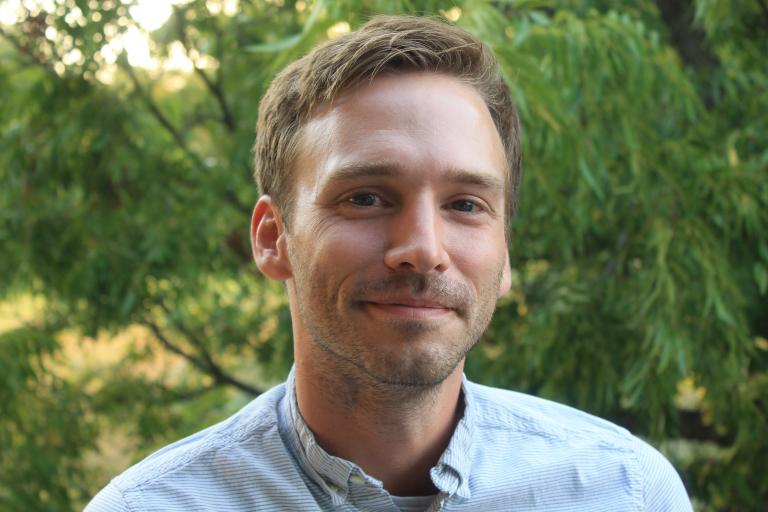
Tell us about yourself and your background.
Thanks for the opportunity, Nijay. This is a real honor. I’m humbled to be in such fine company in this blog series about the work of academic editors.
So, me. I grew up in South Mississippi, raised Church of God, hopped on the Baptist wagon during undergrad while I studied at William Carey University (in the doubly profitable concentration of biblical studies and history!). Served as youth director at a CBF-affiliated Baptist church after college, and while there fell in love with the church. My pastor at the time—himself an alum of Baylor’s Truett Theological Seminary—encouraged me to go the seminary route. My original plan was to pursue a Master’s in church history, but in those post-undergrad days I was, like many millennials I suppose, aloof and adrift with little to no career or further academic prospects. The pastorate was becoming more and more attractive to me, and I figured a Master’s of Divinity would allow me to straddle the worlds of church and academy, and set me up for an eventual PhD. A different route than originally planned but an equally valid one, I felt. It didn’t take a lot of convincing. So, to Baylor and Truett I went.
My pastor also encouraged me, by the way, to apply at Baylor Press (he was a former employee himself). So I contacted Carey Newman, then director of Baylor Press, who helped me get my foot in the door for an interview for an opening in production . . . I suppose that’s getting into the next question.
Few editors I know aspired to be in publishing. They sort of wandered into it and ended up enjoying it. How did you become an editor? What do you enjoy about it?
Indeed. That was almost humorously the case with my trajectory. It was a journey marked by happenstance and a lot of grace.
So, I started at the Press as a production assistant, working on ebooks and manuscript coding, occasionally copyediting, just stumbling my away along and trying to learn as much as I could as quickly as I could about what seemed a massive, and massively obscure, foreign world. Religious publishing intrigued me from the beginning, of course, because, well, I was a biblical studies nerd. The prospect of being around religious books and watching them get made and maybe, just maybe, interacting with some big-name authors—cool, sign me up. But, of course, I had no real idea what I was signing up for. I got thrown in the deep end from the get-go and learned how to swim by pure necessity. And it was a beautiful experience.
Over the years as a graduate assistant I gradually moved away from the back end of the publishing process more toward the middle and front end, kind of carving out a role for myself as manuscript editor. At some point I became the interface between editorial and production, which had never really been a thing at BUP. It was simply a matter of being allowed to try different tasks, the folks above me recognizing what I was good at and what I enjoyed doing, and just falling into that designated role. A very organic process.
Along the way, Carey—a generous mentor—drew me closer into the acquisitions fold. He’d toss whole manuscripts at me and ask me to evaluate them. “Is this a Baylor book? Is it good enough to publish?” So, again, deep end, swim for your life. By these little impromptu crash courses in editorial I, once again, stumbled my way into a new skill set—the ability to quickly thumb through a few pages, get a sense of the author’s argument, the author’s ability as a writer, and the book’s suitability for publication. And eventually, after I’d proven I could make at least vaguely intelligent judgments about proposals, Carey brought me on to the acquisitions team, not just to make regular decisions about what we did and didn’t publish, but also to take on projects of my own. It started with one or two, but slowly expanded over the years.
For a seminary student, this was a remarkable experience, and set me up for success upon entering the actual business in a full-time capacity. And, yes, that’s what I did after seminary—by the time of graduation, the publishing world had captivated me, and I recognized that I could (and I say this absolutely unironically) serve both church and academy as a publisher at a religiously affiliated university press, especially one of such high caliber as BUP. It was the perfect marriage of what I had been searching for. When I was offered the job of managing editor/assistant acquisitions editor, there was no doubt in my mind that it was the best decision I could make for the next step of my professional life. So I stepped out, and this time it was less of a stumble. My former supervisors welcomed me warmly as a colleague; that made the transition all the easier. And here we are.
At present I serve as the head of acquisitions here at the press as we are in an interim phase. It’s been an intense learning experience, and I am obviously in the green phase of my career as an editor. There’s no mistaking me for the caliber of the other folks in this series. With that said, I had the advantage of learning from one of the best in the business, and inherited a solid editorial foundation to continue to grow on.
As to what I love about the job: it’s the interactions with a whole range of folks, at all different stages of their scholarly paths. It’s seeing a book grow and develop from the seed of an idea to a tangible artifact. It’s also the joy of discovery: since we’re such a small-shop press, putting out around forty titles a year, my job as acquisitions editor covers the full spectrum of what we publish. So I’m not just confined to biblical studies, I’m working with all manner of theologies, ethics, church studies, art and religion, media and religion, race studies, and on and on. It’s a constant learning experience that drives me to engage with fields and subjects that are far from my comfort zone.
Apart from that, what I love about Baylor in particular is that, precisely because we are such a “boutique” operation, our team is small (five full-time staff currently and a rotating cadre of stellar student workers). The intimate collaboration with my colleagues and the intensified responsibility to equally bear the demands of the entire press, not just my little editorial area, is immensely rewarding, and keeps me humble. It would be easy to get wrapped up in the insular world of acquisitions and lose sight of the other equally integral components of what makes a publishing house tick; thankfully, here at Baylor, there’s no danger of that. My decisions about what to publish don’t happen in a vacuum, but in constant conversation with all of my coworkers, each of whom brings valuable and unique perspectives to the table. I am honored to work with some of the finest professionals in the industry.
What are some things that stand out to you in a book conversation with an author or a book proposal that grab your interest?
It’s always promising when a prospective author knows BUP—what we publish and what we stand for. We’re a press with a particular mission, and when an author seeks us out because they appreciate precisely that mission, that lets me know that they, at least, are a “fit” even if the book they’re pitching isn’t quite what we’re looking for. At least we’ve built a relationship with potential to produce something viable at some point.
So that’s a good first step. We also want to see someone who really believes in their work. Yes, scholars sometimes overestimate the “originality” or “importance” of their book, or foster unrealistic expectations of a book’s potential reach (more on that in a bit). But at the same time, it’s important to show up with a clear idea of *why* your book is needed, and with some sense of the higher purpose of the work. Our motto is (unironically) “Books for Good,” and we strive to live by that. Even a dense, technical New Testament textual study can speak to some vital ethical implications, for both the guild and for the community of faith. A good book speaks to real needs, and if you can put your finger on a particular “big idea” concern that your book bears upon, all the better. Further: if you are energetic and, maybe, just a little idealistic about the message your book will put out into the world, and not simply publishing to get published, we are more interested in investing our time and energy as a press into you—and your career.
Related to that, it’s vital to have a grasp of what gap in scholarship the book is filling. We’re not looking to shake up a given field, necessarily, but we do want bold, original works that drive conversations forward and generate new conversations. Again, our list is small, and selective. We are deliberate about what we let occupy the pages of our catalog, which means we’re especially attentive to what it is your book is contributing to scholarly interests.
What are your book proposal pet peeves? And what are common, but correctable mistakes that authors make when trying to pitch their book idea?
The most obvious one, for me at least, is having no clue who your target audience is. Every book can have multiple readerships, fine. We never want to put a book in such a niche corner that only ten specialists will ever look at it. At the same time, no book is for “everyone” (much less the elusive “general audience”). Every book has a primary interest group, and it should be written first and foremost to serve the needs of that group. If you can’t pinpoint who’s going to benefit most from your work, the writing will never find its groove, you’ll never nail the delivery, and the book will probably never find a base readership.
Along a similar line of reasoning: not knowing why you brought it to us, what makes BUP the right platform for this book, is a sign to us that you’re not quite sure what you’re hoping to accomplish with the book. If you don’t come with at least a surface impression of why a particular publisher will be particularly suited to aid your book in finding its particular niche, that doesn’t necessarily inspire confidence in the publisher that the partnership will be a fruitful one. At the same time, even if you’re not really sure *why* your book fits with a given publisher’s unique profile—even if you just know you just really like that publisher and what they do—well, that can be worked with. An author with an inkling that their book just “belongs” amidst a certain list is on the right track, even if they can’t articulate the why of it.
Last one: Showing no willingness to revise, both in light of editorial feedback and peer review, sends up a red flag (especially if you’re pitching a dissertation). With academic publishing, you have to be ready to slay your sacred cows and tear down your temples. Yes, it’s your book, and ultimately your vision guides that book’s development. But academic books are made in community, and insight comes from several different quarters, all offering valuable perspectives on ways the book can live into that vision more effectively. A little humility goes a long way. With that said, we appreciate folks with a bit of tenacity, as well, who’ll stand their ground when they really believe in something.
Talk about one or two books that you acquired or edited that you are especially proud of and why.
I’ve had the good fortune to work with a number of fine scholars, luminaries in the field, both in a capacity as manuscript editor (i.e., the person that transitions a developed ms into production and oversees copyedit) and acquisitions/developmental editor. In the former capacity, the highlights have to be Larry Hurtado (Jewish Monotheism and Early Christian Jesus-Devotion) and Tom Wright (History and Eschatology). I mean, it’s hard to beat working alongside the legends, especially scholars as generous and amicable as those two, and I’ll forever be grateful for those formative experiences.
On the acquisitions/development side, I’ll speak to one from each category. Becky Copeland’s Created Being (2020) was not my acquisition, but I guided the manuscript along to completion and offered some feedback on chapters along the way that helped the author fine-tune some crucial points of the argument. I love this book for the way it holds together deeply rooted orthodoxy and a visionary radicalness, taking a central claim of Christian faith and opening it up, without compromising the integrity of the doctrine, to encompass the universal concerns of our time (all in a succinct, elegant ninety pages!). Ross Halbach’s Bonhoeffer and the Racialized Church (2020) was my very first acquisition, and I learned my developmental chops through a couple of years intensive back-and-forth reshaping and fine-tuning. That is a timely and, yes, prophetic book that falls right in line with our mission; the way it reframes the entire conversation around race and Christian identity is provocative and, I hope, restorative.
Overall, I have to say I’m proud of the list we’ve built, and continue to build, out across the next several years. It’s a mosaic of disciplines and subjects, that’s for sure, but there’s cohesion in the diversity, and clear evidence of our commitment to fine scholarship with a mission.

There are many good pieces of scholarship by biblical scholars, but we are not necessarily good at the art of writing. If you were to help an author improve their writing and communication skills, what would you recommend?
Everyone has their own style. Some will write more poetically, some more surgically. But everyone can stand to gain from paring back the dross that prevents their distinctive voice from being heard. So, trust your editor; hopefully they’re able to step back and see the tectonic plates that compose the whole, and provide a clearer idea of the most natural route to chart the territory of your argument. Above the fog that authors live in, immersed as they are in the density of their research, an editor can identify the dross that chokes out the essence of what it is you’re trying to say. That’s what we’re here for, especially if we aren’t specialists in the particular field you’re writing in and so can’t give substantive feedback on the content itself (that’s what peer review is for, ideally!).
Think about your favorite novel, or a really gripping piece of journalism you’ve read recently. What drew you in? What kept you reading? A piece of serious scholarship doesn’t have to be a chore to read; there’s no reason it can’t resound with the energy of a work of gripping fiction or edgy reporting. Paint scenes, set moods. Give an argument coherence with narratival connective tissue but don’t overburden it with excessive recapping or previewing. Trust your readers to follow along. At the same time, suggestive foreshadowing can keep a reader hooked, and signposts scattered along the way can aid in sustained comprehension of the superstructure (subheadings are your friend . . . to a degree!). Less is more, though none at all is not ideal, of course.
This bit is especially for young scholars: you aren’t talking to the dissertation committee anymore. You aren’t proving yourself. This is your book; you are the author; you have authority. Speak with it. Own it. Don’t let other scholars(hip) clutter your prose. Even established scholars have a tendency to weight their discussions with direct engagement with secondary literature and schools of interpretation, material that is best reserved for the notes. Recognizing of course that certain books (those intended for researchers in a given field, primarily) rely on extended surveys of various positions, it still remains that a book can always be served by asking yourself, “Is it essential to my purposes to acknowledge and/or contend with this scholar’s ideas, or is this just an aside or supporting evidence?” At the end of the day, one essential lesson I picked up in my days as a mentee: good academic writing is about ideas, not scholarship.
Following on that, I’ll say that bold—even provocative—statements, if they’re backed up by the research and methodology, have their place in academic writing. Don’t qualify everything or prevaricate at every turn. If you have a claim, make it.
A bonus: use rhetorical questions sparingly.
Explain how you define and interpret “success” in your industry?
It has to be said upfront that no one is in academic publishing to get rich. Especially with a non-profit university press, the ultimate measure is not the bottom line.
What we’re looking for are well-balanced booklists, intriguing in their scope and texture but held together by a story, an ethos, that may not be readily apparent but pulses just beneath the surface of our catalogs. We want books that, as I’ve said before, contribute to the mission of who we are both as a publisher and as an extension of the parent institution. And we want books that a range of voices and perspectives. We want to promote authors at various stages in their careers, but it’s especially important to us to give up-and-coming scholars a respected platform to stake out their own contributions.
At the end of the day, the real reward comes in the unsolicited comments in email exchanges or in passing conversation, some scholar, teacher, pastor, or institutional head telling us how much they appreciate our books, how useful they have found a particular title, how grateful they are for the kind of scholarship we promote. Knowing our books find lives in various contexts and to various ends out in the world, often in ways we couldn’t have predicted, gives this business a rich meaningfulness that can’t be quantified.
Can you give some thoughts and predictions about how publishing in biblical studies can and/or should change in the next 10 years?
The allure of the physical book as artifact is not going anywhere. High-end, lavishly produced books may not be seen as “practical,” but they will continue to be valued—not just as shelf decoration—but as cherished resources that get put to loving use for years.
With that said, there is no denying that how information is consumed is impinging even on humanities publishers. Modern consumption of bite-sized media means that we’ll have to stay adaptable and find ways to supplement that core component of our publishing identity, which is the publishing of academic monographs (sprinkled with a few edited volumes). Digital innovations in e-reading are going to continue, and the long-term success of Open Access is still unknown. I do think that the barriers for public and scholarly access to data will continue to lower, even as the physical book remains the core of the (or our, at least) business. Direct-to-consumer models may come to an equal footing with traditional distribution strategies. How we market our books may need to look beyond the established networks and reach further than an established loyalty base. AI may also play more of a role in publishing long-term. For instance, Baylor University Press translates a fair number of projects from German into English—one of the things we’re most respected for in NT studies. What if much of that translation work someday might be performed by an algorithm?
There is much to navigate and look forward to over the next decade, both for university presses and independent publishers—and BUP has, arguably, come to occupy spaces in both worlds, so viable predictive models are perhaps even trickier in our case—but what won’t change, for us at least, is the commitment to making good books and making books for good.
If you were wanting to invite “fresh talent” to publish with your press, what is your pitch (right here and right now!)? How do you express your press’ identity and purpose and how do you want to shape biblical studies?
Something along the lines of the “Dunder Mifflin” pitch: we’re small, but we can hold our own. We’re one of the scrappiest contingents in the publishing world. And with us you’ll get personalized attention; your book will be lavished with care from development to marketing and publicity. You’ll get to know the team on a first-name basis, and we’ll be there with you every step of the way.
Because our list is so focused, your book has the chance to stand out more. What’s more, even though our yearly list is limited in size, your book will share company with a remarkable variety of subjects that will cast into even further relief the particular niche your book occupies. So, if you have a book with a vision, with a mission, that marries solid scholarship with a concern to speak to contemporary conversations, we have a spot for you.
And yes: We are proud of our strong reputation in biblical (especially New Testament) and early church studies and so will always have one foot firmly planted in that world, even as we venture into exciting new territory. What role I would like to see us have in “shaping” biblical studies is twofold: bringing especially underrepresented, marginal voices to the table, and promoting scholarship that resources the sacred text to speak hard truth to our current cultural moment—especially regarding the challenges of migration and immigrant identity, the conjoined dilemmas of nationalism and race, and the church’s vocation in a continuously diversifying world.
Editors Behind Great Books in NT Studies
Next Post
August 22, 2020 Get BDAG Greek Lexicon for $44 with Promo Code (ends Aug 24)
Browse Our Archives
Select a Category (Mis)Understanding Philippians 10 Things I Can't Live Without 2023 New Books 30 OT HB Scholars to Read and Follow 5 Books Series 50-2-Follow Academia Christian Theologians to Read and Follow Cruciform Scripture: Contributor Reflections Crux Sola TV Editors Behind Great Books in NT Studies Education Gendering the Holy Spirit Gupta FB Live Lectures In Faith and Doubt In Their Own Words Living the King Jesus Gospel My Top 6 OT Commentaries New Testament Resource Guide New Word Biblical Themes Nijay's A Very Library Christmas Shopping Guide Notes from an Editor Notes on New Books NTRG OT in the NT Paul Seminary Now The Bible in God's World The Word Felt Among Us SPENCER Translating Philippians Uncategorized Why I Use Accordance Women in Ministry
Select a Month March 2024 February 2024 January 2024 December 2023 November 2023 October 2023 September 2023 August 2023 May 2023 March 2023 February 2023 January 2023 December 2022 November 2022 October 2022 September 2022 August 2022 July 2022 June 2022 May 2022 March 2022 February 2022 January 2022 December 2021 November 2021 October 2021 September 2021 August 2021 July 2021 June 2021 May 2021 April 2021 March 2021 February 2021 January 2021 December 2020 November 2020 October 2020 September 2020 August 2020 July 2020 June 2020 May 2020 April 2020 March 2020 February 2020 January 2020 December 2019 November 2019 October 2019 September 2019 August 2019 July 2019 June 2019 May 2019 April 2019 March 2019 February 2019 January 2019 October 2018 September 2018 August 2018 July 2018 June 2018 April 2018 March 2018 February 2018 January 2018 December 2017 October 2017 September 2017 August 2017 July 2017 June 2017 May 2017 April 2017 March 2017 February 2017 January 2017 December 2016 November 2016 October 2016 September 2016 August 2016 July 2016 June 2016 May 2016 April 2016 March 2016 February 2016 January 2016 December 2015 November 2015 October 2015 September 2015 August 2015 July 2015 June 2015 May 2015 April 2015 March 2015 February 2015 January 2015 December 2014 November 2014 October 2014 September 2014 August 2014 July 2014 June 2014 May 2014 April 2014 March 2014 February 2014 January 2014 December 2013 November 2013 October 2013 September 2013 August 2013 July 2013 June 2013 May 2013 April 2013 March 2013 February 2013 January 2013 December 2012 November 2012 October 2012 September 2012 August 2012 July 2012 June 2012 May 2012 April 2012 March 2012 February 2012 January 2012 December 2011 November 2011 October 2011 September 2011 August 2011 July 2011 June 2011 May 2011 April 2011 March 2011 February 2011 January 2011 December 2010 November 2010 October 2010 September 2010 August 2010 July 2010 June 2010 May 2010 April 2010 March 2010 February 2010 January 2010 December 2009 November 2009 October 2009 September 2009 August 2009 July 2009 June 2009 May 2009 April 2009 March 2009 February 2009 January 2009 December 2008 November 2008 October 2008 September 2008 August 2008 July 2008 June 2008 May 2008 April 2008 March 2008 February 2008 January 2008 December 2007 November 2007 October 2007 September 2007 August 2007 July 2007 April 2007 March 2007 February 2007 January 2007
Follow Us!
TAKE THE
Religious Wisdom Quiz
What did Samuel's mother promise if God gave her a son?
Select your answer to see how you score.
To dedicate him to the Lord To fast for 40 days To move to Jerusalem To offer a burnt sacrifice
Related posts from Crux Sola: Formed by Scripture to Live like Christ

Dr. Jonathan Kline (Hendrickson Publishers): Editors behind the...
Crux Sola: Formed by Scripture to Live like Christ

Dr. Chris Spinks (Cascade Books/Wipf & Stock): Editors...
Crux Sola: Formed by Scripture to Live like Christ

Dr. Bryan Dyer (Baker Academic): The Editors behind...
Crux Sola: Formed by Scripture to Live like Christ
Katya Covrett (Zondervan Academic): The Editors behind the...
Crux Sola: Formed by Scripture to Live like Christ
TRENDING AT PATHEOS Evangelical

Emotion in Early Christianity by Andrew Crislip
Andrew Crislip’s Emotion in Early Christianity examines an often overlooked dimension of...

16 Spiritual Touchstones for a More Grounded Life
After decades of spiritual study, here are 16 principles I try...

Catholic Evangelization: Sharing Your Faith Every Day
Welcome back to the Graceful Awakening mini-series called, “From Faith to Mission.” ...

The Pillar of the Boatmen: the Ancient Monument...
The Pillar of the Boatmen is a Romano-Gaulish sculpture that dates from...

In one sense walking into Westminster Abbey is like walking down the...

'Super Scam Me' Exposes AI Jon Bon Jovi...
Leslie Pickett believed she was in a relationship with Jon Bon Jovi....
view all Evangelical blogs
Ad-Free & Subscriber Log-In Subscription Support
- About Us
- 2026 Calendar
- Videos
- Podcasts
- Library of World Religions
- Faith In Media Tracker
- Advertise With Us
- Write for Us
- Privacy Policy
- Terms of Service
- Do Not Sell My Data
- Contact Us
- Radiant Digital
- Manage Newsletter Subscriptions
- Unsubscribe From Notifications
- Sitemap
Copyright 2008-2026, Patheos. All rights reserved.
Subscription Support Ad-Free & Subscriber Log-In
Follow Patheos