
BuddhistCatholicContemplativeEvangelicalGeneral ChristianHinduJewishLatter-day SaintMuslimNew VisionsProgressive Christian
Beliefs
- Buddhist
- Catholic
- Contemplative
- Evangelical
- General Christian
- Hindu
- Jewish
- Latter-day Saint
- More Voices
- Muslim
- New Visions
- Pagan
- Progressive Christian
Topics
- Religion News
- Food and Religion
- Sports and Religion
- Religious Art
- Religious Music and Entertainment
- Religious Events
- History and Religion
- Style and Religion
- Politics and Religion
- Women in Religion
- Recreation Outdoors and Religion
- Business Finance and Religion
- Careers Workplace and Religion
- Education and Religion
- Family Parenting and Religion
- Health Fitness and Religion
- Home and Religion
- Relationships and Religion
- Technology and Religion
- Travel and Religion
Columnists
- Buddhist Columnists
- Business Finance and Religion Columnists
- Careers Workplace and Religion Columnists
- Catholic Columnists
- Contemplative Columnists
- Education and Religion Columnists
- Evangelists Columnists
- Family Parenting and Religion Columnists
- General Christian Columnists
- Health Fitness and Religion Columnists
- Hindu Columnists
- History and Religion Columnists
- Home and Religion Columnists
- Jewish Columnists
- More Voices Columnists
- Latter Day Columnists
- Muslim Columnists
- New Visions Columnists
- Nonreligious Columnists
- Pagan Columnists
- Politics and Religion Columnists
- Progressive Columnists
- Recreation Outdoors and Religion Columnists
- Relationships and Religion Columnists
- Religion News Columnists
- Religious Art Columnists
- Religious Events Columnists
- Religious Music and Entertainment Columnists
- Sports and Religion Columnists
- Style and Religion Columnists
- Technology and Religion Columnists
- Travel and Religion Columnists
- Women in Religion Columnists
Resource Library
- 2026 Calendar
- Library of World Religions
- The 100 Most Holy Places on Earth
- Patheos Answers
- Podcasts
- Videos
- Faith Leaders Database
- Anglican Episcopalian
- Bahai
- Baptist
- Buddhism
- Christianity
- Confucianism
- Eastern Orthodoxy
- Hinduism
- Holiness and Pentecostal
- ISKCON
- Islam
- Judaism
- Lutheran
- Methodist
- The Church of Jesus Christ of Latter-day Saints
- New Age
- Paganism
- Presbytarian and Reformed
- Protestantism
- Religion Behind the Scenes
- Roman Catholic
- Scientology
- Shia Islam
- Sikhism
- Sufism
- Sunni Islam
- Taoism
- Zen
- See all religions
Research Tools
 Ad-Free & Subscriber Log-In Subscription Support
Ad-Free & Subscriber Log-In Subscription Support
Follow Patheos 

- Trending:
- Forgiveness
- |
- Marriage
- |
- Consciousness
- |
- Death Penalty
- |
- Election
- |
- Halloween
 Crux Sola: Formed by Scripture to Live like Christ
-
Blog Series
- Home
- Evangelical
- Interview with Craig Keener on Christobiography
Interview with Craig Keener on Christobiography
Last updated on: August 17, 2019 at 12:36 am by Nijay Gupta
Interview with Craig Keener on Christobiography 2019-08-17T00:36:28-08:00 Nijay Gupta
Patheos Explore the world's faith through different perspectives on religion and spirituality! Patheos has the views of the prevalent religions and spiritualities of the world.
Craig Keener (Asbury Seminary) has a new book out called Christobiography: Memory, History, and the Reliability of the Gospels (Eerdmans, 2019).
Dr. Keener was kind enough to answer some questions about his new work.
Q1: How did you become interested in studying and discussing the genre of the Gospels in depth for this book?
CK: Maybe around 1980 Ben Aker, one of my undergraduate professors, taught a course on special hermeneutics, using a textbook by Grant Osborne. I wasn’t in that class, but I was intrigued by what I heard about it, especially exploring different genres. I was already intrigued by apocalyptic, but the subject of genres more generally (explored back then also by Fee and Stuart’s book, which influenced me a lot) got me thinking about the Gospels as biographies. Of course this was also a hot topic of discussion during my PhD work at Duke, and Richard Burridge’s influential work about the Gospels as biographies put the subject in the center of the map. I had of course read Suetonius and some other biographers from the early empire, but began delving into Plutarch as well (following the example of my colleague Mark Matson).
When I wrote my Gospels commentaries, I was building on that approach, but I took for granted that everybody knew what ancient biographies were like–as if everybody else must have read Suetonius et al. as well. I soon discovered that NT scholars already have way too much to read, and most of them were not very familiar with ancient biographies, and certainly not what implications this genre assignment might have for historical reliability. There was more that I needed to learn as well. I conducted some further explorations, but I assumed it would take me years to finish all of them. In one doctoral seminar on the historical Jesus, however, I suggested some needed topics and a number of my doctoral students agreed to research different ancient biographers and then bring together our findings. We published a collection of those findings, so we could all build on what the others had found (and properly credit one another for the other’s findings). That provided a broader foundation to work from. By then, my friend Mike Licona, whose interests in ancient biography had long overlapped with mine, published with Oxford on Gospel differences and Plutarch, and provided more to work with. There is of course more to be done, and some of my doctoral students are developing dissertations in some of these areas.
Q2: What are some key arguments you make in Christobiography? How do you hope to move the discussion forward on the Gospels and the study of Jesus?
CK: A number of scholars are more skeptical of the Gospels’ portraits of Jesus than the evidence warrants. If someone wrote a biography today about a figure who lived fifty years ago, we wouldn’t start with the assumption that events fifty years ago are shrouded in legend and therefore reject any claim that we could not prove. We might be more optimistic if it were verified elsewhere, but we wouldn’t have reason to simply dismiss its claims a priori unless we found consistent errors. Ancient biographies differed from modern biographies; many of the alleged “problems” in the Gospels fit ancient biographic and other ancient literary conventions. These may be problems for readers who want everything verbatim and in sequence but they are not problems from the standpoint of what the Gospels’ first audiences would have expected based on their experience with other works. Moreover, when you have biographies from the early Roman empire written within living memory of their subjects (as the Gospels are), these biographies are full of information and bound to sources. More often than not, we have good reason to believe that the authors believed that the events they reported actually happened. Are they likely correct in that assumption? Here I look at the character of ancient memory to address the oral period before the Jesus biographies.
Q3: After researching and writing this long book (!), what are lingering questions or perplexities you have about the genre of the Gospels?
CK: It’s not long compared to my Acts commentary. 🙂 Where does each Gospel writer lie on the spectrum of fidelity/fixity and flexibility that ancient biography allowed? Our recent work establishes some of the contours of the spectrum, but more research is needed. Each writer tweaks genre in their own ways. Luke combines biography and historiography (Luke-Acts). Mark may have never looked at another biography. There is material that Matthew and Luke share in common that focuses more on teaching, like collections of sages’ teaching. But after learning more about the sort of information that persists within living memory, I have become especially fascinated by early second-century Christian writers such as Papias and Polycarp. They did not write within living memory of Jesus, but they did write within living memory of the writing of our Gospels. What they tell us whets our appetite, and what they don’t is tantalizing. And of course there are new issues in historiography in general, from the importance of rhetoric to postmodern philosophic concerns about historiography. There are many more issues to be addressed.
Q4: Now that this project is out, what are you working on next?
CK: In process is a one-volume, paperback version of my Acts commentary, with Cambridge; also a collection of essays on Acts, with Cascade; I am finishing up a commentary on 1 Peter for Baker Academic, and my biggest project, which should take a few years, is an ICC commentary on Mark for T&T Clark. So it might look like I have a lot coming out at the moment, but there will be some lean years ahead as I work on a long project. As I get older, time is an increasingly precious commodity. So much to do, and only so much time. May we number our days well and devote all our resources to what is of lasting value.
NKG: Thanks, Dr Keener, for sharing your thoughts.
CK: Thank you for interviewing me. Always a pleasure and a privilege to be with you, Nijay! Blessings!
Previous Post
July 26, 2019
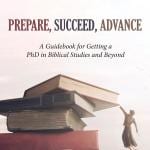
Book Giveaway Contest: Prepare, Succeed, Advance Second Edition (Gupta)
Next Post
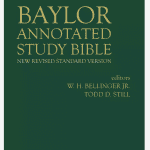
September 10, 2019 Baylor Annotated Study Bible - Quick Review (Gupta)
Browse Our Archives
Select a Category (Mis)Understanding Philippians 10 Things I Can't Live Without 2023 New Books 30 OT HB Scholars to Read and Follow 5 Books Series 50-2-Follow Academia Christian Theologians to Read and Follow Cruciform Scripture: Contributor Reflections Crux Sola TV Editors Behind Great Books in NT Studies Education Gendering the Holy Spirit Gupta FB Live Lectures In Faith and Doubt In Their Own Words Living the King Jesus Gospel My Top 6 OT Commentaries New Testament Resource Guide New Word Biblical Themes Nijay's A Very Library Christmas Shopping Guide Notes from an Editor Notes on New Books NTRG OT in the NT Paul Seminary Now The Bible in God's World The Word Felt Among Us SPENCER Translating Philippians Uncategorized Why I Use Accordance Women in Ministry
Select a Month March 2024 February 2024 January 2024 December 2023 November 2023 October 2023 September 2023 August 2023 May 2023 March 2023 February 2023 January 2023 December 2022 November 2022 October 2022 September 2022 August 2022 July 2022 June 2022 May 2022 March 2022 February 2022 January 2022 December 2021 November 2021 October 2021 September 2021 August 2021 July 2021 June 2021 May 2021 April 2021 March 2021 February 2021 January 2021 December 2020 November 2020 October 2020 September 2020 August 2020 July 2020 June 2020 May 2020 April 2020 March 2020 February 2020 January 2020 December 2019 November 2019 October 2019 September 2019 August 2019 July 2019 June 2019 May 2019 April 2019 March 2019 February 2019 January 2019 October 2018 September 2018 August 2018 July 2018 June 2018 April 2018 March 2018 February 2018 January 2018 December 2017 October 2017 September 2017 August 2017 July 2017 June 2017 May 2017 April 2017 March 2017 February 2017 January 2017 December 2016 November 2016 October 2016 September 2016 August 2016 July 2016 June 2016 May 2016 April 2016 March 2016 February 2016 January 2016 December 2015 November 2015 October 2015 September 2015 August 2015 July 2015 June 2015 May 2015 April 2015 March 2015 February 2015 January 2015 December 2014 November 2014 October 2014 September 2014 August 2014 July 2014 June 2014 May 2014 April 2014 March 2014 February 2014 January 2014 December 2013 November 2013 October 2013 September 2013 August 2013 July 2013 June 2013 May 2013 April 2013 March 2013 February 2013 January 2013 December 2012 November 2012 October 2012 September 2012 August 2012 July 2012 June 2012 May 2012 April 2012 March 2012 February 2012 January 2012 December 2011 November 2011 October 2011 September 2011 August 2011 July 2011 June 2011 May 2011 April 2011 March 2011 February 2011 January 2011 December 2010 November 2010 October 2010 September 2010 August 2010 July 2010 June 2010 May 2010 April 2010 March 2010 February 2010 January 2010 December 2009 November 2009 October 2009 September 2009 August 2009 July 2009 June 2009 May 2009 April 2009 March 2009 February 2009 January 2009 December 2008 November 2008 October 2008 September 2008 August 2008 July 2008 June 2008 May 2008 April 2008 March 2008 February 2008 January 2008 December 2007 November 2007 October 2007 September 2007 August 2007 July 2007 April 2007 March 2007 February 2007 January 2007
Follow Us!
TAKE THE
Religious Wisdom Quiz
Who is called the "brother of the Lord" and wrote a New Testament letter?
Select your answer to see how you score.
John Titus James Bartholomew
Related posts from Crux Sola: Formed by Scripture to Live like Christ
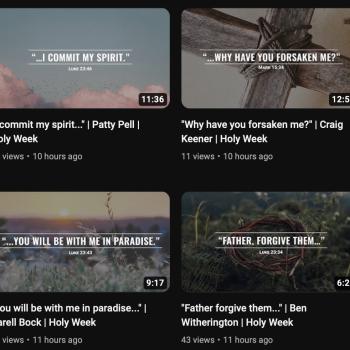
Check out the SeminaryNow Holy Week (2024) Video...
Crux Sola: Formed by Scripture to Live like Christ
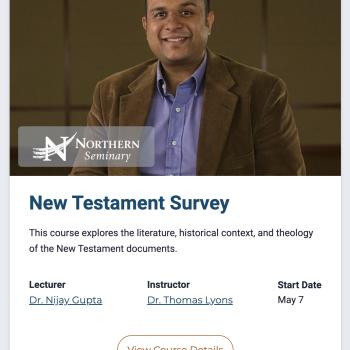
Get Seminary Credit through SeminaryNow Live Courses
Crux Sola: Formed by Scripture to Live like Christ
My New Fiction Series ("Strange Encounter")
Crux Sola: Formed by Scripture to Live like Christ
"Strange Religious Texts": Get the Bonus Essay FREE
Crux Sola: Formed by Scripture to Live like Christ
TRENDING AT PATHEOS Evangelical

The Problem with False Prophets
Miller’s Station UMC| 10/18/26| Anchor Verse: Jeremiah 23: 1, 9-23 I...

Emotion in Early Christianity by Andrew Crislip
Andrew Crislip’s Emotion in Early Christianity examines an often overlooked dimension of...

16 Spiritual Touchstones for a More Grounded Life
After decades of spiritual study, here are 16 principles I try...

Catholic Evangelization: Sharing Your Faith Every Day
Welcome back to the Graceful Awakening mini-series called, “From Faith to Mission.” ...

The Pillar of the Boatmen: the Ancient Monument...
The Pillar of the Boatmen is a Romano-Gaulish sculpture that dates from...

In one sense walking into Westminster Abbey is like walking down the...
view all Evangelical blogs
Ad-Free & Subscriber Log-In Subscription Support
- About Us
- 2026 Calendar
- Videos
- Podcasts
- Library of World Religions
- Faith In Media Tracker
- Advertise With Us
- Write for Us
- Privacy Policy
- Terms of Service
- Do Not Sell My Data
- Contact Us
- Radiant Digital
- Manage Newsletter Subscriptions
- Unsubscribe From Notifications
- Sitemap
Copyright 2008-2026, Patheos. All rights reserved.
Subscription Support Ad-Free & Subscriber Log-In
Follow Patheos