
BuddhistCatholicContemplativeEvangelicalGeneral ChristianHinduJewishLatter-day SaintMuslimNew VisionsProgressive Christian
Beliefs
- Buddhist
- Catholic
- Contemplative
- Evangelical
- General Christian
- Hindu
- Jewish
- Latter-day Saint
- More Voices
- Muslim
- New Visions
- Pagan
- Progressive Christian
Topics
- Religion News
- Food and Religion
- Sports and Religion
- Religious Art
- Religious Music and Entertainment
- Religious Events
- History and Religion
- Style and Religion
- Politics and Religion
- Women in Religion
- Recreation Outdoors and Religion
- Business Finance and Religion
- Careers Workplace and Religion
- Education and Religion
- Family Parenting and Religion
- Health Fitness and Religion
- Home and Religion
- Relationships and Religion
- Technology and Religion
- Travel and Religion
Columnists
- Buddhist Columnists
- Business Finance and Religion Columnists
- Careers Workplace and Religion Columnists
- Catholic Columnists
- Contemplative Columnists
- Education and Religion Columnists
- Evangelists Columnists
- Family Parenting and Religion Columnists
- General Christian Columnists
- Health Fitness and Religion Columnists
- Hindu Columnists
- History and Religion Columnists
- Home and Religion Columnists
- Jewish Columnists
- More Voices Columnists
- Latter Day Columnists
- Muslim Columnists
- New Visions Columnists
- Nonreligious Columnists
- Pagan Columnists
- Politics and Religion Columnists
- Progressive Columnists
- Recreation Outdoors and Religion Columnists
- Relationships and Religion Columnists
- Religion News Columnists
- Religious Art Columnists
- Religious Events Columnists
- Religious Music and Entertainment Columnists
- Sports and Religion Columnists
- Style and Religion Columnists
- Technology and Religion Columnists
- Travel and Religion Columnists
- Women in Religion Columnists
Resource Library
- 2026 Calendar
- Library of World Religions
- The 100 Most Holy Places on Earth
- Patheos Answers
- Podcasts
- Videos
- Faith Leaders Database
- Anglican Episcopalian
- Bahai
- Baptist
- Buddhism
- Christianity
- Confucianism
- Eastern Orthodoxy
- Hinduism
- Holiness and Pentecostal
- ISKCON
- Islam
- Judaism
- Lutheran
- Methodist
- The Church of Jesus Christ of Latter-day Saints
- New Age
- Paganism
- Presbytarian and Reformed
- Protestantism
- Religion Behind the Scenes
- Roman Catholic
- Scientology
- Shia Islam
- Sikhism
- Sufism
- Sunni Islam
- Taoism
- Zen
- See all religions
Research Tools
 Ad-Free & Subscriber Log-In Subscription Support
Ad-Free & Subscriber Log-In Subscription Support
Follow Patheos 

- Trending:
- Forgiveness
- |
- Marriage
- |
- Consciousness
- |
- Death Penalty
- |
- Election
- |
- Halloween
 Crossing the Streams
- Home
- Interfaith
- Politics and Religion
- The Importance of Diversity in the Public Square
The Importance of Diversity in the Public Square
Last updated on: April 10, 2017 at 12:48 am by The Streamers
The Importance of Diversity in the Public Square 2017-04-10T00:48:23-05:00 The Streamers
Patheos Explore the world's faith through different perspectives on religion and spirituality! Patheos has the views of the prevalent religions and spiritualities of the world.
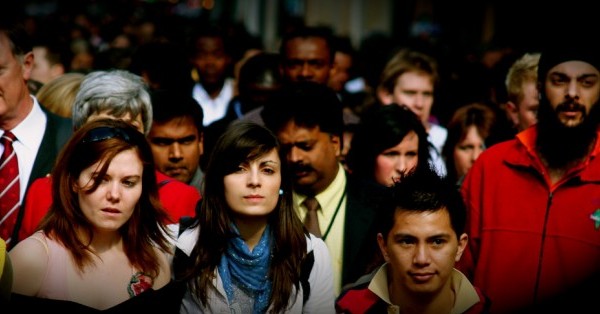
Hind Makki (Muslim blogger at Hindtrospectives): One question that arose time and time again after the election was one my friends who were not Muslim asked: How can we show solidarity with you and other minorities in this time? I think it was a prescient reminder that soon after the inauguration, POC and other minorities would not be welcome to show up in public spaces wearing their diversity. The right to wear a headscarf or a turban, a trans rights button, a Black Lives Matter shirt in public became so highly politicized, that many of us wondered — rightly, I believe — whether America’s “patchwork heritage” was strong enough to survive the Trump era.
Galen Broaddus (atheist blogger at Across Rivers Wide): If I can make perhaps a meta-point here for a moment: I think that the US has done a great disservice to our heritage by moving away from “E Pluribus Unum” to “In God We Trust” — especially since “God” here tends to end up looking like the deity of the dominant religion, Christianity.
Hind: I agree with you. And also because the whole “In God We Trust” came directly as a result of Communist hysteria, and not from any deep introspection as to who we are as a nation. When I lecture in Europe, I often talk of E Pluribus Unum as our democracy’s foundation.
Andy Gill (progressive Christian blogger at Andy Gill): Well, this brings up the problems in which we inevitably find when it comes to democracy and/or the majority choosing how issues are primarily dealt with by the state.
But Hind, it does seem that our two comments kind of inadvertently say or suggest contrasting views. Could you dig into the thoughtlessness you speak of in regards to our nation having moving away from E Pluribus Unum?
Hind: From what I understand, the “In God We Trust” motto was declared our national motto in the 1950s, though it was of course on our money for much longer. I’m not sure how much discussion there was among Congress into what the new motto meant for America, which has always been a secular state; religion was never meant to be the law of the land. And in the ’50s, the decade before JFK became this country’s first (and so far only) Catholic president, there was certainly a knowledge of religious diversity in America. Perhaps atheists were not yet as visible as other minority groups (Catholics and Jews, for example), but there’s no reason to assume they didn’t exist. The whole thing seems to me to have been a way of sticking it to the “Godless Commies” by declaring America — an America with Catholics and Jews, as well as Protestants — trusts in God which is what makes our country great. But there was no need for a new motto, since E Pluribus Unum speaks to the strengths of democracy much better than an exclusivist, faith-based view of America.
Andy: I see, so it sounds as if our “differences” (for lack of better words) are in that you’re saying it’s driven (manipulated) by fear and I was suggesting (inadvertently) that this was just how it was (e.g. driven by various other cultural factors). While I now 100% see where you’re coming from, and would definitely agree to a large part.
Galen: That’s essentially my understanding as well; atheists were used as a stand-in for Communists, who were an enemy that could rally nationalistic fervor. You always need that Other to separate the Good Guys from the Bad Guys. That impulse, sadly, has not gone away, which is why we’re still dealing with people who demand a certain amount of conformity with a specific vision, which is — shall we say — not diverse in its considerations.
Hind: Definitely, Andy, and the fact that a lot of the alleged American “Commies” were Jewish (who might have also been atheists or secular humanists) didn’t hurt, either. I see a parallel with today; the thinking that Latin American immigrants want to have “anchor babies,” or that American Muslims are part of some worldwide Shariah conspiracy. The fear of the globalized other never went away, as Galen alludes; the actors have just changed.
Galen: I think there’s something to be said here about what standards we have for participation in a democratic society. My suspicion is that if you asked someone what would be necessary for such participation, they’d probably go to markers of civic engagement: voting, etc. But visibility is a huge part of full participation, and visibility means not just “you’re here, I see you” but a recognition that our diversity is not a danger to our strength but a significant factor in it.
Hind: Separate tangent here, but this is why I think it’s critical review our laws around restoring rights for people convicted of felonies or who are serving time. What does it mean to be a democracy if more than 6 million adults are disenfranchised and can’t vote? And that those 6 million are overwhelmingly Black and Latino men? Whose bodies are made invisible by the system?
Galen: Absolutely. It also means that we should vehemently oppose attempts to disenfranchise voters through voter ID schemes and the such.
Hind: Agreed!
Galen: And this is, I should say, a place where I part ways with some secular folks who have no issues with attempts to limit certain kinds of public participation, especially religious. Arguing with atheists who are okay with hijab bans, for instance, is incredibly frustrating, especially since those same people would probably be opposed (rightly, in my opinion) to blasphemy laws.
Andy: Galen, yes, I’ve been wondering about your thoughts on many of the atheist leaders (e.g. Sam Harris) who seem to be professing and perpetuating an “Islamophobia”…
Galen: I try to pretend that Sam Harris doesn’t exist, truthfully.
Hind: Christian scholar Dr. Larycia Hawkins speaks of “embodied solidarity,” which basically means to suffer with the marginalized with your own body present — and she argues that you can’t be in solidarity with the marginalized if you don’t even see them as human beings with bodies. Whenever I come across the work of folks like Sam Harris and his supporters, I know immediately that those people don’t see me as a human being, with a body, a mind, and a right to exist the way I choose. Even if that contradicts what they profess, which is they support equality and human rights.
The BS they spout: “I hate Islam, but I don’t hate Muslims.” No, dude. You hate Muslims and you think we don’t have a right to exist (btw, I don’t respond to Sam Harris acolytes’ trolling, so don’t even try it with me in the comments, folks). The worst is that they couch their de-humanization of Muslims in humanitarian terms.
Andy: Is Larycia Hawkins the former Wheaton professor that was most recently and unfortunately let go?
Hind: Yep!
Galen: It’s interesting to me, Hind, that you talk of how some people say they hate Islam but not Muslims because that to me smacks of the “love the sinner, hate the sin” language that I grew up with as an evangelical Christian, and it too is rationalized as goodwill — I love you, so I want to fundamentally change you because what you are now is bad. That’s a toxic attitude, whether you’re talking about religion, sexual orientation, gender identity, or any of a range of other facets of personal identity.
Andy: So, is this not merely a war on ideas in which we face here today?
Hind: Galen, I also loathe this sentiment because it centers the judger (“hate the sin, not the sinner;” “I hate Islam, not Muslims”) rather than centering the human rights — or human dignity — of the aggrieved, marginalized, or oppressed person. On an interpersonal level, that’s bad enough; on a national level, it’s catastrophic for our democracy.
Galen: I can’t disagree with that.
And Andy, I think it’s important to note here that ideas can be battled out in the public sphere without denigrating the dignity of individuals or groups. But on a certain level, treating these battles as merely academic is part of where it becomes difficult.
Hind: OK, final thoughts question: How do we take our intra-personal conversations on human dignity to change the national conversation on human rights?
My final thought on that is: Go to the ballot box! Conversations on human dignity can and must be had in families, houses of worship, civic spaces, op-ed commentaries, etc. But if the political status quo remains, nothing will change. Laws arise from culture; not the other way around. The fundamental foundation of the US, “E Pluribus Unum,” requires constant support.
Galen: I entirely agree with that. We have to be able to see beyond our own limited spheres and fight for societies and governments that can work for everyone. I really don’t think that’s an impossible task, even though for some people it might be a harder sell than others.
Image by Jon Rawlinson via Flickr (CC BY 2.0)
Previous Post

March 16, 2017
To Protect Religious Freedom, Chip Away at Bigotry
Next Post

April 10, 2017 Empathy In the Right Measure
Browse Our Archives
Select a Category Activism Community Daily Living Interfaith Dialogue Language Politics Relationships Society
Select a Month June 2017 May 2017 April 2017 March 2017 February 2017 January 2017 December 2016 November 2016
Follow Us!
TAKE THE
Religious Wisdom Quiz
True or False: Hebrews teaches that Jesus is the same yesterday, today, and forever.
Select your answer to see how you score.
TRUE FALSE
Related posts from Crossing the Streams

How Far Is Too Far? On Bill Maher,...

Spinning Righteous Anger Into Golden Joy

How to Sustain a Resistance Movement
TRENDING AT PATHEOS Interfaith
How Far Is Too Far? On Bill Maher,...
Is the outrage over statements by Kathy Griffin and Bill Maher an...

Refilling the Cup: A Conversation on Self-Care
In these troubled times, self-care is needed now more than ever.
There Is No Courage to Be Bipartisan Anymore...Except...
Health care developments have deepened the divide. It's SCHAEFFER & MOON.

What about Some Solid Outrage from Fox News?...
Scalp-taking and salvation. It's SCHAEFFER & MOON.

Am I Still a Feminist If I Worked...
Does all-or-nothing activism separate women by race, ethnicity, and class?

Why does Eve take the blame when Adam was right there the...
view all Interfaith blogs
Ad-Free & Subscriber Log-In Subscription Support
- About Us
- 2026 Calendar
- Videos
- Podcasts
- Library of World Religions
- Faith In Media Tracker
- Advertise With Us
- Write for Us
- Privacy Policy
- Terms of Service
- Do Not Sell My Data
- Contact Us
- Radiant Digital
- Manage Newsletter Subscriptions
- Unsubscribe From Notifications
- Sitemap
Copyright 2008-2026, Patheos. All rights reserved.
Subscription Support Ad-Free & Subscriber Log-In
Follow Patheos