
BuddhistCatholicContemplativeEvangelicalGeneral ChristianHinduJewishLatter-day SaintMuslimNew VisionsProgressive Christian
Beliefs
- Buddhist
- Catholic
- Contemplative
- Evangelical
- General Christian
- Hindu
- Jewish
- Latter-day Saint
- More Voices
- Muslim
- New Visions
- Pagan
- Progressive Christian
Topics
- Religion News
- Food and Religion
- Sports and Religion
- Religious Art
- Religious Music and Entertainment
- Religious Events
- History and Religion
- Style and Religion
- Politics and Religion
- Women in Religion
- Recreation Outdoors and Religion
- Business Finance and Religion
- Careers Workplace and Religion
- Education and Religion
- Family Parenting and Religion
- Health Fitness and Religion
- Home and Religion
- Relationships and Religion
- Technology and Religion
- Travel and Religion
Columnists
- Buddhist Columnists
- Business Finance and Religion Columnists
- Careers Workplace and Religion Columnists
- Catholic Columnists
- Contemplative Columnists
- Education and Religion Columnists
- Evangelists Columnists
- Family Parenting and Religion Columnists
- General Christian Columnists
- Health Fitness and Religion Columnists
- Hindu Columnists
- History and Religion Columnists
- Home and Religion Columnists
- Jewish Columnists
- More Voices Columnists
- Latter Day Columnists
- Muslim Columnists
- New Visions Columnists
- Nonreligious Columnists
- Pagan Columnists
- Politics and Religion Columnists
- Progressive Columnists
- Recreation Outdoors and Religion Columnists
- Relationships and Religion Columnists
- Religion News Columnists
- Religious Art Columnists
- Religious Events Columnists
- Religious Music and Entertainment Columnists
- Sports and Religion Columnists
- Style and Religion Columnists
- Technology and Religion Columnists
- Travel and Religion Columnists
- Women in Religion Columnists
Resource Library
- 2026 Calendar
- Library of World Religions
- The 100 Most Holy Places on Earth
- Patheos Answers
- Podcasts
- Videos
- Faith Leaders Database
- Anglican Episcopalian
- Bahai
- Baptist
- Buddhism
- Christianity
- Confucianism
- Eastern Orthodoxy
- Hinduism
- Holiness and Pentecostal
- ISKCON
- Islam
- Judaism
- Lutheran
- Methodist
- The Church of Jesus Christ of Latter-day Saints
- New Age
- Paganism
- Presbytarian and Reformed
- Protestantism
- Religion Behind the Scenes
- Roman Catholic
- Scientology
- Shia Islam
- Sikhism
- Sufism
- Sunni Islam
- Taoism
- Zen
- See all religions
Research Tools
 Ad-Free & Subscriber Log-In Subscription Support
Ad-Free & Subscriber Log-In Subscription Support
Follow Patheos 

- Trending:
- Forgiveness
- |
- Marriage
- |
- Consciousness
- |
- Death Penalty
- |
- Election
- |
- Halloween
 Crossing the Streams
- Home
- Interfaith
- Politics and Religion
- How Does Our Language Affect Interfaith Conversations?
How Does Our Language Affect Interfaith Conversations?
Last updated on: December 12, 2016 at 10:44 am by The Streamers
How Does Our Language Affect Interfaith Conversations? 2016-12-12T10:44:21-05:00 The Streamers
Patheos Explore the world's faith through different perspectives on religion and spirituality! Patheos has the views of the prevalent religions and spiritualities of the world.
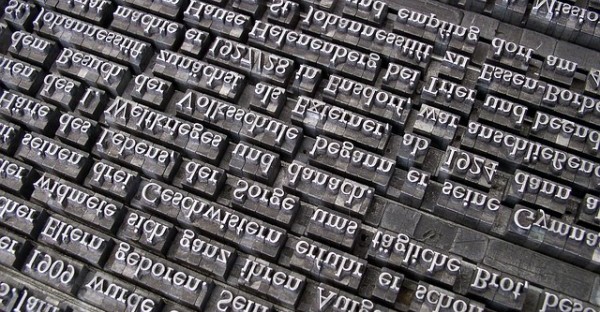
Galen Broaddus (atheist blogger at Across Rivers Wide): I’d love to talk this time about how we use language in the context of interfaith dialogue. I wrote a piece several months ago called Finding Common Ground Means Using a Common Language making the point that language can actually be somewhat exclusionary on its own, but I’m interested on hearing more perspectives than mine, which tends to focus on how atheist, secular humanist, and otherwise non-religious people feel in these contexts.
Hind Makki (Muslim blogger at Hindtrospectives): Thanks for starting off the conversation with your very thoughtful and thought-provoking piece, Galen. Nearly every time I say the phrase “interfaith,” I find myself having to explicitly underscore that the concept I am referring is absolutely inclusive of atheists, secular humanists, and people whose observance of their faith isn’t necessarily orthodox. That’s because when most people think of the term “interfaith,” they assume it only means very religious people or people ascribing to a religious belief system. But the way I think about the concept of interfaith cooperation is more sociological than religious.
Galen: “Interfaith” is one of those words, and unfortunately, I have seen all too many people in my “tribe” who eschew interfaith conversations not for principled reasons (i.e. they don’t really want to engage with religious people) but because they feel that the term excludes them. I’ve struggled with it, too, but it’s hard to get around the term even if we all agree that it has a degree of implicit exclusion.
Hind: It’s a clunky and, in many ways, outdated word. A lot of small-o-orthodox religious people don’t like it, either, because it connotes a watered-down, kumbaya type of belief that doesn’t take legitimate differences in religious convictions seriously. But is there a better word? I haven’t found one yet.
Galen: I’ve heard “interbelief” as an alternate suggestion, and I frankly think it’s kind of terrible, ha.
Hind: Interbelief is even worse! Ha! Of course, Diana Eck’s “Religious Pluralism” is my go-to deeper definition, but it can also be off-putting to some folks.
Galen: Your point about “taking legitimate differences seriously” is one that I do wonder about, Hind. In that piece, I was essentially arguing for a common ground that is religiously neutral, and while I think there are real benefits to that, I also have to recognize that shifting the responsibility of adapting one’s language to religious people does actually sometimes create a burden. Maybe that’s where intersectionality comes in again: A lot of religious minorities are involved in interfaith stuff.
To put it slightly differently: I should recognize that some religious people engaging in these contexts are subtly erased from them as well. I don’t want to be that person who makes the discussion all about my microaggressions. Others have them, too.
Andy Gill (progressive Christian blogger at Andy Gill): Yeah, I think my question is, regarding this topic: how then does the religious or nonreligious “minority” engage safely with the extreme side(s) of the religious majority?
Hind: There are a lot of people who are minorities in their religious tradition, or who observe their faith in a non-orthodox way, that are in the interfaith movement precisely because they feel more “safe” in interfaith spaces than within their own faith tradition. I’ve seen young Muslims from across the sectarian and orthopraxis spectrum who feel safer as Muslims in interfaith spaces than they do in orthodox Muslim spaces.
Andy, what do you mean by “extreme?” I think interfaith cooperation/dialogue can only work when everyone at the table believes all participants have an equally legitimate claim to their own belief system. Sometimes that places the burden on orthodox faith believers; other times that burden is placed on those engaging with those very same religiously orthodox folk.
Andy: Hm, yeah, I think I agree with that (as this week’s dialogue, I must admit, is one I’m mostly wanting to just learn from), but as I’ve grown up in conservative evangelicalism, I’d say the extremes are, in fact as you put very well, “those who do not believe all participants have an equally legitimate claim on their own belief system” (e.g. those who might say, “if you don’t believe in Jesus then you’re not saved…”).
Galen: That evangelical context is what I’m familiar with, too, Andy, and it’s a big part of why the language question here seems to matter a lot to atheists (who are still by and large formerly religious). We’ve lived with religion and see how language is constantly used to remind us that we’re on the margins. I mean, “In God We Trust,” anyone?
Hind: Yes, I am coming at this from a different angle than you two, because religious terminology in Islam is generally derived from Arabic. I feel like Muslims have the double burden of dealing with (mis)translations. I always roll my eyes a little at the phrase “the mecca of (insert something),” but that’s ultimately harmless. The mistranslations into English of the words jihad and kafir are much more egregious.
Galen: I bet you have fun with barely-informed people trying to explain to you what those terms “really mean,” right?
Hind: All the time! Especially on Twitter, people whose avatars are of US flags and eagles and guns and Pepe the Frog. Who are obviously all scholars of Islamic jurisprudence and Arabic linguistics 🙂
Andy: Ugh, I can’t even imagine… (well, sadly, I guess I don’t have to cause I see that sh*t all the time).
Galen: I should say, though, that I’ve been very pleased with how much language hasn’t been a barrier to our conversations (my crack about “sacred” in our first post notwithstanding, heh). It hasn’t felt like we’re separated by different languages because of our different backgrounds and (ir)religious positions.
Andy: Yeah, I agree. I’m glad you echoed that sentiment, as I was super nervous about the possible motivations for this particular topic, lol. Again, it’s that fear of dialogue; one never wants to offend, but it seems and feels like with social media bringing us all together, I’ve stepped on more toes in the last 5 years by accident than I think my grandparents have (without the Internet) in their entire (and still going) lifetime.
Plus, I’m “evangelical” (at least in my mind I am; maybe not so much a “Franklin Graham’s” mind) so, I know that my verbiage, outlook, shoot, my overall epistemology is the one that many times needs major correcting.
Galen: I think there’s a lot that we all can learn about how our language and perspective affects others from these conversations themselves. Gaining understanding is kind of the point, or at least one of them.
Hind: Definitely agree with both your points, gentlemen. I’ve been thinking about the concept of common language, in relationship to our conversation last week about silos. Our cultural silos and reliance on shortened communication via social media have flattened our vocabulary, I think. And that has led to evolving and politicized definitions that may not be helpful for honest cross-cultural, and interfaith, conversations.
Galen: And the miscommunications that can come as a result are harder to overcome when everyone’s not engaging in good faith discussion, which has also become strained. It’s a confluence of a bunch of terrible factors.
But I think those are problems bigger than just language. There are several issues that we have to overcome if we’re going to have better dialogue and improved understanding.
Hind: Those problems are definitely bigger than language, but they underscore our critical need — as a diverse society — to begin to agree on some shared definitions if we are to ever have fruitful dialogues that knock down our silos.
Andy: Closing thoughts: 1) I’m grateful for this dialogue as it beings me hope annnnnd I’m learning a ton. 2) I think that for all of us alive today, it’s truly up to us to engage and alter this conversation. The Internet, if you think about it, is up to all of us as to what its future will look like. That’s a hugely exciting and daunting but (if one is a cup half-full type of person) very amazing opportunity to create these types of “interfaith” dialogue while slowly but steadily doing away with all those cultural silos…
Galen: “Exciting, daunting, but amazing.” I hope you’re right, Andy!
Hind: I’m also grateful for these conversations; they help expand my own worldview, and I’m learning so much from both of you. #WarmFuzzies
Andy: ’til next week?
Galen: Looking forward to many more. See you both next week!
Image via Pixabay
Previous Post

December 5, 2016
Seeking Understanding in an Age of Silos
Next Post
December 19, 2016 What's in a Label?
Browse Our Archives
Select a Category Activism Community Daily Living Interfaith Dialogue Language Politics Relationships Society
Select a Month June 2017 May 2017 April 2017 March 2017 February 2017 January 2017 December 2016 November 2016
Follow Us!
TAKE THE
Religious Wisdom Quiz
Who saw the Lord high and lifted up, with the train of his robe filling the temple?
Select your answer to see how you score.
Jeremiah Ezekiel Isaiah Daniel
Related posts from Crossing the Streams

Dealing with Criticism in the Inner Circle


To Protect Religious Freedom, Chip Away at Bigotry

What About the Hurdles to Good Interfaith Dialogue?
TRENDING AT PATHEOS Interfaith

How Far Is Too Far? On Bill Maher,...
Is the outrage over statements by Kathy Griffin and Bill Maher an...

Refilling the Cup: A Conversation on Self-Care
In these troubled times, self-care is needed now more than ever.

There Is No Courage to Be Bipartisan Anymore...Except...
Health care developments have deepened the divide. It's SCHAEFFER & MOON.

What about Some Solid Outrage from Fox News?...
Scalp-taking and salvation. It's SCHAEFFER & MOON.

Am I Still a Feminist If I Worked...
Does all-or-nothing activism separate women by race, ethnicity, and class?

Why does Eve take the blame when Adam was right there the...
view all Interfaith blogs
Ad-Free & Subscriber Log-In Subscription Support
- About Us
- 2026 Calendar
- Videos
- Podcasts
- Library of World Religions
- Faith In Media Tracker
- Advertise With Us
- Write for Us
- Privacy Policy
- Terms of Service
- Do Not Sell My Data
- Contact Us
- Radiant Digital
- Manage Newsletter Subscriptions
- Unsubscribe From Notifications
- Sitemap
Copyright 2008-2026, Patheos. All rights reserved.
Subscription Support Ad-Free & Subscriber Log-In
Follow Patheos