
BuddhistCatholicContemplativeEvangelicalGeneral ChristianHinduJewishLatter-day SaintMuslimNew VisionsProgressive Christian
Beliefs
- Buddhist
- Catholic
- Contemplative
- Evangelical
- General Christian
- Hindu
- Jewish
- Latter-day Saint
- More Voices
- Muslim
- New Visions
- Pagan
- Progressive Christian
Topics
- Religion News
- Food and Religion
- Sports and Religion
- Religious Art
- Religious Music and Entertainment
- Religious Events
- History and Religion
- Style and Religion
- Politics and Religion
- Women in Religion
- Recreation Outdoors and Religion
- Business Finance and Religion
- Careers Workplace and Religion
- Education and Religion
- Family Parenting and Religion
- Health Fitness and Religion
- Home and Religion
- Relationships and Religion
- Technology and Religion
- Travel and Religion
Columnists
- Buddhist Columnists
- Business Finance and Religion Columnists
- Careers Workplace and Religion Columnists
- Catholic Columnists
- Contemplative Columnists
- Education and Religion Columnists
- Evangelists Columnists
- Family Parenting and Religion Columnists
- General Christian Columnists
- Health Fitness and Religion Columnists
- Hindu Columnists
- History and Religion Columnists
- Home and Religion Columnists
- Jewish Columnists
- More Voices Columnists
- Latter Day Columnists
- Muslim Columnists
- New Visions Columnists
- Nonreligious Columnists
- Pagan Columnists
- Politics and Religion Columnists
- Progressive Columnists
- Recreation Outdoors and Religion Columnists
- Relationships and Religion Columnists
- Religion News Columnists
- Religious Art Columnists
- Religious Events Columnists
- Religious Music and Entertainment Columnists
- Sports and Religion Columnists
- Style and Religion Columnists
- Technology and Religion Columnists
- Travel and Religion Columnists
- Women in Religion Columnists
Resource Library
- 2026 Calendar
- Library of World Religions
- The 100 Most Holy Places on Earth
- Patheos Answers
- Podcasts
- Videos
- Faith Leaders Database
- Anglican Episcopalian
- Bahai
- Baptist
- Buddhism
- Christianity
- Confucianism
- Eastern Orthodoxy
- Hinduism
- Holiness and Pentecostal
- ISKCON
- Islam
- Judaism
- Lutheran
- Methodist
- The Church of Jesus Christ of Latter-day Saints
- New Age
- Paganism
- Presbytarian and Reformed
- Protestantism
- Religion Behind the Scenes
- Roman Catholic
- Scientology
- Shia Islam
- Sikhism
- Sufism
- Sunni Islam
- Taoism
- Zen
- See all religions
Research Tools
 Ad-Free & Subscriber Log-In Subscription Support
Ad-Free & Subscriber Log-In Subscription Support
Follow Patheos 

- Trending:
- Forgiveness
- |
- Marriage
- |
- Consciousness
- |
- Death Penalty
- |
- Election
- |
- Halloween
 Cross Examined
- Home
- Nonreligious
- Top 20 Most Damning Bible Contradictions (3 of 4)
Top 20 Most Damning Bible Contradictions (3 of 4)
Last updated on: April 8, 2025 at 8:04 am by Bob Seidensticker
Top 20 Most Damning Bible Contradictions (3 of 4) 2025-04-08T08:04:34-07:00 Bob Seidensticker
Patheos Explore the world's faith through different perspectives on religion and spirituality! Patheos has the views of the prevalent religions and spiritualities of the world.

|Image via Andrei Lazarev, CC license
We’re in the middle of tossing Christianity’s dirty laundry onto the lawn for everyone to examine. Here are five more Bible contradictions that call into question foundational Christian claims (part 1 is here).
11. Do people deserve punishment for their ancestors’ sins?
The Bible demands intergenerational punishment so that children must be punished for their parents’ sins.
I, the Lord your God, am a jealous God, punishing the children for the sin of the parents to the third and fourth generation of those who hate me (Exodus 20:5).
[God justified a calamity to the people:] It is because your ancestors forsook me (Jeremiah 16:11).
But the opposite claim is recorded in the Bible as well.
Fathers shall not be put to death for their children, nor children put to death for their fathers; each is to die for his own sin (Deuteronomy 24:16).
Everyone will die for their own sin; whoever eats sour grapes—their own teeth will be set on edge (Jeremiah 31:30).
The one who sins is the one who will die (Ezekiel 18:4).
Where does this leave Original Sin? This is the idea that we’re born fallen and deserve hell because of Adam’s sin, which infects us all. What foundation remains for Original Sin if it is undercut by the Bible itself?
12. What day was Jesus crucified on?
The synoptic gospels (Matthew, Mark, and Luke) say that the Last Supper was the Passover meal and that Jesus was crucified after the Passover meal.
On the first day of the Festival of Unleavened Bread, the disciples came to Jesus and asked, “Where do you want us to make preparations for you to eat the Passover?” (Matthew 26:17)
Three verses later, Jesus is at the Passover meal, the Last Supper. But in John, the order is reversed: it’s the crucifixion and then the Passover meal.
Now it was the day of Preparation [the day of preparing lambs for the Passover meal], and the next day was to be a special Sabbath. Because the Jewish leaders did not want the bodies [of Jesus and the two thieves] left on the crosses during the Sabbath, they asked Pilate to have the legs broken and the bodies taken down. (John 19:31)
A “historical account,” as the gospels are claimed by some to be, should get the order of important events correct, and the Passover meal and the crucifixion are both important events.
13. Who should the disciples convert?
At the end of the gospel story, Jesus has risen and is giving the disciples their final instructions.
Make disciples of all the nations, baptizing them in the name of the Father and the Son and the Holy Spirit (Matthew 28:19).
This is the familiar Great Commission, and it’s a lot more generous than what has been called the lesser commission that appears earlier in the same gospel:
These twelve Jesus sent out with the following instructions: “Do not go among the Gentiles or enter any town of the Samaritans. Go rather to the lost sheep of Israel.” (Matthew 10:5–6)
This was not a universal message. We see it again in his encounter with the Canaanite woman:
[Jesus rejected her plea to heal her daughter, saying] “I was sent only to the lost sheep of Israel.”
The woman came and knelt before him. “Lord, help me!” she said.
He replied, “It is not right to take the children’s bread and toss it to the dogs.” (Matthew 15:24–6)
You might say that a ministry with limited resources had to prioritize, but that doesn’t apply here. Don’t forget that Jesus was omnipotent.
Going back to the Old Testament, we don’t find an all-inclusive message there, either. The Israelites were God’s “Chosen People,” and God had harsh things to say about neighboring tribes.
No Ammonite or Moabite or any of their descendants may enter the assembly of Jehovah, not even in the tenth generation (Deuteronomy 23:3).
God also forbids intermarriage with these foreign tribes (Deut. 7:3; Ezra 9:2, 10:10; Nehemiah 13).
Let’s revisit the fact that Matthew is contradictory when it says both “Make disciples of all nations” and “Do not go among the Gentiles [but only] to the lost sheep of Israel.” There are no early papyrus copies of Matthew 28 (the “Make disciples of all nations” chapter), and the earliest copies of this chapter are in the codices copied in the mid-300s. That’s almost three centuries of silence from original to our best copies, a lot of opportunity for the Great Commission to get “improved” by copyists. I’m not saying it was, of course; I’m simply offering one explanation for why the gospel in Matthew has Jesus change so fundamental a tenet as who he came to save.
14. Jesus should’ve returned already.
Jesus promised to return within the lifetimes of those listening to him. This Apocalyptic message (Apocalypticism claims that the end times are very close) is found in the three synoptic gospels. It takes a passage in Isaiah 13 that predicts calamity for Babylon—that the sun and moon will darken and the stars will fall—and repurposes it as a prediction of the end. It also predicts:
[All people on earth will] see the Son of Man coming on the clouds of heaven, with power and great glory. And he will send his angels with a loud trumpet call, and they will gather his elect from the four winds. (Matthew 24:30–31)
The prediction ends saying that this will all happen soon.
This generation will certainly not pass away until all these things have happened (Matthew 24:34).
Let me emphasize those two points: “these things” will happen soon (within months or years, not centuries), and “these things” are obvious and world-destroyingly calamitous. The popular Christian response that this referred to the fall of the Temple won’t fly.
Earlier in the same gospel, we find other references to the imminent coming of the Son of Man:
When you are persecuted in one place [as you spread the gospel], flee to another. Truly I tell you, you will not finish going through the towns of Israel before the Son of Man comes. (Matthew 10:23)
Some who are standing here will not taste death before they see the Son of Man coming in his kingdom (Matthew 16:28).
It’s been a lot longer than one generation. Jesus made a mistake.
15. Jesus promises that prayers are answered
Jesus says a lot about prayer, and he makes big claims for it.
Ask and it will be given to you; seek and you will find; knock and the door will be opened to you (Matthew 7:1).
Whatever you ask for in prayer, believe that you have received it, and it will be yours (Mark 11:24).
He who believes in me will also do the works that I do; and greater works than these will he do (John 14:12).
Apologists say that Jesus isn’t like a genie, but they need to reread their Bibles. Jesus really does say, “Ask, and ye shall receive”—it’s in John 16:24. He says it without caveats. That promise has been tested uncountably many times, often by desperate people, but if Jesus answers, it’s indistinguishable from chance. (More on prayer here and here.)
Concluded in part 4.
Religion is just superstition
which has been around long enough
to have become respectable.
— J. B. R. Yant
.
.
Previous Post

October 22, 2018
Top 20 Most Damning Bible Contradictions (2 of 4)
Next Post

October 26, 2018 8 Lessons from New Age Thinking for Christians and Atheists
Browse Our Archives
Select a Category Abortion Apologetics Atheism Bible Christianity Cosmology Creationism/ID Debate Evolution History Homosexuality Humor Morality Other Religions Prophecy Religion Science Separation of Church and State Skepticism Social Issues Uncategorized Words
Select a Month December 2021 November 2021 October 2021 September 2021 August 2021 July 2021 June 2021 May 2021 April 2021 March 2021 February 2021 January 2021 December 2020 November 2020 October 2020 September 2020 August 2020 July 2020 June 2020 May 2020 April 2020 March 2020 February 2020 January 2020 December 2019 November 2019 October 2019 September 2019 August 2019 July 2019 June 2019 May 2019 April 2019 March 2019 February 2019 January 2019 December 2018 November 2018 October 2018 September 2018 August 2018 July 2018 June 2018 May 2018 April 2018 March 2018 February 2018 January 2018 December 2017 November 2017 October 2017 September 2017 August 2017 July 2017 June 2017 May 2017 April 2017 March 2017 February 2017 January 2017 December 2016 November 2016 October 2016 September 2016 August 2016 July 2016 June 2016 May 2016 April 2016 March 2016 February 2016 January 2016 December 2015 November 2015 October 2015 September 2015 August 2015 July 2015 June 2015 May 2015 April 2015 March 2015 February 2015 January 2015 December 2014 November 2014 October 2014 September 2014 August 2014 July 2014 June 2014 May 2014 April 2014 March 2014 February 2014 January 2014 December 2013 November 2013 October 2013 September 2013 August 2013 July 2013 June 2013 May 2013 April 2013 March 2013 February 2013 January 2013 December 2012 November 2012 October 2012 September 2012 August 2012 July 2012 June 2012 May 2012 April 2012 March 2012 February 2012 January 2012 December 2011 November 2011 October 2011 September 2011 August 2011
Follow Us!
TAKE THE
Religious Wisdom Quiz
What animal did Balaam's donkey see that Balaam could not?
Select your answer to see how you score.
A lion An angel A storm A snake
Books by This Author Books by Bob Seidensticker
Related posts from Cross Examined
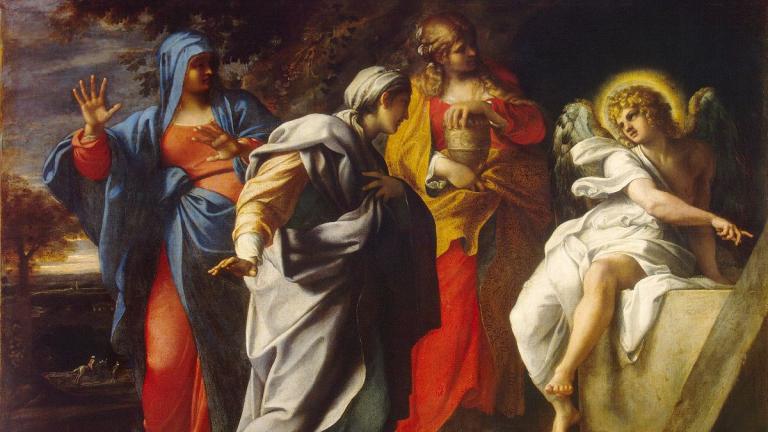
The Bible defeats its own Resurrection story

Guest post: The flat tire and the gospels
Bible Prophecies: Edom’s Barrenness, Deaths of Sons, and...
Bible Prophecies: Jerusalem Suburbs and Conquest
TRENDING AT PATHEOS Nonreligious

Dethroning Jesus and Enthroning Yourself
Jesus Never Asked to Be Worshipped. He Asked to Be Understood. Christianity...

Why Most Christians are Really Paulians and Jobians
I Don't Care, But It Matters Let's get this out of the...

Essential Tips to Successfully Navigate the Selling Process
Selling a house can feel overwhelming, but it doesn’t have to be....

To Make Remote Work Effective, Think About Others
The COVID-19 pandemic forced many companies to rapidly transition to remote work....

Flexibility Is Key to Solving Problems of Tomorrow
The world of work is undergoing a dramatic transformation. The COVID-19 pandemic...
view all Nonreligious blogs
Ad-Free & Subscriber Log-In Subscription Support
- About Us
- 2026 Calendar
- Videos
- Podcasts
- Library of World Religions
- Faith In Media Tracker
- Advertise With Us
- Write for Us
- Privacy Policy
- Terms of Service
- Do Not Sell My Data
- Contact Us
- Radiant Digital
- Manage Newsletter Subscriptions
- Unsubscribe From Notifications
- Sitemap
Copyright 2008-2026, Patheos. All rights reserved.
Subscription Support Ad-Free & Subscriber Log-In
Follow Patheos