
BuddhistCatholicContemplativeEvangelicalGeneral ChristianHinduJewishLatter-day SaintMuslimNew VisionsProgressive Christian
Beliefs
- Buddhist
- Catholic
- Contemplative
- Evangelical
- General Christian
- Hindu
- Jewish
- Latter-day Saint
- More Voices
- Muslim
- New Visions
- Pagan
- Progressive Christian
Topics
- Religion News
- Food and Religion
- Sports and Religion
- Religious Art
- Religious Music and Entertainment
- Religious Events
- History and Religion
- Style and Religion
- Politics and Religion
- Women in Religion
- Recreation Outdoors and Religion
- Business Finance and Religion
- Careers Workplace and Religion
- Education and Religion
- Family Parenting and Religion
- Health Fitness and Religion
- Home and Religion
- Relationships and Religion
- Technology and Religion
- Travel and Religion
Columnists
- Buddhist Columnists
- Business Finance and Religion Columnists
- Careers Workplace and Religion Columnists
- Catholic Columnists
- Contemplative Columnists
- Education and Religion Columnists
- Evangelists Columnists
- Family Parenting and Religion Columnists
- General Christian Columnists
- Health Fitness and Religion Columnists
- Hindu Columnists
- History and Religion Columnists
- Home and Religion Columnists
- Jewish Columnists
- More Voices Columnists
- Latter Day Columnists
- Muslim Columnists
- New Visions Columnists
- Nonreligious Columnists
- Pagan Columnists
- Politics and Religion Columnists
- Progressive Columnists
- Recreation Outdoors and Religion Columnists
- Relationships and Religion Columnists
- Religion News Columnists
- Religious Art Columnists
- Religious Events Columnists
- Religious Music and Entertainment Columnists
- Sports and Religion Columnists
- Style and Religion Columnists
- Technology and Religion Columnists
- Travel and Religion Columnists
- Women in Religion Columnists
Resource Library
- 2026 Calendar
- Library of World Religions
- The 100 Most Holy Places on Earth
- Patheos Answers
- Podcasts
- Videos
- Faith Leaders Database
- Anglican Episcopalian
- Bahai
- Baptist
- Buddhism
- Christianity
- Confucianism
- Eastern Orthodoxy
- Hinduism
- Holiness and Pentecostal
- ISKCON
- Islam
- Judaism
- Lutheran
- Methodist
- The Church of Jesus Christ of Latter-day Saints
- New Age
- Paganism
- Presbytarian and Reformed
- Protestantism
- Religion Behind the Scenes
- Roman Catholic
- Scientology
- Shia Islam
- Sikhism
- Sufism
- Sunni Islam
- Taoism
- Zen
- See all religions
Research Tools
 Ad-Free & Subscriber Log-In Subscription Support
Ad-Free & Subscriber Log-In Subscription Support
Follow Patheos 

- Trending:
- Forgiveness
- |
- Marriage
- |
- Consciousness
- |
- Death Penalty
- |
- Election
- |
- Halloween

- Home
- General Christian
- Religious Music and Entertainment
- Why We Needed Broken Superheroes
Why We Needed Broken Superheroes
Last updated on: May 9, 2025 at 5:21 pm by Nathan Clarkson
Why We Needed Broken Superheroes 2025-05-09T17:21:16-07:00 Nathan Clarkson
Patheos Explore the world's faith through different perspectives on religion and spirituality! Patheos has the views of the prevalent religions and spiritualities of the world.
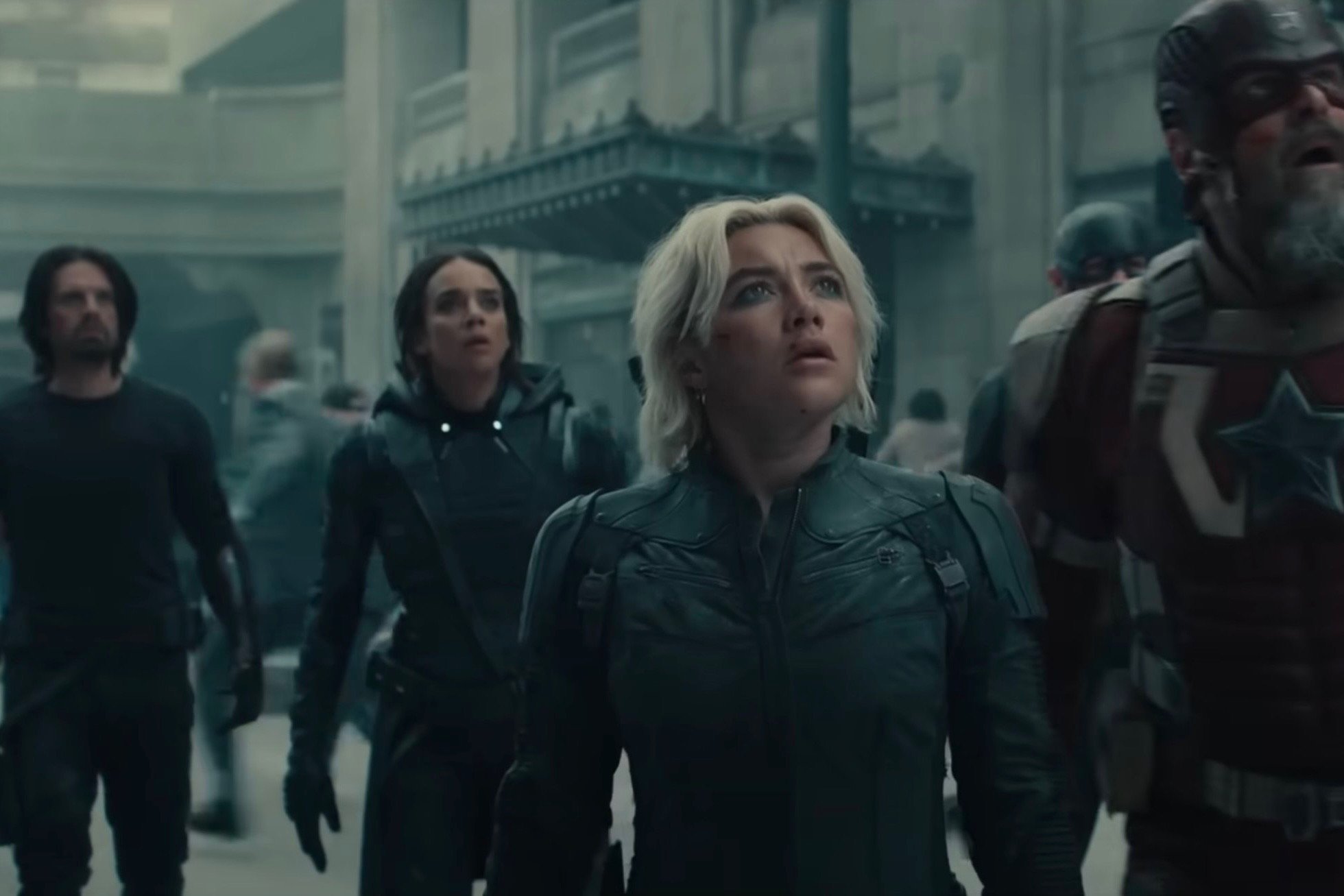
Like many kids growing up in late 20th century America, I loved superheroes. Particularly Superman.
In my young head, Superman was the picture of what I wanted to be. I knew, short of falling in a vat of super-soldier juice, there was a good chance I’d never have superpowers, but the image of a good guy spending his life doing something meaningful by using his strength to help others, preserve goodness, and fight evil appealed to me at a young age. And it still does. But the difference between then and now is that when I was a child, there was a part of me that truly believed I could be that shining beacon of heroism Superman was — cape in the wind, on top of a skyscraper, ready to do good.
I imagined that, in my own way, I could stand, chest out, impervious to harm, never be overtaken by whatever “enemy” was facing me and always make the true, noble, and “right” decision. But then, I grew up. Suddenly, in the throes of adult life, I began finding that image of myself as Superman drifting from my grasp as I dealt with my own weakness brought on by severe mental illness, the consequences of my own destructive choices, and the onslaught of devastating circumstances beyond my control. In just a few years, the belief that I could be Superman was shattered as I discovered that the world was a far more broken place than I had expected, and I was a far weaker person than I ever wanted to admit.
I still have that small spark of desire deep down to be the hero my six-year-old self thought I could be, which is why I still go to every new superhero movie that comes out, to keep that small flame alive. And while I always get a rush of watching the hero defeat the bad guy, there is now a slight disconnect from myself and the heroes on screen who are often (still) depicted as “chosen ones” who seemingly don’t struggle with the messes many of us do, as if the requisite to be a hero, is to be a naturally good, moral, and stable person — all of which would leave me far outside the definition of the identity I so longed to take on. But recently, I watched a movie that changed everything.
On the weekend of May 2nd, I geared up with my movie-loving friend group to go and see Marvel’s latest addition to their cinematic universe, Thunderbolts*. Of course, my inner child was excited to watch another epic tale of good guys vs. bad guys, but my inner adult was a bit tired, as I was certain I knew what to expect: another group of unrelatable heroes that I could never truly emulate, saving the day in a way I couldn’t accomplish in my own life, even metaphorically. But to my surprise, this movie subverted all of my expectations.
Unlike so many superhero films in the past, I wasn’t introduced to a group of quasi-Christ figures who, full of self-assurance and Herculean affect, always know what to do to save the day. Instead I was shown a rag-tag group of broken and hurting individuals who have no idea how to save anything, much less themselves. The film centers around Yelena, played brilliantly by Florence Pugh, who has spent her life running from a dark past that always seems to find her.
Through dire circumstances she is thrown into a group of failed heroes and depressed and embittered individuals, each sifting through the ruins of trauma, regret, and shame that we see detailed in heartbreaking flashbacks. During one of the most powerful scenes, after the task of saving New York falls in the hands of the band of ragamuffins, Yelena breaks down in tears under the weight of her shame, unable to see herself as someone who could overcome her own darkness, much less the one that threatens New York City.
In a brilliant piece of cinematic juxtaposition, the scene of her breaking down very aptly takes place under the bridge, where just some years ago, we watched the polished Avengers handily defeat the villain they faced. I won’t give any spoilers or plot away. But this image of broken, flawed, and human individuals finding they are still, if not especially, qualified to be the heroes of the day, moved me in a uniquely powerful way I haven’t been in my many years of watching superhero movies.
I think we all long to be heroes. We all long to live purposefully in the world, using our strength and power to help people and save the day. But so many of us disqualify ourselves from the title of “hero” because the image of heroes we’re given seems so far from the reality of who we know ourselves to be — broken, weak, ashamed, failed. But movies like Thunderbolts* remind us, just like many of the characters from scripture (murderer Paul, adulterer David, sinful Hagar, doubter Thomas, betrayer Peter, etc…) that perfection isn’t a requirement for being a hero. Instead, being a hero comes with the willingness to fight our own darkness and help others do the same.
General Christian
Evangelical
Religious Art
Previous Post
April 8, 2025
The Artist Identity Hierarchy
Next Post
August 31, 2025 The Lord Of The Rings Was Wrong
Browse Our Archives
Select a Category Uncategorized
Select a Month August 2026 May 2026 March 2026 January 2026 November 2025 August 2025 May 2025 April 2025 March 2025 January 2025 December 2024 October 2024 September 2024 August 2024 July 2024 June 2024 May 2024 April 2024 March 2024
TAKE THE
Religious Wisdom Quiz
What is the number of the beast in Revelation?
Select your answer to see how you score.
666 144 777 1000
Related posts from Cross Cultural
Entertainment

Entertainment
In Defense of Escapism: When Art Becomes Refuge

Entertainment

Entertainment
TRENDING AT PATHEOS Religious Music and Entertainment

"Les Diabolique" and Transgression
Alongside something like Arrival, Vertigo, or Charade, Les Diaboliques is a...

"The Plague Dogs" and Mortality
So, flashback to the late 70s, early 80s. Walt Disney Studios is...

With the recent and highly successful release of Christopher Nolan’s epic film,...

"L'avventura" and Human Weakness
Today's piece is going to be a little different for a few...

I first want to apologize for not posting or writing anything. I'm...

I've engaged in the multi-year project of reading through the Church Fathers,...
view all Religious Music and Entertainment blogs
Ad-Free & Subscriber Log-In Subscription Support
- About Us
- 2026 Calendar
- Videos
- Podcasts
- Library of World Religions
- Faith In Media Tracker
- Advertise With Us
- Write for Us
- Privacy Policy
- Terms of Service
- Do Not Sell My Data
- Contact Us
- Radiant Digital
- Manage Newsletter Subscriptions
- Unsubscribe From Notifications
- Sitemap
Copyright 2008-2026, Patheos. All rights reserved.
Subscription Support Ad-Free & Subscriber Log-In
Follow Patheos