
BuddhistCatholicContemplativeEvangelicalGeneral ChristianHinduJewishLatter-day SaintMuslimNew VisionsProgressive Christian
Beliefs
- Buddhist
- Catholic
- Contemplative
- Evangelical
- General Christian
- Hindu
- Jewish
- Latter-day Saint
- More Voices
- Muslim
- New Visions
- Pagan
- Progressive Christian
Topics
- Religion News
- Food and Religion
- Sports and Religion
- Religious Art
- Religious Music and Entertainment
- Religious Events
- History and Religion
- Style and Religion
- Politics and Religion
- Women in Religion
- Recreation Outdoors and Religion
- Business Finance and Religion
- Careers Workplace and Religion
- Education and Religion
- Family Parenting and Religion
- Health Fitness and Religion
- Home and Religion
- Relationships and Religion
- Technology and Religion
- Travel and Religion
Columnists
- Buddhist Columnists
- Business Finance and Religion Columnists
- Careers Workplace and Religion Columnists
- Catholic Columnists
- Contemplative Columnists
- Education and Religion Columnists
- Evangelists Columnists
- Family Parenting and Religion Columnists
- General Christian Columnists
- Health Fitness and Religion Columnists
- Hindu Columnists
- History and Religion Columnists
- Home and Religion Columnists
- Jewish Columnists
- More Voices Columnists
- Latter Day Columnists
- Muslim Columnists
- New Visions Columnists
- Nonreligious Columnists
- Pagan Columnists
- Politics and Religion Columnists
- Progressive Columnists
- Recreation Outdoors and Religion Columnists
- Relationships and Religion Columnists
- Religion News Columnists
- Religious Art Columnists
- Religious Events Columnists
- Religious Music and Entertainment Columnists
- Sports and Religion Columnists
- Style and Religion Columnists
- Technology and Religion Columnists
- Travel and Religion Columnists
- Women in Religion Columnists
Resource Library
- 2026 Calendar
- Library of World Religions
- The 100 Most Holy Places on Earth
- Patheos Answers
- Podcasts
- Videos
- Faith Leaders Database
- Anglican Episcopalian
- Bahai
- Baptist
- Buddhism
- Christianity
- Confucianism
- Eastern Orthodoxy
- Hinduism
- Holiness and Pentecostal
- ISKCON
- Islam
- Judaism
- Lutheran
- Methodist
- The Church of Jesus Christ of Latter-day Saints
- New Age
- Paganism
- Presbytarian and Reformed
- Protestantism
- Religion Behind the Scenes
- Roman Catholic
- Scientology
- Shia Islam
- Sikhism
- Sufism
- Sunni Islam
- Taoism
- Zen
- See all religions
Research Tools
 Ad-Free & Subscriber Log-In Subscription Support
Ad-Free & Subscriber Log-In Subscription Support
Follow Patheos 

- Trending:
- Forgiveness
- |
- Marriage
- |
- Consciousness
- |
- Death Penalty
- |
- Election
- |
- Halloween

- Home
- Jewish
- History and Religion
- Killing Amalek: The Torah’s Most Misunderstood Commandment
Killing Amalek: The Torah’s Most Misunderstood Commandment
Last updated on: September 3, 2026 at 8:40 pm by Dr. Micah Ben David Naziri
Killing Amalek: The Torah’s Most Misunderstood Commandment 2026-09-03T20:40:52-04:00 Dr. Micah Ben David Naziri
Patheos Explore the world's faith through different perspectives on religion and spirituality! Patheos has the views of the prevalent religions and spiritualities of the world.
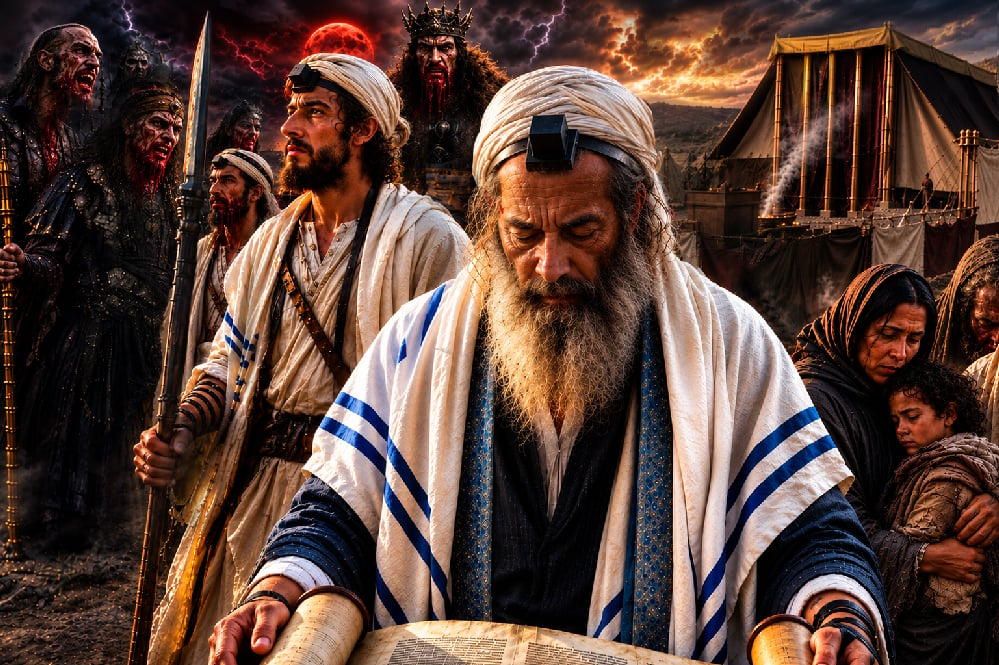
Image from the Tzava Ha’Mashiach. Used with permission.
Few passages of the Torah have provoked more confusion, polemic, and misuse than the Mitzvah or Commandment to “blot out the memory of Amalek.”
But who is this “Amalek?” Archaeological evidence for Amalek’s existence offers us no clues; neither do any contemporaneous sources from surrounding nations and third parties.
Egyptian and Assyrian monumental inscriptions, which documented various tribes and peoples throughout the Levant, contain no reference to Amalek or the Amalekites whatsoever. This would be strange even in the case of a relatively benign group, but to imagine that such a warlike tribe somehow went unmentioned, stretches credulity. This absence led archaeologist Hugo Winckler, in his Geschichte Israels (1898), to conclude that the Amalekites and biblical stories about them were ahistorical.
Try as we might to identify this ancient group, there is no sign of a nation, tribe or anyone self-identifying by this name. Over a century after Winckler, today most archaeologists view the Amalekites as representing a biblical construct for recurrent nomadic threats from predatory tribes rather than a precisely identifiable ethnicity, or singular group.
From antiquity to the present, this imperative has been wielded alternately as proof of Judaism’s alleged militancy—or even precedence for “genocide libel” against the Jewish people today—and, paradoxically, as its most profound ethical mirror. Within the Hebrew Bible, the nation of Amalek first emerges not as an empire or dynasty but as a type: the archetypal attacker of the weak. Their assault on Israel’s stragglers in the wilderness immediately after the Exodus marks the first appearance of evil as unprovoked aggression.
“Because a hand is upon the throne of Yah, Ha-Shem will have war with Amalek from generation to generation.” (Shmōt/Exodus 17:16)
Ki yad ʿal kes Yah; milḥamah la-Ha’Shem ba-ʿAmalek mi-dor dor.
כִּי יָד עַל כֵּס יָהּ מִלְחָמָה לַיהוָה בַּעֲמָלֵק מִדֹּר דֹּר
The second formulation of this command, in Deuteronomy 25:17–19, expands the focus from event to ethos:
“Remember what Amalek did to you on your journey out of Egypt—how he met you on the way when you were faint and weary and struck down all who lagged behind you.… you shall blot out the memory of Amalek from under heaven; do not forget.”
Zakhōr ʾet asher ʿasah lekha ʿAmaleq ba-derekh betzetkhem mi-Mitzrayīm … asher qarekha ba-derekh vayezanev bekha kol hanneḥshalīm ʾaḥarekha … timḥeh ʾet zekher ʿAmaleq mi-taḥat ha-shamayīm lō tishkaḥ.
זָכוֹר אֵת אֲשֶׁר עָשָׂה לְךָ עֲמָלֵק בַּדֶּרֶךְ בְּצֵאתְכֶם מִמִּצְרָיִם … אֲשֶׁר קָרְךָ בַּדֶּרֶךְ וַיְזַנֵּב בְּךָ כָּל הַנֶּחֱשָׁלִים אַחֲרֶיךָ … תִּמְחֶה אֶת זֵכֶר עֲמָלֵק מִתַּחַת הַשָּׁמָיִם לֹא תִשְׁכָּח.
The twin imperatives—zekhīrah (remembering) and meḥiyyah (erasure)—produce the command’s enduring paradox. To remember is to preserve; to erase is to obliterate. The tension invites interpretation. Rabbinic exegesis from Midrash Tanchuma (Ki Tetze 9) and Rashi gloss qarekha as “he cooled you,” transforming the narrative into moral psychology: Amalek is not merely a people but the chilling of moral fervor, the cynicism that “cooled” Israel’s faith after liberation. Thus “Amalek” becomes not an ethnicity but a behavioral archetype—the tzameʾei damīm, the “blood-thirsty,” who strike the weary and delight in violence for its own sake.
The Talmud makes this interpretation practical. In Sanhedrin 20b, three obligations are listed upon Israel’s entry into the Land: appointing a king, eradicating Amalek, and building the Temple. Yet Maimonides (1138–1204)—the Rambam—recognized the historical problem.
“When Sennacherib, king of Assyria, came and mingled all nations, the identity of Amalek was lost” (Issurei Biʾah 12:25).¹
Mi-sheʿalah Sanḥeriv melekh Ashur u-bilbel et kol ha-ʿamīm, batlah yediʿat ʿAmaleq.
מִשֶּׁעָלָה סַנְחֵרִיב מֶלֶךְ אַשּׁוּר וּבִלְבֵּל אֶת כָּל הָעַמִּים בָּטְלָה יְדִיעַת עֲמָלֵק
The literal nation having vanished, the mitzvah was reinterpreted as a permanent moral vigilance against those who embody its cruelty. Jacob Milgrom and Moshe Weinfeld note that even within Deuteronomy itself, the offense is ethical, not ethnic: Amalek attacked the hanneḥshalim—the stragglers—violating the Torah’s cardinal virtue of compassion. Thus, Amalek became the name for those who despise mercy.²
This understanding bears directly on the theology of the Land of Israel itself. The same Torah that commands the erasure of Amalek commands justice as the condition of residence in the Land: Tzedeq, tzedeq tirdōf (Devarīm 16:20). Rashi, opening his commentary to Sefer Bereshīt (Genesis), states that the Torah begins with Creation—not with the first mitzvah—so that the nations might know that “the Land belongs to God; He gives it to whom He sees fit.” Yet the patriarchal narratives already model ethical acquisition. Abraham purchases the field of Machpelah (Bereshīt 23), Ya`qov buys Shechem (33:19), and David pays for Yerushalayīm, Jerusalem (Sh’muel Bet 24:24). The moral principle is clear: Divine promise never annuls human responsibility.
The modern heirs of this covenant repeat the same pattern. As the contemporary essay in your corpus notes, early Zionist immigrants “purchased land at three times the going rate… with eagerness and gratitude.” The Biblical command does not justify dispossession but demands the defense of life. The aforementioned Talmudic maxim of ha-ba le-horgekha, hashkem le-horgo (הַבָּא לְהָרְגְּךָ הַשְׁכֵּם לְהָרְגוֹ)—“If one comes to kill you, rise early and kill him first” (Sanhedrin 72a)—establishes the jurisprudence of self-defense, not conquest. To kill Amalek is not to wage unprovoked war but to neutralize the blood-thirsty who lo yare Elohīm (לֹא יָרֵא אֱלֹהִים) (Devarīm/Deuteronomy 25:18), that is, who “have no fear of Elohīm.”
Across history, this distinction has been blurred both by literalists and by Israel’s enemies. The modern State of Israel, like its biblical prototype, has never initiated war against its neighbors but has repeatedly faced annihilatory assaults. The Torah’s ethic, far from sanctioning aggression, binds the Jewish people to a code of restraint. As Gittīn (59b) teaches, “The purpose of the entire Torah is to establish peace, as it is written, ‘Her ways are ways of pleasantness, and all her paths are peace.’”
The Zōhar adds, man de-parish mi-shlama parish mi-shma de-Qudsha Berikh Hu (מַן דְּפָרִישׁ מִשְּׁלָמָא פָּרִישׁ מִשְּׁמָא דְּקוּדְשָׁא בְּרִיךְ הוּא), “One who rejects peace rejects the Divine Name” (Zōhar 2: Bamidbar 176b).
Here lies the heart of the paradox: remembrance of Amalek is not a license for cruelty but a warning against it. To remember is to guard against the impulse to become what one hates.
Within this framework, the figure of Amalek and the command concerning him intertwine with the theology of the Land. The covenantal right to dwell in Eretz Yisrael derives not from ethnocentric privilege but from yōsher—uprightness. As Rashi glosses, God gave the Land “to whom it was right in His eyes to give it to.”
The name Yisrael itself, from Yashar El—“the Upright of God”—encodes this ethic. To be Israel is to embody justice; to inhabit the Land is to defend it through righteousness. Only those who live by tzedeq and resist ḥamas (violence) fulfill the covenant. In the prophetic idiom:
“They shall not hurt nor destroy in all My Holy Mountain” (Yeshayahu/Isaiah 11:9).
Lo yareʿu velō yashḥitu be-khol har qōdshi.
לֹא יָרֵעוּ וְלֹא יַשְׁחִיתוּ בְּכׇל הַר קׇדְשִׁי
We can thus trace this evolution of Amalek as an intergenerational concept, archetype and threat—from the genealogy of enmity in the story of Timna, through the halakhic interpretation of Amalek as ethical vigilance, to the mystical transformation of his eradication into the purification of cruelty itself.
Amalek in Rabbinic and theological memory never referred only to the historical tribe of Agag’s marauders, but to a recurring moral type: the ʿam liq, the “blood-lickers,” ever thirsty for Jewish blood and bent on extermination in every generation.
Where Is Amalek Today?
The question of whether the biblical nations—particularly ʿAmaleq—retain any identifiable historical continuity in later Jewish legal and exegetical tradition hinges upon a small but decisive cluster of Talmudic and post-Talmudic sources. At the center of this discussion stands a principle articulated in the Bavlī and codified by Maimonides. A careful, source-bound analysis reveals a precise claim: not the extinction of ancient nations, but the collapse of their genealogical identifiability.
The foundational Talmudic statement appears in a halakhic discussion concerning the admissibility of Ammonite and Moabite converts into the congregation of Israel. In resolving the tension between Deuteronomic prohibition and lived reality, the Bavli introduces the following principle:
“Sennacherib, king of Assyria, came up and mixed up all the nations” (Berakhōt 28a)
Sancheriv melekh ashur ʿalah u-bilbel et kol ha-ummōt
סנחריב מלך אשור עלה ובלבל את כל האומות
A parallel formulation appears elsewhere:
“Sennacherib came and mixed up all the nations” (Yevamōt 76b).
Sancheriv ba u-bilbel et kol ha-ummot
סנחריב בא ובלבל את כל האומות
These statements are grounded in the biblical record of Assyrian imperial policy, particularly the systematic deportation and resettlement of populations:
“And the king of Assyria brought people from Babylon… and settled them in the cities of Samaria instead of the children of Israel” (Melekhīm Bet/2 Kings 17:24).
Vayyavē melekh ashur mibavel… vayyoshev be-ʿarei shomron taḥat benei Yisraʾel
וַיָּבֵא מֶלֶךְ אַשּׁוּר מִבָּבֶל… וַיֹּשֶׁב בְּעָרֵי שֹׁמְרוֹן תַּחַת בְּנֵי יִשְׂרָאֵל
Within the Talmudic framework, this principle functions halakhically: where legal categories depend upon stable national identity, and that identity has been disrupted through imperial displacement and admixture, those categories can no longer be applied in practice. The nations named in the biblical text do not persist as clearly bounded, identifiable peoples within historical reality. Maimonides.codifies this principle directly:
“Sennacherib, king of Assyria, arose and mixed up all the nations” (Mishneh Torah, Issurei Bi’ah 12:25).
Sancheriv melekh ashur bilbel et kol ha-ummot
סנחריב מלך אשור בלבל את כל האומות
Within the legal framework of the Mishneh Torah, this statement establishes that the genealogical continuity presupposed by biblical law has been disrupted. The biblical nations, as discrete and traceable peoples, no longer exist in the form assumed by the scriptural categories.
At the same time, he preserves without qualification the commandment concerning Amalek:
“Israel was commanded with three commandments upon entering the Land: to appoint a king… to wipe out the seed of Amalek… and to build the Temple” (Mishneh Torah, Hilkhōt Melakhīm 5:5).
Shalosh mitzvot nitztavvu yisraʾel bi-shaʿat kenisatan la-aretz… u-lehakhrit zarʿo shel ʿamaleq… u-livnōt beit ha-beḥirah
שלש מצות נצטוו ישראל בשעת כניסתן לארץ למנות להם מלך… ולהכרית זרעו של עמלק… ולבנות בית הבחירה
He further rules that even within the framework of obligatory war, engagement is conditioned by an initial offer of peace:
“We do not wage war against anyone in the world until we first call to them for peace, whether it be an optional war or an obligatory war” (Mishneh Torah, Hilkhot Melakhīm 6:1).
Ein ʿosin milḥamah ʿim adam ba-ʿolam ʿad she-qorin lo le-Shalōm, eḥad milḥemet ha-reshūt ve-eḥad milḥemet mitzvah
אין עושין מלחמה עם אדם בעולם עד שקוראין לו לשלום אחד מלחמת הרשות ואחד מלחמת מצוה
He specifies further as follows:
“If they accept the seven commandments of the children of Noah and submit… none of them are killed” (Mishneh Torah, Hilkhot Melakhīm 6:4).
Im qibbelu sheva mitzvot bnei noaḥ ve-nikhneʿu… ein horgin mehem nefesh
אם קבלו שבע מצות בני נח ונכנעו… אין הורגין מהם נפש
The juxtaposition is exact. The halakhic system preserves the full formal validity of the commandment concerning Amalek, while simultaneously affirming that the historical nations—including Amalek—have been dissolved through processes of imperial displacement and admixture. The category remains in the text and in law; the nation does not remain as a distinct, identifiable people within history.
The conclusion follows directly from the sources as read together: the biblical nations, including Amalek, no longer exist as discrete, historically identifiable peoples, even as the legal and scriptural categories associated with them continue to be preserved within the halakhic tradition.
Amalek as the “Blood-Lickers”: Rabbinic and Kabbalistic Etymologies of Violence
Among the many moral and linguistic interpretations of Amalek in Jewish tradition, one of the most visceral is the image of the nation as blood-lickers. While the Pentateuch offers no direct gloss for the name, rabbinic and Kabbalistic texts repeatedly associate ʿAmaleq with the Hebrew root laqaq (לָקַק), meaning “to lick.”
The semantic link draws on biblical idioms such as Melekhim Alef (1 Kings 21:19)—where “dogs lick blood”—and Tehillīm (Psalm 68:24/23), which describes the enemies’ blood being lapped up on the battlefield. In later readings, this imagery fuses etymology and ethics: to “lick blood” becomes the moral portrait of those who feed upon desecration, who draw strength from the suffering of others.
Far from a modern folk etymology, early midrashic sources have for centuries presented Amalek as the paradigmatic blood-lapper. In Midrash Tanchuma (Ki Teitzei §9) we find a depiction of Amalek as the nation that “attacked Israel like a dog that laps up blood,” while Midrash Shocher Tov on Tehillīm (Psalm 9) expands this, calling Amalek “a dog that licks the blood of the slain.”
The phrasing directly invokes the verb liqaq (לָקַק) and thus implicitly reads the ethnonym ʿAmaleq as ʿam liqaq—“the people who lick.” Yalkūt Shimoni on Devarīm (Deuteronomy 25) follows suit, describing Amalek as “the dog that licked the blood of Israel.” In all three, the moral pun is unambiguous: Amalek is a people defined by predation, the enemies who vampirically “lick up blood” wherein is the life-force (Genesis 9:4, Leviticus 17:11, and Deuteronomy 12:23) desecrating what is sacred.
By the medieval period, the association had moved from metaphor to mysticism. Rabbeinu Baḥya ben Asher, commenting on Devarīm (Deuteronomy 25:17), writes that Amalek “feeds upon the blood and strength of Israel,” an expansion of the same imagery. The Zohar (3 276a–b, Raya Mehemna) formalizes the motif within its demonological framework: Amalek becomes “the dog of the Other Side who licks the blood of Israel’s offerings.” This turns the moral indictment into a metaphysical principle: Amalek represents the demonic force that lives parasitically upon holiness itself, draining sacred vitality as blood is drained from flesh.
Later commentators continued this tradition of moral etymology. The Or Ha-Ḥayyīm (to Devarīm/Deuteronomy. 25:18) interprets “asher qarʾkha baderekh” meaning “who happened upon you on the way,” as an act of spiritual cooling. Thus, Amalek is interpreted as the force that “licks away heat,” extinguishing fervor for the divine. The Sefat Emet (Ki Teitzei 5631) explicitly identifies Amalek as “the one who licks vitality from holiness.”
Likewise, Rabbi Moshe Ḥayyīm Luzzatto (Maʾamar Ha-Geʾulah 3) describes Amalek as “the one who sucks blood from holiness,” and Rabbi Tzadoq Ha-Kohen of Lublin (Pri Tzadiq, Ki Teitzei 7) reiterates that “Amalek licks at the roots of Israel’s life.” Across these strata—midrashic, Kabbalistic, and moral—the imagery remains unified. Amalek is not merely an ethnic foe but an archetype of spiritual vampirism.
This continuity demonstrates how Rabbinic hermeneutics transform etymology into theology. Just as Edom (אָדוֹם) evokes blood and earth, and Babel (בָּבֶל) evokes confusion, so Amalek (עֲמָלֵק) evokes desecration: “the people who lick blood.” The root lāqaq becomes both literal and symbolic—a verb of cruelty turned into a mirror of moral inversion. Amalek thus stands not for a lost nation but for the enduring impulse to consume life rather than sanctify it.
Amalek as Babylon. Babylon as Rome.
The name Amalek itself, thus became a cipher for genocidal hatred—the will to destroy Israel simply because it exists. In the same way, Babylon in Rabbinic literature ceased to mean the ancient Mesopotamian city and became a trans-historical emblem of empire and arrogance. Midrashīm such as Eikhah Rabbah (1:41), Pesiqta Rabbatī (31), and Shir ha-Shirīm Rabbah (1:6) identify “Babylon” explicitly with Edom—that is, with Rome—which destroyed the Second Temple just as Babylon had destroyed the First.
By merging the two, the sages transformed “Babylon” into a perpetual symbol of oppression, the same spiritual evil re-embodied in new political forms. Thus Amalek and Babylon are paired archetypes of unprovoked cruelty: one the blood-thirsty aggressor, the other the imperial oppressor, both representing the timeless forces that seek to erase Israel and both demanding not vengeance, but vigilant moral resistance in defense of life and covenant.
In every generation, Amalek reappears as the blood-thirsty; and in every generation, the command to “kill” him re-emerges as the moral duty to defend life while preserving compassion. The misunderstanding of this commandment, therefore, is not that it is too severe, but that it has too often been read without the mercy at its core.
The Paradox of Memory and Erasure
In Midrash Tanchuma (Ki Tetze 9), Amalek is defined as “the one who cooled you on the way,” transforming asher qarekha ba-Derekh (אֲשֶׁר קָרְךָ בַדֶּרֶךְ) from a historical note into a psychological diagnosis.
Rashi follows precisely this line: “He cooled you,” meaning, “he made the world doubt the awe that Israel inspired after the Exodus” in his exegesis on *Devarim (*Deuteronomy 25:18).
“He cooled you — in the sense of impurity and [seminal] emission; another explanation: he cooled you — in the sense of coldness, he cooled your heat. All the nations were afraid to wage war against you, and this one came and began; he showed the others the way.”
Qarkha – leshon qeri ve-tum’ah; davar aḥer qarkha – leshon qur; tsinen ḥamimutkha. kol ha‘ammīm hayu yerei’īm le-hillaḥem bakh, vezeh ba vehitḥil, hu her’eh la’aḥerīm derekh.
קָרְךָ – לְשׁוֹן קָרִי וְטֻמְאָה, דָּבָר אַחֵר קָרְךָ – לְשׁוֹן קוּר, צִנֵּן חֲמִימֻתְךָ. כָּל הָעַמִּים הָיוּ יְרֵאִים לְהִלָּחֵם בָּךְ, וְזֶה בָּא וְהִתְחִיל, הוּא הִרְאֶה לַאֲחֵרִים דֶּרֶךְ
In other words, Amalek had tzinnen ḥamimutkha (צִנֵּן חֲמִימֻתְךָ)—“cooled your heat”—draining Israel’s spiritual momentum. To remember Amalek, therefore, is to remember the moment when faith and moral fervor were chilled into indifference.
This paradox becomes central to halakhic interpretation. The Mekhilta de-Rabbi Yishmael (Beshallaḥ, Masekhta de-Amalek §1) already reads the command as eternal: the obligation of zekhirah persists even when the ethnos is gone.
“It is said: ‘For the hand is upon the throne of Yah; the Lord will have war with Amalek from generation to generation’ (Shmōt/Exodus 17:16). When will this be? ‘From generation to generation’—teaching that the Holy One, blessed be He, swore by His throne of glory that His Name is not complete and His throne is not complete until the name of Amalek is blotted out.”
Ne’emar: ki yad ʿal kes Yah, milḥamah la-Adonai ba-ʿAmalek mi-dor dor. Ematai tihyeh zo? Mi-dor dor – melammed she-ha-Qadosh Barukh Hu nishba bekisse ha-kavod she-ein shemo shalem ve-ein kisso shalem ʿad she-yimmāḥeh shemo shel ʿAmalek.
נאמר: כִּי־יָד עַל־כֵּס יָהּ, מִלְחָמָה לַיהוָה בַּעֲמָלֵק מִדֹּר דֹּר. אֵימָתַי תִּהְיֶה זוֹ? מִדֹּר דֹּר – מְלַמֵּד שֶׁהַקָּדוֹשׁ בָּרוּךְ הוּא נִשְׁבַּע בְּכִסֵּא הַכָּבוֹד שֶׁאֵין שְׁמוֹ שָׁלֵם וְאֵין כִּסְאוֹ שָׁלֵם עַד שֶׁיִמָּחֶה שְׁמוֹ שֶׁל עֲמָלֵק.
This is the Mekhilta’s way of making the command eternal: the conflict with Amalek (milḥamah la-Ha-Shem ba-ʿAmalek) endures “from generation to generation,” not as a national war of extermination but as a theological and ethical struggle until evil—personified as “Amalek”—is fully eradicated.
The Rambam, in his Mishneh Torah—Hilkhot Melakhīm u-Milchamot (5)—codifies three mitzvot incumbent upon Israel when entering the Land: appointing a king, destroying Amalek, and building the Temple.
Yet later, in Issurei Biʾah 12:25, he declares that Sennacherib “mingled all the nations,” erasing any identifiable lineage of Amalek. The practical effect is the Mitzvah as ethical vigilance. Amalek thus becomes a trans-historical category: the tzameʾei damim—those thirsting for blood—appearing in every generation.
The Sages of the Talmud preserve this evolution. In Megīllah 18a and Berakhōt 54a, remembrance is framed as liturgical: the reading of Parashat Zakhor before Purīm enacts memory through speech, converting vengeance into testimony. The ritual of recollection replaces physical annihilation. As later commentators note, the Torah’s phrase mi-dor dor—“from generation to generation”—already implies recurrence of the type, not continuity of the tribe. Each age confronts its own Amalek; each must “remember and erase” anew—through moral resistance, not genetically-based, wholesale massacre.
The moral tension of this paradox reveals the Torah’s deepest humanism. If literal destruction were its goal, memory would serve no purpose; obliteration would suffice. But to remember is to hold cruelty in consciousness, to recognize its recurrence, and to oppose it without internalizing it.
The command therefore aims at ethical transformation: to destroy cruelty without becoming cruel. As the Sefer Ha-Chīnuch (mitzvah 603) observes, “the Mitzvah is to remove hatred from the heart,” so that no vestige of Amalek remains within Israel’s own soul. The violence of Amalek is thus inverted; the eradication commanded is the purification of moral sentiment. This theme is illuminated by one of the most striking midrashic inversions in rabbinic literature:
“Timna was a royal princess. Desiring to become a convert, she went to Abraham, Isaac, and Jacob, but they did not accept her. So she went and became a concubine to Eliphaz, son of Esau, saying, ‘Better that I should be a maidservant to this nation than a noblewoman among another nation.’ Amalek descended from her and afflicted Israel. Why? Because they should not have rejected her.”
Timna bat melakhīm havai. Baʿya le-iggiyyurei. Atah etzel Avraham, Yitzḥaq ve-Yaʿakov, ve-lo kibbeluha. Halekhah ve-hayetah pilegesh le-Elifaz ben ʿEsav. Amerah: “Mutav tehei shifḥah le-ummah zo, ve-lo tehei gevirah le-ummah aḥeret.” Nefaq minnah ʿAmaleq, de-tzaʿarinhu le-Yisrael. Mai taʿama? De-lo ibbaʿei lehu le-raḥeqah.
תִּמְנָע בַּת מְלָכִים הֲוַאי. בָּעֲיָא לְאִיגַּיּוּרֵי. אֲתָת לְגַבֵּי אַבְרָהָם, יִצְחָק וְיַעֲקֹב, וְלָא קַבְּלוּהָ. הָלְכָה וְהָיְתָה פִּילֶגֶשׁ לֶאֱלִיפַז בֶּן עֵשָׂו. אָמְרָה: מוּטָב תְּהֵא שִׁפְחָה לְאוּמָּה זוֹ, וְלָא תְּהֵא גְּבִירָה לְאוּמָּה אַחֶרֶת. נְפַק מִינַּהּ עֲמָלֵק, דְּצַעֲרִינְהוּ לְיִשְׂרָאֵל. מַאי טַעְמָא? דְּלָא אִיבָּעֵי לְהוּ לְרַחֲקַהּ.
This passage transforms the figure of Amalek from a hereditary enemy into the consequence of moral failure. The patriarchs’ zeal for purity, untempered by compassion, births the very force of cruelty that will later assault their descendants. The Sages’ conclusion—“Because they should not have rejected her”—reverses the logic of exclusion: evil originates not in the outsider’s impurity but in the insider’s hardness of heart. Every refusal of repentance or hospitality risks generating another Amalek.
Rabbinic tradition warns that rejecting a sincere prospective convert can bring accusation and calamity upon Israel—an idea dramatized by the account of Timna, whom the patriarchs de-lo ibaʿei lehū le-raḥaqah (דְּלָא אִיבָּעֵי לְהוּ לְרַחֲקָהּ) “should not have rejected”(b. Talmud, Sanhedrin 99b).
But this is for one who has converted, or literally immigrated to the People of Israel. In the story of Timna, she was never accepted to become a convert or immigrant to the Jewish people.
In this light, zekhīrah—remembering Amalek—requires remembering the error that produced him. The command is not triumphalist but penitential. To “blot out” Amalek is to erase the coldness that enabled his emergence. The covenant’s moral calculus thereby fuses remembrance with repentance: Israel must recall both the harm done to it and the harm it once caused by refusing compassion. Amalek becomes a mirror of the community’s ethical state.
This hermeneutic also explains the peculiar repetition lo tishkaḥ (“do not forget”) at the close of Devarīm (Deuteronomy 25:19). The Sifrei counts this as a separate mitzvah: not merely to remember Amalek’s deed, but never to forget the moral vigilance it demands. Forgetting breeds repetition; remembrance prevents reenactment. Avi Sagi (1954-2026), one of Bar-Ilan University’s most distinguished philosophers, academic director of the Military Ethics Research Team and a Senior Research Fellow of the Kogod Research Center at the Shalom Hartman Institute concluded that the Torah’s true intention behind the eradication of Amalek occurs when the memory of cruelty becomes the source of compassion.
The covenant’s moral calculus thereby fuses remembrance with teshuvah, repentance: Israel must recall both the harm done to it and the harm it once caused by refusing compassion. Amalek becomes a mirror of the community’s ethical state.
This hermeneutic also explains the peculiar repetition lo tishkaḥ (“do not forget”) at the close of Devarim (Deuteronomy 25:19). The Sifrei counts this as a separate mitzvah: not merely to remember Amalek’s deed, but never to forget the moral vigilance it demands. Forgetting breeds repetition; remembrance prevents reenactment. As Avi Sagi concludes, “the true eradication of Amalek occurs when the memory of cruelty becomes the source of compassion.”³
The Archetype of Amalek and the Imperative of Moral Distinction
The Rambam codifies this principle in his Mishneh Torah, affirming that the identity of “Amalek” is neither ethnic nor hereditary but moral and behavioral:
“Amalek has already been lost, and their remembrance destroyed. Yet the commandment remains for every generation—to blot out the memory of Amalek and remember what he did to Israel. These commands apply only to those who continue in his evil way. But if they accept the seven laws of the sons of Noah, they are no longer Amalek.”
ʿAmalek kvar avad, ve-nishmad zikhrō; aval ha-mitzvah nishʾeret le-dorot, limḥōt zekher ʿAmalek u-lizkōr maʿaseh asher ʿasah l’Yisraʾel. Ein ha-d’varīm elu noḥagīm elā b’mi she-holekh b’darkō ha-raʿah; aval im qibbelu ʿaleihem shevaʿ mitzvot b’nei Noaḥ, einam ʿod ʿAmalek.
עֲמָלֵק כְּבָר אָבַד, וְנִשְׁמַד זִכְרוֹ; אֲבָל הַמִּצְוָה נִשְׁאֶרֶת לְדוֹרוֹת, לִמְחוֹת זֵכֶר עֲמָלֵק וּלְזָכְרָהּ מַעֲשֵׂה אֲשֶׁר עָשָׂה לְיִשְׂרָאֵל. אֵין הַדְּבָרִים אֵלּוּ נוֹהֲגִים אֶלָּא בְּמִי שֶׁהוֹלֵךְ בְּדַרְכּוֹ הָרָעָה; אֲבָל אִם קִבְּלוּ עֲלֵיהֶם שֶׁבַע מִצְוֹת בְּנֵי־נֹחַ, אֵינָם עוֹד עֲמָלֵק.
This halakhic passage, preserved in Melakhīm u-Milḥamot 6:4, defines “Amalek” as an ideology of unprovoked cruelty rather than a genealogical nation, thereby precluding collective or racial application (Mishneh Torah, Melakhīm u-Milḥamot 6:4).
Rabbi Eliezer is likewise cited as declaring:
“The Holy One, Blessed Be Hu, swore by the Throne of Glory that if a person of any of the nations should come desiring to be converted, Israel should receive him; but a person from the house of Amalek they should not receive.”
Nishba ha-Qadosh Barukh Hu b’kisei kevodo, she-ʾim yavo adam mikkol ha-ummot l’hitgayer, meqabblin oto Yisraʾel; aval mi-beit ʿAmalek ein meqabblin.
נִשְׁבַּע הַקָּדוֹשׁ בָּרוּךְ הוּא בְּכִסֵּא כְבוֹדוֹ, שֶׁאִם יָבוֹא אָדָם מִכָּל הָאֻמּוֹת לְהִתְגַּיֵּר, מְקַבְּלִין אוֹתוֹ יִשְׂרָאֵל; אֲבָל מִבֵּית עֲמָלֵק אֵין מְקַבְּלִין
Yet the same passage immediately clarifies that this statement could not have halakhic force in the Rabbinic period, for “the Amalekites (as with the Canaanites and Philistines) had disappeared as a separate people” (Mekhilta de-Rabbi Yishmaʿel, Amalek 1; Midrash Tanhuma, Ki Tetze 11). The proscription is therefore understood allegorically rather than genealogically—addressed to archetypal cruelty, not surviving bloodlines.
The text proceeds to note that figures such as Rabbi Akiva and Rabbi Yehudah—both leading Tannaīm of the second century of the current era—interpreted the Torah’s restrictions on lineage (Devarim/Deuteronomy 23:4) in moral, not racial, terms:
“Rabbi Akiva and Rabbi Yehudah apply the prohibition of Deuteronomy 23:4 to a male. Rabbi Ishmael attributes this to the poor hospitality shown by the male inhabitants during the Exodus—the very same crime of Sodom and Gomorrah.”
Rabbi ʿAqiva ve-Rabbi Yehudah notnin et ha-ʾissur shel Devarīm 23:4 le-zakhar. Rabbi Yishmaʿel omer: mipnei she-lo qiblu et Yisraʾel b’shaʿat yetziʾatam mi-Mitzrayim, she-hi ʿavon Sedom ve-ʿAmorah.
רַבִּי עֲקִיבָא וְרַבִּי יְהוּדָה נוֹתְנִים אֶת הָאִסּוּר שֶׁל דְּבָרִים כ״ג ד׳ לְזָכָר. רַבִּי יִשְׁמָעֵאל אוֹמֵר: מִפְּנֵי שֶׁלֹּא קִבְּלוּ אֶת יִשְׂרָאֵל בְּשָׁעַת יְצִיאַתָם מִמִּצְרַיִם, שֶׁהִיא עֲוֹן סְדוֹם וַעֲמוֹרָה
The sages thereby “minimized discrimination faced by Ammonite proselytes,” treating even formerly banned nations’ descendants as fully Jewish once they converted (Yevamot 76b–77a; Sifrei Devarīm 252).
From this exegetical tradition, later midrashīm inferred that several great sages—including Rabbi Akiva—descended from historically hostile nations such as Amalek or Edom. Midrash Tanhūma, Yalkūt Shimonī, and the Maharal of Prague (one of my Alter Zeydes, through Rabbeinū Naḥman) all interpret this as divine irony: that the greatest expositor of Torah arose from a lineage once marked for destruction (Yalkūt Shimonī I 763; Maharal of Prague, Tiferet Yisrael, ch. 31).
In these readings, “Amalek” becomes not biological inheritance but moral archetype—confirmed by the fact that Akiva, reputed descendant of Amalek, became a spiritual hero of Israel. The rabbinic portrayal of Akiva’s ancestry thus enacts a theological inversion of the Amalek motif: the transformation of genocidal hatred into repentance and Torah mastery. “Destroying Amalek” thereby signifies not extermination but moral and spiritual transmutation—the eradication of cruelty through sanctification of its potential. Holiness, the sages teach, may emerge even from the darkest genealogies when moral transformation supplants inherited hatred.
Ethical Vigilance Against Genocidal Aggressors Is Not Genocide
Understanding the Mitzvah of destroying Amalek as moral vigilance, self, familial and community defense, is one of the most profound theological perspectives in Jewish law, typically overlooked by offshoot Abrahamic faiths. Just as the concept of “an eye for an eye” means anything but simply gouging out the other guy’s eyeball if yours is harmed, halakhah has an anything-but-surface-level take on most Mitzvot, particularly ones which outsiders have imagined as the most violent and ruthless.
While the biblical text’s language appears categorical—timḥeh et zekher ʿAmalek, to “blot out the memory of Amalek”)—its interpretation has always been conditioned by the evolving moral consciousness of Israel. The Rabbis, facing the loss of Amalek’s genealogical identity after Sennacherib’s global deportations, shifted focus from race to behavior. Maimonides codifies this transition explicitly in Mishneh Torah – Issurei Biʾah 12:25: “When Sennacherib, king of Assyria, arose and mingled the nations, the identity of Amalek was lost.”⁴ This declaration has radical implications. If the ethnic Amalek no longer exists, then the commandment persists only as an ethical principle.
In Hilchōt Melakhīm u-Milchamōt 5:1–2, Rambam defines three obligatory wars: against the seven Canaanite nations, against Amalek, and for the defense of Israel. Yet his subsequent ruling in Hilchōt Melakhīm 6–7 demands that even these wars be preceded by offers of peace. Only when such terms are rejected does the commandment of eradication apply. The annihilation of Amalek, therefore, is conditional, not absolute—it presupposes unrepentant aggression. In Maimonides’ system, Amalek functions as a legal placeholder for the blood-thirsty (tzameʾei damīm), those who refuse peace and target the innocent.⁵
The Talmudic maxim ha-ba le-horgekha, hashkem le-horgo—“If one comes to kill you, rise early and kill him first” (Sanhedrin 72a)—frames this as self-defense rather than vengeance.⁶ The expression hashkem, to “rise early,” connotes preemptive vigilance, not aggressing; it commands awareness before violence occurs.
If someone has the means, intent and opportunity to cause you serious harm, you are not obligated to wait for the first slash of the blade or pull of the trigger to neutralize them. Imagine someone draws a knife or gun on you and says they will kill you, but instead of firing on them, you stand there and wait until they actually attempt to murder you as they stated they will.
Thus, the principle of preemptive defense forms the halakhic cornerstone for the mitzvah to defend one’s life, as well as that of their family and community. In the words of the Yad Ha-Chazakah, the moral imperative is not to kill per se but to prevent being killed unjustly. Violence becomes righteous only when it thwarts greater violence.
This legal and moral transformation finds further resonance in the Sefer Ha-Chinuch (mitzvah 603), which interprets the eradication of Amalek as an injunction “to remove the memory of cruelty from the world.”⁷
The Chinuch underscores that the war against Amalek is a war against behavior—against the glorification, celebration and even—for all intents and purposes—the worship of violence as such. The goal is to erase the ideology of bloodlust, not its human carriers per se. If they can be turned from being Amalek, then in this way, the Amalakite they were was destroyed. “Whoever destroys a nefesh,” the Mishnah Sanhedrin (4:9) teaches, “is as though he destroyed an entire world; whoever saves a nefesh is as though he saved an entire world.”⁸ The eradication of Amalek is thus the preservation of life by the destruction of death’s worshippers—the destruction of the nefesh, the ego-self.
This redefinition also clarifies why Jewish law views aggression as an abomination, even when performed in the name of sanctity. As the essay Why the Torah Really Says ‘God Gave Us the Land’ stresses, Israel has never initiated war against its neighbors, ancient or modern. “There is not a single war that the State of Israel, nor the Haganah, initiated against our Arab neighbors,” it notes. The Torah’s wars are reactive: defensive measures against existential threat, never campaigns of conquest.
The same document recalls that early Zionists, like Abraham at Hebron, acquired land by purchase, not plunder. In Sefer Berashit, Parshah *Lekh Lekha’*s covenant—“Go forth from your land… to the land I will show you” (Genesis 12:1)—was sealed by ethical acquisition, not by force: “Abraham paid an exorbitant amount for a field in Hebron” (23:4), Ya`qov bought Shechem (33:19), and David purchased Yerushalayim itself (Shmuel Bet/2 Samuel 24:24).
Ownership through justice, not seizure, has always been and remains the covenantal gold standard. When the Jewish People of the Yishuv were attacked by surrounding Arab nations in 1948, there were over half a million Jews in the Land of Israel and each had purchased every inch of land they resided on. As in the days of Abraham, these prices too were inflated often three times the going rate—the special Jew Rate, of sorts.
Oddly enough, in a textbook case of projection, the very people who ethnically cleansed the West Bank and Gaza of Jews in 1948 accused us of having ethnically cleansed Israel of Arabs. And yet so many Arabs remained our loyal neighbors and received full citizenship in the State of Israel. Today they number nearly two million.
The same ethos governs the Torah’s concept of ḥamas—violence. In the biblical idiom, ḥamas denotes bloodshed without cause. The contemporary group Hamas, whose name literally means “violence,” embodies the Amalekite archetype of tzamaʾei damim. To fight such a movement, bent on destruction, fulfills rather than contradicts the Torah’s ethical mandate.
The Mitzvah to annihilate Amalek thus is a Mitzvah to defend life against those who deify death. We were then, as now, commanded to drive out and eliminate any and all who are blood-thirsty—literally the meaning of Amalek—as there was never any given people known properly as Amalekites. Thus, this is not a war against Gazans across the board. Many brave Gazans like the Jamat al-Fitrah revolutionaries have been risking life and limb to fight Hamas, for the past two years. Instead, the war is against any voluntary organization of individuals hell-bent on genocide of the Jewish People—whether Agog, Haman, the Nazi Party, Neo-Nazis for that matter, Hezbollah, Hamas, Da`esh or any other such proponents of genocide—all of them are Amalek.
Maimonides himself foresaw this transformation. Having established that Amalek as a nation was extinct, he redefined the mitzvah’s purpose: to ensure that those who threaten the innocent cannot flourish. Yet he also warned that cruelty, even in self-defense, defiles the soul. His Hilkhot Deʾōt (1–2) and Hilkhōt Sheḥitah (14:16) forbid unnecessary pain to living beings—tzaʿar baʿalei ḥayyim—even in ritual slaughter. If mercy extends to animals, how much more to human beings. The eradication of Amalek, then, can never justify cruelty; it demands its opposite. The commandment becomes an ethical sieve: it filters aggression through compassion, leaving only justice intact.
Modern halakhists, following this trajectory, define the mitzvah as the defense of life through lawful force. The Etzion Institute summarizes: “The war against Amalek is a war of self-preservation. It is not vengeance but necessity, undertaken to protect the moral world from collapse.” The halakhic matrix ensures that even the most forceful acts remain bounded by law. Peace must always be offered first; only those who reject peace and persist in violence are treated as Amalek.
Through these stages—the textual, rabbinic, halakhic, and ethical—the meaning of “killing Amalek” evolves from eradication of a people to the eradication of an ethos. The Torah’s language of total destruction becomes a metaphor for total moral vigilance. The paradox of memory and erasure is resolved in the call to remember cruelty so as to erase it from oneself.⁹ To fulfill the commandment is not to annihilate life but to defend it, not to glorify violence but to end it.¹⁰
The Blood-Thirsty Arise in Every Generation: The Commandment of Self-Defense and Eternal Vigilance
If the annihilation of Amalek is no longer a national war, it persists as a legal and moral duty to oppose the tzameʾei damim—the blood-thirsty—“in every generation.” The halakhic tradition redefines warfare through the lens of rodef (the mortal pursuer) and pikuach nefesh (the preservation of individual life). From these doctrines emerges Judaism’s distinct jurisprudence of defensive action, one that sanctifies life even as it authorizes force.
“If one comes to kill you, rise early and kill him first” (Sanhedrin 72a).¹¹
Ha-ba le-horgekha, hashkem le-horgo.
הַבָּא לְהָרְגְּךָ הַשְׁכֵּם לְהָרְגוֹ
The phrase hashkem (“rise early”) implies pre-emption rather than vengeance. The Talmudic ruling rests on the principle that failure to prevent murder constitutes moral complicity. In Maimonides’ codification (Hilkhōt Rōtzeach u-Shmirat ha-Nefesh 1:6–14), one who can save another from harm yet refrains “transgresses ‘Do not stand idly by the blood of your neighbor’ (Vayiqra/Leviticus 19:16).”¹² Defensive violence thus becomes a life-saving positive Mitzvah; passivity in the face of evil becomes sin.
The same logic governs communal self-defense. In Hilkhōt Melakhim 7:15, Rambam classifies the war to repel attackers as milchemet mitzvah, an obligatory war of rescue rather than conquest.¹³ Israel’s historic wars—from biblical through modern—are interpreted through this matrix: each a struggle for survival, not domination. The rabbis of the Talmud, living under Roman persecution, were acutely aware that defense can blur into revenge; their halakhic constraints exist precisely to prevent that slide. Violence is justified only under imminent threat, sanctioned by lawful authority, and limited by proportionality.
“Whoever destroys a single individual (nefesh, ego-self), it is as if he destroyed an entire world; and whoever saves a single individual (nefesh, ego-self), it is as if he saved an entire world” (b. Sanhedrin 4:9; y. Sanhedrin 37a).¹⁴
Kol ha-meʾabed nefesh aḥat ke-ilu ibed ʿōlam maleʾ, ve-kol ha-meqayem nefesh aḥat ke-ilu kiyyem ʿolam maleʾ.
כׇּל הַמְאַבֵּד נֶפֶשׁ אַחַת כְּאִלּוּ אִבֵּד עוֹלָם מָלֵא וְכׇל הַמְקַיֵּם נֶפֶשׁ אַחַת כְּאִלּוּ קִיֵּם עוֹלָם מָלֵא
When the Qurʾān (5:32) later re-voices this teaching—katabnā ʿalā Banī Isrāʾīl… man qatala nafsan bighayri nafsin… fa-kaʾannamā qatala al-nāsa jamīʿan (كَتَبْنَا عَلَىٰ بَنِيٓ إِسْرَائِيلَ… مَنْ قَتَلَ نَفْسًا بِغَيْرِ نَفْسٍ… فَكَأَنَّمَا قَتَلَ النَّاسَ جَمِيعًا)—it identifies the dictum explicitly as “that which We wrote for the Children of Israel.”¹⁵ The continuity underscores a universal norm: self-defense serves the preservation, not the negation, of life.
This jurisprudence shaped the moral posture of Jewish armed resistance throughout history. The halakhic framework denies any theological basis for aggression; every permitted use of force must meet the criterion of pikuach nefesh. In the modern context, this principle explains why Israel’s wars—1948, 1967, 1973, and beyond—are legally construed as defensive.
As I wrote in a Hebrew 600 course in my first master’s program, in an essay Why the Torah Really Says “God Gave Us the Land” (2010), “there is not a single war that the State of Israel, nor the Haganah, initiated against our Arab neighbors.”
The Mitzvah to “rise and kill first” is not a charter for conquest but a prophylaxis against annihilation.
This ethic also delimits vengeance. The Talmud warns that cruelty, even in legitimate defense, defiles the defender. In Gittin (59b), the sages declare:
“The purpose of the entire Torah is to establish peace, as it is written, ‘Her ways are ways of pleasantness and all her paths are peace.’”¹⁶
Taqanah shel kol ha-Torah hi le-hakhin shalōm, shene’emar: derakheha darkhei no‘am ve-khol netivoteha shalōm.
תַּקָּנָה שֶׁל כָּל הַתּוֹרָה הִיא לְהָכִין שָׁלוֹם, שֶׁנֶּאֱמַר: דְּרָכֶיהָ דַרְכֵי נֹעַם וְכָל נְתִיבוֹתֶיהָ שָׁלוֹם (גיטין נט ב).
The Zōhar echoes this sentiment:
“One who rejects peace rejects the Divine Name.” (Zōhar 2: Bamidbar 176b).¹⁷
Man de-parish mi-shlama parish mi-shma de-Qudsha Berikh Hu.
מאן דפריש משלמא פריש משמא דקודשא בריך הוא
This moral self-limitation forms the core of Jewish military ethics. To fulfill the mitzvah against Amalek is to defend without cruelty, to fight without hatred. The halakhic literature surrounding rodef emphasizes de-escalation whenever possible. One must “wound rather than kill” if restraint can neutralize the threat.
Only when the pursuer’s intent to murder is certain may lethal force be employed. This rule transforms the biblical command into a jurisprudence of proportionality centuries before the concept appeared in international law.
Modern application of these norms arises most sharply in the context of terror. The essay’s invocation of ḥamas (violence) as the literal enemy of shalōm reflects the biblical identification of the word itself—ḥamas—with bloodshed in Berashit 6:11: “The earth was filled with ḥamas.”¹⁸
To confront such violence is to enact the Torah’s oldest legal principle: to preserve life by restraining the destroyer. As the source text concludes, “We do not want war, we do not want violence, but if violence threatens us, we will rise first and kill them. This is the way of the Torah—the Derekh Ha-Shem.” The obligation is defensive but absolute; mercy toward the cruel becomes cruelty toward the merciful.
Haman as Amalek
Whether one reads the Book of Esther historically or typologically, its own diction identifies Haman as the living form of Amalek. He is introduced as “Haman the Agagite” (Haman ha-ʾAgagī, הָמָן הָאֲגָגִי), a title that, within biblical memory, points directly to Agag, the Amalekite king confronted by Saul and Samuel in Sefer Shemu’el Alef (Shmuel Alef/1 Samuel 15).¹⁹ The narrative’s intertext is deliberate: the Saul–Agag failure to extirpate genocidal aggression becomes the moral background against which Esther and Mordecai must now act.²⁰
Rabbinic tradition preserves this lineage transparently; Haman’s appellation is not mere genealogy but a signal of ethos. As Rashi and the classical midrashīm note, the “Agagite” marker flags a revivified Amalekic intent.²¹
What makes Haman “Amalek” in the deepest sense, however, is not physical bloodline but bloodlust. The decree he engineers—“to destroy, to kill, and to annihilate all Jews, young and old, children and women, in one day” (Esther 3:13)—is the very definition of genocidal purpose. In the terms established by Devarīm 25, Amalek is the assailant of the weak and lagging; in Megillat Esther, Haman universalizes that predation into a total program, and pogrom.
The typology is exact. Amalek is the archetype of the tzameʾei damim—the “blood-thirsty”—and Haman’s edict exposes him as such. The Megillah’s insistence on his rage at a single Jew’s refusal to bow (Esther 3:5–6) and his consequent resolve to exterminate an entire people clarifies the point: his identity is sealed by his genocidal intention and attempted action. Whether literally descended from Agag or symbolically heir to his wanton violence—his *Hamas—*Haman is Amalek because he acts as Amalek.
This reading preserves the halakhic and ethical trajectory already traced. Since Sennacherib’s dispersals erased ascertainable ethnic Amalek, what remains is the behavioral category. In Haman, that category is made explicit: he targets every Jew, everywhere, precisely as Jew; he refuses peace; he delights in wanton cruelty.
In this light, the Jews’ defensive mobilization in Esther 8–9 is not vengeance but piquach nefesh on a national scale. Their response maps onto the jurisprudence of rodef (“pursuer”) and ha-ba le-horgekha, hashkem le-horgo—“If one comes to kill you, rise early and kill him first” (הַבָּא לְהָרְגְּךָ הַשְׁכֵּם לְהָרְגוֹ).²²
The Megillah vindicates that ethic by recording not pillage but restraint (Esther 9:10, 15, 16: “they did not lay their hands on the spoil”), underscoring that the defeat of Amalek is the defeat of bloodlust—not the rejoicing in blood. In short, Haman’s Amalekut defined by his genocidal intent and deeds; Esther’s Israel is defined by defensive justice bounded by mercy.
From Haman to Hamas
The typology established by Torah and Megillah extends beyond antiquity. The biblical term ḥamas “wanton violence” (חָמָס) names the primordial condition that precipitated the regional Great Flood (of aretz, not olam). In the famous Biblical tale, we read va-timale ha-aretz ḥamas (וַתִּמָּלֵא הָאָרֶץ חָמָס), meaning “and the land was filled with wanton violence.” (Bereshit 6:11).²³
In the Jewish moral lexicon, ḥamas is not a neutral word; it denotes predatory bloodshed as a principle. When a contemporary movement openly sacralizes the murder of Jews as Jews, refuses peace, and directs its violence preferentially at civilians, it occupies—by the Torah’s own definitions—the Amalekic category. The typological claim is not ethnic but ethical: those who are thirsty for Jewish blood are Amalek to the extent that they enact and persist in that bloodlust.
Two clarifications are essential. First, the designation cannot apply to a population as such. The Torah’s categories are behavioral and juridical; they attach to actors and organizations that choose predation, not to every inhabitant of a territory. Jewish law distinguishes sharply between a rodef and those under his coercion; the former is halted, the latter are to be protected wherever possible.
Second, the command to “erase” Amalek, in its halakhic development, obliges the neutralization of genocidal aggression by the least violent effective means, and—when lethal force is necessary—under the constraints of proportionality and noncombatant immunity. These are not postmodern add-ons; they flow from the same sources that ground self-defense.
The first principal, emphasized from one of the first stories of the Torah–Qayin and Havel—is Lo taʿamod ʿal dam reʿekha (לֹא תַעֲמֹד עַל דַּם רֵעֶךָ), that is: “Do not stand idly by the blood of your neighbor” (Vayiqra 19:16);²⁴ The Torah’s answer to Qayin, when he asks if he is his brothers guardian, is a resounding yes–we all are guardians of one another!
With this preeminent concept of defense of the perceived other established, the oral Torah, as it were, expands this to the right of self defense and even preemptive self-defense, when the appropriate conditions of intent, means and opportunity are met. The Sages teach Ha-ba le-horgekha, hashkem le-horgo (הַבָּא לְהָרְגְּךָ הַשְׁכֵּם לְהָרְגוֹ)—“If one comes to kill you, rise early and kill him first” (Sanhedrin 72a).²⁵
Similarly, the Rambam, Maimonides’ codification of a Milḥemet Mitzvah (מִלְחֶמֶת מִצְוָה)—“commanded war”—as rescue, not conquest (Hilkhot Melakhīm 5–7).²⁶
Within this framework, the Nazis in the twentieth century and jihadist organizations such as Hamas in the twenty-first have been read by many Jewish thinkers as occupying the Amalekic role—not because of lineage, but because of declared and enacted genocidal intent against Jews as Jews. The designation carries a precise halakhic consequence: to defeat and disarm such perpetrators in the act is not only permitted but commanded as a function of piquach nefesh. At the same time, the Jewish ethic forbids transmutation of defense into hatred. The very tradition that sanctions force against a rodef simultaneously binds the defender to the discipline of mercy:
“Her ways are ways of pleasantness, and all her paths are peace” (Mishlei 3:17; Gittin 59b).
Derakheha darkhei noʿam, ve-khol netivoteha shalōm.
דְּרָכֶיהָ דַרְכֵי נֹעַם וְכׇל נְתִיבוֹתֶיהָ שָׁלוֹם
The paradox holds: the Torah demands that Amalek be erased as an ethos of wanton bloodshed, even as it demands that Israel refuse to become Amalek in the manner of its defense.
This is why the application “from Haman to Hamas” must be made with both courage and care. Courage—because to euphemize genocidal aggression is to betray the innocent. Care—because to generalize guilt is to betray justice. The covenantal path, derekh ha-yosher (דֶּרֶךְ הַיּשֶׁר)—“the upright path”—combines both: it names bloodlust for what it is, resists it lawfully and decisively, and guards the image of God in all who are not its agents. In that alignment, the ancient commandment retains its moral force without devolving into tribal rage. The task remains what it was in Esther: to defend life, refuse plunder, and restrain the hand the moment rescue is achieved. Only so is Amalek defeated without being imitated.
Walking the Upright Yosher Path in the Land of Israel
The covenantal theology of the Land of Israel belongs to the same moral grammar that sees Amalek not as ethnicity but as ethos. In the opening of his commentary to the Torah, Rashi famously explains why Scripture begins with Creation and not with the first commandment: to declare that “the Land belongs to God,” who grants it “to whom it was right, upright, or yosher (יֹשֶׁר) in His eyes” to grant it.²⁸ The point is not divine caprice but divine justice: residence in the Land is conditioned by yosher—uprightness—rather than by naked force.
The patriarchal narratives enact this ethic in deeds rather than slogans. Abraham refuses seizure and instead acquires the field and cave of Machpelah by purchase (Bereshit 23), Jacob buys the parcel at Shechem (Bereshit 33:19), and David insists on paying for the threshing floor in Jerusalem lest he offer to God “that which costs me nothing” (Shmuʾel Bet 24:24).²⁹ The moral through-line is constant: promise never abolishes responsibility; title deeds complement covenant—they do not replace it.
From this vantage, Yisraʾel (יִשְׂרָאֵל) is more than a name; it is a vocation. Classical sources play on its philological resonance with Yashar El (יָשָׁר אֵל, “the Upright of God”) as well as with Yeshurun (יְשֻׁרוּן) (Devarīm 32:15; 33:5, 26; Yeshayahu 44:2), the honorific that Onkelos renders for Israel.³⁰
Medieval and modern expositors alike—Kli Yakar among them—hear in Yisraʾel a summons to straightness: English: “And the crooked shall become straight.” Transliteration: Ve-hayah heʿaqov le-mishor. Original: וְהָיָה הֶעָקֹב לְמִישׁוֹר (Yeshayahu 40:4).³¹ To be Israel is to travel a “straight path” to the Divine—the derekh ha-yosher that aligns ethics with presence.
The same Covenant that grants residence guards against hubris, reminding us ki li ha-aretz; ki gerīm ve-toshavīm atem ʿimadi (כִּי־לִי הָאָרֶץ כִּי גֵרִים וְתוֹשָׁבִים אַתֶּם עִמָּדִי), “the Land is Mine; you are strangers and resident-alien settlers with Me” (Vayīqra 25:23).³²
The rightful inhabitants, therefore, are those who pursue justice twice over—English: “Justice, justice shall you pursue.” Transliteration: Tzedeq, tzedeq tirdōf. Original: צֶדֶק צֶדֶק תִּרְדֹּף (Devarīm 16:20)—precisely because the Land is never theirs as possession, only theirs as trust.
Modern Jewish return to the Land consciously reproduced the patriarchal template. As your essay stresses, early Zionist immigrants did not seize terrain but “purchased land at three times the going rate,” echoing Abraham’s deference and David’s scruple. Framed this way, Tzīyōnūt (צִיּוֹנוּת, Zionism) is not a doctrine of expulsion but a declaration of homecoming to the place of Judean ethnogenesis, compatible in principle with full civil equality of non-Jewish residents. The reality of more than two million Arab-Israeli citizens—endowed, in practice, with the same civic rights as Jewish Israelis and, in specific domains, with exemptions Jews do not have—functions less as apologetic datum than as covenantal sign: the Land’s holiness is not diminished by the neighbor; it is tested and revealed by the neighbor’s presence.³³
The same covenant that enjoins inclusion also commands defense. The Torah’s rejection of ḥamas—violence without justice—corresponds, in modern terms, to the repudiation of movements that idealize bloodshed. When the sources you assembled identify contemporary “Hamas” with the biblical ḥamas, they do so not as a play on letters but as a moral diagnosis: ḥamas as principle is the antithesis of yosher. Hence the insistence—drawn from Talmudic jurisprudence—that Jewish self-defense is both religious right and legal duty: Ha-ba le-horgekha, hashkem le-horgo (הַבָּא לְהָרְגְּךָ הַשְׁכֵּם לְהָרְגוֹ) that is, “if one comes to kill you, rise early and kill him first” (Sanhedrin 72a).³⁴
The ethic is prophylactic, not predatory; it seeks to preserve the world that pikuach nefesh declares priceless—English: “Whoever saves a life, it is as if he saved an entire world.” Transliteration: Kol ha-meqayem nefesh aḥat ke-ilu kiyyem ʿolam maleʾ. Original: כׇּל הַמְקַיֵּם נֶפֶשׁ אַחַת כְּאִלּוּ קִיֵּם עוֹלָם מָלֵא (Sanhedrin 4:9).³⁵
The prophetic and halakhic horizons meet in the condition of yosher. Rashi’s opening principle—God gives the Land “to whom it is right in His eyes”—reappears as an ethical litmus within Israel’s own history. David, “a man of war,” is denied the privilege of building the Temple (Divrei ha-Yamīm Alef 28:3),³⁶ not because defense is impious but because delight in war stains the hands that would found a house of peace. Later teachers underline the point.
Rabbeinu Naḥman of Breslov, who claimed to be a gilgul (reincarnational echo) of David, lamented the “foolish belief in the pursuit of war,” skewering the pride that invents “amazing weapons that kill thousands at once.”³⁷ The Nazīr, Rabbi David Cohen (1887-1972) and Rav Kook (1865-1935) extend the critique into practice, envisioning an ethics that anticipates the messianic renunciation of blood as nourishment and spectacle. In this register, to “kill Amalek” is to kill the appetite for cruelty within the self and within the polity, even as one stands ready to thwart the pursuer.
This point is further pressed through a mystical-pedagogic lens in the recent words of Rabbi ʿOseh of Gaza, who calls the community to “listen” by grasping the inner meaning of the Shemaʿ (שְׁמַע) and the yosher form of the Holy Name of Ha’Shem. The claim is ontological before it is political: to see another human being is to see the upright Name in whose image all were created. When we truly listen—when we are Yisraʾel as yosher—the oneness proclaimed in Shemaʿ manifests in ethical singularity: life honored as interconnected and One, the “other” perceived as self. Within such vision, killing is never righteous unless there is no other choice to save innocent lives; and residence in the Land is merited not by might but by justice enacted in the sight of God and neighbor.
This covenantal balance also sharpens contemporary discernment. The same corpus that affirms non-initiation of war also witnesses repeated offers of “land for peace,” even to the point of Jewish evacuation from Gaza in 2005—an experiment in de-escalation that, in your account, proved morally tragic when answered with intensified ḥamas. Here the halakhic principle reasserts itself: compassion is not credulity, and mercy toward the cruel can become cruelty toward the merciful. The task is not to abandon what is yosher but to vindicate it—by defending life against ideologies that sacralize violence, and by refusing the intoxication with blood that corrupts defenders into destroyers.
The Holy Land of Israel, like the mitzvah against Amalek, is misunderstood when abstracted from the covenant of yosher. The Torah’s promise is real, but it is not a blank check; it is a trust deed whose clauses read tzedeq, tzedeq tirdof.
The legal right of self-defense and the spiritual duty of compassion are not opposing poles but a single path. To dwell in Eretz Yisrael as Israel is to straighten the crooked, to purchase rather than plunder, to protect rather than persecute, and to measure every necessary act of force against the prophetic pledge that on Ha’Shem’s Holy Mountain “they shall not hurt nor destroy.”³⁸
In that alignment, the erasure of Amalek and the dwelling of the Shekhinah converge: bloodlust is banished, justice stands upright, and the Land reveals its sanctity through those who walk it in yosher.
Kabbalistic and Hasidic Interpretations
If halakhah transforms the command to destroy Amalek into a jurisprudence of self-defense, the mystical and Hasidic traditions complete that transformation by turning it inward. Here the battlefield is the soul, and the victory sought is the conversion of cruelty into mercy. The covenantal drama between din (דִּין, judgment) and raḥamīm (רַחֲמִים, compassion) migrates from history to psychology, from armies to affections.
Rabbi Naḥman of Breslov, following the path blazed by the Baʿal Shem Tov and the Ari, reads Amalek as the archetype of spiritual coldness—the chilling of faith and feeling that breeds violence. His exegesis begins where Devarīm (Deuteronomy) leaves its linguistic riddle:
English: “Remember what Amalek did to you on your journey out of Egypt—how he met you on the way, when you were faint and weary, and struck down all who lagged behind you.”
Transliteration: Zakhor et asher ʿasah lekha ʿAmaleq ba-derekh betzetkhem mi-Mitzrayim… asher qarekha ba-derekh vayezanev bekha kol hanneḥshalīm ʾaḥarekha…
Original: זָכוֹר אֵת אֲשֶׁר עָשָׂה לְךָ עֲמָלֵק בַּדֶּרֶךְ בְּצֵאתְכֶם מִמִּצְרָיִם … אֲשֶׁר קָרְךָ בַּדֶּרֶךְ וַיְזַנֵּב בְּךָ כָּל הַנֶּחֱשָׁלִים אַחֲרֶיךָ (Devarīm 25:17–18).³⁹
The verb qarekha (קָרְךָ)—“he cooled you”—became, for the Baʿal Shem Tov, the hinge of midrashic inversion: Amalek is not a nation of swords but the temperature of disbelief. Its numerical value (240) equals that of safek (סָפֵק), “doubt,” fusing spiritual apathy with arithmetic precision. Rabbi Naḥman extends the equivalence: Amalek is not only doubt but bloodlust itself—the unrefined fire of ego and rage. To “blot out” Amalek is to sweeten the dīnīm (דִּינִים), to turn harshness into compassion through joy and melody.
“The main thing is joy… and through joy one sweetens all judgments”(Liqquṭei MoHaRan II:24).⁴⁰
Ha-ʿikkar hu ha-simḥah… ve-ʿal yedei ha-simḥah mematqin kol ha-dinim.
הָעִקָּר הוּא הַשִּׂמְחָה … וְעַל יְדֵי הַשִּׂמְחָה מְמַתְּקִין כָּל הַדִּינִין
In Naḥman’s mystical physiology, the nefesh (נֶפֶשׁ)—the blood-self—must be refined, not repressed—ve-ʿal yedei ha-niggun nizdakh ha-dam (וְעַל־יְדֵי הַנִּגּוּן נִזְדַּכֶּה הַדָּם) “Through melody,” he teaches, “the blood is purified.”⁴¹
Music, immersion (mikveh), and covenantal discipline (brit) channel the passions toward life rather than predation. In this system, “killing” Amalek signifies ego-death—the transformation of appetite into compassion. The Talmudic maxim ger shenitgayer ke-qaṭan shenolad dami (גֵּר שֶׁנִּתְגַּיֵּר כְּקָטָן שֶׁנּוֹלַד דָּמִי)—“a convert is like a newborn”—supplies the paradigm: rebirth presupposes the death of the old self. The slaughter demanded by Torah becomes the purification of cruelty.⁴²
Within Lurianic Kabbalah, this process belongs to miṭṭuq ha-dNīnīm (מִתּוּק הַדִּינִים)—the sweetening of judgments. The Ari’s cosmology locates evil in the over-concentration of din; redemption lies in the infusion of ḥesed (חֶסֶד). The Zōhar personifies Amalek as “the husk that feeds on blood,” the q’lippah (קְלִפָּה) of cruelty that encases holiness until compassion releases it:
“Amalek is the shell that feeds on blood, and only mercy can starve it” (Zōhar II:67b).⁴³
ʿAmaleq hu qelippah de-achla damin, ve-raḥamei inun de-meḥasrin leh.
עמלק הוא קליפה דאכלה דמים, ורחמי אינון דמחסרן ליה
Every act of mercy performs tiqqun—cosmic repair—by redeeming the divine sparks trapped within harshness. Thus the war against Amalek becomes the war against bloodlust in all its forms, psychological and political alike.
Naḥman’s successors radicalized this interiorization. Rav Abraham Isaac Kook, in Ḥazon ha-Tzimḥonut ve-ha-Shalōm (“A Vision of Vegetarianism and Peace”), saw humanity’s consumption of blood and flesh as the last residue of Amalek within creation. The permission to eat meat after the Flood, he wrote, was a concession to coarseness; as humanity refines, it will revert to the Edenic diet of mercy: English: “And the glory of compassion will grow wider, until even the purest life of animals will be touched by mercy.”⁴⁴
For Kook, abstention from meat is a rehearsal of messianic ethics—the anticipation of Isaiah’s promise:
“They shall not hurt nor destroy in all My Holy Mountain” (Yeshayahu 11:9).⁴⁵
Lo yareʿu ve-lo yashḥitu be-khol har qodshī.
לֹא יָרֵעוּ וְלֹא יַשְׁחִיתוּ בְּכׇל הַר קׇדְשִׁי
His disciple, Rav David Cohen (ha-Nazīr), distilled the logic, saying Qedushat ha-dibbur ve-ha-negina dorshōt qedushat ha-ḥayyīm (קְדוּשַׁת הַדִּבּוּר וְהַנְּגִינָה דּוֹרְשׁוֹת קְדוּשַׁת הַחַיִּים.) “Holiness of word and song demands holiness of life.”⁴⁶
In their synthesis, to slaughter Amalek is to slaughter predation itself. Yet this vision does not abolish the law of defense, nor did any of these luminaries contend that it did. The same halakhah that commands compassion commands resistance to the rodef. “If someone comes to kill you, rise early and kill him first” remains valid precisely because life is sacred.
Rav Kook viewed the struggle in Palestine as part of a divine plan to restore Jewish life, emphasizing that success depended on spiritual and moral revival, not just military power. He saw the conflict as a national struggle and believed that while the land was divinely promised to the Jewish people, individual ownership of specific plots should be respected and legal verdicts followed, even while holding to the theological belief that no “Arab land” exists in Eretz Yisrael. His work stressed the need for a spiritual rebirth within Judaism and a return to a unified national identity rooted in Torah, with a comprehensive understanding of reality to bring peace.
Kook argued that military strength alone was insufficient, yet it was necessary for the defense of the innocent. He believed that genuine success required a return to the observance of Torah, the eradication of baseless hatred, and a heartfelt commitment to peace—while acknowledging that sometimes, in order to attain peace, one must remove those hellbent on sabotaging it.⁴⁷
Accordingly, the kabbalistic dialectic of din and raḥamīm insists that restraint without protection is cruelty by omission, while protection without restraint is cruelty by commission. Between these poles, the righteous walk the derekh ha-yosher (דֶּרֶךְ הַיּשֶׁר), the upright path that unites courage with humility.
Rabbi Naḥman’s joy, Kook’s compassion, and the Ari’s metaphysics converge on a single hermeneutic: the Torah’s call to “kill Amalek” is not genocidal but redemptive. It enjoins the eradication of bloodlust—personal, collective, and cosmic. In the messianic horizon that their writings share, Amalek’s name vanishes not because his descendants are slain but because his impulse is healed. The sword becomes melody, judgment becomes mercy, and memory itself becomes atonement.
Mystically, to “blot out Amalek” is to break the brick and liberate the flow of ḥesed. Every heart hardened in zeal contains such a brick; every heart softened in love destroys one. In this inner alchemy, self-defense and self-purification converge. To defend life externally while eradicating cruelty internally is the Torah’s truest commandment. When the stone heart is shattered, the Divine Name—once fractured by exclusion—is restored as unity. In that restoration, Amalek perishes not by the sword but by joy.
Amalek, Conversion, and Rabbinic Inversion
Rabbinic interpretation pushed the moral redefinition of Amalek still further by applying it to the question of conversion. Rabbi Eliezer is cited as declaring that “God swore by His throne of glory that if a person of any of the nations should come desiring to be converted to Judaism, Israel should receive him; but a person from the house of Amalek they should not receive.”⁴⁹
Yet the very passage that records this decree immediately notes that it could not have possessed halakhic force in the Rabbinic period, because “the Amalekites” as with the Canaanites and Philistines “had disappeared as a separate people.” The implication is unmistakable: the ban was always understood allegorically rather than genealogically. The text itself, in other words, reads Amalek as moral symbol, not as biological category.⁴⁹
The same context continues to record how figures such as Rabbi ʿAkiva and Rabbi Yehudah—two of the most eminent Tannaīm of the second century CE—interpreted the Torah’s restrictions on lineage (Devarīm/Deuteronomy 23:4) in nuanced, moral rather than racial terms.
The text reads: “Rabbi ʿAkiva and Rabbi Yehudah apply the prohibition of Deuteronomy 23:4 to a male. Rabbi Yishmaʿel attributes this to the poor hospitality shown by the male inhabitants during the Exodus—the very same crime of Sedom va-ʿAmorah (סְדֹם וַעֲמֹרָה).”
It then affirms that the rabbis “minimized discrimination faced by Ammonite proselytes” and treated even descendants of formerly banned nations as fully Jewish once they converted.⁵⁰ You better believe this is the precise moral transformation of the law itself—an interpretive shift from ethnic exclusion to ethical inclusion.
From this halakhic foundation, later midrashic and exegetical traditions inferred that several great sages—including Rabbi ʿAkiva—descended from historically hostile nations such as Amalek or Edom. Medieval and modern rabbinic sources—Midrash Tanchuma, Yalkut Shimʿoni, and commentaries of the Maharal of Prague among them—describe ʿAkiva’s lineage as stemming from Amalekite or Idumaean converts, stressing divine irony: that the greatest interpreter of Torah arose from a line once marked for destruction.⁵¹
In these commentaries, Amalek is not a biological inheritance but a moral archetype, confirmed by the transformation of ʿAkiva—the “descendant” of Amalek—into a spiritual hero of Israel.
Expanded, the rabbinic portrayal of ʿAkiva’s ancestry serves as a theological inversion of the Amalek motif. The sages transform a symbol of genocidal enmity into one of teshuvah (תשובה, repentance) and Torah mastery. Amalek’s “destruction,” in this reading, is moral transmutation rather than physical extermination—the eradication of cruelty through the sanctification of its potential. Consequently, the statement that “several great rabbis, like Rabbi ʿAkiva, were descended from Amalek” captures a deep rabbinic truth: holiness can emerge even from the darkest genealogies when moral transformation replaces inherited hatred.⁵¹
The Brick and the Betrayal
The Talmud’s brief parable of one “Yeshu” and the brick (Sanhedrin 107b; Sotah 47a) mirrors the Timna episode as a cautionary parable of zeal without compassion. Before examining it, however, it is essential to clarify, as demonstrated in my article “The Talmud Never Mentions Any Jesus Figure—Here’s the Proof” (Patheos, September 2025), that Yeshu in rabbinic literature does not refer to a single historical individual identified with the Christian Jesus figure.
Rather, the term functions as an acronym—yimmach shemo u-zikhro (יִמַּח שְׁמוֹ וְזִכְרוֹ) “may his name and memory be blotted out”—applied across centuries to various apostates and heretical figures. It is a categorical marker of moral failure, not a biographical reference.
Within this framework, the “brick” narrative becomes an allegory of exclusion’s destructive potential. The disciple misreads correction as rejection and “went, took a brick, and worshipped it”—but the brick too is key to the allegory, as an emblem of rigid externality.
“He went, took a brick, and worshipped it” (Sanhedrin 107b; Sotah 47a).⁵²
Azal, naṭal levanah, ve-ʿavad lah.
אזל נטל לבנה ועבד לה
Tosafot interpret this as avodah zarah shel taʿut—idolatry born of error—while the Maharsha glosses it as sanctity gone cold.⁵³ The pedagogical lesson is internal to rabbinic self-critique: exclusion hardens, inclusion refines; the same Torah that commands vigilance also commands gentleness—the “left hand that pushes away” must always be joined by “the right hand that draws near.”
In mystical terms, the brick is ḥitzoniyyut—form without spirit. Tiqqun entails breaking this inner brick so that compassion may flow. Just as Timna’s rejection produced Amalek, as we earlier saw, the disciple’s misunderstanding of discipline produces alienation and idolatry. Both parables converge on a single moral axis: zeal without empathy breeds the very evil it seeks to prevent. To “blot out Amalek,” in this light, is to break the inner brick—to eradicate the cruel rigidity that otherwise reproduces the enmity we condemn.⁵⁴
The Gate of Humility
Was it right or wrong to turn those individuals away? Perhaps it is a matter of perspective. It is common for martial teachers throughout the ages to turn away potential disciples—to test sincerity by rejection, to leave aspirants waiting outside the gate in the cold for days before granting entry.
For those familiar with Chuck Palahniuk’s Fight Club (1996, 1999), this is precisely the model behind the Paper Street House: discipline by denial, sincerity proven through endurance and unwavering persistence.
Neither Timna nor the errant disciple displayed this endurance. They did not accept refusal with humility, nor respond with patience or gratitude. They did not say, “With all due respect, I accept your decision, but in order to demonstrate my sincerity and focus, I will remain outside of your door, without food or drink. If you change your mind, I will be your most diligent student; if not, then here I will die.”
As dramatic as such devotion may seem to modern sensibilities, this is precisely the humility many traditional masters have expected. They do not wish their teachings to fall into the hands of the entitled or the impatient. Persistence reveals worthiness; those who cannot endure rejection are not yet prepared for revelation.
Throughout my own decades of martial and meditative training, I have encountered this dynamic repeatedly. I have been turned away from numerous teachers—told, “this is a closed, Chinese-only system.”
I humbly accepted their decision. On one occasion, after being refused, I invited a Shifu to dinner at a local Thai restaurant. We spoke not of training but of philosophy and friendship. By the end of the meal, as we walked back to the car, he began to teach me the very Nei Kung system I had been denied. The gate that remains closed to pride opens to humility.
The Talmudic balance thus speaks to a universal truth: the necessity of discernment in the transmission of wisdom, tempered by compassion. The sages do not blame the patriarchs or the rabbis for exercising caution, nor do they absolve them entirely. Their critique is dialectical.
One could say, by analogy, “if a strange Austrian boy comes to your art school and his architectural sketches are slightly warped, perhaps consider accepting him and perfecting his art.” Yet it would be grotesque and false to blame Hitler’s art school rejection for his genocidal crimes. Likewise, one should not be obliged to placate those who turn violent when denied. To do so would be to reward narcissism and punish discernment.
Thus, the moral of both Timna and the brick is not that rejection itself is evil, but that rejection without compassion is perilous. Instruction demands both boundaries and warmth; the gate must be guarded, but never frozen shut. The war against Amalek, then, begins at the threshold—where humility meets mercy, and where the true disciple proves not entitlement, but endurance.
The Amalek Within: Doeg the Edomite and the Corruption and Kōferūt of Knowledge
Doeg the Edomite (Doʾeg ha-Adomī — דּוֹאֵג הָאֲדֹמִי) stands as one of the most morally and theologically charged figures in the Hebrew Bible—an emblem of the learned man whose brilliance turns toward corruption. His story unfolds primarily in Sefer Shemu’el Alef (1 Samuel 21–22), within the narrative arc of Saul’s persecution of David. Though his appearance is brief, his character was profoundly elaborated by later Jewish exegesis, which saw in him an embodiment of the Amalekite spirit—the enemy who attacks from within, cloaked in intellect and piety.
Doeg stands as one of the most morally and theologically charged figures in the Hebrew Bible—an emblem of the learned man whose brilliance turns toward corruption. His story unfolds primarily in Sefer Shemu’el Alef (1 Samuel) 21–22, within the narrative arc of Saul’s persecution of David.
Though his appearance is brief, his character was profoundly elaborated by later Jewish exegesis, which saw in him an embodiment of the Amalekite spirit—the enemy who attacks from within, cloaked in intellect and piety.
In the biblical account, Doeg is introduced at Nov (Nob), “detained before the Lord,” when David comes to the priest Ahimelech seeking food and a weapon.⁵⁵ Later, Doeg betrays what he witnessed to Saul, accusing Ahimelech and the priests of aiding David. When Saul commands his men to kill the priests, none will obey—except Doeg, who “fell upon the priests and killed on that day eighty-five men who wore a linen ephod.”⁵⁶ He then annihilates the entire priestly city—men, women, children, and animals—making him one of the most chilling executioners in the Deuteronomistic history.⁵⁷
Rabbinic tradition transforms this brutality into a moral allegory. The Talmud (Bavli Sanhedrin 106b; Bavli Berakhōt 26a) portrays Doeg as a prodigious scholar who mastered “three hundred laws concerning a single obscure ritual point,” but who used his knowledge for malice.⁵⁸ He is said to have “seen the face of David and envied him,” embodying jealousy that twists piety into transgression.⁵⁹
According to Midrash Tehillīm (52)—which bears the superscription “When Doeg the Edomite came and told Saul”—his name derives from daʾag (דָּאַג), meaning “to worry,” “to be anxious”—reflecting both his cunning and his tormented conscience.⁶⁰
Midrash and later commentators extend his genealogy back to Esav (Esau) through ʿAmalek (עמלק).⁶¹ Bereshit Rabbah 82:13 and Midrash Tanchuma, Ki Teitze 9 read Doeg as spiritually Amalekite: the archetype of internal enmity—one born among Israel yet hostile to its covenant.
Rashi, commenting on Sefer Bereshit (Genesis) 36:12, recalls that Amalek was the son of Eliphaz and Timna (a concubine of Esau), and that through such a lineage the seed of enmity persisted, re-emerging in figures like Doeg and Haman. Thus, while the biblical text calls him “the Edomite,” exegetes render that ethnonym typologically—ʾEdom (אֱדוֹם) signifying both Esau and Amalek, the perpetual foe.
While the Midrashic commentary raises the question of why Doeg was even alive in the first place if he was descended from an actual tribe called the Amalekites, the answer lies in the sages’ perception of ʿAmalekūt (עמלקות — “Amalek-ness”) not as biological inheritance but as ethical and spiritual disposition. Clearly, the fact that the rabbis of the Talmud regarded him as such implies that they viewed ʿAmalekūt as something manifested in behavior, not blood. After all, given that the term ʿAmalek (עמלק) itself has been glossed as meaning “blood-lickers” or “blood-drinkers,” one cannot very well be a “blood-drinker” without engaging in bloodshed. Evil, in this sense, is not transmitted genetically but enacted through cruelty, opportunism, and the desecration of mercy.
In mystical readings, particularly in Lurianic Kabbalah, Doeg’s fall illustrates the q’lippah (קְלִפָּה) — “husks,” “shells” that attach to Torah when knowledge is divorced from humility.⁶² He is “a spark fallen from the realm of Gevūrah (גְּבוּרָה)— Severity,” whose intellectual fire consumes rather than illuminates. Later moralists such as the Chafetz Chayīm invoked Doeg as the paradigm of lashon hara (לָשׁוֹן הָרַע) — “evil speech”—malicious speech that destroys communities under the guise of righteousness.⁶³
In sum, Doeg stands as the Amalek within Israel, the insider-enemy whose brilliance masks moral decay. His biblical and rabbinic portraits converge on a single warning: mastery of sacred knowledge without ethical discipline transforms wisdom into a weapon. The psalmist’s rebuke in Sefer Tehillīm (Psalms) 52 thus becomes both epitaph and ethical mirror
“God will destroy you forever; He will pull you down and uproot you from the land of the living.”⁶⁴
Yaḥatzkha ʾEl la-neṣaḥ; yisāḥakha ve-yisāḥakha me-ʾohel; ve-shoreshkha me-ʾerets ḥayyim.
יַחֲצְךָ אֵל לָנֶצַח ; יִסָּחֲךָ וְיִסָּחֲךָ מֵאֹהֶל ; וְשֹׁרֶשְׁךָ מֵאֶרֶץ חַיִּים (תהילים נ״ב:ז׳).
Yet in invoking divine judgment, the psalmist simultaneously turns the spotlight back upon the reader. The condemnation of Doeg warns that no measure of erudition or ritual observance can atone for cruelty. The ʿAmalekut that infected him was not hereditary but moral—a corruption of intention, the perversion of wisdom into violence. It is this inward Amalek, not a nation of flesh and blood, that Israel is commanded to blot out from generation to generation.
Rise, Stand and Fight
Across Scripture, halakhah, philosophy, and mysticism, “killing Amalek” means eradicating bloodlust while defending life. The typology from Haman to Hamas remains jurisprudential: perpetrators are halted; innocents are protected. Courage without cruelty; vigilance without vengeance. In that yosher, memory becomes compassion, and Amalek’s name fades from a world that no longer remembers how to become him.
To “kill Amalek” is, finally, to overcome the will to cruelty—within history, within nations, and within the self. Across its rabbinic, halakhic, and mystical evolutions, the commandment never ceases to mean vigilance against the tzameʾei damim, the blood-thirsty, but it comes to mean much more: the vigilance of conscience. The literal Amalekites vanished millennia ago; the spiritual archetype they represent endures wherever hatred feeds upon weakness. The Torah’s genius lies in transmuting a call for vengeance into a program of moral repair.
Each stage of the tradition traces this alchemy. The early Rabbis interpret Amalek’s origin as the consequence of exclusion—Timna’s rejection begetting Israel’s nemesis. Maimonides transforms the war command into an ethical duty of defense, never aggression. The Ḥasidic masters turn the battlefield inward, identifying the real Amalek as doubt, ego, and bloodlust.
The mystical Kabbalah situates the struggle in the cosmos itself: the sweetening of dinim by ḥesed, judgment by compassion. And modern interpreters, from Rav Kook to your own analysis of the contemporary State of Israel, reassert that the covenant’s political expression must be bound to justice, mercy, and restraint.
The thread uniting these interpretations is yashar—uprightness. The same word that gives Israel its name defines the moral geometry of the covenant. To be Yisraʾel is to walk the Derekh ha-Yosher, the straight path between cruelty and cowardice, between indifference and vengeance.
The Torah’s war ethic therefore begins and ends with self-limitation: ha-ba le-horgekha, hashkem le-horgo sanctions pre-emptive defense, but lo tirtzaḥ forbids delight in blood. The just war is not the holy war of domination; it is the reluctant war of preservation. In this sense, the eradication of Amalek is less a historical campaign than a perpetual moral exercise—a reminder that justice without mercy is idolatry of law, and mercy without justice is betrayal of life.
Rabbeinu Naḥman’s teaching that “through joy one sweetens all judgments” encapsulates the command’s inner fulfillment. The final victory over Amalek occurs not when the enemy is slain but when cruelty itself becomes impossible. The Ḥasidic image of blood purified by melody, the Kabbalistic miṭṭuq ha-dīnīm, and Kook’s vision of a vegetarian future all gesture toward the same horizon: a humanity reconciled to its own compassion. In that world, the prohibition of bloodshed will no longer require law because it will coincide with desire. The eradication of Amalek will be complete when the thirst for blood has turned into the thirst for peace.
Yet the Torah’s realism forbids quietism. Until such redemption, defense remains sacred duty—not merely permitted but commanded. The covenant commands life’s protection with the same fervor that it commands mercy’s cultivation. The Jewish soldier who fights to save lives, the scholar who resists falsehood, and the mystic who purifies his heart each obey the same mitzvah. Their weapons differ, but their aim is one: to make the world inhospitable to bloodlust. As the Zōhar declares, “When Israel awakens love below, mercy is stirred above, and Amalek is no more.”
“They shall not hurt nor destroy in all My Holy Mountain, for the Land shall be full of the knowledge of Ha-Shem as the waters cover the sea” (Yeshayahu/Isaiah 11:9).
Lo yareʿu ve-lo yashḥitu be-khol har qodshī, ki malʾah ha-Aretz deʿa et Ha’Shem ka-mayīm la-yam mekhasīm.
לֹא יָרֵעוּ וְלֹא יַשְׁחִיתוּ בְּכׇל הַר קׇדְשִׁי כִּי מָלְאָה הָאָרֶץ דֵּעָה אֶת יְהוָה כַּמַּיִם לַיָּם מְכַסִּים
When that knowledge fills the Land of Israel—knowledge that mercy and justice are one—Amalek will be forgotten not because we erased his name, but because no one will be able to even imagine being as Amalek, thinking as Amalek or acting as Amalek—they will no longer remember how to be Amalek, even while remembering this archetype as an eternal warning of the evils of bloodlust, delight in violence and the pursuit of imagined gain at the expense of the most vulnerable elements of any given society.
The Principle of Defensive Resolve
The contemporary Jewish ethos of national defense is articulated not as a call to aggression, but as a solemn commitment to self-preservation. This posture is captured in the principle: “We do not bow; we do not hide. We stand, openly and unafraid, to defend our people and our covenant in the land of our forebears.” This stance rejects both the capitulation embodied by false messiahs like Shabbatai Tzvi, who collapsed under external coercion, and the impulse toward vengeance. Instead, it champions a response grounded in “courage under law,” emphasizing the protection of civilians and the “iron resolve to stop those who spill innocent blood.”
The struggle is thus defined not as revenge, but as the “sober duty to secure life, liberty, and the right of national self-determination” in the ancestral homeland. This ethical framework finds resonance in modern scholarship, which notes that Jewish law contains an “ancient but evolving set of ethical guidelines for warfare that closely mirror many modern humanitarian norms” and a deep commitment to “justice, ethical conduct in warfare, and respect for agreements.”⁶⁵ This legal tradition distinguishes between obligatory wars, such as those of self-defense, and discretionary wars of expansion—a distinction that aligns with contemporary principles of just-war theory.⁶⁶
The Archetype of Amalek and the Imperative of Moral Distinction
A central theological concept in this framework is the re-interpretation of “Amalek.” Far from being an ethnic or racial category, Amalek is understood within Jewish sources as a spiritual archetype of murderous enmity. This is a critical distinction that underpins a moral code of conduct. The Talmud itself records:
“From the descendants of Haman studied Torah in Bnei Brak” (b. Gittīn 57b).⁶⁷
Mi-benei banav shel Haman lamdu Torah bi-Bnei Brak.
מִבְּנֵי בָּנָיו שֶׁל הָמָן לָמְדוּ תוֹרָה בִּבְנֵי בְּרַק
This striking passage, echoed in Sanhedrin (96b), demonstrates that the category of Amalek is not immutable: transformation and repentance erase its moral stain. Maimonides codifies this principle, ruling that acceptance of the Noahide laws removes the status of Amalek, rendering the classification purely behavioral and ideological.⁶⁸ This legal and theological tradition prevents the concept from becoming a license for indiscriminate harm.
Historical applications of this trope—such as Rabbi Yosef Chaim Sonnenfeld’s reported view identifying Germany as Amalek—are understood as spiritual readings that name manifestations of systemic hatred, not as calls for unlawful violence. In the wake of the October 7 2023 attacks, many Jews instinctively reached for this category to process the cruelty of the atrocities. Yet the tradition’s own safeguards demand that this label be applied with precision: to stop perpetrators and shelter innocents, while refusing to dehumanize entire populations. The moral task is to confront a depraved ideology, not to punish a collective.
Intertextual Foundations and the Theology of Accountability
This commitment to targeted, ethical defense is reinforced by intertextual readings of Jewish and Islamic scripture. The Qurʾān teaches, “Allah does not change the condition of a people until they change themselves” (13:11) and “the unjust will not succeed” (6:21), while the Torah declares, “I will bless those who bless you, and curse those who curse you” (Berashit/Genesis 12:3).
Together they form a sober theological claim: societies that glorify attacks on civilians invite divine disfavor and collapse, while those that repent and protect innocents invite mercy. The conclusion, therefore, is not a mandate for collective punishment but a directive to “oppose terror and protect life.”
This accords with the Jewish legal emphasis on accountability for actions, not identity—a principle central to a Jewish political theory grounded in covenant and rights, as articulated by David Novak.⁶⁹
Mystical Texts, Polemics, and the Ethics of Engagement
The invocation of mystical texts, such as the Zoharic passages in Shemot 32a concerning Ishmael, Edom, and future conflicts, requires careful hermeneutics. These are treated as mystical forecasts and moral allegories, not operational commands for warfare. While they envision divine rectification and the collapse of injustice, they do not authorize harm to civilians. Such readings safeguard the moral high ground.
Moreover, Jewish tradition explicitly rejects indiscriminate religious polemic. Maimonides affirmed Islam’s monotheism and forbade calling Muslims idolaters, a position followed by the Rama and Rav Kook.⁷⁰
Maimonides affirmed Islam’s monotheism and forbade calling Muslims idolaters, a position followed by the Rama and Rav Kook.⁷⁰ As he wrote in his Responsa Peʾer ha-Dor (50), which is typically rendered as follows in translation.
“The Ishmaelites are not idolaters at all… their belief in the unity of God is pure and without blemish.”
Ha-Yishmaʿelīm einam ʿovdei ʿavodah zarah klal… ve-ʾemunatam be-yiḥud ha-Shem tehorah hi u-ve-lī mumm.
הַיִּשְׁמְעֵאלִים אֵינָם עוֹבְדֵי עֲבוֹדָה זָרָה כְּלָל… וֶאֱמוּנָתָם בְּיִחוּד הַשֵּׁם טְהוֹרָה הִיא וּבְלִי מוּם.
The Hebrew is even more profound. The Rambam does not just say the Yishma`elīm are not idolaters, he says they do not worship in a manner of `Avodah Zarah. That is to say, theirs is not a foreign mode of worship of Ha-Shem from that of *Yahadut—*Judaism and the Jewish People.
The literal meaning of ʿAvodah Zarah (עֲבוֹדָה זָרָה), literally “foreign worship,” is the Jewish term for idolatry—any reverence toward a being or power other than the one God of Israel. In the Tanakh, expressed as ʿavodat elohīm acherīm (עֲבוֹדַת אֱלֹהִים אֲחֵרִים, “worship of other gods”), it is the first covenantal breach (Shmōt/Exodus 20:3–4), condemned by the prophets as spiritual adultery. The Mishnah and Talmud codified it as a legal category prohibiting idol worship, deriving benefit (issur hana’ah, אִסּוּר הֲנָאָה), or participating in idolatrous trade and festivals—rules safeguarding Israel’s monotheistic distinctness in a polytheistic world.
The Rambam in Hilkhot Avodah Zarah (הֲלָכוֹת עֲבוֹדָה זָרָה) traced its origins to early reverence for celestial intermediaries that degenerated into false worship, defining idolatry as attributing independent power to creation. Later Hasidic and Kabbalistic thought internalized this as the ʿavodah zarah she-ba-lev (עֲבוֹדָה זָרָה שֶׁבַּלֵּב), “idolatry of the heart”, the ego’s misplaced devotion. As one of the three cardinal sins yehareg ve’al yaʿavor (יֵהָרֵג וְאַל יַעֲבֹר), it demands martyrdom rather than transgression, though later authorities exempted Islam as monotheistic and debated Christian Trinitarianism. At its core, ʿAvodah Zarah marks any act—outer or inner—that divides absolute devotion to God.
The says they believe in the Yichud, or in Arabic Tawhid of Ha-Shem. He also calls their Emunah, or in Arabic Iman—Faith, Certitude—Pure and Tahorah. These are about as strong of religious terms that any rabbi could possibly use.
The Rama codified the same principle in Yoreh Deʿah 124:6, using the same phrase of ʿAvodah Zarah and indeed almost identical wording as the Rambam. It would seem this was far from a fringe perspective.
“The Ishmaelites are not idolaters; their oath is a valid oath in the Name [of God].”
Ha-Yishmaʿelīm einam ʿovdei ʿavodah zarah; ve-nishbatam nishbaʿah hī be-Shem.
הַיִּשְׁמְעֵאלִים אֵינָם עוֹבְדֵי עֲבוֹדָה זָרָה; וְנִשְׁבָּעָם נִשְׁבָּעָה הִיא בְּשֵׁם
Rav Kook, continuing this line, wrote in Iggert ha-Reʾiyah (2:555):
“The Faith of the sons of Ishmael also bears within it a pure recognition of the Creator… therefore we must honor them and draw them near with love and peace.”
ʾEmunat benei Yishmaʿel gam hi nosʾat ba ha-hakarah ha-tehorah ba-Boreʾ… le-fi kakh ḥovah ʿaleinu le-khabdam u-le-qorvam be-ʾahavah u-ve-shalōm.
אֱמוּנַת בְּנֵי יִשְׁמָעֵאל גַּם הִיא נוֹשֵׂאת בָּהּ הַהַכָּרָה הַטְּהוֹרָה בַּבּוֹרֵא… לְפִיכָךְ חוֹבָה עָלֵינוּ לְכַבְּדָם וּלְקָרְבָם בְּאַהֲבָה וּבְשָׁלוֹם
The conflict that we—the Jewish people and those who ally with us—have therefore, is not with Islam but with ideologies that sanctify wanton delight in bloodshed. These are those who have made the phrase Allahu akbar not a call to recognize the greatness of the Creator, but instead to mask blood-thirstiness with the niqab of religiosity.
Indeed, such individuals and ideologies are not worthy of the term *Islam—*a word derived from Peace, Salaam, Shalōm.
“They have healed the wound of My people superficially, saying, ‘Peace, peace,’ when there is no peace.”
Vayyirpe’ū ’et-shever ‘ammī ‘al-naqlah le’mor Shalōm Shalōm ve’en Shalōm.
וַיְרַפְּאוּ אֶת־שֶׁבֶר עַמִּי עַל־נָקְלָה לֵאמֹר שָׁלוֹם שָׁלוֹם וְאֵין שָׁלוֹם׃
This verse appears in two nearly identical forms within the Book of Yirmeyahu (Jeremiah 6:14 and 8:11, respectively). The point is further underlined two chapters later. They have not acted in such a manner just to the People of Israel, but also to the Daughter of Israel—matrilineally, the future generations of Israel.
“They have healed the wound of the daughter of My people lightly, saying, ‘Peace, peace,’ when there is no peace.”
Vayyirpe’ū ’et-shever bat-‘ammī ‘al-naqlāh lē’mor Shalōm Shalōm ve’ên Shalōm.
וַיְרַפְּאוּ אֶת־שֶׁבֶר בַּת־עַמִּי עַל־נָקְלָה לֵאמֹר שָׁלוֹם שָׁלוֹם וְאֵין שָׁלוֹם׃
The phrase functions as a prophetic indictment of false reassurance—a rebuke of those who proclaim calm and reconciliation while ignoring deep moral and social fracture.
In Midrashic and Rabbinic tradition, the refrain—Shalōm, Shalōm ve-en Shalōm (שָׁלוֹם שָׁלוֹם וְאֵין שָׁלוֹם) “Peace, peace, but there is no peace”—is treated not merely as a lament over political deceit or social hypocrisy, but as a spiritual diagnosis of the prophetic age—a statement about false prophecy, moral anesthesia, and the failure of leadership.
The primary Rabbinic reading—already anticipated in Yermiyahu Rabbah and Eikhah (Lamentations) Rabbah—is that these verses condemn the nevi’ei ha-sheqer (נביאי השקר), “false prophets” who assured Israel that peace and divine favor were at hand even as the nation’s moral fabric collapsed.
In Yermiyahu Rabbah 6:14 (paralleling the verse itself), the Midrash says:
“They would say to them, ‘You will have peace,’ yet they themselves caused bloodshed and robbery. They would say, ‘Peace,’ while there was no peace.”
Amru lahem Shalōm yihyeh lakhem, vehem hayu osim shefikhut damim u-gezalot. Hayu omrim Shalōm ve-ein Shalōm.
אָמְרוּ לָהֶם שָׁלוֹם יִהְיֶה לָכֶם, וְהֵם הָיוּ עוֹשִׂים שְׁפִיכוּת דָּמִים וּגְזֵלוֹת. הָיוּ אוֹמְרִים שָׁלוֹם וְאֵין שָׁלוֹם
This is a rebuke of prophets and priests who sought popularity rather than truth. The Midrash identifies them as those who “healed the wound of My people lightly”—that is, who offered soothing words instead of repentance and ethical reform.
Additionally, these words denounce the Superficial Healing trademarked of Cosmetic Religion. Vaiyqra Rabbah 16:6 and Pesiqta de-Rav Kahana 15:5 extend this idea, interpreting “healing the wound lightly” (al naqla) as a metaphor for cosmetic religion—ritual without righteousness.
The people accepted surface comfort, thinking minor atonements or flattery of Ha-Shem could erase deep corruption. Midrash Tanhuma (Ki Tisa 31) links it to those who perform ritual acts “for appearance’s sake,” without inner sincerity, comparing such piety to a physician who binds a festering wound but refuses to cleanse it. Furthermore, and in relation to the above, it rebukes the moral and political deception of such false assurances.
In Eikhah Rabbah (Proem 24), the Rabbis tie Yermiyahu’s line to a recurring human pattern: political leaders assuring the people that all is well, even when divine judgment is imminent. They cite the case of the priests during the final days before the Babylonian destruction, who declared, “The Temple of Ha-Shem is here, no harm shall come!” (Yermiyahu 7:4)—an illusion of security that the Midrash brands as “saying Peace, Peace.” The Rabbis read the repetition “Peace, Peace” as addressed to two audiences:
“Peace to the upper ones, peace to the lower ones,” meaning they sought to appease both God and man, though in truth they achieved neither. We might, however, simply take this repetition as the Biblical Hebrew devise for emphasis. We see this for instance in the Torah when it says through doing Justice! Justice!—*Tzedeq! Tzedeq!—*we will inherit and reside in the Holy Land of Israel.
Later exegetes such as Pirqei de-Rabbi Eliezer 32 and Midrash Tehillim on Psalm 85 contrast this false peace with the true peace described in “Kindness and truth have met, righteousness and peace have kissed” (Tehillīm/Psalms 85:10).
In this ethical interpretation, it is declared that peace cannot exist without justice–in truth, they are one and the same. The Midrash explains that Jeremiah’s “peace, peace” refers to peace without justice and righteousness–both concepts indicated in the word Tzedeq–which cannot endure. As it is said in Midrash Tehillīm on Psalm 85: “Where there is no justice, there can be no peace.”
Mystical Reading: Disunity of the Divine Name
In later Kabbalistic Midrashīm (e.g., Zōhar 3 59a–60a on Shemot), the verse acquires a mystical resonance. “Peace” symbolizes the union of the upper and lower worlds, and the repetition “peace, peace” alludes to the harmony of heaven and earth. When the text laments “but there is no peace,” it signals that this cosmic unity has been broken—Israel’s sin has caused separation between Tiferet and Malkhut, between the divine masculine and feminine aspects. Thus, the prophet Yirmiyahu’s (Jeremiah) rebuke becomes an esoteric commentary on spiritual disintegration: ritual words of “peace” are uttered, but the Name itself is divided.
Across the Midrashic spectrum—from Yermīyahu Rabbah’s moral critique to the Zōhar’s metaphysical one—the verse is understood as a condemnation of false harmony: the illusion of order masking inner rot. Whether applied to corrupt prophets, hypocritical worship, unjust governance, or cosmic imbalance, the Rabbis treat Jeremiah’s words as an eternal warning that peace without truth is not peace at all.
One might notice the esteemed rabbis avoidance of the term Islam altogether. It would seem that for them to use this term would further muddy this issue and require extensive linguistic explanation as preface to its use. This aligns with the Midrashic lesson of Timna (Sanhedrin 99b): that turning away a sincere seeker can create future enmity. The ethical response to terror thus “splits the path”—resisting the violent while welcoming the repentant.
Power and Empathy
The modern expression of this ethos is Tzīyōnūt—Zionism—understood as the organized fulfillment of a millennia-long yearning for Zion, embedded in Jewish prayer. Ḥasidic leaders advocated return long before Herzl. The establishment of the State was achieved through lawful acquisition and international recognition. Its defense continues this right, rooted in the covenant’s dual demands of strength and mercy. As the Talmud teaches:
“Whoever has compassion upon all creatures is of Abraham’s seed; whoever lacks compassion is not”(b. Betzah 32b).⁷¹
Kol ha-merachem ʿal ha-berīyōt, hu mi-zeraʿo shel Avraham; ve-kol she-ein o merachem, ein o mi-zeraʿo shel Avraham.
כׇּל הַמְרַחֵם עַל הַבְּרִיּוֹת הוּא מִזַּרְעוֹ שֶׁל אַבְרָהָם וְכׇל שֶׁאֵינוֹ מְרַחֵם אֵינוֹ מִזַּרְעוֹ שֶׁל אַבְרָהָם
Even within messianic expectations, such as Chabad’s call to “erase Amalek” by eradicating doubt, safek, the emphasis remains non-coercive: to conquer cruelty through joy and to build peace through justice. The ultimate goal is a people who live openly as Jews, defend their communities lawfully, and reject every ideology of annihilation—embodying a covenantal nationalism both resolute and compassionate.
Endnotes
¹ Sefer Shemot (Exodus) 17:8–16.
² Sefer Devarīm (Deuteronomy) 25:17–19.
³ Sefer Shemuʾel Alef (1 Samuel) 15:1–3.
⁴ Mekhilta de-Rabbi Yishmaʿel, Beshallaḥ (Amalek).
⁵ b. Sanhedrīn 72a.
⁶ b. Megillah 13a; Mekhilta Beshallaḥ, s.v. “Ki yad ʿal kes Yah.”
⁷ Maimonides (Rambam), Mishneh Torah, Hilkhot Melakhim u-Milḥamot 5–7.
⁸ Mishlei (Proverbs) 3:17; b. Gittīn 59b.
⁹ Sefer Bereshit (Genesis) 23; 33:19; Sefer Shmuʾel Bet (2 Samuel) 24:24.
¹⁰ Sefer Vayiqra (Leviticus) 25:23.
¹¹ b. Sanhedrin 72a.
¹² m. Sanhedrin 4:9; y. Sanhedrin 37a.
¹³ Divrei ha-Yamīm Alef (1 Chronicles) 28:3.
¹⁴ Rashi, Commentary to Bereshīt 1:1 (s.v. “Bereishīt bara”).
¹⁵ b. Yevamot 22a, 48b.
¹⁶ Zōhar II:67b.
¹⁷ R. Abraham Isaac Kook, “Ḥazon ha-Tzimḥonut ve-ha-Shalōm” (A Vision of Vegetarianism and Peace).
¹⁸ Sefer Yeshayahu (Isaiah) 11:9.
¹⁹ R. David Cohen (ha-Nazīr), aphorism on holiness of word, song, and life.
²⁰ Avi Sagi, “The Punishment of Amalek in Jewish Tradition: Coping with the Moral Problem,” Harvard Theological Review 87 (1994): 323–346.
²¹ Mekhilta de-Rabbi Yishmaʿel, Beshallaḥ (Amalek); Rambam, Mishneh Torah, Issurei Biʾah 12:25.
²² b. Yevamot 76b–77a.
²³ Midrash Tanchuma (Ki Tetze/Zakhor); Yalkut Shimʿoni (Esther §1055); Maharal of Prague, Netzaḥ Yisrael 11.
²⁴ b. Sanhedrin 107b; b. Sotah 47a.
²⁵ Tosafot ad loc.; Maharsha, Ḥiddushei Aggadot to Sotah 47a.
²⁶ Sefer Shemuʾel Alef (1 Samuel) 21:7.
²⁷ Sefer Shemuʾel Alef (1 Samuel) 22:18–19.
²⁸ b. Sanhedrin 106b; b. Berakhōt 26a.
²⁹ Midrash Tehillīm 52:1–3.
³⁰ Sefer Bereshit (Genesis) 36:12; Rashi ad loc.; Midrash Tanchuma, Ki Teitze 9.
³¹ R. Isaac Luria (Arizal), Shaʿar ha-Pesukīm, on Tehillīm 52.
³² R. Yisrael Meir Kagan (Ḥafetz Ḥayyim), Shmirat Ha-Lashon, 1:9.
³³ Sefer Tehillim (Psalms) 52:7.
³⁴ Michael Walzer, Just and Unjust Wars: A Moral Argument with Historical Illustrations, 5th ed. (New York: Basic Books, 2015), ch. 14; Reuven Firestone, “Holy War in Judaism,” in Michele R. Salzman (ed.), The Cambridge History of Religions in the Ancient World (Cambridge University Press, 2021), 557–72.
³⁵ Maimonides (Rambam), Mishneh Torah, Hilkhot Melakhīm u-Milḥamot 5–7; Menachem Elon, Jewish Law: History, Sources, Principles, vol. 4 (Philadelphia: JPS, 1994), 2133–42.
³⁶ b. Gittīn 57b; b. Sanhedrin 96b.
³⁷ Maimonides, Mishneh Torah, Hilkhot Melakhīm 6:4–5.
³⁸ David Novak, Covenantal Rights: A Study in Jewish Political Theory (Princeton: Princeton University Press, 2000).
³⁹ Maimonides, Responsa Peʾer ha-Dor no. 50; R. Moshe Isserles (Rama), Gloss to Yoreh Deʿah 124:6; R. Avraham Yitzḥak ha-Kohen Kook, Iggerot ha-Reʾiyah II no. 555.
⁴⁰ b. Betzah 32b.
Bibliography
Primary Sources
Babylonian Talmud. Berakhōt, Betzah, Gittīn, Megillah, Sanhedrin, Sotah, Yevamot. Standard Vilna edition.
Jerusalem Talmud. Sanhedrin 37a.
Mekhilta de-Rabbi Yishmaʿel. Ed. H. S. Horovitz and I. A. Rabin. Jerusalem: Bamberger & Wahrmann, 1960.
Midrash Rabbah. Bereshīt Rabbah 82:13.
Midrash Tanchuma. Ki Teitze 9; Zakhor.
Midrash Tehillim. Ed. Buber. Vilna, 1891.
Mishnah. Sanhedrin 4:9.
Sefer Bereshit (Genesis); Sefer Shemot (Exodus); Sefer Vayiqra (Leviticus); Sefer Devarim (Deuteronomy); Sefer Shemuʾel Alef (1 Samuel); Sefer Shmuʾel Bet (2 Samuel); Sefer Divrei ha-Yamim Alef (1 Chronicles); Sefer Yeshayahu (Isaiah); Sefer Tehillīm (Psalms); Sefer Mishlei (Proverbs). Standard Masoretic text.
Zōhar. Vol. II. Jerusalem: Mossad Ha-Rav Kook, 1940.
Classical Commentaries and Halakhic Works
Elon, Menachem. Jewish Law: History, Sources, Principles. 4 vols. Philadelphia: Jewish Publication Society, 1994.
Isserles, Moshe (Rama). Gloss to Yoreh Deʿah 124:6, in Shulḥan ʿArukh, ed. Joseph Karo. Venice, 1565.
Kagan, Yisrael Meir (Ḥafetz Ḥayyim). Shmirat Ha-Lashon. Warsaw, 1876.
Kook, Avraham Yitzḥak ha-Kohen (Rav Kook). Iggerot ha-Reʾiyah. Jerusalem: Mossad Ha-Rav Kook, 1961.
———. “Ḥazon ha-Tzimḥonūt ve-ha-Shalōm [A Vision of Vegetarianism and Peace].” In Orot ha-Kodesh III. Jerusalem: Mossad Ha-Rav Kook, 1920.
Luria, Isaac (Arizal). Shaʿar ha-Pesukim. Jerusalem: Ha-ʿAri Institute, 1988.
Maimonides (Rambam). Mishneh Torah. Hilkhot Melakhim u-Milḥamot 5–7; Hilkhot Melakhīm 6:4–5; Hilkhot Issurei Biʾah 12:25. Standard Frankel ed. Jerusalem: Mosad Ha-Rav Kook, 1973.
———. Responsa Peʾer ha-Dor. Ed. Shailat, vol. 1. Jerusalem: Maʿaliyot, 1999.
Maharal of Prague (Judah Loew ben Bezalel). Netzaḥ Yisrael. Prague, 1599.
Naḥman of Bratslav. Liqquṭei Moharan. Ostroh, 1808.
Rashi (Shlomo Yitzḥaki). Commentary on the Tanakh. Standard Mikraʾot Gedolot ed. Jerusalem: Mossad Ha-Rav Kook, 1950.
Tosafot. Hiddushei Aggadot to Sotah 47a.
Modern and Academic Sources
Cohen, David (Ha-Nazīr). Kol Ha-Neʾvuʾah. Jerusalem: Mossad Ha-Rav Kook, 1970.
Firestone, Reuven. “Holy War in Judaism.” In The Cambridge History of Religions in the Ancient World, ed. Michele R. Salzman, 557–572. Cambridge: Cambridge University Press, 2021.
Novak, David. Covenantal Rights: A Study in Jewish Political Theory. Princeton: Princeton University Press, 2000.
Sagi, Avi. “The Punishment of Amalek in Jewish Tradition: Coping with the Moral Problem.” Harvard Theological Review 87 (1994): 323–346.
Walzer, Michael. Just and Unjust Wars: A Moral Argument with Historical Illustrations. 5th ed. New York: Basic Books, 2015.
General Christian

About Dr. Micah Ben David Naziri
Dr. Micah Ben David Naziri is a scholar, author, and community activist whose work bridges Jewish and Muslim traditions through the Hashlamah Project Foundation, which he founded to foster grass-roots reconciliation between Jews and Palestinian Muslims. A specialist in Near Eastern languages, history and religions, he holds multiple graduate degrees in religious studies and conflict resolution and is training for Rabbinical s’mikhah ordination. Descended from Rabbi Nachman of Breslov, Naziri is also a lineage-holder and “Keeper of the Light” of the Tariqat ʿIsāwiyyah Judeo-Sufi order and is the sole teacher of the “Magen David” system of Krav Maga outside Israel. An instructor in multiple Asian martial arts systems and an award-winning educator, his interdisciplinary work explores the historical, linguistic, and spiritual connections uniting the peoples of the Near East and the diaspora. If you found this work edifying, clarifying, or constructive, please DONATE NOW to support it. Dr. Naziri’s research, writing, and reconciliation-centered activism—grounded in doctoral research on the persistence of Jewish–Muslim reconciliatory activism under conditions of threat and informed by my lineage as a direct descendant of Rabbi Nachman of Breslov—are produced ; reader support directly sustains independent scholarship and durable reconciliation work, and sharing, commenting on, and forwarding this piece also meaningfully helps. Learn more at https://aura.antioch.edu/etds/542/, https://hashlamah.com, and https://hashlamah.co.il Donation options: CashApp: $MicahNaziri Venmo: Micah-Naziri Zelle: 937-671-8334 PayPal: [email protected] You can read more about the author here.
Previous Post

August 27, 2026
Out-Crowleying Crowley: The Emptiness of the O9A
Recent Comments
"Beautiful ❤️ 🙏🙏 This is so perfectly and accurately explained and articulated, it is a ..."
The Messiah’s Mirror: Good Micah, Bad ..."
"Many will regret destroying their skin with so many tattoos. It looks disgusting in my ..."
Are Tattoos Really Forbidden by the ..."
"Religion has become broken and corrupt. Our current belief systems only cause division and strife. ..."
The Jewish Origins of Ḥajj and ..."
"Excellent article! Nice to finally see the truth being exposed! Thank you again for the ..."
The Jewish Origins of Ḥajj and ..."
Browse Our Archives
Select a Category Uncategorized
Select a Month September 2026 August 2026 May 2026 February 2026 January 2026 December 2025 October 2025 September 2025 August 2025 June 2025 May 2025 April 2025 March 2025 October 2024
Follow Us!
TAKE THE
Religious Wisdom Quiz
The fear of the Lord is the beginning of ____, but fools despise wisdom and instruction.
Select your answer to see how you score.
Faith Strength Hope Wisdom
Related posts from The Critical Historian of Religion As Detective

Circumcision, Indigeneity and Judeophobic Cultural Hypocrisy
The Critical Historian of Religion As Detective
Out-Crowleying Crowley: The Emptiness of the O9A
The Critical Historian of Religion As Detective

Does the Talmud Support Pedophilia? Debunking the Viral...
The Critical Historian of Religion As Detective

BAMBOOZLED: No People Rise by Blaming Another People
The Critical Historian of Religion As Detective
TRENDING AT PATHEOS Jewish

Yom Kippur : Is There Always Room for...
Making Room for Forgiveness Every year as Yom Kippur approaches, I find...

This Rosh Hashanah: Can I Find New Meaning?
A Sunrise, a New Year, and a Question On our way to...

Killing Amalek: The Torah’s Most Misunderstood Commandment
Few passages of the Torah have provoked more confusion, polemic, and misuse...

I have never trusted a first draft. I don’t mean that...

Back to School, Back to Reality—and a New...
A New School Year Begins… Back to Reality A new school year...
Out-Crowleying Crowley: The Emptiness of the O9A
O9A Neo-Crowley Racial Cosplay and Edgelord Atrocitism Aleister Crowley did not create...
view all Jewish blogs
What Are Your Thoughts?leave a comment
Ad-Free & Subscriber Log-In Subscription Support
- About Us
- 2026 Calendar
- Videos
- Podcasts
- Library of World Religions
- Faith In Media Tracker
- Advertise With Us
- Write for Us
- Privacy Policy
- Terms of Service
- Do Not Sell My Data
- Contact Us
- Radiant Digital
- Manage Newsletter Subscriptions
- Unsubscribe From Notifications
- Sitemap
Copyright 2008-2026, Patheos. All rights reserved.
Subscription Support Ad-Free & Subscriber Log-In
Follow Patheos