
BuddhistCatholicContemplativeEvangelicalGeneral ChristianHinduJewishLatter-day SaintMuslimNew VisionsProgressive Christian
Beliefs
- Buddhist
- Catholic
- Contemplative
- Evangelical
- General Christian
- Hindu
- Jewish
- Latter-day Saint
- More Voices
- Muslim
- New Visions
- Pagan
- Progressive Christian
Topics
- Religion News
- Food and Religion
- Sports and Religion
- Religious Art
- Religious Music and Entertainment
- Religious Events
- History and Religion
- Style and Religion
- Politics and Religion
- Women in Religion
- Recreation Outdoors and Religion
- Business Finance and Religion
- Careers Workplace and Religion
- Education and Religion
- Family Parenting and Religion
- Health Fitness and Religion
- Home and Religion
- Relationships and Religion
- Technology and Religion
- Travel and Religion
Columnists
- Buddhist Columnists
- Business Finance and Religion Columnists
- Careers Workplace and Religion Columnists
- Catholic Columnists
- Contemplative Columnists
- Education and Religion Columnists
- Evangelists Columnists
- Family Parenting and Religion Columnists
- General Christian Columnists
- Health Fitness and Religion Columnists
- Hindu Columnists
- History and Religion Columnists
- Home and Religion Columnists
- Jewish Columnists
- More Voices Columnists
- Latter Day Columnists
- Muslim Columnists
- New Visions Columnists
- Nonreligious Columnists
- Pagan Columnists
- Politics and Religion Columnists
- Progressive Columnists
- Recreation Outdoors and Religion Columnists
- Relationships and Religion Columnists
- Religion News Columnists
- Religious Art Columnists
- Religious Events Columnists
- Religious Music and Entertainment Columnists
- Sports and Religion Columnists
- Style and Religion Columnists
- Technology and Religion Columnists
- Travel and Religion Columnists
- Women in Religion Columnists
Resource Library
- 2026 Calendar
- Library of World Religions
- The 100 Most Holy Places on Earth
- Patheos Answers
- Podcasts
- Videos
- Faith Leaders Database
- Anglican Episcopalian
- Bahai
- Baptist
- Buddhism
- Christianity
- Confucianism
- Eastern Orthodoxy
- Hinduism
- Holiness and Pentecostal
- ISKCON
- Islam
- Judaism
- Lutheran
- Methodist
- The Church of Jesus Christ of Latter-day Saints
- New Age
- Paganism
- Presbytarian and Reformed
- Protestantism
- Religion Behind the Scenes
- Roman Catholic
- Scientology
- Shia Islam
- Sikhism
- Sufism
- Sunni Islam
- Taoism
- Zen
- See all religions
Research Tools
 Ad-Free & Subscriber Log-In Subscription Support
Ad-Free & Subscriber Log-In Subscription Support
Follow Patheos 

- Trending:
- Forgiveness
- |
- Marriage
- |
- Consciousness
- |
- Death Penalty
- |
- Election
- |
- Halloween

- Home
- Jewish
- History and Religion
- The Secret of Kabbalah: The ‘World to Come’ Is Already Here!
The Secret of Kabbalah: The ‘World to Come’ Is Already Here!
Last updated on: January 31, 2026 at 7:23 pm by Dr. Micah Ben David Naziri
The Secret of Kabbalah: The ‘World to Come’ Is Already Here! 2026-01-31T19:23:46-05:00 Dr. Micah Ben David Naziri
Patheos Explore the world's faith through different perspectives on religion and spirituality! Patheos has the views of the prevalent religions and spiritualities of the world.

Image from the Hashlamah Project. Used with permission.
Classical Jewish eschatology never envisioned an “end of the world,” but rather its transfiguration through divine revelation. The Hebrew expressions Aḥarīt ha-Yamim (אַחֲרִית הַיָּמִים, “afterward of days”) and Yemot ha-Mashiaḥ (יִמוֹת הַמָּשִׁיחַ, “days of the Messiah”) denote not finality but fulfillment—the descent of ʿOlam ha-Ba (עוֹלָם הַבָּא, “world to come”) into ʿOlam ha-Zeh (עוֹלָם הַזֶּה, “this world”). Drawing from the Zohar, the Ari, and the Ḥasidic masters, this vision presents gilgul (גִּלְגּוּל, “reincarnation”) as the mechanism by which the divine image fractured in creation is continually repaired until heaven and earth become one. In this understanding, geʾulah (גְּאוּלָּה, “redemption”) equals giluy (גִּלּוּי, “revelation”): the unveiling of what has always been present. Thus the Yemot ha-Mashiaḥ signify not an apocalyptic termination but an awakening—the realization that ʿOlam ha-Ba has already begun, waiting to be drawn forth through the consciousness, actions, and collective tiqqun of humankind, the Bnei Adam.
The Eschatology of Emanation: How ʿOlam ha-Ba Descends into ʿOlam ha-Zeh
In prophetic, rabbinic, and mystical thought, the Hebrew idioms commonly rendered as “end of days” never imply a cataclysmic conclusion but rather the culmination and transfiguration of history. The phrase Aḥarīt ha-Yamim (אַחֲרִית הַיָּמִים) literally means “the afterward of the days,” that is, what follows—not what ceases. Yaʿqov’s blessing in Bereshit 49:1, be-Aḥarīt ha-Yamim (בְּאַחֲרִית הַיָּמִים), is interpreted by the Sages as bayamim ha-baʾim (בַּיָּמִים הַבָּאִים), “in the coming days,” emphasizing futurity rather than finality.¹
Likewise, the rabbinic term Yemot ha-Mashiaḥ (יִמוֹת הַמָּשִׁיחַ), “the days of the Messiah,” denotes not a cosmic annihilation but a transformation within the created order. Maimonides stresses that “the world will continue according to its natural course,” only that “the knowledge of God will fill the earth.”²
The Zohar frames this transformation not as obliteration but revelation, describing the end of concealment as Ithgalya alma be-alma (אִתְגַּלְיָא עָלְמָא בְּעָלְמָא), “the revelation of one world within another.”³
This image encapsulates the essence of Jewish eschatology: ʿOlam ha-Ba is not a replacement of ʿOlam ha-Zeh but its illumination—the disclosure of the divine unity hidden within time and matter.
In Kabbalistic cosmology, ʿOlam ha-Ba and ʿOlam ha-Zeh are not opposites but interpenetrating dimensions of divine consciousness. The Ari (Rabbi Isaac Luria), in Etz Ḥayyim, teaches that the four ontological strata—Asiyah (עֲשִׂיָּה, “Action”), Yetzirah (יְצִירָה, “Formation”), Beriah (בְּרִיאָה, “Creation”), and Atzilut (אֲצִילוּת, “Emanation”)—exist in dynamic correspondence, and that ultimate tiqqun (תִּקּוּן, “rectification”) occurs when the light of ʿOlam ha-Ba permeates *ʿOlam ha-Zeh.*⁴
Within this framework, Shaʿar ha-Gilgulim articulates gilgul as the very mechanism of that cosmic interpenetration. Souls do not transmigrate aimlessly but descend again and again to complete the divine image fractured since the primordial “breaking of the vessels,” shevirat ha-kelim (שְׁבִירַת הַכֵּלִים):
The nefesh, ruaḥ, and neshamah must each come in gilgul separately until all three are rectified together… whatever has not yet been repaired returns again in gilgul until it is completely perfected.
Ha-nefesh ve-ha-ruaḥ ve-ha-neshamah hem tzerikh la-vo ba-gilgul kol eḥad le-ʿatzmo ʿad she-yitkannu shloshtam kullam yaḥdav… ve-khol mah she-lo nitkan yashuv ba-gilgul ʿad she-yitkan kulo.
הַנֶּפֶשׁ וְהָרוּחַ וְהַנְּשָׁמָה הֵם צָרִיךְ לָבוֹא בַּגִּלְגּוּל כָּל אֶחָד לְעַצְמוֹ עַד שֶׁיִּתְקַנּוּ שְׁלָשְׁתָּם כֻּלָּם יַחְדָּו… וְכָל מַה שֶּׁלֹּא נִתְקַן יָשׁוּב בַּגִּלְגּוּל עַד שֶׁיִּתְקַן כֻּלּוֹ.⁵
Thus, gilgul becomes the instrument of cosmic completion: through successive incarnations, the tzelem Elohim (צֶלֶם אֱלֹהִים, “divine image”) fractured in Adam is restored across history.
All souls come into this world to rectify that which was lacking in the first world.
Kol ha-neshamot baʾu la-ʿolam ha-zeh le-takkēn mah she-ḥasar ba-ʿolam ha-rishon.
כָּל הַנְּשָׁמוֹת בָּאוּ לָעוֹלָם הַזֶּה לְתַקֵּן מַה שֶּׁחָסַר בָּעוֹלָם הָרִאשׁוֹן.⁶
Each incarnation thus advances tiqqun ha-ʿolam (תִּקּוּן הָעוֹלָם, “the repair of the world”), healing the fractures of prior worlds:
If a soul is not rectified in human form, it returns in the inanimate, the vegetative, or the animal, according to its deeds, until it is rectified and returns to its proper level.
Im lo yitkan be-guf adam yashuv be-domeim o be-tzomeaḥ o be-ḥai le-fi maʿasav, ʿad she-yitkan ve-yashuv le-maʿalo.
אִם לֹא יִתְקַן בְּגוּף אָדָם יָשׁוּב בְּדּוֹמֵם אוֹ בְּצוֹמֵחַ אוֹ בְּחַי לְפִי מַעֲשָׂיו, עַד שֶׁיִּתְקַן וְיָשׁוּב לְמַעֲלוֹ.⁷
The hierarchy of being—domeim (דּוֹמֵם, “inanimate”), tzomeaḥ (צוֹמֵחַ, “vegetative”), ḥai (חַי, “animal”), and medaber (מְדַבֵּר, “speaking”)—thus participates in redemption.
All the souls of Israel are one body and one soul, and the tiqqun is not complete until all are perfected.
Kol ha-neshamot shel Yisraʾel hem ke-guf eḥad ve-neshamah aḥat, ve-ein ha-tikkun nishlam ʿad she-yitkannu kullam.
כָּל הַנְּשָׁמוֹת שֶׁל יִשְׂרָאֵל הֵם כְּגוּף אֶחָד וְנִשְׁמָה אַחַת, וְאֵין הַתִּקּוּן נִשְׁלָם עַד שֶׁיִּתְקַנּוּ כֻּלָּם.⁸
The Ḥasidic masters inherit and interiorize this metaphysics. The Baʿal Shem Ṭov taught that ʿOlam ha-Ba is “latent within this world,” drawn forth by every mitzvah.⁹ Rebbe Naḥman of Breslov adds that “the renewal of the world occurs through the renewal of souls.”¹⁰ For both, gilgul is not exile but divine pedagogy—each life another step in the ascent toward wholeness. Ramḥal termed this hitlabshut ha-ʿelyon ba-taḥton (הִתְלַבְּשׁוּת הָעֶלְיוֹן בַּתַּחְתּוֹן), “the en-garmenting of the upper within the lower,” by which the hidden unity of all worlds is disclosed.¹¹
When the Holy One awakens the world at the end of the days, all will see that the light of the upper worlds never departed, but was hidden within the lower.
Ked ithʿor alma be-qeitz yamaya, kholḥad yeḥzi de-nahora de-ʿalma ʿilaʾa laʾ istaleq, ella itkasya be-ʿalma taḥtaʾa.
כְּד אִתְעוֹר עָלְמָא בְּקֵץ יָמַיָּא, כָּל־חַד יֶחֱזֵי דְּנְהוֹרָא דְּעָלְמָא עִלָּאָה לָא אִסְתַּלֵּק, אֶלָּא אִתְכַּסְיָא בְּעָלְמָא תַּתָּאָה.¹²
Thus, ʿOlam ha-Ba is both the “world to come” and the “world that is coming”—the ever-arriving horizon of divine immanence revealed through human rectification.
The Descent of Heaven into Earth
In Kabbalistic and Ḥasidic cosmology, ʿOlam ha-Bah (עוֹלָם הַבָּא, “the world to come”) and ʿOlam ha-Zeh (עוֹלָם הַזֶּה, “this world”) are not opposites but interpenetrating dimensions of divine consciousness. The Ari (Isaac Luria) in Eẓ Ḥayyim teaches that the four ontological strata—ʿAsiyah (עֲשִׂיָּה, “Action”), Yetzirah (יְצִירָה, “Formation”), Beriah (בְּרִיאָה, “Creation”), and Atzilut (אֲצִילוּת, “Emanation”)—exist in dynamic correspondence, and that ultimate Tiqqun (תִּקּוּן, “rectification”) occurs when the light of ʿOlam ha-Ba permeates ʿOlam ha-Zeh.⁴
Within this framework, Shaʿar ha-Gilgulim (שַׁעַר הַגִּלְגּוּלִים) articulates Gilgul (גִּלְגּוּל, “reincarnation”) as the very mechanism of that cosmic interpenetration. Souls do not transmigrate aimlessly but descend again and again to complete the divine image fractured since the primordial “breaking of the vessels,” shevirat ha-kelim (שְׁבִירַת הַכֵּלִים).
“The nefesh, ruaḥ, and neshamah must each come in gilgul separately until all three are rectified together… whatever has not yet been repaired returns again in gilgul until it is completely perfected.”⁵
Ha-nefesh ve-ha-ruaḥ ve-ha-neshamah hem tzerikh la-vo ba-gilgul kol eḥad le-ʿatzmo ʿad she-yitkannu shloshtam kullam yaḥdav… ve-khol mah she-lo nitkan yashuv ba-gilgul ʿad she-yitkan kulo.
הַנֶּפֶשׁ וְהָרוּחַ וְהַנְּשָׁמָה הֵם צָרִיךְ לָבוֹא בַּגִּלְגּוּל כָּל אֶחָד לְעַצְמוֹ עַד שֶׁיִּתְקַנּוּ שְׁלָשְׁתָּם כֻּלָּם יַחְדָּו… וְכָל מַה שֶּׁלֹּא נִתְקַן יָשׁוּב בַּגִּלְגּוּל עַד שֶׁיִּתְקַן כֻּלּוֹ
This passage situates gilgul as the instrument of cosmic completion: through successive incarnations the tzelem Elohim (צֶלֶם אֱלֹהִים, “divine image”) fractured in Adam is reintegrated through history, until the microcosm of the soul mirrors the macrocosm of creation itself.
Further in its introduction, Shaʿar ha-Gilgulim makes the purpose explicit: Kol ha-Neshamot baʾu la-ʿOlam ha-zeh le-taqqēn mah she-ḥasar ba-ʿOlam ha-Rishon (כָּל הַנְּשָׁמוֹת בָּאוּ לָעוֹלָם הַזֶּה לְתַקֵּן מַה שֶּׁחָסַר בָּעוֹלָם הָרִאשׁוֹן) “all Higher Spirits or Neshamot come into this world to rectify that which was lacking in the first world” (§20).⁶
Here gilgulim become the engine of tiqqun ha-ʿOlam (תִּקּוּן הָעוֹלָם) “the repair of the world”—each return of a soul continues the unfinished rectification of earlier worlds, moving creation toward its redeemed form. The Ari extends this vision beyond humanity itself:
“If a soul is not rectified in human form, it returns in the inanimate, the vegetative, or the animal, according to its deeds, until it is rectified and returns to its proper level.”⁷
Im lo yitkan be-guf adam yashuv be-domeim o be-tzomeaḥ o be-ḥai le-fi maʿasav, ʿad she-yitkan ve-yashuv le-maʿalo.
אִם לֹא יִתְקַן בְּגוּף אָדָם יָשׁוּב בְּדּוֹמֵם אוֹ בְּצוֹמֵחַ אוֹ בְּחַי לְפִי מַעֲשָׂיו, עַד שֶׁיִּתְקַן וְיָשׁוּב לְמַעֲלוֹ
The entire hierarchy of being—domeim (דּוֹמֵם), “inanimate”, tzomeaḥ (צוֹמֵחַ), “vegetative,” ḥai (חַי), “animal,” and medaber (מְדַבֵּר), “speaking”—thus participates in the redemptive process. Even seemingly dead matter itself becomes a medium for Divine self-disclosure.
The Ari then states, Kol ha-Neshamot shel Yisraʾel hem ke-guf Eḥad ve-Neshamah aḥat, ve-ein ha-Tiqqun Nishlam ʿad she-yitkannu kullam (כָּל הַנְּשָׁמוֹת שֶׁל יִשְׂרָאֵל הֵם כְּגוּף אֶחָד וְנִשְׁמָה אַחַת וְאֵין הַתִּקּוּן נִשְׁלָם עַד שֶׁיִּתְקַנּוּ כֻּלָּם). That is, “All the Higher Spirits of Israel are One body and One Higher Spirit, and the Tiqqun is not Complete until all are Perfected.”⁸
Redemption here is corporate: only when every spark nitzotz (נִצּוֹץ) or “spark,” and every soul returns to its root does the collective tzelem Elohim (צֶלֶם אֱלֹהִים, “image of God”) shine through the whole of creation. This is the Ari’s vision of Geʾulah shleimah (גְּאוּלָּה שְׁלֵמָה), “complete redemption,” the moment when ʿOlam ha-Ba is wholly manifest within ʿOlam ha-Zeh.
From Gilgul to Geʾulah
The Ḥasidic masters inherit this Lurianic cosmology and clothe it in lived devotion. The Baʿal Shem Ṭov taught that “the world to come is already latent within this world, and the righteous draw it forth through every Mitzvah.”⁹
This means that ʿOlam ha-Ba (עוֹלָם הַבָּא) is not a distant paradise awaiting the soul after death, but a concealed dimension accessible through sanctified action—each deed (maʿaseh, מַעֲשֶׂה) becomes a vessel for divine influx. When the Baʿal Shem Ṭov describes the righteous as those who “draw forth” ʿOlam ha-Ba into ʿOlam ha-Zeh (עוֹלָם הַזֶּה), he alludes to the Kabbalistic principle of hamshakhah (הַמְשָׁכָה, “drawing down”), the descent of light from Atzilut (אֲצִילוּת) into the lower worlds.
Rebbe Naḥman of Ḥasidut Breslov deepened this teaching: “the renewal of the world occurs through the renewal of souls.”¹⁰ For him, gilgul (גִּלְגּוּל) was not merely the recycling of spirits through time but the perpetual regeneration of Divine vitality within creation. Every rebirth of a spirit participates in the ongoing act of beriah ḥadashah (בְּרִיאָה חֲדָשָׁה, “new creation”), until the entire Universe is renewed.
The Ramḥal, Moshe Ḥayyim Luzzatto, in Daʿat Tevunot, describes this same mystery as hitlabshut ha-ʿelyon ba-taḥton (הִתְלַבְּשׁוּת הָעֶלְיוֹן בַּתַּחְתּוֹן), “the en-garmenting of the upper within the lower,” explaining that redemption is not an apocalypse but an illumination—the end not of the world but of concealment, sof ha-hester (סוֹף הַהֶסְתֵּר).¹¹
The Zohar often equates this process with the awakening of divine consciousness within the human heart. In one luminous passage it declares, Ked ithʿor alma be-qeitz yamaya, kholḥad yeḥzi de-nahora de-ʿalma ʿilaʾa laʾ istaleq, ella itkasya be-ʿalma taḥtaʾa (כְּד אִתְעוֹר עָלְמָא בְּקֵץ יָמַיָּא, כָּל־חַד יֶחֱזֵי דְּנְהוֹרָא דְּעָלְמָא עִלָּאָה לָא אִסְתַּלֵּק, אֶלָּא אִתְכַּסְיָא בְּעָלְמָא תַּתָּאָה), “when the Holy One awakens the world at the end of the days, all will see that the light of the upper worlds never departed, but was hidden within the lower.”¹²
The revelation of Olam ha-Ba within Olam ha-Zeh thus becomes an interior awakening: humanity’s task is to uncover the latent divine luminosity already woven through the substance of the world. This is why Ḥasidic masters describe the Yemot ha-Mashiaḥ (יִמוֹת הַמָּשִׁיחַ), “days of the Messiah” not as a rupture but as a recognition—that “heaven” is here, concealed by human forgetfulness, awaiting Tiqqun daʿat (תִּקּוּן דַּעַת, “rectification of consciousness”).
The Ramḥal’s formulation reaffirms that geʾulah (גְּאוּלָּה), “Redemption” is synonymous with Giluy (גִּלּוּי), “Revelation”—the unveiling of what was always present. The “coming world,” in this view, is not a separate realm but the same world seen rightly—transfigured through knowledge, compassion, and justice. In the idiom of the sages, ʿOlam ha-Ba baʾ le-ḥayyim (עוֹלָם הַבָּא בָּא לְחַיִּים), “the world to come comes to the living,” not to the dead.
Primordial Roots
The conceptual foundations of this cosmology are already implicit in the earliest strata of Jewish mysticism. In Sefer ha-Baḥir (סֵפֶר הַבָּהִיר), one of the earliest Kabbalistic works, the relation between the upper and lower worlds is described as a perfect correspondence, such that every phenomenon below mirrors a form above, Ha-ʿOlam ha-taḥton hu neged ha-ʿOlam ha-ʿElyon (הָעוֹלָם הַתַּחְתּוֹן הוּא נֶגֶד הָעוֹלָם הָעֶלְיוֹן), “The lower world is the reflection of the upper world.”¹³
This ancient aphorism encapsulates the very principle that later Kabbalah and Ḥasidut will develop into a grand metaphysical system: that ʿOlam ha-Zeh (עוֹלָם הַזֶּה, “this world”) is not separate from ʿOlam ha-Ba (עוֹלָם הַבָּא, “the world to come”) but its reflection, inversion, and vessel.
Likewise, Heikhalot Rabbati (הֵיכָלוֹת רַבָּתִי) envisions the celestial palaces as interpenetrating kol heikhalin ba-ḥada heikhal ḥad ka-aymin (כָּל הֵיכָלִין בַּחֲדָא הֵיכָל חַד קָא אֵימִין), “all the palaces stand within one another.”¹⁴
Here the imagery of Heikhal (הֵיכָל, “palace” of the Celestial “Temple”) prefigures the later Lurianic and Ḥasidic use of ʿOlam (עוֹלָם, “world”) as a permeable domain of divine immanence. Each “palace” within another anticipates the doctrine of hitlabshut ha-ʿOlamot (הִתְלַבְּשׁוּת הָעוֹלָמוֹת, “inter-enclothing of worlds”), the teaching that heaven and earth coexist in hidden unity, each world serving as the inner garment of another.
From this early mystic imagery, the Zohar inherited its language of interpenetration—one world unveiled within another. The Ḥasidic masters, in turn, internalized that cosmic architecture into the psychology of devotion: when one prays or performs a mitzvah with pure intention, the higher world is momentarily revealed through the lower. Thus, the heikhal becomes the heart; the Merkavah (מֶרְכָּבָה, “Chariot”) becomes the human form; and the ascent of ʿOlam ha-Ba into ʿOlam ha-Zeh occurs through the sanctification of thought, speech, and deed.
The “End of the Age” and the Descent of ʿOlam ha-Ba
When viewed comparatively, the Jewish doctrines of gilgul (גִּלְגּוּל, “reincarnation”) and tiqqun (תִּקּוּן, “restoration”) parallel the Indo-Aryan schema of yuga (युग, “age”) cycles—particularly the passage from Kali Yuga (कलियुग, “age of darkness”) to Satya Yuga (सत्ययुग, “age of truth”). Both describe the descent of spirit into matter followed by its redemptive ascent through purification. Yet, while the yuga paradigm of India is impersonal and cosmological, the Jewish conception is ethical, covenantal, and participatory. The unfolding of Olam ha-Ba (עוֹלָם הַבָּא, “world to come”) into ʿOlam ha-Zeh (עוֹלָם הַזֶּה, “this world”) depends upon human consciousness and collective merit.
In the Zohar, this process is portrayed not as destruction but as awakening, be-qeitz ha-yamim, itʿor alma, ve-khol yeḥzi de-nahora de-ʿalma laʾ istaleq ela itkasya (בְּקֵץ הַיָּמִים אִתְעוֹר עָלְמָא, וְכָל יֶחֱזֵי דְּנְהוֹרָא דְּעָלְמָא לָא אִסְתַּלֵּק אֶלָּא אִתְכַּסְיָא). “At the end of the days, the Holy One will awaken the world, and all will see that the light which seemed to depart was merely concealed.”¹⁵
This “end of the days,” qeitz ha-yamim (קֵץ הַיָּמִים), does not mark the end of existence but the end of concealment. It signals the disclosure of the infinite (Ein Sof, אֵין סוֹף) within the finite, the full revelation of Shekhinah (שְׁכִינָה, “Divine Presence”) in the realm of action, ʿOlam ha-ʿAsiyah (עוֹלָם הַעֲשִׂיָּה).
In this light, the Yemot ha-Mashiaḥ (יִמוֹת הַמָּשִׁיחַ, “days of the Messiah”) are not the annihilation of time but its illumination—the moment when the rhythm of divine life pulses consciously through the fabric of creation. This state, described by the prophets as mala ha-Aretz deʿah et Ha’Shem (מָלְאָה הָאָרֶץ דֵּעָה אֶת) “the earth shall be filled with the knowledge of Ha-Shem” (Yeshayahu 11:9), corresponds to the restoration of universal harmony—the Jewish Satya Yuga.
Thus, ʿOlam ha-Ba is both the world to come beyond death and the world that is coming within life. When, through gilgulim (גִּלְגּוּלִים) and tiqqunim (תִּקּוּנִים), every soul-spark nitzotz (נִצּוֹץ) attains its root and every action becomes transparent to its Source, heaven and earth will no longer be estranged. The veil will fall, and creation will remember itself as Divine.
Endnotes
- Rashi on Genesis 49:1; Midrash Tanhuma, Vayyeḥi §10.
- Maimonides, Mishneh Torah, Hil. Melakhim u-Milḥamot 12:1.
- Zohar III:153b (Sulam ed.).
- Isaac Luria, Eẓ Ḥayyim (Jerusalem: Or Ha-Ḥayyim, 1960), Shaʿar 49.
- Shaʿar ha-Gilgulim, introd. §§11–12 (Vilna ed., Sefaria).
- Ibid., introd. §20.
- Ibid., ch. 22.
- Ibid., introd. §38.
- Baʿal Shem Ṭov, Keter Shem Ṭov §87.
- Rebbe Naḥman of Breslov, Liqutei Moharan I:21 (Jerusalem: Breslov Research Institute, 1990).
- Moshe Ḥayyim Luzzatto (Ramḥal), Daʿat Tevunot §158 (Amsterdam, 1742).
- Zohar I:118a (Sulam ed.).
- Sefer ha-Baḥir, ed. Margaliot (Jerusalem: Mossad Ha-Rav Kook, 1973), §94.
- Heikhalot Rabbati, ed. Peter Schäfer (Tübingen: Mohr Siebeck, 1988), fol. 23b–24a.
- Zohar II:7b (Sulam ed.).
About Dr. Micah Ben David Naziri
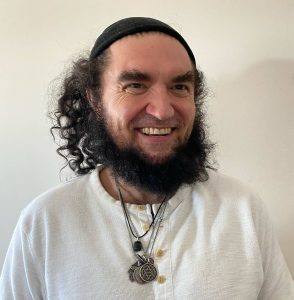
Dr. Micah Ben David Naziri is a scholar, author, and community activist whose work bridges Jewish and Muslim traditions through the Hashlamah Project Foundation, which he founded to foster grass-roots reconciliation between Jews and Palestinian Muslims. A specialist in Near Eastern languages, history and religions, he holds multiple graduate degrees in religious studies and conflict resolution and is training for Rabbinical s’mikhah ordination. Descended from Rabbi Nachman of Breslov, Naziri is also a lineage-holder and “Keeper of the Light” of the Tariqat ʿIsāwiyyah Judeo-Sufi order and is the sole teacher of the “Magen David” system of Krav Maga outside Israel. An instructor in multiple Asian martial arts systems and an award-winning educator, his interdisciplinary work explores the historical, linguistic, and spiritual connections uniting the peoples of the Near East and the diaspora. If you found this work edifying, clarifying, or constructive, please DONATE NOW to support it. Dr. Naziri’s research, writing, and reconciliation-centered activism—grounded in doctoral research on the persistence of Jewish–Muslim reconciliatory activism under conditions of threat and informed by my lineage as a direct descendant of Rabbi Nachman of Breslov—are produced ; reader support directly sustains independent scholarship and durable reconciliation work, and sharing, commenting on, and forwarding this piece also meaningfully helps. Learn more at https://aura.antioch.edu/etds/542/, https://hashlamah.com, and https://hashlamah.co.il Donation options: CashApp: $MicahNaziri Venmo: Micah-Naziri Zelle: 937-671-8334 PayPal: [email protected] You can read more about the author here.
Previous Post
September 30, 2025
The Talmud Never Mentions Any Jesus Figure—Here’s the Proof
Next Post

October 31, 2025 The Jewish Origins of Ḥajj and the Caliphate’s Appropriation
Recent Comments
"Beautiful ❤️ 🙏🙏 This is so perfectly and accurately explained and articulated, it is a ..."
The Messiah’s Mirror: Good Micah, Bad ..."
"Many will regret destroying their skin with so many tattoos. It looks disgusting in my ..."
Are Tattoos Really Forbidden by the ..."
"Religion has become broken and corrupt. Our current belief systems only cause division and strife. ..."
The Jewish Origins of Ḥajj and ..."
"Excellent article! Nice to finally see the truth being exposed! Thank you again for the ..."
The Jewish Origins of Ḥajj and ..."
Browse Our Archives
Select a Category Uncategorized
Select a Month September 2026 August 2026 May 2026 February 2026 January 2026 December 2025 October 2025 September 2025 August 2025 June 2025 May 2025 April 2025 March 2025 October 2024
Follow Us!
TAKE THE
Religious Wisdom Quiz
What is taught about gossip in the Bible?
Select your answer to see how you score.
Spread it Enjoy it Encourage it Avoid it
Related posts from The Critical Historian of Religion As Detective
Circumcision, Indigeneity and Judeophobic Cultural Hypocrisy
The Critical Historian of Religion As Detective
Out-Crowleying Crowley: The Emptiness of the O9A
The Critical Historian of Religion As Detective

Does the Talmud Support Pedophilia? Debunking the Viral...
The Critical Historian of Religion As Detective

BAMBOOZLED: No People Rise by Blaming Another People
The Critical Historian of Religion As Detective
TRENDING AT PATHEOS Jewish

Yom Kippur : Is There Always Room for...
Making Room for Forgiveness Every year as Yom Kippur approaches, I find...

This Rosh Hashanah: Can I Find New Meaning?
A Sunrise, a New Year, and a Question On our way to...

Killing Amalek: The Torah’s Most Misunderstood Commandment
Few passages of the Torah have provoked more confusion, polemic, and misuse...

I have never trusted a first draft. I don’t mean that...

Back to School, Back to Reality—and a New...
A New School Year Begins… Back to Reality A new school year...

Out-Crowleying Crowley: The Emptiness of the O9A
O9A Neo-Crowley Racial Cosplay and Edgelord Atrocitism Aleister Crowley did not create...
view all Jewish blogs
What Are Your Thoughts?leave a comment
Ad-Free & Subscriber Log-In Subscription Support
- About Us
- 2026 Calendar
- Videos
- Podcasts
- Library of World Religions
- Faith In Media Tracker
- Advertise With Us
- Write for Us
- Privacy Policy
- Terms of Service
- Do Not Sell My Data
- Contact Us
- Radiant Digital
- Manage Newsletter Subscriptions
- Unsubscribe From Notifications
- Sitemap
Copyright 2008-2026, Patheos. All rights reserved.
Subscription Support Ad-Free & Subscriber Log-In
Follow Patheos