
BuddhistCatholicContemplativeEvangelicalGeneral ChristianHinduJewishLatter-day SaintMuslimNew VisionsProgressive Christian
Beliefs
- Buddhist
- Catholic
- Contemplative
- Evangelical
- General Christian
- Hindu
- Jewish
- Latter-day Saint
- More Voices
- Muslim
- New Visions
- Pagan
- Progressive Christian
Topics
- Religion News
- Food and Religion
- Sports and Religion
- Religious Art
- Religious Music and Entertainment
- Religious Events
- History and Religion
- Style and Religion
- Politics and Religion
- Women in Religion
- Recreation Outdoors and Religion
- Business Finance and Religion
- Careers Workplace and Religion
- Education and Religion
- Family Parenting and Religion
- Health Fitness and Religion
- Home and Religion
- Relationships and Religion
- Technology and Religion
- Travel and Religion
Columnists
- Buddhist Columnists
- Business Finance and Religion Columnists
- Careers Workplace and Religion Columnists
- Catholic Columnists
- Contemplative Columnists
- Education and Religion Columnists
- Evangelists Columnists
- Family Parenting and Religion Columnists
- General Christian Columnists
- Health Fitness and Religion Columnists
- Hindu Columnists
- History and Religion Columnists
- Home and Religion Columnists
- Jewish Columnists
- More Voices Columnists
- Latter Day Columnists
- Muslim Columnists
- New Visions Columnists
- Nonreligious Columnists
- Pagan Columnists
- Politics and Religion Columnists
- Progressive Columnists
- Recreation Outdoors and Religion Columnists
- Relationships and Religion Columnists
- Religion News Columnists
- Religious Art Columnists
- Religious Events Columnists
- Religious Music and Entertainment Columnists
- Sports and Religion Columnists
- Style and Religion Columnists
- Technology and Religion Columnists
- Travel and Religion Columnists
- Women in Religion Columnists
Resource Library
- 2026 Calendar
- Library of World Religions
- The 100 Most Holy Places on Earth
- Patheos Answers
- Podcasts
- Videos
- Faith Leaders Database
- Anglican Episcopalian
- Bahai
- Baptist
- Buddhism
- Christianity
- Confucianism
- Eastern Orthodoxy
- Hinduism
- Holiness and Pentecostal
- ISKCON
- Islam
- Judaism
- Lutheran
- Methodist
- The Church of Jesus Christ of Latter-day Saints
- New Age
- Paganism
- Presbytarian and Reformed
- Protestantism
- Religion Behind the Scenes
- Roman Catholic
- Scientology
- Shia Islam
- Sikhism
- Sufism
- Sunni Islam
- Taoism
- Zen
- See all religions
Research Tools
 Ad-Free & Subscriber Log-In Subscription Support
Ad-Free & Subscriber Log-In Subscription Support
Follow Patheos 

- Trending:
- Forgiveness
- |
- Marriage
- |
- Consciousness
- |
- Death Penalty
- |
- Election
- |
- Halloween
 Create Soul Space
- Home
- Catholic
- Relationships and Religion
- Domestic Violence from a Personal Ministerial Perspective
Domestic Violence from a Personal Ministerial Perspective
Last updated on: April 26, 2023 at 8:40 am by Jenny duBay
Domestic Violence from a Personal Ministerial Perspective 2023-04-26T08:40:08-04:00 Jenny duBay
Patheos Explore the world's faith through different perspectives on religion and spirituality! Patheos has the views of the prevalent religions and spiritualities of the world.
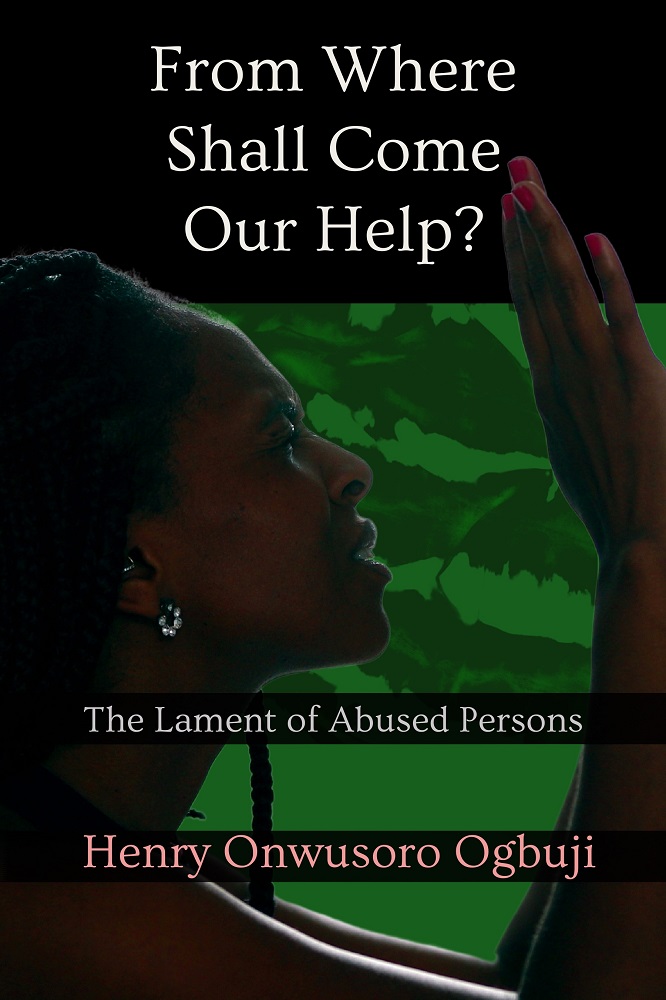
I’m thrilled to have Fr. Henry Ogbuji as a guest blogger speaking about domestic violence from a ministerial perspective. Fr. Henry is one of the Church’s brave priests who isn’t shy about speaking out against domestic violence, and is the author of From Where Shall Come Our Help: The Lament of Abused Persons.
From Fr. Henry Ogbuji:
For a long time during her short life on earth, St. Theresa of Lisieux was troubled that she could contribute nothing to the life of the church and humanity. She was desirous of impacting people’s lives, and saving sinners, but felt she lacked the virtue or gifts required to do so. Finally, Theresa had her thirst quenched when she discovered in Paul’s discourse on the spiritual gifts (1Cor 13) that love is the highest of the gifts of the Spirit. The Lisieux saint lived the rest of her life happily loving people and doing even the least duty entrusted to her in the best possible way out of love for God.
Like St. Theresa, I yearned to have a positive impact on as many persons as possible in my life. I felt I hadn’t the needed virtue or talent. However, during my graduate studies at Boston College and Boston University, I learned to own a voice, a theological voice.
From the voices of theologians and scholars, I began to develop my own voice.
As one could only think or theologize from a context, I started to reflect on my life and pastoral experiences back home in Nigeria. An experience that stood out for me, one that I developed throughout my graduate studies was the issue of domestic violence. As I child growing up in an extended family setting, I witnessed domestic violence. The shrilling cries of the helpless young women, especially at night (when all had gone to bed), as their husbands battered them often came to my mind.
In such a setting, women and we children (especially the girls) had no agency and lived in constant fear of the unpredictable and ferocious provocation and punishment of the adult males. Equally, in my dozen years of ministry in Nigeria (before the overseas trip), I was confronted with strikingly awful cases of abuse of women and girl-children by the menfolk.
When asked to make a presentation in class on a matter of (in)justice at Boston College, I could not think of any greater subject matter of injustice than domestic violence.
Domestic violence is an injustice that plagues the human society. As I came to write later,
“…abusing the woman’s or the child’s body is a terrible form of dehumanization. It is a great dishonor to the human body created in God’s image and likeness. It is a grave human abuse, a violation of victim’s dignity and rights…violence against women robs them of their dignity and humanity. It demeans and denigrates their personhood and constitutes a damage to our common human nature”
(Henry Ogbuji, From Where Shall Come Our Help: The Lament of Abused Persons, p. 45).

(Aarón Blanco Tejedor / Unsplash)
The class presentation was exciting and made a deep impression on my cohort and the professor. The commented that I was daring to venture into such phenomenon that remains delicate even in the US.
By the time I finished my master’s and doctoral studies at Boston College and Boston University respectively, I had a theological voice; I could speak out and stand compassionately with my abused brethren, especially the womenfolk. I was already giving the several abused women who were calling me from Nigeria emancipating and empowering support that I couldn’t have given before.
It was fulfilling doing so. Like St. Theresa, I found a way of satisfying my longing to impact lives of my fellow brothers and sisters in the good and loving Lord.
The publication of my book, From Where Shall Come Our Help: The Lament of Abused Persons, becomes a poignant aperture to share my life and ministerial experiences with a wider audience and thus bring Christ’s emancipation and healing to many.
In the course of my research, it was clear to me that the Church, especially the Church in Nigeria, has done little to stem the tide of domestic violence. The silence and inaction of the Nigerian ecclesial leadership is akin to complicity in the matter.
While domestic violence is an issue of great concern that cuts across boundaries of race, color, nation, gender and age, it is prevalent in Nigeria and other nations of Sub-Saharan Africa. Researches indicate that in Nigeria, every woman could expect to be a victim of one kind of abuse or another at some point in her life and men are responsible for over 95% of domestic violence cases. In some cases, two-third of women are victims of domestic violence and in other cases or regions of the country, one-third of Nigerian face domestic abuse.
The violence could be physical, emotional/psychological, sexual, economic or spiritual. These abused persons are in the church pews together with their abusers. Often, when abused persons venture to inform their pastors about their ordeal in relationship, they seldom get the pastoral care and support they require for the trajectory to wholeness.
My research reveals that part of the problem with clergy pastoral care of domestic violence victims stems from ignorance due to lack of training on issues of domestic violence.
It is imperative, therefore, to educate seminarians, clergy as well as lay ministers on how to minister to victims and survivors of domestic violence to aid their emancipation, empowerment and healing. The Church leadership can do this by ensuring that the subject matter of domestic violence becomes a major theme in the curriculum of seminaries as part of their Pastoral Theological Studies.
It is by having a discussion on the theme that both seminary professors and seminaries begin to appreciate the relevance of the subject matter to teaching, learning, ministry and the overall mission of the ecclesial body. The purpose is to equip the prospective ministers with the necessary tools for their ministry. Equally, seminars and ongoing formation on this pastoral issue are to be organized occasionally for priests as well as for lay ecclesial ministers.
Church leadership in every part of the world should speak and write in condemnation of the phenomenon of familial abuse; their position on the matter should be unambiguous.
- As a practical step, local dioceses and parishes are to form a team of members who engage in ministry that incorporates familial violence as part of church curriculum. The team is to be constituted of professionals like attorneys, doctors and Social Workers and other committed church members with the task of creating a safe environment for all in the church and the goal of fostering emancipation, empowerment and healing of victims of domestic violence.
- At the diocesan level, the team made of lay and clergy help the local ordinary in making policies and addressing issues regarding the attitude to domestic violence, victims and perpetrators.
- The team, at the parish level, consists of lay members who work with the pastor to spread of gospel of compassion and solidarity and thus minister healing and wholeness to abused persons. Where possible, there should be a Women Support Group (WSG) where victims and survivors of intimate partner violence gather for mutual support with trained lay ministers facilitating the prayer meeting. Such a gathering of prayer/ritual is believed by many to be a veritable pastoral response to domestic violence.
My recent book, From Where Shall Come Our Help: The Lament of Abused Persons, contains a Pastoral Counseling Guide for pastoral caregivers engaged in the pastoral care of domestic violence victims and survivors.
Domestic violence is a core ecclesial and pastoral issue that requires a committed and compassionate church response. The above pastoral steps would go a long way to mitigate its prevalence in church and society across the world and foster human flourishing of millions of abused persons.
“Pastoral response to domestic violence though a risky enterprise, it is worth the risk for it is part of our calling as ministers and as God’s children. It involves leading “deep change.” Little wonder it is risky and expensive. However, it unites us to the sufferers and …to the body of Christ and ultimately to Christ who suffered for us and identifies with our abused brethren. This makes it a crucial and urgent mission for the Church”
(Ogbuji, From Where Shall Come Our Help, 229).
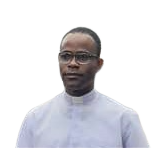
Bio:
A priest of the Catholic Archdiocese of Owerri, Nigeria, Fr. Henry was ordained in 2003, and has since served his diocese in various pastoral and administrative capacities as associate pastor, pastor and associate Diocesan Finance Administrator. One of the biggest pastoral challenges he’s encountered has been that of ministering to victims of domestic violence. Because of his empathetic experiences, combating domestic violence became an area of interest for him during his graduate studies in the U.S. He obtained a Master’s degree in Theology at Boston College (2017) and a doctorate in Transformational Leadership from Boston University (2022). After graduating from Boston University, Fr. Henry returned to his home diocese in Nigeria and has since been engaged in pastoral ministry. I’m so pleased to be able to share his uniquely striking ministerial and academic experiences with a wider audience.

Previous Post
March 10, 2023
Pope Francis and Domestic Abuse Awareness: An Anniversary Reflection
Recent Comments
Browse Our Archives
Select a Category Conversion Difficult marriages Difficult Relationships Domestic Abuse Domestic Violence Eucharist Adoration Family Intimate Partner Violence Marriage & Relationships Marriage issues Patron Saints psychological abuse Self-Care Self-Change Self-Love Sexual Abuse
Select a Month April 2023 March 2023 November 2022 October 2022 September 2022 August 2022
Follow Us!
TAKE THE
Religious Wisdom Quiz
I lift my eyes to the _________, where does my help come from? My help comes from the LORD.
Select your answer to see how you score.
Seas Hills Sky Heavens
Related posts from Create Soul Space

Catholic
Pope Francis and Domestic Abuse Awareness: An Anniversary...
Catholic
Pope Francis on Equality: Putting Women in their...
Catholic
Catholic
How to Attend Eucharistic Adoration When Adoration Isn't...
TRENDING AT PATHEOS Catholic

Creation, Preservation, and Teleology in Catholic Theology
As I write this, it is very early Monday morning. Like millions...

The Parable Of The Sower And The Word...
One of Christ’s most famous parables is that of the sower who...

Rejecting Doom: Christian Hope And Human Action
Christianity is a religion of hope. We are to have hope and...

Why I Choose the Eucharist Over the Sermon
Choose the Eucharist, Not the Sermon What are we supposed to get...

5 Design Elements Found in Spiritually Rooted Homes
Putting Spirituality Into Home Decor Our homes are more than our living...

Credo: A Story of God Told with the...
About 10 years ago, I began to imagine a personal "Credo" that...
view all Catholic blogs
Ad-Free & Subscriber Log-In Subscription Support
- About Us
- 2026 Calendar
- Videos
- Podcasts
- Library of World Religions
- Faith In Media Tracker
- Advertise With Us
- Write for Us
- Privacy Policy
- Terms of Service
- Do Not Sell My Data
- Contact Us
- Radiant Digital
- Manage Newsletter Subscriptions
- Unsubscribe From Notifications
- Sitemap
Copyright 2008-2026, Patheos. All rights reserved.
Subscription Support Ad-Free & Subscriber Log-In
Follow Patheos