
BuddhistCatholicContemplativeEvangelicalGeneral ChristianHinduJewishLatter-day SaintMuslimNew VisionsProgressive Christian
Beliefs
- Buddhist
- Catholic
- Contemplative
- Evangelical
- General Christian
- Hindu
- Jewish
- Latter-day Saint
- More Voices
- Muslim
- New Visions
- Pagan
- Progressive Christian
Topics
- Religion News
- Food and Religion
- Sports and Religion
- Religious Art
- Religious Music and Entertainment
- Religious Events
- History and Religion
- Style and Religion
- Politics and Religion
- Women in Religion
- Recreation Outdoors and Religion
- Business Finance and Religion
- Careers Workplace and Religion
- Education and Religion
- Family Parenting and Religion
- Health Fitness and Religion
- Home and Religion
- Relationships and Religion
- Technology and Religion
- Travel and Religion
Columnists
- Buddhist Columnists
- Business Finance and Religion Columnists
- Careers Workplace and Religion Columnists
- Catholic Columnists
- Contemplative Columnists
- Education and Religion Columnists
- Evangelists Columnists
- Family Parenting and Religion Columnists
- General Christian Columnists
- Health Fitness and Religion Columnists
- Hindu Columnists
- History and Religion Columnists
- Home and Religion Columnists
- Jewish Columnists
- More Voices Columnists
- Latter Day Columnists
- Muslim Columnists
- New Visions Columnists
- Nonreligious Columnists
- Pagan Columnists
- Politics and Religion Columnists
- Progressive Columnists
- Recreation Outdoors and Religion Columnists
- Relationships and Religion Columnists
- Religion News Columnists
- Religious Art Columnists
- Religious Events Columnists
- Religious Music and Entertainment Columnists
- Sports and Religion Columnists
- Style and Religion Columnists
- Technology and Religion Columnists
- Travel and Religion Columnists
- Women in Religion Columnists
Resource Library
- 2026 Calendar
- Library of World Religions
- The 100 Most Holy Places on Earth
- Patheos Answers
- Podcasts
- Videos
- Faith Leaders Database
- Anglican Episcopalian
- Bahai
- Baptist
- Buddhism
- Christianity
- Confucianism
- Eastern Orthodoxy
- Hinduism
- Holiness and Pentecostal
- ISKCON
- Islam
- Judaism
- Lutheran
- Methodist
- The Church of Jesus Christ of Latter-day Saints
- New Age
- Paganism
- Presbytarian and Reformed
- Protestantism
- Religion Behind the Scenes
- Roman Catholic
- Scientology
- Shia Islam
- Sikhism
- Sufism
- Sunni Islam
- Taoism
- Zen
- See all religions
Research Tools
 Ad-Free & Subscriber Log-In Subscription Support
Ad-Free & Subscriber Log-In Subscription Support
Follow Patheos 

- Trending:
- Forgiveness
- |
- Marriage
- |
- Consciousness
- |
- Death Penalty
- |
- Election
- |
- Halloween
 Cracks in Postmodernity
- Home
- Catholic
- Sex, Religion, and Desire in Hulu’s Ramy
Sex, Religion, and Desire in Hulu’s Ramy
Last updated on: December 26, 2020 at 4:15 pm by Stephen G. Adubato
Sex, Religion, and Desire in Hulu’s Ramy 2020-12-26T16:15:33+00:00 Stephen G. Adubato
Patheos Explore the world's faith through different perspectives on religion and spirituality! Patheos has the views of the prevalent religions and spiritualities of the world.
Hulu’s Ramy is loosely based on the life of Ramy Youssef, who the show stars and was created by. Ramy is a first generation Egyptian-American growing up in a middle class New Jersey neighborhood. His parents, who are nominally Muslim, pamper their only son, who still lives at home as a young adult and is struggling to maintain a fulltime job. Though their expectations of him are lax, he knows that their one demand is that he settle down with a Muslim wife at some point and start a family.
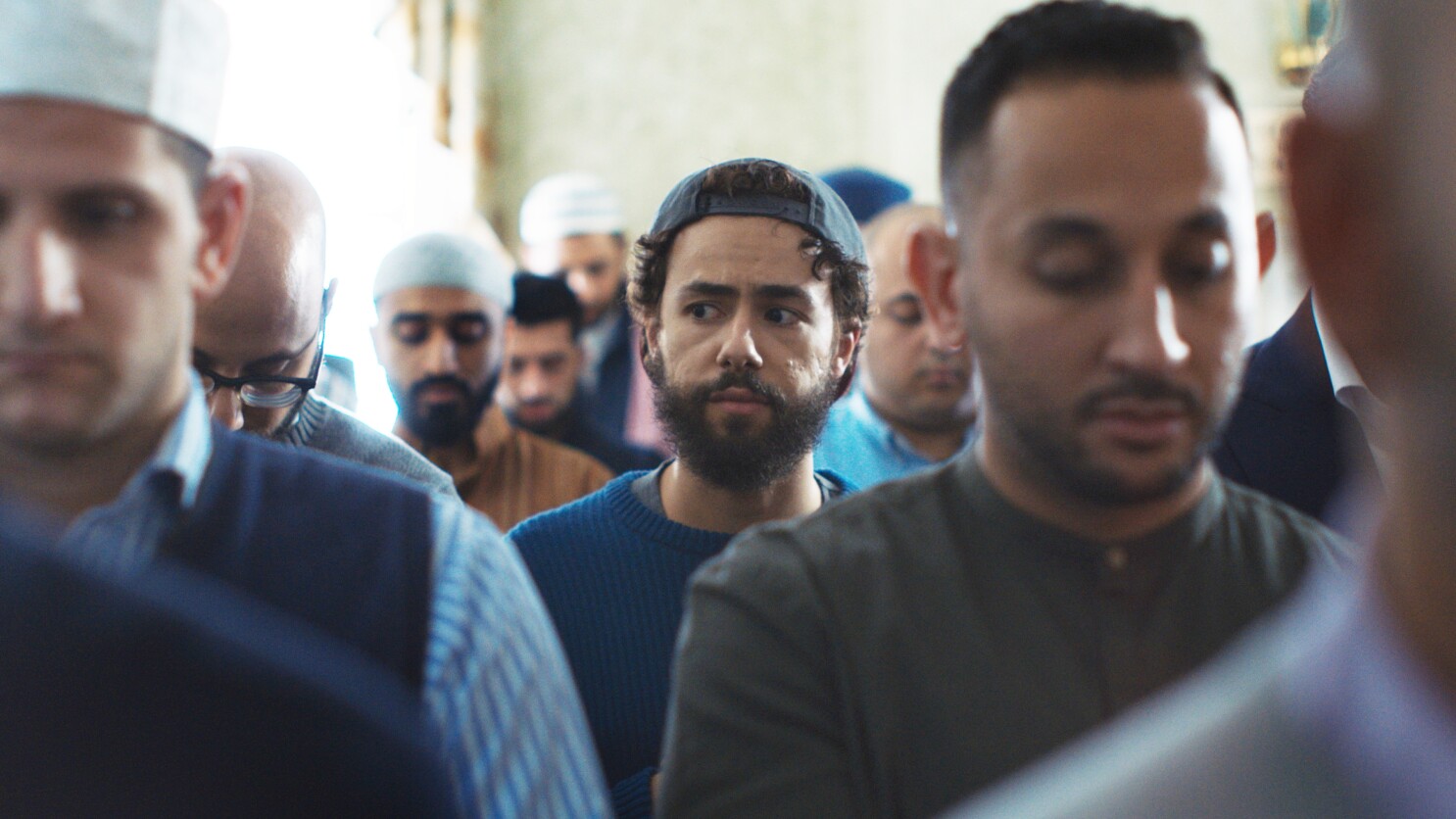
Ramy finds himself caught between worlds. On one hand, he experiences American culture to be more lax morally, especially when it comes to sex, than his Muslim Egyptian culture. At his local masjid, his imam reprimands him for cutting corners in his observance of qur’anic teachings. He arrives to Friday jummah late, and rushes to wash his feet before entering to pray. He confides to the imam that he’s struggling with fornication, which he thought he could deter with pornography (which he’s now addicted to). The imam tells him that his caving to sexual vice is connected to his corner cutting. If he wants to stop falling into the devil’s pitfalls, he ought to pray, fast, and guard his gaze…and should probably start washing between his toes during ritual purification.
Between the morally permissive culture he’s surrounded by and the moralistic, legalist religiosity of his community, is the bourgeois assimilationist mentality of his parents. His parents don’t want him to go to the extremes of sexual libertinism, nor to religious fanaticism. All they seem to care about is that he get married “someday” and settle down to live a comfortable and respectable life.
As he tries to navigate the conflicting worldviews presented to him, he starts to hit a wall. None of them offer him any substantial meaning or a deeper purpose.
After one sexual encounter with a secular Jewish girl, he checks to see if there are any holes in his used condom. When she asks him what he’s doing, he tells her that he wants to make sure that she doesn’t get pregnant. As a Muslim, he wants to avoid having to abort a child, but also doesn’t want to have a child out of wedlock. “But I thought your were Muslim in the same way I’m Jewish…like it’s a cultural thing. Like, you drink alcohol.”
“Umm, actually I don’t,” he responds sheepishly. She reminds him that he ordered everyone drinks the night before, and he points out that he ordered drinks for everyone except himself. She leaves him, questioning the authenticity of his alleged religious convictions.
He then goes on a chaperoned date with a Muslim girl, who turns out to be kind and funny. After going for a walk without the chaperone (her uncle), she asks him to perform violent sex acts on her. Ramy is left confused, wondering why a deep conversation had to jump so quickly to sex. He points out that they’re both Muslim, and probably shouldn’t have sex before marriage. Though she’s surprised, she agrees and asks him to perform non-penetrative sexual acts on her. Ramy leaves, feeling empty and disillusioned.
He decides to fast, pray, and turn away from sex and pornography, and starts attending his masjid regularly. He agrees after prayer one evening to help one of the female congregants with taking care of her sick son while her husband is on a work trip, and ends up sleeping with her.
He then decides to go on a trip to Egypt to reconnect with his family, discover his roots, and go deeper in his faith. He begins a conversation with his grandfather, only for him to have a heart attack and die two minutes into it. Feeling even more spiritually lost than at the beginning of his trip, he agrees to accompany his female cousin to a Sufi prayer service.
Amazed by the beauty of the service and the tangible sense of the Divine, he shares with his cousin that he’s been struggling to finding meaning in his life. She tells him that she’s been on a similar journey, and found that Sufism helped her to draw closer to God. As they began to bear more of their souls with each other, they begin drawing closer physically, and end up kissing and eventually having sex.
Ramy returns from Egypt disgusted with his sinfulness and his inability to “fix” his life. He seeks out the help of a Sufi sheikh in his neighborhood and bares his soul to him, hoping that maybe this time things will be different.
I feel like I have this hole inside of me that’s – this, like, emptiness. And I’m always trying to fill it with something, like sex and porn. And I feel like the more people I’m with, the more alone I feel. And I’ve tried to fill it with God. I have. I won’t lie. But I just – I don’t know how. If I’m being honest, I started watching porn because I wanted to be a good Muslim. Like, I didn’t want to have sex before marriage, so I thought I could just watch porn to fill that urge. It just made me do crazier things.
The sheik, looks into his eyes silently, lovingly, and then proceeds to say, “I was once like you, too. Thankfully I was able to find someone who helped me reframe my desires, kill my ego.”
I want you to be my teacher, I want you to help me kill my desire.
How do I know I’m not just another one of your “desires”? It would be easy for you to hand me your pain and ask me to take it away. Be the solution to your problems, relieve you of having to deal with yourself. You seem to be driven by your own set of desire.
I don’t want to have desire. I don’t want to want anything. I just want God.
Through this dialogue, Ramy begins to recognize the connection between God and desire. The mystic tradition of Sufi Islam has a history of integrating desire with traditional Muslim ethics and worship. Ramy finds himself further attracted to this element of Sufism that neither the bourgeois, permissive, nor moralistic positions were able to offer him.
On a trip to request a donation from Mr. Bin Khalied, a wealthy Gulf investor, he happens upon adult film actress Mia Khalifa, whose porn he’s embarrassed to admit he’s watched. Bin Khalied admits the he also had a porn addiction, and came across a hadith that said that a man who drinks the breast milk of a woman other than his mother becomes her spiritual child. He reached out to Mia Khalifa and asked her to lactate for him, knowing that he wouldn’t be able to watch the porn of his “spiritual mother.” Eventually, he finds himself to be more interested in her personality and humanity as a whole than in using her as a tool to obtain sexual pleasure.
This reminds Ramy of something his sheikh said about recognizing the humanity of the women he uses sexually and learning to see them through the eyes of God.
The women you click on. Have you ever considered the plight of the performers, their pain, what they’re experiencing? I’ve heard they don’t even have beds, that they’re just driven around in white vans. What if you met a porn star, if you looked her in the eyes? Have you considered her feeling?
As he slowly progresses along his spiritual journey, he begins to see that it is indeed possible to have a relationship with a woman that’s not just about controlling or releasing his sexual urges. His new girlfriend (the sheik’s daughter) loves him for him, with his flaws and all, and is not interested in using him. Further, he expresses that she is becoming a sign of God to him. “I feel so much closer to God when I’m with you,” he tells her. Through this relationship, he realizes that his desire is fulfilled not by releasing or repressing it, but by channeling it into his journey toward God. He finds the kind of purity, intimacy, and honesty that he is experiencing with Zeinab to be refreshing and liberating, as it propels him further toward the Divine.
The one resounding message that emerges from Ramy is that if traditional religions are to have value in the postmodern world, they must facilitate the movement of our heart’s desire toward the Divine, rather than hindering it.
Previous Post

December 18, 2020
Christianity is the Most Ridiculous Religion: On Scorsese's Silence
Next Post

December 29, 2020 2020 Writing Wrap Up
Browse Our Archives
Select a Category my mediterranean adventures Uncategorized
Select a Month July 2023 June 2023 May 2023 April 2023 March 2023 January 2023 November 2022 October 2022 September 2022 August 2022 May 2022 April 2022 March 2022 January 2022 December 2021 September 2021 April 2021 March 2021 February 2021 January 2021 December 2020 November 2020 October 2020 July 2020 June 2020 May 2020 April 2020 March 2020 February 2020 September 2019 August 2019 July 2019 June 2019 March 2019 January 2019 October 2018 August 2018 July 2018 June 2018 April 2018 March 2018 January 2018 December 2017 October 2017
Follow Us!
TAKE THE
Religious Wisdom Quiz
Who was crucified and rose again after three days?
Select your answer to see how you score.
Moses Jesus Paul John the Baptist
Related posts from Cracks in Postmodernity

Learning from the Christchurch Mosque Shootings

Father Abraham: Catholic, Jewish, and Muslim Perspectives

TRENDING AT PATHEOS Catholic

Creation, Preservation, and Teleology in Catholic Theology
As I write this, it is very early Monday morning. Like millions...

The Parable Of The Sower And The Word...
One of Christ’s most famous parables is that of the sower who...

Rejecting Doom: Christian Hope And Human Action
Christianity is a religion of hope. We are to have hope and...

Why I Choose the Eucharist Over the Sermon
Choose the Eucharist, Not the Sermon What are we supposed to get...

5 Design Elements Found in Spiritually Rooted Homes
Putting Spirituality Into Home Decor Our homes are more than our living...

Credo: A Story of God Told with the...
About 10 years ago, I began to imagine a personal "Credo" that...
view all Catholic blogs
Ad-Free & Subscriber Log-In Subscription Support
- About Us
- 2026 Calendar
- Videos
- Podcasts
- Library of World Religions
- Faith In Media Tracker
- Advertise With Us
- Write for Us
- Privacy Policy
- Terms of Service
- Do Not Sell My Data
- Contact Us
- Radiant Digital
- Manage Newsletter Subscriptions
- Unsubscribe From Notifications
- Sitemap
Copyright 2008-2026, Patheos. All rights reserved.
Subscription Support Ad-Free & Subscriber Log-In
Follow Patheos