
BuddhistCatholicContemplativeEvangelicalGeneral ChristianHinduJewishLatter-day SaintMuslimNew VisionsProgressive Christian
Beliefs
- Buddhist
- Catholic
- Contemplative
- Evangelical
- General Christian
- Hindu
- Jewish
- Latter-day Saint
- More Voices
- Muslim
- New Visions
- Pagan
- Progressive Christian
Topics
- Religion News
- Food and Religion
- Sports and Religion
- Religious Art
- Religious Music and Entertainment
- Religious Events
- History and Religion
- Style and Religion
- Politics and Religion
- Women in Religion
- Recreation Outdoors and Religion
- Business Finance and Religion
- Careers Workplace and Religion
- Education and Religion
- Family Parenting and Religion
- Health Fitness and Religion
- Home and Religion
- Relationships and Religion
- Technology and Religion
- Travel and Religion
Columnists
- Buddhist Columnists
- Business Finance and Religion Columnists
- Careers Workplace and Religion Columnists
- Catholic Columnists
- Contemplative Columnists
- Education and Religion Columnists
- Evangelists Columnists
- Family Parenting and Religion Columnists
- General Christian Columnists
- Health Fitness and Religion Columnists
- Hindu Columnists
- History and Religion Columnists
- Home and Religion Columnists
- Jewish Columnists
- More Voices Columnists
- Latter Day Columnists
- Muslim Columnists
- New Visions Columnists
- Nonreligious Columnists
- Pagan Columnists
- Politics and Religion Columnists
- Progressive Columnists
- Recreation Outdoors and Religion Columnists
- Relationships and Religion Columnists
- Religion News Columnists
- Religious Art Columnists
- Religious Events Columnists
- Religious Music and Entertainment Columnists
- Sports and Religion Columnists
- Style and Religion Columnists
- Technology and Religion Columnists
- Travel and Religion Columnists
- Women in Religion Columnists
Resource Library
- 2026 Calendar
- Library of World Religions
- The 100 Most Holy Places on Earth
- Patheos Answers
- Podcasts
- Videos
- Faith Leaders Database
- Anglican Episcopalian
- Bahai
- Baptist
- Buddhism
- Christianity
- Confucianism
- Eastern Orthodoxy
- Hinduism
- Holiness and Pentecostal
- ISKCON
- Islam
- Judaism
- Lutheran
- Methodist
- The Church of Jesus Christ of Latter-day Saints
- New Age
- Paganism
- Presbytarian and Reformed
- Protestantism
- Religion Behind the Scenes
- Roman Catholic
- Scientology
- Shia Islam
- Sikhism
- Sufism
- Sunni Islam
- Taoism
- Zen
- See all religions
Research Tools
 Ad-Free & Subscriber Log-In Subscription Support
Ad-Free & Subscriber Log-In Subscription Support
Follow Patheos 

- Trending:
- Forgiveness
- |
- Marriage
- |
- Consciousness
- |
- Death Penalty
- |
- Election
- |
- Halloween
 Cracks in Postmodernity
- Home
- Catholic
- “I want to see everything”: Photography and Human Experience
“I want to see everything”: Photography and Human Experience
Last updated on: June 25, 2020 at 2:22 am by Guest Contributor
“I want to see everything”: Photography and Human Experience 2020-06-25T02:22:23+00:00 Guest Contributor
Patheos Explore the world's faith through different perspectives on religion and spirituality! Patheos has the views of the prevalent religions and spiritualities of the world.
This is the first article in a three part series by NYC-based photographer Felicia DiSalvo. Click here to read parts 2 and 3.
Beyond clicking the shutter button of a camera, the real mission of my photography is to see. When I walk outside, I want to see the precise spot where the sun is shining. I want to watch the world around me evaporate into sparkles, shadows, and truth. Every single detail of our physical world has a story to tell. When I walk past old brick walls and across sidewalks, I wonder how they got there. I want to know how old they are, who made them, why they were made…I want to know everything.
My work is a process of telling this narrative through scenery, people, moments, and conceptual photoshoots. My process is an experience of discovery. Not only do I begin to notice the physical world, but I notice the way my friends laugh with me when I take their picture and we both break character. I even notice little concrete facts about myself that I have never been able to articulate before. I want to see more, know more, and in the process, urge others to look up and around as they go about their day.
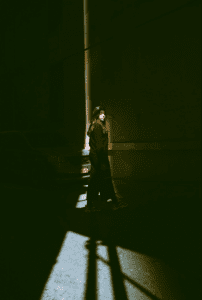
The above photo is an example of how this process allows me to discover both myself and my surroundings. Notice the way the sunlight peeking through the alley’s shadows highlighted my friend Weronika. Manhattan’s architecture can create beautiful places to hide in such an exposed and bustling city–the warmth coming from the colors of the buildings and pavement in the alley, and the way Weronika was able to shine her own light in such a dark scene.
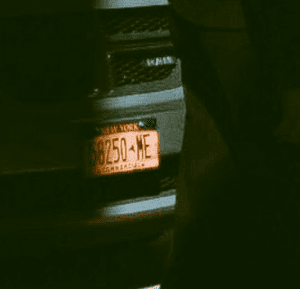
It took me half a year later to notice that the letters of the license plate in the background spelled out “Me.” I realized this halfway through explaining the meaning of this photo to my Mum. The license plate represents the way I find myself in the moments I capture. I see myself and the things I want to know about this world in every person or scene that I take a photo of. Sometimes it takes me so long to notice it, but photos always have the ability to teach me more about myself and lead me to see something new.
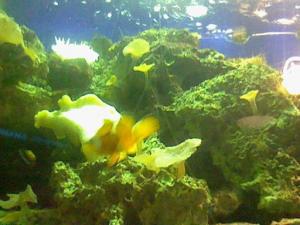
Whenever someone asks me “When did you start taking photos?”, I tell them about when I was eight years old and used a Nintendo DSi as my camera. This is a part of who I am and how I grew up alongside craft, but only recently have I actually started to ponder why this mattered. It’s interesting to me that I asked for a game console for my birthday “because it had a camera,” not because I could play newer Pokemon games…which I did, but that’s besides the point.
After that, my Nintendo DSi evolved into an iPod Touch, and eventually that iPod Touch evolved into an entry level DSLR, my Nikon D3200. I was inspired by a random fictional story someone wrote online that I came across. The protagonist of that story was seeing something and moving the lives of the people in her life because she taught them how to see as well. I didn’t care about who else was being inspired or moved by what I wanted to see. I just knew then and there that I wanted to take the act of noticing that something is happening much more seriously. I wanted to grow in this relationship with meaning.
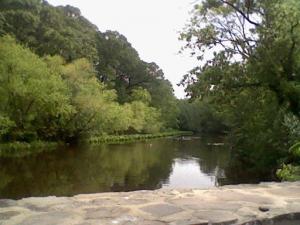
Even as an eight year old I recognized that something is happening around me. Every part of my being treasures my ability to pay attention to the world in this way. This is a truth that I have known ever since I was young–photography is vital to my journey in life.

My understanding of photography deepened between my senior year of high school and my freshman year of college. A few conversations with a friend I spent time with during that summer made me realize something about myself: I’m incredibly curious and need to know everything. Although I lost contact with this friend, I spent every single day after that conversation fully awake–thinking of inspirations and how I want to capture the entire world. I owe a lot to this interaction because I have not lived a single day in apathy after it. Many times during my years taking photos I had become distracted or forgotten about photographing. After this, never again.
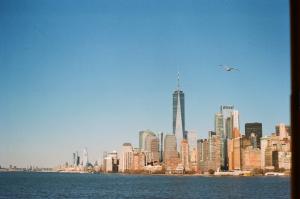
This dramatic change in viewpoint led me to pursue film photography. Film enables me to feel like something I am seeing can be physically imprinted onto a memory forever. The memory or the beauty that it preserves remains so real. With the light of that exact moment in time reacting with the silver halides on the emulsion side of a filmstrip, there is something more real going on than just the preservation of that point in time. Digital photography does preserve an instance of time, but film photography preserves a chemical reaction that occurred because of the sun rays of that specific instant. It is more than just a physical copy of that memory. It is the physical remains of that memory in itself. This turns the act of seeing something into an authentic experience.

I want to mention a photography hero of mine that has also impacted the way I have viewed the world through a lens. I admire the historic documentary photographer Dorothea Lange not only for her talent and impeccable photographic proof of it, but her capability to truly see. I discovered this quote when I was starting to discover my love for photography at 13: “The camera is an instrument that teaches people to see without a camera.” What an unusual way of describing something that I knew to be so true!
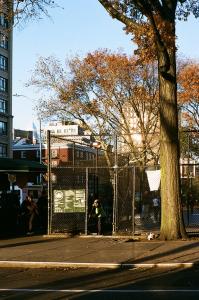
I recently came upon the full version of this quote. “You put your camera around your neck in the morning along with putting on your shoes, and there it is, an appendage of the body that shares your life with you. The camera is an instrument that teaches people how to see without a camera.” After reading this, I looked down at my own film camera that had become a part of my everyday attire. I was already living this statement. My camera shares my life with me because with it, I’m provoked to see the world around me.

See more of Felicia’s portfolio here.
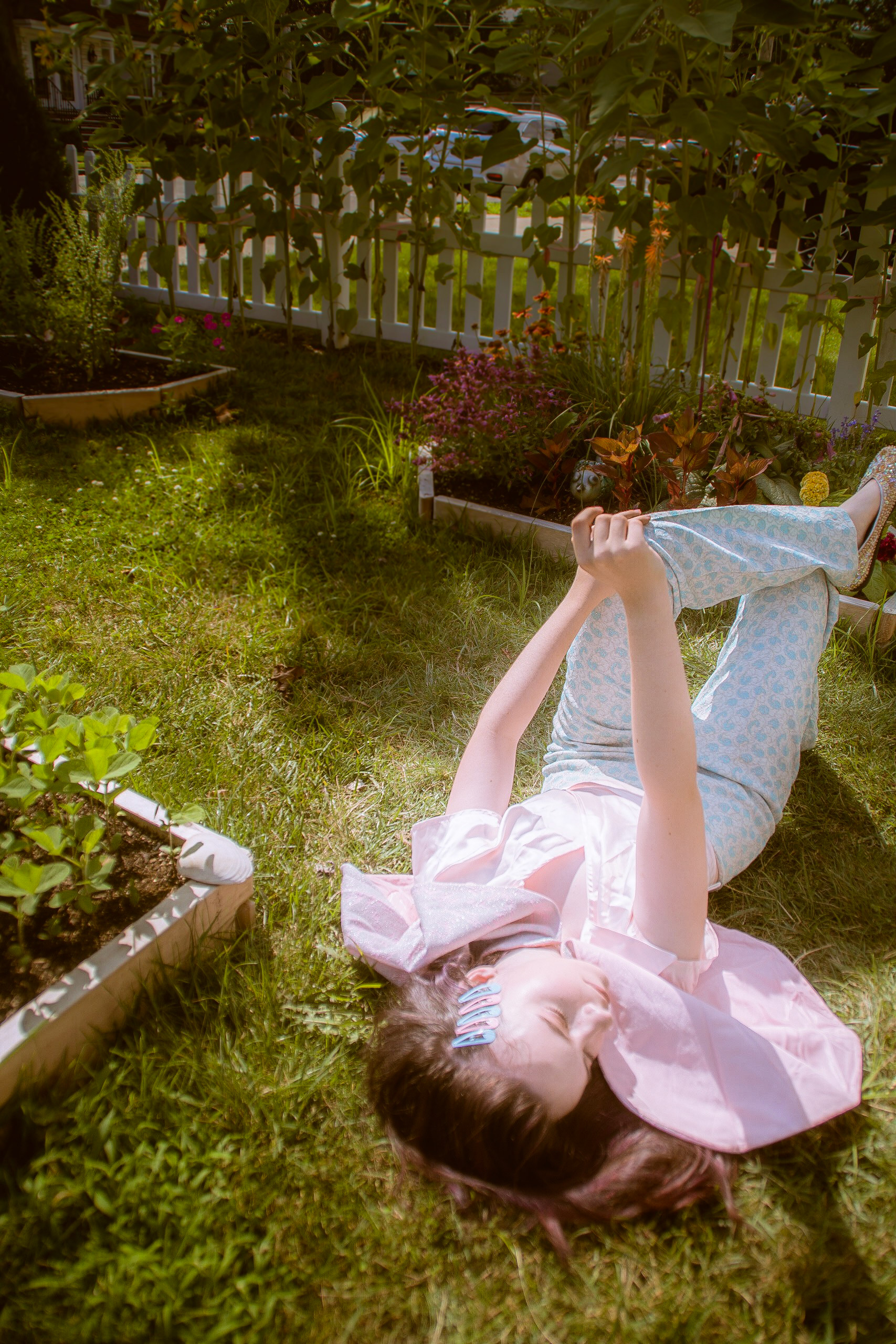
About Felicia DiSalvo
Felicia DiSalvo is a NYC-based photographer, styling intern, and advertising and marketing communications student. Her photography career began in 2017 and since then has photographed engagement sessions, baptisms, music recitals, and individual sessions. As of 2020, she is drafting her first long-term fashion/ editorial and documentary photography project/ photo book. You can read more about the author here.
Previous Post
June 17, 2020
The Bright Side of Gender Theory
Next Post
June 27, 2020 Creativity in Quarantine: Photographing Solitude, Memory, Nostalgia
Browse Our Archives
Select a Category my mediterranean adventures Uncategorized
Select a Month July 2023 June 2023 May 2023 April 2023 March 2023 January 2023 November 2022 October 2022 September 2022 August 2022 May 2022 April 2022 March 2022 January 2022 December 2021 September 2021 April 2021 March 2021 February 2021 January 2021 December 2020 November 2020 October 2020 July 2020 June 2020 May 2020 April 2020 March 2020 February 2020 September 2019 August 2019 July 2019 June 2019 March 2019 January 2019 October 2018 August 2018 July 2018 June 2018 April 2018 March 2018 January 2018 December 2017 October 2017
Follow Us!
TAKE THE
Religious Wisdom Quiz
What does Revelation say about anyone who adds to the words of the prophecy?
Select your answer to see how you score.
They will lose their salvation They will be judged They will be cursed God will add to them the plagues described in this scroll
Related posts from Cracks in Postmodernity
Fashion Photography: Seeing the Mystery of the Person
Creativity in Quarantine: Photographing Solitude, Memory, Nostalgia

TRENDING AT PATHEOS Catholic

The Parable Of The Sower And The Word...
One of Christ’s most famous parables is that of the sower who...

Rejecting Doom: Christian Hope And Human Action
Christianity is a religion of hope. We are to have hope and...

Why I Choose the Eucharist Over the Sermon
Choose the Eucharist, Not the Sermon What are we supposed to get...

5 Design Elements Found in Spiritually Rooted Homes
Putting Spirituality Into Home Decor Our homes are more than our living...

Credo: A Story of God Told with the...
About 10 years ago, I began to imagine a personal "Credo" that...

The Anatomy of Divine Revelation in Catholic Thought
The claim that God has made Himself known to human beings is...
view all Catholic blogs
Ad-Free & Subscriber Log-In Subscription Support
- About Us
- 2026 Calendar
- Videos
- Podcasts
- Library of World Religions
- Faith In Media Tracker
- Advertise With Us
- Write for Us
- Privacy Policy
- Terms of Service
- Do Not Sell My Data
- Contact Us
- Radiant Digital
- Manage Newsletter Subscriptions
- Unsubscribe From Notifications
- Sitemap
Copyright 2008-2026, Patheos. All rights reserved.
Subscription Support Ad-Free & Subscriber Log-In
Follow Patheos