
BuddhistCatholicContemplativeEvangelicalGeneral ChristianHinduJewishLatter-day SaintMuslimNew VisionsProgressive Christian
Beliefs
- Buddhist
- Catholic
- Contemplative
- Evangelical
- General Christian
- Hindu
- Jewish
- Latter-day Saint
- More Voices
- Muslim
- New Visions
- Pagan
- Progressive Christian
Topics
- Religion News
- Food and Religion
- Sports and Religion
- Religious Art
- Religious Music and Entertainment
- Religious Events
- History and Religion
- Style and Religion
- Politics and Religion
- Women in Religion
- Recreation Outdoors and Religion
- Business Finance and Religion
- Careers Workplace and Religion
- Education and Religion
- Family Parenting and Religion
- Health Fitness and Religion
- Home and Religion
- Relationships and Religion
- Technology and Religion
- Travel and Religion
Columnists
- Buddhist Columnists
- Business Finance and Religion Columnists
- Careers Workplace and Religion Columnists
- Catholic Columnists
- Contemplative Columnists
- Education and Religion Columnists
- Evangelists Columnists
- Family Parenting and Religion Columnists
- General Christian Columnists
- Health Fitness and Religion Columnists
- Hindu Columnists
- History and Religion Columnists
- Home and Religion Columnists
- Jewish Columnists
- More Voices Columnists
- Latter Day Columnists
- Muslim Columnists
- New Visions Columnists
- Nonreligious Columnists
- Pagan Columnists
- Politics and Religion Columnists
- Progressive Columnists
- Recreation Outdoors and Religion Columnists
- Relationships and Religion Columnists
- Religion News Columnists
- Religious Art Columnists
- Religious Events Columnists
- Religious Music and Entertainment Columnists
- Sports and Religion Columnists
- Style and Religion Columnists
- Technology and Religion Columnists
- Travel and Religion Columnists
- Women in Religion Columnists
Resource Library
- 2026 Calendar
- Library of World Religions
- The 100 Most Holy Places on Earth
- Patheos Answers
- Podcasts
- Videos
- Faith Leaders Database
- Anglican Episcopalian
- Bahai
- Baptist
- Buddhism
- Christianity
- Confucianism
- Eastern Orthodoxy
- Hinduism
- Holiness and Pentecostal
- ISKCON
- Islam
- Judaism
- Lutheran
- Methodist
- The Church of Jesus Christ of Latter-day Saints
- New Age
- Paganism
- Presbytarian and Reformed
- Protestantism
- Religion Behind the Scenes
- Roman Catholic
- Scientology
- Shia Islam
- Sikhism
- Sufism
- Sunni Islam
- Taoism
- Zen
- See all religions
Research Tools
 Ad-Free & Subscriber Log-In Subscription Support
Ad-Free & Subscriber Log-In Subscription Support
Follow Patheos 

- Trending:
- Forgiveness
- |
- Marriage
- |
- Consciousness
- |
- Death Penalty
- |
- Election
- |
- Halloween
 Cracks in Postmodernity
- Home
- Catholic
- MLK’s Dream Brought to Life at the New York Encounter
MLK’s Dream Brought to Life at the New York Encounter
Last updated on: January 25, 2018 at 3:57 am by Stephen G. Adubato
MLK’s Dream Brought to Life at the New York Encounter 2018-01-25T03:57:23+00:00 Stephen G. Adubato
Patheos Explore the world's faith through different perspectives on religion and spirituality! Patheos has the views of the prevalent religions and spiritualities of the world.

Pianist Andrea Domenici (left) and guitarist Philip Faconti (right) accompany Grammy-nominated Jonathan Hoard in gospel hymn commemorating the life of the Rev. Martin Luther King Jr. Photo by Mary Sarah Ivers
The New York Encounter is an annual three-day public cultural event in the heart of New York City. Run by members of the lay movement Communion and Liberation, the Encounter strives to witness to the new life and knowledge generated by the faith, following Pope Benedict’s claim that “the intelligence of faith has to become the intelligence of reality.” This year’s theme, “An ‘Impossible’ Unity”, proposed that “[t]he full scope of our humanity, with all its vast and profound needs and desires, may suddenly emerge, elicited by memories, thoughts or events, but usually quickly fades, without lasting joy or real change. And unless our relationships are rooted in the common experience of such humanity, we don’t even have real dialogue; we just chat, gossip, text or argue.”
“Martin Luther King Jr. faced the problem of racial prejudice from the position of faith rather than justice exclusively,” said Elizabeth Peralta, who was inspired by King’s life while studying African American History in college. “The Civil Rights Movement was a gesture of a people who loved Christ, and whose pursuit of justice in our country was a consequence of having encountered His love.” Peralta and a group of friends thought that King’s life served as a witness to this year’s New York Encounter theme of “An ‘Impossible’ Unity,” not to mention the fact that the Encounter coincides annually with Martin Luther King Jr. weekend.
The presentation began with a series of video clips and images capturing key sermons and events in the Life of Rev. King, as well as testimonies of those who were influenced by his witness. Each clip was followed by the musical stylings of guitarist Philip Faconti, pianist Andrea Domenici and Grammy-nominated singer-songwriter Jonathan Hoard, who performed a repertoire of negro spirituals and gospel hymns.
After playing King’s “I Have a Dream” speech, Hoard led the crowd in a rousing rendition of the traditional spiritual Oh Freedom. Though “I Have a Dream” may be his most oft-cited speech, it seems to be the least understood by today’s social justice activists. King’s vision of freedom and justice in the United States proceeded from his experience of a greater freedom, a freedom that can only come from an encounter with our Creator in the flesh.
The second half of the presentation, a dance performance by the St. Joseph’s High School step team (known as the “Lady Conquerors”) sought to bring to light this dimension of King’s dream. “The greatest thing that has been lost from King’s legacy is that he was a man of faith. Our performance sets out to exhibit what so many people ignore,” said the director of the Lady Conquerors, Nichole Prime. Prime, who has stepped since her sophomore year at St. Joseph’s, has helped lead the team to victory in competitions within the Brooklyn Diocese.
Stepping, a form of dance which was popularized by black fraternities and sororities, has its roots in traditional African foot dancing. It has become common to find step performances combined with the recitation of scripture passages in Christian worship services.
As the Lady Conquerors stepped, they interlaced their vibrant routine with proclamations and exhortations that were related to King’s claim that, “We are all caught in an inescapable network of mutuality, tied into a single garment of destiny.” It is indeed possible for people across racial and social divides to be united, the girls exclaimed. But the promise of this possibility can only be rooted in the individual’s personal conversion toward Christ.
Though many fixate on political identities and social categories, there is something that goes much deeper than any of these labels. The human heart’s thirst for the redemptive and transformative love of God, in whose image each person has been made, cuts across divides of all kinds-a point which the Lady Conquerors emphatically demonstrated as they tore up “society’s labels,” which they had worn taped to their backs until that point in the performance.
“They don’t know why we step!” interjected one of the steppers in the middle of the performance. “So why don’t you tell them?” responded another. “We step to tell you about our pain, to tell you our stories.” In this way, the performance brought King’s words about the transformative power of Christian charity to life. Inviting others to witness the transformation of one’s pain into a beautiful piece of art, more so than bringing one’s oppressors to justice, is one way we can be tied into the “single garment of destiny” of which King spoke.
Even as the performance was hopeful and optimistic, one cannot ignore the burdensome shadow that racial injustice casts on our country’s shared memory. Recently, there have been many calls for society to recognize the privilege that some groups have had and continue to have within this racial history. But is this an adequate response to the “race problem” that has plagued our country since its early foundations? The presentation tonight called for a different kind of recognition, or a rediscovery, rather, of what it means to be human. This call, far from ignoring injustices of the past and present, seeks a more promising future together, as King had dreamed.
Msgr. Luigi Giussani claims that, “The forces that change history are the same as those that change the heart of man.” Perhaps we need to take a closer look at the men and women who, like King, stood on the frontlines of the Civil Rights Movement. What was it that so moved their hearts to risk their lives for this cause? The origin of this movement may be the very source of the unity we lack in these times.
previously published in Traces

Next Post

January 25, 2018 Father Abraham: Catholic, Jewish, and Muslim Perspectives
Browse Our Archives
Select a Category my mediterranean adventures Uncategorized
Select a Month July 2023 June 2023 May 2023 April 2023 March 2023 January 2023 November 2022 October 2022 September 2022 August 2022 May 2022 April 2022 March 2022 January 2022 December 2021 September 2021 April 2021 March 2021 February 2021 January 2021 December 2020 November 2020 October 2020 July 2020 June 2020 May 2020 April 2020 March 2020 February 2020 September 2019 August 2019 July 2019 June 2019 March 2019 January 2019 October 2018 August 2018 July 2018 June 2018 April 2018 March 2018 January 2018 December 2017 October 2017
Follow Us!
TAKE THE
Religious Wisdom Quiz
What does the rider of the Black Horse in Revelation hold in his hand?
Select your answer to see how you score.
A sword A pair of scales A bow A book
Related posts from Cracks in Postmodernity

Beyond CCM: Finding God in Secular Music
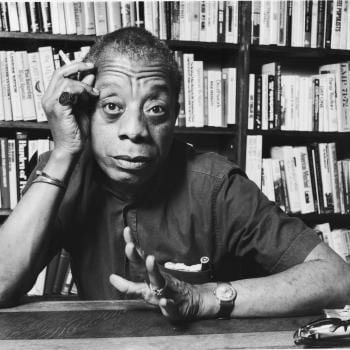
Encountering our Wounds: Looking at Race and Reality...
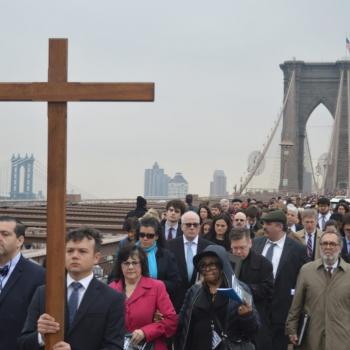
Unity at the Crossroads: a Good Friday Reflection

Father Abraham: Catholic, Jewish, and Muslim Perspectives
TRENDING AT PATHEOS Catholic

The Parable Of The Sower And The Word...
One of Christ’s most famous parables is that of the sower who...

Rejecting Doom: Christian Hope And Human Action
Christianity is a religion of hope. We are to have hope and...

Why I Choose the Eucharist Over the Sermon
Choose the Eucharist, Not the Sermon What are we supposed to get...

5 Design Elements Found in Spiritually Rooted Homes
Putting Spirituality Into Home Decor Our homes are more than our living...

Credo: A Story of God Told with the...
About 10 years ago, I began to imagine a personal "Credo" that...

The Anatomy of Divine Revelation in Catholic Thought
The claim that God has made Himself known to human beings is...
view all Catholic blogs
Ad-Free & Subscriber Log-In Subscription Support
- About Us
- 2026 Calendar
- Videos
- Podcasts
- Library of World Religions
- Faith In Media Tracker
- Advertise With Us
- Write for Us
- Privacy Policy
- Terms of Service
- Do Not Sell My Data
- Contact Us
- Radiant Digital
- Manage Newsletter Subscriptions
- Unsubscribe From Notifications
- Sitemap
Copyright 2008-2026, Patheos. All rights reserved.
Subscription Support Ad-Free & Subscriber Log-In
Follow Patheos