
BuddhistCatholicContemplativeEvangelicalGeneral ChristianHinduJewishLatter-day SaintMuslimNew VisionsProgressive Christian
Beliefs
- Buddhist
- Catholic
- Contemplative
- Evangelical
- General Christian
- Hindu
- Jewish
- Latter-day Saint
- More Voices
- Muslim
- New Visions
- Pagan
- Progressive Christian
Topics
- Religion News
- Food and Religion
- Sports and Religion
- Religious Art
- Religious Music and Entertainment
- Religious Events
- History and Religion
- Style and Religion
- Politics and Religion
- Women in Religion
- Recreation Outdoors and Religion
- Business Finance and Religion
- Careers Workplace and Religion
- Education and Religion
- Family Parenting and Religion
- Health Fitness and Religion
- Home and Religion
- Relationships and Religion
- Technology and Religion
- Travel and Religion
Columnists
- Buddhist Columnists
- Business Finance and Religion Columnists
- Careers Workplace and Religion Columnists
- Catholic Columnists
- Contemplative Columnists
- Education and Religion Columnists
- Evangelists Columnists
- Family Parenting and Religion Columnists
- General Christian Columnists
- Health Fitness and Religion Columnists
- Hindu Columnists
- History and Religion Columnists
- Home and Religion Columnists
- Jewish Columnists
- More Voices Columnists
- Latter Day Columnists
- Muslim Columnists
- New Visions Columnists
- Nonreligious Columnists
- Pagan Columnists
- Politics and Religion Columnists
- Progressive Columnists
- Recreation Outdoors and Religion Columnists
- Relationships and Religion Columnists
- Religion News Columnists
- Religious Art Columnists
- Religious Events Columnists
- Religious Music and Entertainment Columnists
- Sports and Religion Columnists
- Style and Religion Columnists
- Technology and Religion Columnists
- Travel and Religion Columnists
- Women in Religion Columnists
Resource Library
- 2026 Calendar
- Library of World Religions
- The 100 Most Holy Places on Earth
- Patheos Answers
- Podcasts
- Videos
- Faith Leaders Database
- Anglican Episcopalian
- Bahai
- Baptist
- Buddhism
- Christianity
- Confucianism
- Eastern Orthodoxy
- Hinduism
- Holiness and Pentecostal
- ISKCON
- Islam
- Judaism
- Lutheran
- Methodist
- The Church of Jesus Christ of Latter-day Saints
- New Age
- Paganism
- Presbytarian and Reformed
- Protestantism
- Religion Behind the Scenes
- Roman Catholic
- Scientology
- Shia Islam
- Sikhism
- Sufism
- Sunni Islam
- Taoism
- Zen
- See all religions
Research Tools
 Ad-Free & Subscriber Log-In Subscription Support
Ad-Free & Subscriber Log-In Subscription Support
Follow Patheos 

- Trending:
- Forgiveness
- |
- Marriage
- |
- Consciousness
- |
- Death Penalty
- |
- Election
- |
- Halloween
 Cracks in Postmodernity
- Home
- Catholic
- Mark Lilla: “We are going to share a destiny, whether we like it or not”
Mark Lilla: “We are going to share a destiny, whether we like it or not”
Last updated on: January 22, 2018 at 3:34 pm by Guest Contributor
Mark Lilla: “We are going to share a destiny, whether we like it or not” 2018-01-22T15:34:04+00:00 Guest Contributor
Patheos Explore the world's faith through different perspectives on religion and spirituality! Patheos has the views of the prevalent religions and spiritualities of the world.
By Guest Contributor, Elena Neuzil
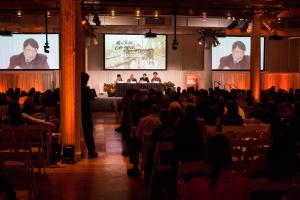
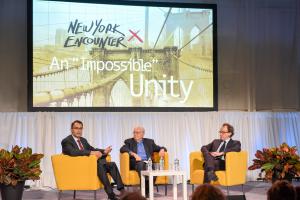
The New York Encounter is an annual three-day public cultural event in the heart of New York City. Run by members of the lay movement Communion and Liberation, the Encounter strives to witness to the new life and knowledge generated by the faith, following Pope Benedict’s claim that “the intelligence of faith has to become the intelligence of reality.” This year’s theme, “An ‘Impossible’ Unity”, proposed that “[t]he full scope of our humanity, with all its vast and profound needs and desires, may suddenly emerge, elicited by memories, thoughts or events, but usually quickly fades, without lasting joy or real change. And unless our relationships are rooted in the common experience of such humanity, we don’t even have real dialogue; we just chat, gossip, text or argue.”
Cracks in Postmodernity welcomes guest contributor, Elena Neuzil, who wrote this article about Saturday evening’s presentation, “Out of Many, One: Really?”, which featured Amitai Etzioni and Mark Lilla.
NEW YORK CITY — Neither you nor I invented this society. We didn’t write the Constitution, develop Western philosophy, or invent the English language or the alphabet it’s written in. We didn’t set up the societal structures we participate in today. Instead, we built today’s society on yesteryear’s. We tinkered with old ideas and pruned away shriveled ones. We fought about them — and we continue to do so. But we are in an especially divided time in our national politics, and it was this issue that professors Amitai Etzioni and Mark Lilla discussed in “Out of Many, One: Really?”, on Saturday evening at the 2018 New York Encounter. Etzioni, a professor of international relations at The George Washington University and a leading American intellectual, and Lilla, a humanities professor at Columbia University and a frequent The New York Times contributor, are exceedingly qualified to analyze the state of our society. Unfortunately, they both come to similar negative conclusions about our current public life.
Society is a communal effort and one that spans across history. When we build or tear down our society, we are adding to or striking down not only what we’ve developed but also what our ancestors have done. We do not act in a vacuum, neither as individuals without public lives nor as individuals relating only to one historic era. We come out of a human conversation that stems from the origins of our species and affect and respond to that conversation in our own time.
Everything we do is an action and reaction to this global community. And if we have any care at all for this community and how to improve it, our actions should center around a question Etzioni articulated: “Under what conditions are we better than we would be otherwise?” His answer to that, and Lilla’s, is in community.
Communities provide informal social controls to make us better. Communities make us healthier, increase our lifespans and infuse our lives with meaning, Etzioni said. But what if we don’t get along, refuse to consider certain people part of our community or never speak with people who disagree? Are we supposed to force ourselves through conversation with them merely to increase our own lifespans?
No. We are to talk with those who we consider bigoted, racist, ignorant or simply wrong because we all exist in this society together. Whatever happens to the country, to the world, happens to all of us.
“We are going to share a destiny, whether we like it or not,” Lilla said. We did not create this society, and unless we are very unlucky or very stupid, we will not be the last ones to add to it. We should consider ourselves as contributors to the human story, which began before and will continue after our own time.
It doesn’t matter that we don’t agree on everything. That moment will never arrive. There is no ideal civilization or culture waiting in the wings for us, ready to be deployed the moment we need it most. That kind of culture will not spring up without any of us noticing. We need to build it. It takes work, and that means working with whoever and whatever we’ve got. As Lilla put it, “You go into politics, you go into history, with the people you have, not the people you wish for.”
We do not and will not have perfectly aligned goals. But we are all human, and we do have at least some common goals and can recognize each other’s common humanity. As Etzioni said, to lead a good life, we must devote part of ourselves to others. And that means investing in community. None of us has a monopoly on meaning or truth. We can only search for the answers with each other.
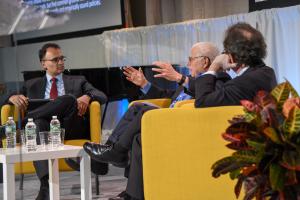
This will mean compromise. This will mean putting aside differences to work toward higher ends, Lilla said. We have no other option. As the theme of this year’s Encounter suggests, unity is not unrealistic or impossible. Rather, it is our only hope. It is only unified as a global community that we can solve global problems, and that sort of unity is begun by making a single human connection – and another, and another. When communities wither, civilizations fall. During the short time that it’s our turn to add to the human story, will we create a civilization of unity? Of community, dialogue, dignity, respect? We will decide, and face the consequences, together.
photos from: https://www.flickr.com/photos/newyorkencounter/albums/72157690601035741
Previous Post
December 26, 2017
Emmanuel: Christmas in NYC
Next Post

January 25, 2018 MLK's Dream Brought to Life at the New York Encounter
Browse Our Archives
Select a Category my mediterranean adventures Uncategorized
Select a Month July 2023 June 2023 May 2023 April 2023 March 2023 January 2023 November 2022 October 2022 September 2022 August 2022 May 2022 April 2022 March 2022 January 2022 December 2021 September 2021 April 2021 March 2021 February 2021 January 2021 December 2020 November 2020 October 2020 July 2020 June 2020 May 2020 April 2020 March 2020 February 2020 September 2019 August 2019 July 2019 June 2019 March 2019 January 2019 October 2018 August 2018 July 2018 June 2018 April 2018 March 2018 January 2018 December 2017 October 2017
Follow Us!
TAKE THE
Religious Wisdom Quiz
Who said, "I can do all things through Christ who strengthens me"?
Select your answer to see how you score.
Peter James Paul John
Related posts from Cracks in Postmodernity

Beyond CCM: Finding God in Secular Music

Friendship that Surpasses Death: In Memory of Aris...
Encountering our Wounds: Looking at Race and Reality...
Unity at the Crossroads: a Good Friday Reflection
TRENDING AT PATHEOS Catholic

Rejecting Doom: Christian Hope And Human Action
Christianity is a religion of hope. We are to have hope and...

It’s What Comes From Within Which Matters
One of the most difficult things for us to understand is why...

Why I Choose the Eucharist Over the Sermon
Choose the Eucharist, Not the Sermon What are we supposed to get...

5 Design Elements Found in Spiritually Rooted Homes
Putting Spirituality Into Home Decor Our homes are more than our living...

Credo: A Story of God Told with the...
About 10 years ago, I began to imagine a personal "Credo" that...

The Anatomy of Divine Revelation in Catholic Thought
The claim that God has made Himself known to human beings is...
view all Catholic blogs
Ad-Free & Subscriber Log-In Subscription Support
- About Us
- 2026 Calendar
- Videos
- Podcasts
- Library of World Religions
- Faith In Media Tracker
- Advertise With Us
- Write for Us
- Privacy Policy
- Terms of Service
- Do Not Sell My Data
- Contact Us
- Radiant Digital
- Manage Newsletter Subscriptions
- Unsubscribe From Notifications
- Sitemap
Copyright 2008-2026, Patheos. All rights reserved.
Subscription Support Ad-Free & Subscriber Log-In
Follow Patheos