
BuddhistCatholicContemplativeEvangelicalGeneral ChristianHinduJewishLatter-day SaintMuslimNew VisionsProgressive Christian
Beliefs
- Buddhist
- Catholic
- Contemplative
- Evangelical
- General Christian
- Hindu
- Jewish
- Latter-day Saint
- More Voices
- Muslim
- New Visions
- Pagan
- Progressive Christian
Topics
- Religion News
- Food and Religion
- Sports and Religion
- Religious Art
- Religious Music and Entertainment
- Religious Events
- History and Religion
- Style and Religion
- Politics and Religion
- Women in Religion
- Recreation Outdoors and Religion
- Business Finance and Religion
- Careers Workplace and Religion
- Education and Religion
- Family Parenting and Religion
- Health Fitness and Religion
- Home and Religion
- Relationships and Religion
- Technology and Religion
- Travel and Religion
Columnists
- Buddhist Columnists
- Business Finance and Religion Columnists
- Careers Workplace and Religion Columnists
- Catholic Columnists
- Contemplative Columnists
- Education and Religion Columnists
- Evangelists Columnists
- Family Parenting and Religion Columnists
- General Christian Columnists
- Health Fitness and Religion Columnists
- Hindu Columnists
- History and Religion Columnists
- Home and Religion Columnists
- Jewish Columnists
- More Voices Columnists
- Latter Day Columnists
- Muslim Columnists
- New Visions Columnists
- Nonreligious Columnists
- Pagan Columnists
- Politics and Religion Columnists
- Progressive Columnists
- Recreation Outdoors and Religion Columnists
- Relationships and Religion Columnists
- Religion News Columnists
- Religious Art Columnists
- Religious Events Columnists
- Religious Music and Entertainment Columnists
- Sports and Religion Columnists
- Style and Religion Columnists
- Technology and Religion Columnists
- Travel and Religion Columnists
- Women in Religion Columnists
Resource Library
- 2026 Calendar
- Library of World Religions
- The 100 Most Holy Places on Earth
- Patheos Answers
- Podcasts
- Videos
- Faith Leaders Database
- Anglican Episcopalian
- Bahai
- Baptist
- Buddhism
- Christianity
- Confucianism
- Eastern Orthodoxy
- Hinduism
- Holiness and Pentecostal
- ISKCON
- Islam
- Judaism
- Lutheran
- Methodist
- The Church of Jesus Christ of Latter-day Saints
- New Age
- Paganism
- Presbytarian and Reformed
- Protestantism
- Religion Behind the Scenes
- Roman Catholic
- Scientology
- Shia Islam
- Sikhism
- Sufism
- Sunni Islam
- Taoism
- Zen
- See all religions
Research Tools
 Ad-Free & Subscriber Log-In Subscription Support
Ad-Free & Subscriber Log-In Subscription Support
Follow Patheos 

- Trending:
- Forgiveness
- |
- Marriage
- |
- Consciousness
- |
- Death Penalty
- |
- Election
- |
- Halloween
 Cosmos The In Lost
- Home
- Catholic
- John Paul II, the Artist in You, and Coleridge
John Paul II, the Artist in You, and Coleridge
Last updated on: April 2, 2014 at 1:28 pm by Artur Rosman
John Paul II, the Artist in You, and Coleridge 2014-04-02T13:28:12-07:00 Artur Rosman
Patheos Explore the world's faith through different perspectives on religion and spirituality! Patheos has the views of the prevalent religions and spiritualities of the world.

“Those to whom the care of the legacy of the keys has been entrusted / gather here, allowing themselves to be enfolded by the Sistine’s colours, / by the vision left to us by Michelangelo.” —John Paul II
John Paul II died nine years ago today. His background in the theater and poetry, especially Polish Romanticism, is something that is frequently overlooked. Needless to say, his connection with the Romantic theorist (and poet) Samuel Taylor Coleridge, which I’d like to highlight today, does not garner any attention.
Coleridge is one of those curious instances of a scholar who is known for perhaps the wrong things. True, his poetry is of the highest order, but his stature as a philosopher and theologian is as great, if not greater. His underground influence is immense, in fact, did you know that Coleridge invented the word “scientist”?
I suspect Coleridge the philosopher-theologian will become one of those great figures–like Hopkins, Kierkegaard, or Wojtyla’s favorite poet Cyprian Norwid–who will become discovered late, very late. The tip of the Coleridge iceberg is currently being explored by, most notably, Douglas Hedley in Coleridge, Philosophy, and Religion and J. Robert Barth, SJ in The Symbolic Imagination: Coleridge and the Romantic Tradition.
Here is one of the most representative artistic-theological statements from Coleridge’s Biographia Literaria that will give you a sense of where he’s coming from:
“The Imagination then I consider either as primary, or secondary. The primary Imagination I hold to be the living Power and prime Agent of all human Perception, and as a repetition in the finite mind of the eternal act of creation in the infinite I Am. The secondary I consider as an echo of the former, co-existing with the conscious will, yet still as identical with the primary in the kind of its agency, and differing only in degree, and in the mode of its operation. It dissolves, diffuses, dissipates, in order to re-create; or where this process is rendered impossible, yet still at all events it struggles to idealize and to unify. It is essentially vital, even as all objects (as objects) are essentially fixed and dead.”
What he’s saying here is that the imagination is a faculty we have for putting together the manifold of intuition into an intelligible experience. In turn, this process is analogous to the Genesis account of the act of creation where God is poetically presented as ordering the chaos.
What’s more, the imagination, or putting together the many into one, is something we do on a daily basis in what Coleridge calls the primary imagination. The secondary imagination, basically the act of artistic creation, is just a special case of using the imagination to once again break apart experience and put it together into a unified work of art.
The fascinating thing is how fluid the boundaries between theology, everyday life, and artistic creation are for Coleridge.
It might be surprising for you to see how much John Paul II’s “Letter to the Artists” advocates similar sentiments. Here is what John Paul II, a child of Polish Romanticism (see this anthology for primary sources):
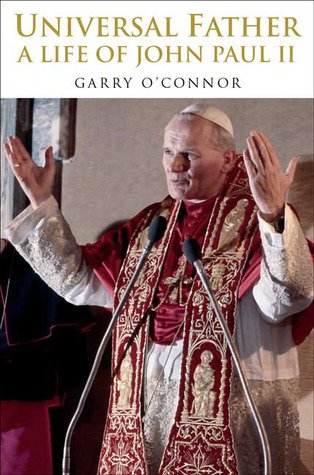
This is the one biography I know of that focuses on the pope’s literary background.
“What is the difference between ‘creator’ and ‘craftsman’? The one who creates bestows being itself, he brings something out of nothing—ex nihilo sui et subiecti, as the Latin puts it—and this, in the strict sense, is a mode of operation which belongs to the Almighty alone. The craftsman, by contrast, uses something that already exists, to which he gives form and meaning. This is the mode of operation peculiar to man as made in the image of God. In fact, after saying that God created man and woman ‘in his image’ (cf. Gn 1:27), the Bible adds that he entrusted to them the task of dominating the earth (cf. Gn 1:28). This was the last day of creation (cf. Gn 1:28-31). On the previous days, marking as it were the rhythm of the birth of the cosmos, Yahweh had created the universe. Finally he created the human being, the noblest fruit of his design, to whom he subjected the visible world as a vast field in which human inventiveness might assert itself.
God therefore called man into existence, committing to him the craftsman’s task. Through his ‘artistic creativity’ man appears more than ever ‘in the image of God,’ and he accomplishes this task above all in shaping the wondrous ‘material’ of his own humanity and then exercising creative dominion over the universe which surrounds him. With loving regard, the divine Artist passes on to the human artist a spark of his own surpassing wisdom, calling him to share in his creative power. Obviously, this is a sharing which leaves intact the infinite distance between the Creator and the creature, as Cardinal Nicholas of Cusa made clear: ‘Creative art, which it is the soul’s good fortune to entertain, is not to be identified with that essential art which is God himself, but is only a communication of it and a share in it.’
That is why artists, the more conscious they are of their ‘gift,’ are led all the more to see themselves and the whole of creation with eyes able to contemplate and give thanks, and to raise to God a hymn of praise. This is the only way for them to come to a full understanding of themselves, their vocation and their mission.”
Once again, we see the close ties, the analogies, between Divine creativity, everyday experience, and the special gift of the artist.
Literature and the imagination are not luxuries. They are necessities.
I’d like to leave you with an example of John Paul II putting all of these together in an excerpt from his Roman Triptych. The pope’s poem is a meditation upon Michelangelo’s Sistine Chapel and our need for artists to help us see God’s workings more clearly in special events and in everyday experiences.
“Epilogue”
It is here, at the feet of this marvellous Sistine profusion of colour that the Cardinals gather—
a community responsible for the legacy of the keys of the Kingdom.
They come right here.
And once more Michelangelo wraps them in his vision.
“In Him we live and move and have our being
Who is He?
Look, here the creating hand of the Almighty Ancient One, turned towards Adam….
In the beginning God created….
He, the all-seeing One….
The Sistine painting will then speak with the Word of the Lord:
Tu es Petrus—as Simon, the son of Jonah, heard.
“To you I will give the keys of the Kingdom”.
Those to whom the care of the legacy of the keys has been entrusted
gather here, allowing themselves to be enfolded by the Sistine’s colours,
by the vision left to us by Michelangelo—
so it was in August, and then in October of the memorable year of the two Conclaves,
and so it will be again, when the need arises
after my death.
Michelangelo’s vision must then speak to them.
“Con-clave”: a joint concern for the legacy of the keys of the Kingdom.
They will find themselves between the Beginning and the End,
between the Day of Creation and the Day of Judgment.
It is given to man once to die and after that the judgment!
A final clarity and light.
The clarity of the events—
The clarity of consciences—
It is necessary that during the Conclave, Michelangelo teach them—
Do not forget: Omnia nuda et aperta sunt ante oculos Eius.
You who see all—point to him!
He will point him out….
http://www.youtube.com/watch?v=NXyi82dYRxE
Previous Post

April 1, 2014
Famous Feminists Who Aren't Atheists: Luce Irigaray, Catholic
Next Post
April 8, 2014 The Early Church's Choice Between Neoplatonism & Neoplatonism
Browse Our Archives
Select a Category #WhyRemainCatholic Abortion Advent Anti-Catholicism Arts Atheism Beauty Benedict XVI Bible Book Review Catholic Cinema Comedy Cosmos: A Space-Time Odyssey Czesław Miłosz Dariusz Karłowicz Devil Easter Eastern Orthodoxy Economics Environment Family Famous Atheists Who Weren't Atheists Guest Post Hans Urs von Balthasar HHS Mandate History Imagination Interview Islam Jean-Luc Marion John Paul II Judaism Just War Lent Literature Little Sisters of the Poor Liturgy Martyrdom Music News Paganism Patristics Phenomenology Philosophy Pierre Hadot Poetry Poland Pop Culture Pope Francis Poverty Prayer Protestantism Rabelais Race Remi Brague Rene Girard Russia Sam Rocha Science & Religion SCOTUS Secularization Sexual Abuse Sexuality Silence Solidarity Stratford Caldecott Synod14 Terrorism Top 10 Uncategorized Walker Percy War Weakened Edition World War II World Youth Day WYD Krakow
Select a Month July 2017 June 2017 May 2017 April 2017 March 2017 February 2017 January 2017 December 2016 October 2016 September 2016 August 2016 July 2016 June 2016 May 2016 April 2016 March 2016 February 2016 January 2016 December 2015 November 2015 October 2015 September 2015 August 2015 July 2015 June 2015 May 2015 April 2015 March 2015 February 2015 January 2015 December 2014 November 2014 October 2014 September 2014 August 2014 July 2014 May 2014 April 2014 March 2014 February 2014 January 2014 December 2013 November 2013 October 2013 September 2013 August 2013 July 2013 June 2013 May 2013
Follow Us!
TAKE THE
Religious Wisdom Quiz
What was the primary method of food preservation in Biblical times?
Select your answer to see how you score.
Salting Drying Smoking Pickling
Related posts from Cosmos The In Lost

The Surprising Anti-Capitalist Logic Behind the Catholic Church's...

How is Classical Philosophy is Like War?

Why Does the World's Leading Philosopher Remain a...

Post-Execution Church: Rise Up from the Electric Chair!
TRENDING AT PATHEOS Catholic

Rejecting Doom: Christian Hope And Human Action
Christianity is a religion of hope. We are to have hope and...

It’s What Comes From Within Which Matters
One of the most difficult things for us to understand is why...

Why I Choose the Eucharist Over the Sermon
Choose the Eucharist, Not the Sermon What are we supposed to get...

5 Design Elements Found in Spiritually Rooted Homes
Putting Spirituality Into Home Decor Our homes are more than our living...

Credo: A Story of God Told with the...
About 10 years ago, I began to imagine a personal "Credo" that...

The Anatomy of Divine Revelation in Catholic Thought
The claim that God has made Himself known to human beings is...
view all Catholic blogs
Ad-Free & Subscriber Log-In Subscription Support
- About Us
- 2026 Calendar
- Videos
- Podcasts
- Library of World Religions
- Faith In Media Tracker
- Advertise With Us
- Write for Us
- Privacy Policy
- Terms of Service
- Do Not Sell My Data
- Contact Us
- Radiant Digital
- Manage Newsletter Subscriptions
- Unsubscribe From Notifications
- Sitemap
Copyright 2008-2026, Patheos. All rights reserved.
Subscription Support Ad-Free & Subscriber Log-In
Follow Patheos