
BuddhistCatholicContemplativeEvangelicalGeneral ChristianHinduJewishLatter-day SaintMuslimNew VisionsProgressive Christian
Beliefs
- Buddhist
- Catholic
- Contemplative
- Evangelical
- General Christian
- Hindu
- Jewish
- Latter-day Saint
- More Voices
- Muslim
- New Visions
- Pagan
- Progressive Christian
Topics
- Religion News
- Food and Religion
- Sports and Religion
- Religious Art
- Religious Music and Entertainment
- Religious Events
- History and Religion
- Style and Religion
- Politics and Religion
- Women in Religion
- Recreation Outdoors and Religion
- Business Finance and Religion
- Careers Workplace and Religion
- Education and Religion
- Family Parenting and Religion
- Health Fitness and Religion
- Home and Religion
- Relationships and Religion
- Technology and Religion
- Travel and Religion
Columnists
- Buddhist Columnists
- Business Finance and Religion Columnists
- Careers Workplace and Religion Columnists
- Catholic Columnists
- Contemplative Columnists
- Education and Religion Columnists
- Evangelists Columnists
- Family Parenting and Religion Columnists
- General Christian Columnists
- Health Fitness and Religion Columnists
- Hindu Columnists
- History and Religion Columnists
- Home and Religion Columnists
- Jewish Columnists
- More Voices Columnists
- Latter Day Columnists
- Muslim Columnists
- New Visions Columnists
- Nonreligious Columnists
- Pagan Columnists
- Politics and Religion Columnists
- Progressive Columnists
- Recreation Outdoors and Religion Columnists
- Relationships and Religion Columnists
- Religion News Columnists
- Religious Art Columnists
- Religious Events Columnists
- Religious Music and Entertainment Columnists
- Sports and Religion Columnists
- Style and Religion Columnists
- Technology and Religion Columnists
- Travel and Religion Columnists
- Women in Religion Columnists
Resource Library
- 2026 Calendar
- Library of World Religions
- The 100 Most Holy Places on Earth
- Patheos Answers
- Podcasts
- Videos
- Faith Leaders Database
- Anglican Episcopalian
- Bahai
- Baptist
- Buddhism
- Christianity
- Confucianism
- Eastern Orthodoxy
- Hinduism
- Holiness and Pentecostal
- ISKCON
- Islam
- Judaism
- Lutheran
- Methodist
- The Church of Jesus Christ of Latter-day Saints
- New Age
- Paganism
- Presbytarian and Reformed
- Protestantism
- Religion Behind the Scenes
- Roman Catholic
- Scientology
- Shia Islam
- Sikhism
- Sufism
- Sunni Islam
- Taoism
- Zen
- See all religions
Research Tools
 Ad-Free & Subscriber Log-In Subscription Support
Ad-Free & Subscriber Log-In Subscription Support
Follow Patheos 

- Trending:
- Forgiveness
- |
- Marriage
- |
- Consciousness
- |
- Death Penalty
- |
- Election
- |
- Halloween
 Cosmos The In Lost
- Home
- Catholic
- Biblical Authority After Babel Cannot Be Built Upon Mere Protestant Christianity
Biblical Authority After Babel Cannot Be Built Upon Mere Protestant Christianity
Last updated on: May 9, 2017 at 10:17 am by Guest Contributor
Biblical Authority After Babel Cannot Be Built Upon Mere Protestant Christianity 2017-05-09T10:17:21-07:00 Guest Contributor
Patheos Explore the world's faith through different perspectives on religion and spirituality! Patheos has the views of the prevalent religions and spiritualities of the world.
(5) Biblical Authority after Babel proposes a distinction of importance among doctrines, so that not every doctrinal difference need produce a schism or a division among Protestant churches. Level-one teachings, dogmas, which a follower of Jesus always has to believe, have to do with “identifying the main persons of the gospel story” (p. 205). Level-one doctrines answer questions of who and what, whereas level-two doctrines “typically respond to questions of how” various parts of the gospel story were accomplished (p. 206). But this distinction seems difficult to maintain on these terms. Trinity is a level-one doctrine, according to Vanhoozer. But why should it be? Why can’t a person admit that salvation is a work of the Father, Son, and Holy Spirit while not subscribing to the trinitarian metaphysics of Nicaea? Wouldn’t the Nicene creed sooner fall into the domain of “how”, namely how these three figures are involved in our salvation, or how they relate to each other, etc.? This invites unitarians and others into the fold of mere Protestant Christianity, radically disjointing Protestant unity. On the other hand, he lists questions of atonement theology (“How does Jesus’s death on the cross save sinners?”) as a level-two doctrine. But can you affirm that there was an act of salvation at all without specifying what the danger was and how it was avoided? This pulls atonement theology into level-one, once again making mere Protestant Christianity ripe for schism.
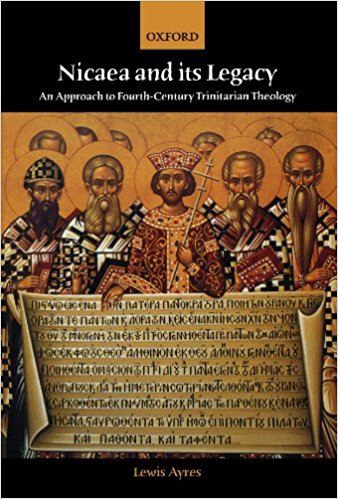
(6) Vanhoozer speaks about Trinitarian theology throughout his book as if it were an obvious conclusion to come to by simply reading the Scripture. He doesn’t justify Trinitarian theology; it is a maxim. Likewise, he treats Scripture as a complete object, the word of God, Old and New Testaments included, without paying any attention the causal origins of the Scripture and its inextricable connection to the Church that produced it. It comes off like trying to change the rules in the middle of the game to one’s advantage: traditions and councils and the rest are now fallible, even if valuable; Scripture alone is the ultimate authority, and I (Luther, Calvin, whoever) am aware that the Catholic Church has been misreading it very badly. What of unitarians who do not think that trinitarianism is the conclusion you come to by a close reading of Scripture? They have an answer for every prooftext you bring up. Or how do you know what books count as Scripture at all? The Bible didn’t come with a table of contents. Some source outside of the text had to recognize what was Scripture and what wasn’t; why is that source no longer infallible when it comes to interpreting the texts it assembled and recognized as Scripture?
(7) I think the issue of baptism produces a significant problem for Vanhoozer’s project. Is the baptism of infants valid or not? Are adults who were baptized as infants incorporated into the body of Christ or not? Should they be admitted to partake of the Lord’s Supper? If baptism requires faith on the part of the person being baptized, and if baptism actually incorporates us into the body of Christ as Scripture teaches, then Baptists cannot admit Presbyterians, Catholics, and the rest as fully incorporated into the body of Christ. Presbyterians should be baptized again as adults if they are really to be part of the body of Christ. On the other hand, if they are incorporated, then this requires a rethinking of the mechanics of baptism — and the exegetical case for infant baptism is a far cry from the kind of explicit, black-on-white proof that most Protestants seem to require in defense of some doctrine or practice. The Romanian Pentecostal churches in which I grew up require that Orthodox, Catholics, and others who were baptized as infants be rebaptized as adults before they are admitted to participate in eucharistic fellowship. Are they being sectarian, or is this a first-level issue that has to be resolved? And how could it be resolved in any satisfactory way, except by appeal to tradition: this is what the Church has always done, and refusing the validity of infant baptism consigns to the outer darkness innumerable generations of Christians? Now tradition is being admitted as an authority again, and this time an apparently quite weighty one
For these reasons, then, I am not convinced by Vanhoozer’s retrieval of the solas in Biblical Authority after Babel
Steven Nemes teaches philosophy as an adjunct professor at Grand Canyon University. He completed a B.A. in Philosophy at Arizona State University and M.Div. at Fuller Theological Seminary. In September 2017 he will be beginning his Ph.D. at Fuller Theological Seminary, studying under Oliver Crisp.
For more on biblical hermeneutics see: Jesus Didn’t Call God Daddy
Please also make a donation to this blog through the button on the upper right side of this page to help keep it going.
Stay in touch! Like Cosmos the in Lost on Facebook:
Biblical Authority after Babel
Previous Post

May 4, 2017
Atheists Have "National Day of Reason," But American Atheism is Irrational
Browse Our Archives
Select a Category #WhyRemainCatholic Abortion Advent Anti-Catholicism Arts Atheism Beauty Benedict XVI Bible Book Review Catholic Cinema Comedy Cosmos: A Space-Time Odyssey Czesław Miłosz Dariusz Karłowicz Devil Easter Eastern Orthodoxy Economics Environment Family Famous Atheists Who Weren't Atheists Guest Post Hans Urs von Balthasar HHS Mandate History Imagination Interview Islam Jean-Luc Marion John Paul II Judaism Just War Lent Literature Little Sisters of the Poor Liturgy Martyrdom Music News Paganism Patristics Phenomenology Philosophy Pierre Hadot Poetry Poland Pop Culture Pope Francis Poverty Prayer Protestantism Rabelais Race Remi Brague Rene Girard Russia Sam Rocha Science & Religion SCOTUS Secularization Sexual Abuse Sexuality Silence Solidarity Stratford Caldecott Synod14 Terrorism Top 10 Uncategorized Walker Percy War Weakened Edition World War II World Youth Day WYD Krakow
Select a Month July 2017 June 2017 May 2017 April 2017 March 2017 February 2017 January 2017 December 2016 October 2016 September 2016 August 2016 July 2016 June 2016 May 2016 April 2016 March 2016 February 2016 January 2016 December 2015 November 2015 October 2015 September 2015 August 2015 July 2015 June 2015 May 2015 April 2015 March 2015 February 2015 January 2015 December 2014 November 2014 October 2014 September 2014 August 2014 July 2014 May 2014 April 2014 March 2014 February 2014 January 2014 December 2013 November 2013 October 2013 September 2013 August 2013 July 2013 June 2013 May 2013
Follow Us!
TAKE THE
Religious Wisdom Quiz
Which book of the Bible contains the most direct prophecies about the Messiah?
Select your answer to see how you score.
Micah Zechariah Isaiah Psalms
Related posts from Cosmos The In Lost

The Surprising Anti-Capitalist Logic Behind the Catholic Church's...

Western Civ Doesn't Need Tenured Radicals to Ruin...

Post-Execution Church: Rise Up from the Electric Chair!
TRENDING AT PATHEOS Catholic

Rejecting Doom: Christian Hope And Human Action
Christianity is a religion of hope. We are to have hope and...

It’s What Comes From Within Which Matters
One of the most difficult things for us to understand is why...

Why I Choose the Eucharist Over the Sermon
Choose the Eucharist, Not the Sermon What are we supposed to get...

5 Design Elements Found in Spiritually Rooted Homes
Putting Spirituality Into Home Decor Our homes are more than our living...

Credo: A Story of God Told with the...
About 10 years ago, I began to imagine a personal "Credo" that...

The Anatomy of Divine Revelation in Catholic Thought
The claim that God has made Himself known to human beings is...
view all Catholic blogs
Ad-Free & Subscriber Log-In Subscription Support
- About Us
- 2026 Calendar
- Videos
- Podcasts
- Library of World Religions
- Faith In Media Tracker
- Advertise With Us
- Write for Us
- Privacy Policy
- Terms of Service
- Do Not Sell My Data
- Contact Us
- Radiant Digital
- Manage Newsletter Subscriptions
- Unsubscribe From Notifications
- Sitemap
Copyright 2008-2026, Patheos. All rights reserved.
Subscription Support Ad-Free & Subscriber Log-In
Follow Patheos