
BuddhistCatholicContemplativeEvangelicalGeneral ChristianHinduJewishLatter-day SaintMuslimNew VisionsProgressive Christian
Beliefs
- Buddhist
- Catholic
- Contemplative
- Evangelical
- General Christian
- Hindu
- Jewish
- Latter-day Saint
- More Voices
- Muslim
- New Visions
- Pagan
- Progressive Christian
Topics
- Religion News
- Food and Religion
- Sports and Religion
- Religious Art
- Religious Music and Entertainment
- Religious Events
- History and Religion
- Style and Religion
- Politics and Religion
- Women in Religion
- Recreation Outdoors and Religion
- Business Finance and Religion
- Careers Workplace and Religion
- Education and Religion
- Family Parenting and Religion
- Health Fitness and Religion
- Home and Religion
- Relationships and Religion
- Technology and Religion
- Travel and Religion
Columnists
- Buddhist Columnists
- Business Finance and Religion Columnists
- Careers Workplace and Religion Columnists
- Catholic Columnists
- Contemplative Columnists
- Education and Religion Columnists
- Evangelists Columnists
- Family Parenting and Religion Columnists
- General Christian Columnists
- Health Fitness and Religion Columnists
- Hindu Columnists
- History and Religion Columnists
- Home and Religion Columnists
- Jewish Columnists
- More Voices Columnists
- Latter Day Columnists
- Muslim Columnists
- New Visions Columnists
- Nonreligious Columnists
- Pagan Columnists
- Politics and Religion Columnists
- Progressive Columnists
- Recreation Outdoors and Religion Columnists
- Relationships and Religion Columnists
- Religion News Columnists
- Religious Art Columnists
- Religious Events Columnists
- Religious Music and Entertainment Columnists
- Sports and Religion Columnists
- Style and Religion Columnists
- Technology and Religion Columnists
- Travel and Religion Columnists
- Women in Religion Columnists
Resource Library
- 2026 Calendar
- Library of World Religions
- The 100 Most Holy Places on Earth
- Patheos Answers
- Podcasts
- Videos
- Faith Leaders Database
- Anglican Episcopalian
- Bahai
- Baptist
- Buddhism
- Christianity
- Confucianism
- Eastern Orthodoxy
- Hinduism
- Holiness and Pentecostal
- ISKCON
- Islam
- Judaism
- Lutheran
- Methodist
- The Church of Jesus Christ of Latter-day Saints
- New Age
- Paganism
- Presbytarian and Reformed
- Protestantism
- Religion Behind the Scenes
- Roman Catholic
- Scientology
- Shia Islam
- Sikhism
- Sufism
- Sunni Islam
- Taoism
- Zen
- See all religions
Research Tools
 Ad-Free & Subscriber Log-In Subscription Support
Ad-Free & Subscriber Log-In Subscription Support
Follow Patheos 

- Trending:
- Forgiveness
- |
- Marriage
- |
- Consciousness
- |
- Death Penalty
- |
- Election
- |
- Halloween
 Cosmos The In Lost
- Home
- Catholic
- Biblical Authority After Babel Cannot Be Built Upon Mere Protestant Christianity
Biblical Authority After Babel Cannot Be Built Upon Mere Protestant Christianity
Last updated on: May 9, 2017 at 10:17 am by Guest Contributor
Biblical Authority After Babel Cannot Be Built Upon Mere Protestant Christianity 2017-05-09T10:17:21-07:00 Guest Contributor
Patheos Explore the world's faith through different perspectives on religion and spirituality! Patheos has the views of the prevalent religions and spiritualities of the world.
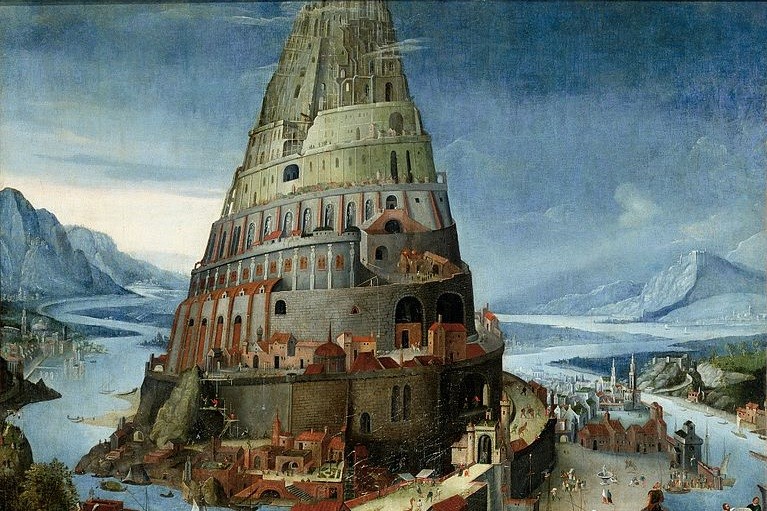
(Circle of Tobias Verhaecht, The Tower of Babel, 17th c.; Wikimedia, PD-Old-100)
I recently finished reading Kevin J. Vanhoozer’s, Biblical Authority after Babel: Retrieving the Solas in the Spirit of Mere Protestant Christianity. I have numerous complaints about his “mere Protestant Christianity” project.
(1) Vanhoozer regularly says that the Church is a product of the Word, by which in context he evidently means the Scripture. But this is exactly the wrong order. The Church is produced by the Word, certainly, in the sense that the Logos Incarnate converted the apostles, but the Word in this sense is not the same thing as the Scriptures, as the written word. The Church — the people of God — preexisted the Scripture, and the hierarchy of the Church, through the biblical authors who were teaching authorities within the people of God, produced the New Testament Scripture. The Scripture is the mind of the Church “stamped” onto paper, so to speak. Indeed, the New Testament epistles are authoritative interventions in the hermeneutical activities of various churches. This shows that theological authority ultimately resides in persons, who know how to interpret the text they’ve produced, rather than the text above everyone else. The people of God with the “mind of Christ” (1 Cor 2:16) preexists the Scripture and produces it and continues to exist even after the production of the Scripture. This means that the Church as a general body — in some way, by some mechanism — has to know what the Scripture means and be capable of interpreting it authoritatively.
(2) Biblical Authority after Babel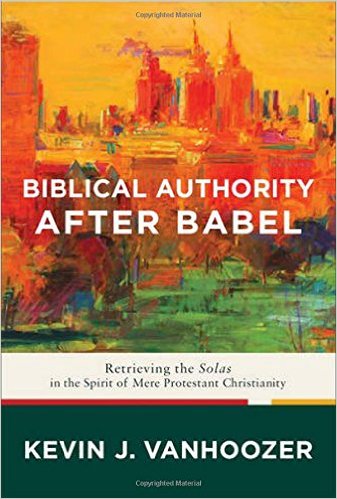 views tradition as a fallible, ancillary source to Scripture. Vanhoozer supposes that he can save Protestantism from the charge of interpretive anarchy by according tradition with this limited role, but I don’t see how this is anything more than mere lip service. Tradition is good, so long as it does not contradict the Scripture — but no one in the tradition ever took himself to be contradicting the Scripture! Traditional doctrines and practices trace, in some way, back to Scripture. So inevitably the rejection of a tradition means setting oneself (or one’s denominational body, etc.) as a better interpreter of the text than previous figures. Why do Protestants reject iconography, prayers for the dead, (some) baptism of children, etc.? These are traditions. “Because they are not compatible with Scripture.” But since people justify these traditions ultimately by reference to Scripture, this is just another claim to interpretive power. So long as tradition can only agree with Scripture (as we interpret it), rather than telling us what Scripture means, we are still the ultimate interpretative authority
(3) Claims about authority to bind and loose — e.g. Mt 16:19, 18:18 — which are given to Jesus’ eyewitnesses disciples are interpreted, without any obvious reason, to confer authority upon the everyone within the church generally, and limited to the local congregation. I don’t see why a person should accept this interpretation of the text, but a lot of mere Protestant Christianity’s ecclesiological vision goes out of the window if we reject this particular reading. The “disciples” in Matthew are generally, if not always, the Twelve (cf. Mt 10). Those are the persons who received the power to bind and loose, Peter the one who received the keys. This is also obvious reading Acts — the apostles exercised teaching and binding/loosing authority; not just anyone teaches but only the apostles and the elders. It seems to me that this reading only becomes plausible if you reject a priori the Catholic reading as beyond the pale.
(4) The way to address differences of opinion about Scriptural interpretation is by way of council and discussion. Of course, these take place among Protestants who share a certain set of background axioms: namely, that no one honestly and attentively reading the Bible under the guidance of the Holy Spirit could ever come to the conclusions that the Roman Catholic (or Orthodox) Church teaches, say about faith/works or icons or other such issues. These are all obvious misreadings. So mere Protestant Christianity knows a priori what the Bible doesn’t teach. How is this not simply the establishment of an anti-magisterium, with its own authoritative tradition? . . .
Biblical Authority after Babel
Previous Post

May 4, 2017
Atheists Have "National Day of Reason," But American Atheism is Irrational
Browse Our Archives
Select a Category #WhyRemainCatholic Abortion Advent Anti-Catholicism Arts Atheism Beauty Benedict XVI Bible Book Review Catholic Cinema Comedy Cosmos: A Space-Time Odyssey Czesław Miłosz Dariusz Karłowicz Devil Easter Eastern Orthodoxy Economics Environment Family Famous Atheists Who Weren't Atheists Guest Post Hans Urs von Balthasar HHS Mandate History Imagination Interview Islam Jean-Luc Marion John Paul II Judaism Just War Lent Literature Little Sisters of the Poor Liturgy Martyrdom Music News Paganism Patristics Phenomenology Philosophy Pierre Hadot Poetry Poland Pop Culture Pope Francis Poverty Prayer Protestantism Rabelais Race Remi Brague Rene Girard Russia Sam Rocha Science & Religion SCOTUS Secularization Sexual Abuse Sexuality Silence Solidarity Stratford Caldecott Synod14 Terrorism Top 10 Uncategorized Walker Percy War Weakened Edition World War II World Youth Day WYD Krakow
Select a Month July 2017 June 2017 May 2017 April 2017 March 2017 February 2017 January 2017 December 2016 October 2016 September 2016 August 2016 July 2016 June 2016 May 2016 April 2016 March 2016 February 2016 January 2016 December 2015 November 2015 October 2015 September 2015 August 2015 July 2015 June 2015 May 2015 April 2015 March 2015 February 2015 January 2015 December 2014 November 2014 October 2014 September 2014 August 2014 July 2014 May 2014 April 2014 March 2014 February 2014 January 2014 December 2013 November 2013 October 2013 September 2013 August 2013 July 2013 June 2013 May 2013
Follow Us!
TAKE THE
Religious Wisdom Quiz
What does the helmet represent?
Select your answer to see how you score.
Faith The Holy Spirit Salvation The power of prayer
Related posts from Cosmos The In Lost

The Surprising Anti-Capitalist Logic Behind the Catholic Church's...

Western Civ Doesn't Need Tenured Radicals to Ruin...

Post-Execution Church: Rise Up from the Electric Chair!
TRENDING AT PATHEOS Catholic

Rejecting Doom: Christian Hope And Human Action
Christianity is a religion of hope. We are to have hope and...

It’s What Comes From Within Which Matters
One of the most difficult things for us to understand is why...

Why I Choose the Eucharist Over the Sermon
Choose the Eucharist, Not the Sermon What are we supposed to get...

5 Design Elements Found in Spiritually Rooted Homes
Putting Spirituality Into Home Decor Our homes are more than our living...

Credo: A Story of God Told with the...
About 10 years ago, I began to imagine a personal "Credo" that...

The Anatomy of Divine Revelation in Catholic Thought
The claim that God has made Himself known to human beings is...
view all Catholic blogs
Ad-Free & Subscriber Log-In Subscription Support
- About Us
- 2026 Calendar
- Videos
- Podcasts
- Library of World Religions
- Faith In Media Tracker
- Advertise With Us
- Write for Us
- Privacy Policy
- Terms of Service
- Do Not Sell My Data
- Contact Us
- Radiant Digital
- Manage Newsletter Subscriptions
- Unsubscribe From Notifications
- Sitemap
Copyright 2008-2026, Patheos. All rights reserved.
Subscription Support Ad-Free & Subscriber Log-In
Follow Patheos