
BuddhistCatholicContemplativeEvangelicalGeneral ChristianHinduJewishLatter-day SaintMuslimNew VisionsProgressive Christian
Beliefs
- Buddhist
- Catholic
- Contemplative
- Evangelical
- General Christian
- Hindu
- Jewish
- Latter-day Saint
- More Voices
- Muslim
- New Visions
- Pagan
- Progressive Christian
Topics
- Religion News
- Food and Religion
- Sports and Religion
- Religious Art
- Religious Music and Entertainment
- Religious Events
- History and Religion
- Style and Religion
- Politics and Religion
- Women in Religion
- Recreation Outdoors and Religion
- Business Finance and Religion
- Careers Workplace and Religion
- Education and Religion
- Family Parenting and Religion
- Health Fitness and Religion
- Home and Religion
- Relationships and Religion
- Technology and Religion
- Travel and Religion
Columnists
- Buddhist Columnists
- Business Finance and Religion Columnists
- Careers Workplace and Religion Columnists
- Catholic Columnists
- Contemplative Columnists
- Education and Religion Columnists
- Evangelists Columnists
- Family Parenting and Religion Columnists
- General Christian Columnists
- Health Fitness and Religion Columnists
- Hindu Columnists
- History and Religion Columnists
- Home and Religion Columnists
- Jewish Columnists
- More Voices Columnists
- Latter Day Columnists
- Muslim Columnists
- New Visions Columnists
- Nonreligious Columnists
- Pagan Columnists
- Politics and Religion Columnists
- Progressive Columnists
- Recreation Outdoors and Religion Columnists
- Relationships and Religion Columnists
- Religion News Columnists
- Religious Art Columnists
- Religious Events Columnists
- Religious Music and Entertainment Columnists
- Sports and Religion Columnists
- Style and Religion Columnists
- Technology and Religion Columnists
- Travel and Religion Columnists
- Women in Religion Columnists
Resource Library
- 2026 Calendar
- Library of World Religions
- The 100 Most Holy Places on Earth
- Patheos Answers
- Podcasts
- Videos
- Faith Leaders Database
- Anglican Episcopalian
- Bahai
- Baptist
- Buddhism
- Christianity
- Confucianism
- Eastern Orthodoxy
- Hinduism
- Holiness and Pentecostal
- ISKCON
- Islam
- Judaism
- Lutheran
- Methodist
- The Church of Jesus Christ of Latter-day Saints
- New Age
- Paganism
- Presbytarian and Reformed
- Protestantism
- Religion Behind the Scenes
- Roman Catholic
- Scientology
- Shia Islam
- Sikhism
- Sufism
- Sunni Islam
- Taoism
- Zen
- See all religions
Research Tools
 Ad-Free & Subscriber Log-In Subscription Support
Ad-Free & Subscriber Log-In Subscription Support
Follow Patheos 

- Trending:
- Forgiveness
- |
- Marriage
- |
- Consciousness
- |
- Death Penalty
- |
- Election
- |
- Halloween
 Cosmos The In Lost
- Home
- Catholic
- Holocaust Remembrance Day: The Memory of the Holocaust Continues to Evolve
Holocaust Remembrance Day: The Memory of the Holocaust Continues to Evolve
Last updated on: April 24, 2017 at 6:00 pm by Artur Rosman
Holocaust Remembrance Day: The Memory of the Holocaust Continues to Evolve 2017-04-24T18:00:58-07:00 Artur Rosman
Patheos Explore the world's faith through different perspectives on religion and spirituality! Patheos has the views of the prevalent religions and spiritualities of the world.
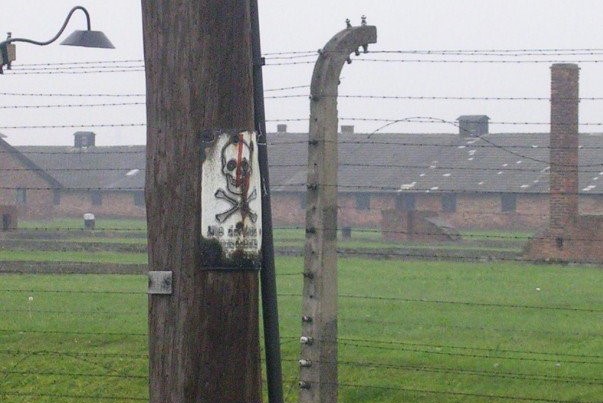
(Artur Rosman, all rights reserved, ©2017)
The great German philosopher is usually only known for the statement, made in Prisms, that the culture which produced Auschwitz lives on in postwar poetry (meant as a synecdoche for all art), which means we cannot write poetry. It’s even more complex than that, but you should read it in full context, rather than only the lines:
To write poetry after Auschwitz is barbaric. And this corrodes even the knowledge of why it has become impossible to write poetry today.
Later on, Adorno, took a further step back from his statement in Prisms with the following lines from his magnum opus Negative Dialectics:
Perennial suffering has as much right to expression as a tortured man has to scream; hence it may have been wrong to say that after Auschwitz you could no longer write poems. But it is not wrong to raise the less cultural question whether after Auschwitz you can go on living–especially whether one who escaped by accident, one who by rights should have been killed, may go on living. His mere survival calls for the coldness, the basic principle of bourgeois subjectivity, without which there could have been no Auschwitz; this is the drastic guilt of him who was spared. By way of atonement he will be plagued by dreams such as that he is no longer living at all, that he was sent to the ovens in 1944 and his whole existence since has been imaginary, an emanation of the insane wish of a man killed twenty years earlier.
Adorno was somewhat unusual in seeing the Holocaust, very early on after the War, as an event so singular that could, or should, negate all cultural production. Most Europeans, as I learned from Tony Judt, just wanted to get on with life and forget about the war and its victims altogether.
Some of you might be surprised, but according Judt’s Postwar: A History of Europe Since 1945, the Holocaust did not come to occupy this singular place in the First World imagination until very late. It was only in the mid-1980’s that most European countries came to see the Holocaust as a singular event, some not until well into the 1990’s. Commemorating the Holocaust only became official between those years.
Historical memory is always changing in reaction to current events. Reinhart Kosseleck’s Futures Past: On the Semantics of Historical Time discusses this change, what is called “the politics of history,” in a systematic way. It is no surprise that the politics of history are playing themselves out with regard to the Holocaust since the 1980’s.
There are, for example, efforts to understand the Holocaust in terms of its World War II context. Timothy Snyder’s Bloodlands is an especially important book for reminding us that genocide is far more common than we suspect, especially in the lands stuck between Germany and Russia. His more recent book, Black Earth, brings the genocidal policies of Hitler and Stalin closer to home, by pointing out how the current refugee crisis, along with a host of other political circumstances, is similar to the historical circumstances that brought Hitler to power.
It just so happens that we are also commemorating the Armenian Genocide today, which is an event that has come to be remembered only in very recent memory. The first round of the French elections is behind us, but the future of the historical reckoning with first modern state-genocide, in the Vendee during the French Revolution, is still before us. The French state continues to stand in the way of commemorating it. We need to understand these events for a more global understanding of the terrors of the 20th century, and to prepare ourselves for the tempests the 21st century will no doubt bring.
The politics of Holocaust history appear to be shifting in Israel too. The former Prime Minister of Israel, Ehud Barak, ahead of the publishing of his book My Country, My Life: Fighting for Israel, Searching for Peace, was using that memory against Netanyahu, according to Hareetz:
Israel has been “infected by the seeds of fascism,” former prime minister and defense minister Ehud Barak said during a TV interview on Friday night.
Responding to the resignation of Defense Minister Moshe Ya’alon earlier in the day, Barak said that it “should be a red light for all of us regarding what’s going on in the government.”
“Life-sustaining Zionism and the seeds of fascism cannot live together,” Barak told a Channel 10 interviewer.
Ya’alon’s resignation is “the end of a chain that began with the case of the soldier who shot [a wounded Palestinian assailant to death],” Barak said. “Such incidents give us an X-ray image that is opposed to the will of the people.
“What has happened is a hostile takeover of the Israeli government by dangerous elements. And it’s just the beginning.
To illustrate his point, Barak referred to legislation promoted by members of the coalition, including the law to lift the parliamentary immunity of Knesset members who allegedly support terrorism and a bill to impose Israeli law on Israelis living in the West Bank.
I don’t think most outsiders would feel comfortable speaking of Israel in this way, even given the qualifications. But there it is.
Once we start looking at all the historical threads frequently overlooked during Holocaust Remembrances, we begin to wonder not so much, why there are evils such as the Holocaust, but why aren’t there more like them.
The uncomfortable thought at the heart of Snyder’s Black Earth is that the genocidal chapter of human history is probably far from over. We’re not as good as we’d like to think.
Holocaust Remembrance Day should remind us how much more there is to remember, and that our memory evolves with the passage of time.
Remember to support important institutions such as the Auschwitz Centre for Dialogue and Prayer as well.
This is why I would recommend you take a look at: 5 Facts Holocaust and World War II Remembrances Frequently Forget
Previous Post

April 22, 2017
2 Reasons Why the March for Science is a Losing Strategy

Browse Our Archives
Select a Category #WhyRemainCatholic Abortion Advent Anti-Catholicism Arts Atheism Beauty Benedict XVI Bible Book Review Catholic Cinema Comedy Cosmos: A Space-Time Odyssey Czesław Miłosz Dariusz Karłowicz Devil Easter Eastern Orthodoxy Economics Environment Family Famous Atheists Who Weren't Atheists Guest Post Hans Urs von Balthasar HHS Mandate History Imagination Interview Islam Jean-Luc Marion John Paul II Judaism Just War Lent Literature Little Sisters of the Poor Liturgy Martyrdom Music News Paganism Patristics Phenomenology Philosophy Pierre Hadot Poetry Poland Pop Culture Pope Francis Poverty Prayer Protestantism Rabelais Race Remi Brague Rene Girard Russia Sam Rocha Science & Religion SCOTUS Secularization Sexual Abuse Sexuality Silence Solidarity Stratford Caldecott Synod14 Terrorism Top 10 Uncategorized Walker Percy War Weakened Edition World War II World Youth Day WYD Krakow
Select a Month July 2017 June 2017 May 2017 April 2017 March 2017 February 2017 January 2017 December 2016 October 2016 September 2016 August 2016 July 2016 June 2016 May 2016 April 2016 March 2016 February 2016 January 2016 December 2015 November 2015 October 2015 September 2015 August 2015 July 2015 June 2015 May 2015 April 2015 March 2015 February 2015 January 2015 December 2014 November 2014 October 2014 September 2014 August 2014 July 2014 May 2014 April 2014 March 2014 February 2014 January 2014 December 2013 November 2013 October 2013 September 2013 August 2013 July 2013 June 2013 May 2013
Follow Us!
TAKE THE
Religious Wisdom Quiz
What tax collector wrote a Gospel and was called by Jesus?
Select your answer to see how you score.
Mark Barnabas Matthew Luke
Related posts from Cosmos The In Lost

The Surprising Anti-Capitalist Logic Behind the Catholic Church's...

What is the Source of Our Culture of...


The Holy Family as an Icon of World...
TRENDING AT PATHEOS Catholic

Rejecting Doom: Christian Hope And Human Action
Christianity is a religion of hope. We are to have hope and...

It’s What Comes From Within Which Matters
One of the most difficult things for us to understand is why...

Why I Choose the Eucharist Over the Sermon
Choose the Eucharist, Not the Sermon What are we supposed to get...

5 Design Elements Found in Spiritually Rooted Homes
Putting Spirituality Into Home Decor Our homes are more than our living...

Credo: A Story of God Told with the...
About 10 years ago, I began to imagine a personal "Credo" that...

The Anatomy of Divine Revelation in Catholic Thought
The claim that God has made Himself known to human beings is...
view all Catholic blogs
Ad-Free & Subscriber Log-In Subscription Support
- About Us
- 2026 Calendar
- Videos
- Podcasts
- Library of World Religions
- Faith In Media Tracker
- Advertise With Us
- Write for Us
- Privacy Policy
- Terms of Service
- Do Not Sell My Data
- Contact Us
- Radiant Digital
- Manage Newsletter Subscriptions
- Unsubscribe From Notifications
- Sitemap
Copyright 2008-2026, Patheos. All rights reserved.
Subscription Support Ad-Free & Subscriber Log-In
Follow Patheos