
BuddhistCatholicContemplativeEvangelicalGeneral ChristianHinduJewishLatter-day SaintMuslimNew VisionsProgressive Christian
Beliefs
- Buddhist
- Catholic
- Contemplative
- Evangelical
- General Christian
- Hindu
- Jewish
- Latter-day Saint
- More Voices
- Muslim
- New Visions
- Pagan
- Progressive Christian
Topics
- Religion News
- Food and Religion
- Sports and Religion
- Religious Art
- Religious Music and Entertainment
- Religious Events
- History and Religion
- Style and Religion
- Politics and Religion
- Women in Religion
- Recreation Outdoors and Religion
- Business Finance and Religion
- Careers Workplace and Religion
- Education and Religion
- Family Parenting and Religion
- Health Fitness and Religion
- Home and Religion
- Relationships and Religion
- Technology and Religion
- Travel and Religion
Columnists
- Buddhist Columnists
- Business Finance and Religion Columnists
- Careers Workplace and Religion Columnists
- Catholic Columnists
- Contemplative Columnists
- Education and Religion Columnists
- Evangelists Columnists
- Family Parenting and Religion Columnists
- General Christian Columnists
- Health Fitness and Religion Columnists
- Hindu Columnists
- History and Religion Columnists
- Home and Religion Columnists
- Jewish Columnists
- More Voices Columnists
- Latter Day Columnists
- Muslim Columnists
- New Visions Columnists
- Nonreligious Columnists
- Pagan Columnists
- Politics and Religion Columnists
- Progressive Columnists
- Recreation Outdoors and Religion Columnists
- Relationships and Religion Columnists
- Religion News Columnists
- Religious Art Columnists
- Religious Events Columnists
- Religious Music and Entertainment Columnists
- Sports and Religion Columnists
- Style and Religion Columnists
- Technology and Religion Columnists
- Travel and Religion Columnists
- Women in Religion Columnists
Resource Library
- 2026 Calendar
- Library of World Religions
- The 100 Most Holy Places on Earth
- Patheos Answers
- Podcasts
- Videos
- Faith Leaders Database
- Anglican Episcopalian
- Bahai
- Baptist
- Buddhism
- Christianity
- Confucianism
- Eastern Orthodoxy
- Hinduism
- Holiness and Pentecostal
- ISKCON
- Islam
- Judaism
- Lutheran
- Methodist
- The Church of Jesus Christ of Latter-day Saints
- New Age
- Paganism
- Presbytarian and Reformed
- Protestantism
- Religion Behind the Scenes
- Roman Catholic
- Scientology
- Shia Islam
- Sikhism
- Sufism
- Sunni Islam
- Taoism
- Zen
- See all religions
Research Tools
 Ad-Free & Subscriber Log-In Subscription Support
Ad-Free & Subscriber Log-In Subscription Support
Follow Patheos 

- Trending:
- Forgiveness
- |
- Marriage
- |
- Consciousness
- |
- Death Penalty
- |
- Election
- |
- Halloween
 Cosmos The In Lost
- Home
- Catholic
- If You Hate Catholic SJW’s, Especially on Earth Day, Then You’ll Agree with This Thinker
If You Hate Catholic SJW’s, Especially on Earth Day, Then You’ll Agree with This Thinker
Last updated on: April 21, 2017 at 9:27 pm by Artur Rosman
If You Hate Catholic SJW’s, Especially on Earth Day, Then You’ll Agree with This Thinker 2017-04-21T21:27:35-07:00 Artur Rosman
Patheos Explore the world's faith through different perspectives on religion and spirituality! Patheos has the views of the prevalent religions and spiritualities of the world.
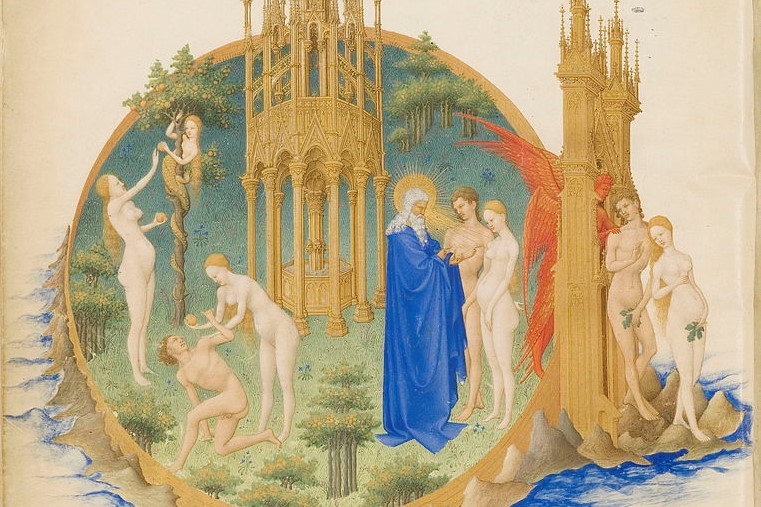
I suppose Genesis featured the first Earth Day (Limbourg Brothers,Très Riches Heures du duc de Berry Folio 25, verso: The Garden of Eden, 15th c.; Wikimedia, PD-Old-100)
Tomorrow, 22 April 2017, is Earth Day.
Earth Day is a day when we stop and especially remember God’s gift of the Earth to us, and remember what our stewardship for it entails.
Social Justice Warriors, or SJW’s as they are called for short, are using this day for getting their message out. There is no shortage of SJW’s among Catholics, and to the chagrin of some, Pope Francis can be called an SJW.
However, by most standards, the same can be said about John Paul II and Benedict XVI (make sure you read the Easter egg at the end of the latter post).
Crux reports the following about Laudato Si’ events surrounding this year’s Earth Day:
Several places are hosting events to study Laudato si’, the 2015 papal encyclical on ecological issues which has been a foundation of Vatican efforts to protect the environment in the current pontificate.
Insua told Crux the encyclical was “transformative” for the Church, saying it “built on top of the teachings of previous popes to enshrine creation care as a key issue for Catholics.”
He noted its influence on the international level, calling it “a gigantic contribution” to United Nations climate negotiations and crediting it for increasing the level of ambition of the Paris Climate Agreement reached in 2016.
“Both Catholics and non-Catholics are certainly listening to Pope Francis’s eco-message,” Insua said, “although of course in the U.S. there are some politicians and lobbyists from the fossil fuel industry that are determined to ignore scientists and public opinion, advancing an extremely harmful pro-fossil fuel agenda that contradicts the Laudato si’ message.”
If you aren’t too familiar with the SJW message of the Pope, then here are some highlights from his World Day of Prayer for the Care of Creation message from last year:
With this Message, I renew my dialogue with “every person living on this planet” (Laudato Si’, 3) about the sufferings of the poor and the devastation of the environment. God gave us a bountiful garden, but we have turned it into a polluted wasteland of “debris, desolation and filth” (ibid., 161). We must not be indifferent or resigned to the loss of biodiversity and the destruction of ecosystems, often caused by our irresponsible and selfish behaviour. “Because of us, thousands of species will no longer give glory to God by their very existence, nor convey their message to us. We have no such right” (ibid., 33).
Global warming continues, due in part to human activity: 2015 was the warmest year on record, and 2016 will likely be warmer still. This is leading to ever more severe droughts, floods, fires and extreme weather events. Climate change is also contributing to the heart-rending refugee crisis. The world’s poor, though least responsible for climate change, are most vulnerable and already suffering its impact.
As an integral ecology emphasizes, human beings are deeply connected with all of creation. When we mistreat nature, we also mistreat human beings. At the same time, each creature has its own intrinsic value that must be respected. Let us hear “both the cry of the earth and the cry of the poor” (Laudato Si’, 49), and do our best to ensure an appropriate and timely response.
According to the pope, we cannot make an easy break between environmental and the common good, or, between religion and politics.
We’re not born in a vacuum; our view is not from nowhere; it is from the Earth, the only one we have.
When we look at environmental conservation from unbiased eyes, undimmed by reflexive hatred of SJW’s (and some of them make that easy), then it is clear that conservation, is a form of conservatism (traditionalism, if you prefer). It’s right there built into the word “conserv-ation” itself.
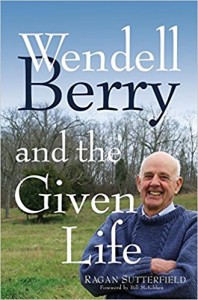 This isn’t just pure etymology, the history of the environmental conservation movement also has deep Catholic (and Protestant) roots. One of it’s first early proponents was Catholic thinker E.F. Schumacher in his perennial bestseller Small is Beautiful: Economics as if People Mattered. A father and strong early advocate of the farmer’s market movement is Wendell Berry, a Protestant essayist, novelist, and poet.
If you find yourself annoyed with these sorts of political mixing with religion, then you might like what the following famous Polish thinker once said:
We are not looking for a war with the Church . . . But we will not tolerate a certain part of the Church hierarchy and priests, which remains under the influence of Vatican circles that are hostile to [our government], and are striving toward goals that have nothing to do with the religious mission of the Church, undermining the socio-political order of the country.
Doesn’t that seem about right? Why don’t the SJW Catholics stick to religion?
The same source voiced his frustration with the Church meddling in politics in another speech:
The Church hierarchy is being observed for violating state laws and regulations, which is happening again. We advise them to stop provoking [the government], because it will not come out in the Church’s favor. The times of the medieval domination of the state by the Church have long passed. We must adopt to progress and renounce hopeless thoughts about fighting [us].
This second statement was probably a little bit more difficult to swallow. But if you’ve agree even with just the first one . . . Then you’ve agreed with Władysław Gomułka, First Secretary of Polish Communist Party. Congratulations.
That’s the person referenced by this post’s title.
Have you ever wondered what is the source of such imperatives to keep religion out of matters that truly politically matter?
It is something William T. Cavanaugh calls The Myth of Religious Violence in a book with the same title:
I argue that there is no transhistorical and transcultural essence of religion and that essentialist attempts to separate religious violence from secular violence are incoherent. What counts as religious or secular in any given context is a function of different configurations of power. The question then becomes why such essentialist constructions are so common. I argue that, in what are called ‘Western’ societies, the attempt to create a transhistorical and transcultural concept of religion that is essentially prone to violence is one of the foundational legitimating myths of the liberal nation-state. The myth of religious violence helps to construct and marginalize a religious Other, prone to fanaticism, to contrast with the rational, peace-making, secular subject. This myth can be and is used in domestic politics to legitimate the marginalization of certain types of practices and groups labeled religious, while underwriting the nation-state’s monopoly on its citizens’ willingness to sacrifice and kill. In foreign policy, the myth of religious violence serves to cast non secular social orders … in the role of villain. They have not yet learned to remove the dangerous influence of religion from political life. Their violence is therefore irrational and fanatical. Our violence, being secular, is rational, peace making, and sometimes regrettably necessary to contain their violence. We find ourselves obliged to bomb them into liberal democracy.
Doesn’t that make more sense? Even Catholics who are Pro-Life Republicans recognize that this is true. They are, in fact, obviously also SJW’s in their own laudable way.
For more Catholic resources for Earth Day see: TOP10 Books on Religion and Ecology.
Please also make a donation to this blog through the button on the upper right side of this page to help keep it going.
Stay in touch! Like Cosmos the in Lost on Facebook:
Previous Post
April 19, 2017
How Did the Resurrection Historically Affect Reason?
Next Post
April 22, 2017 2 Reasons Why the March for Science is a Losing Strategy
Browse Our Archives
Select a Category #WhyRemainCatholic Abortion Advent Anti-Catholicism Arts Atheism Beauty Benedict XVI Bible Book Review Catholic Cinema Comedy Cosmos: A Space-Time Odyssey Czesław Miłosz Dariusz Karłowicz Devil Easter Eastern Orthodoxy Economics Environment Family Famous Atheists Who Weren't Atheists Guest Post Hans Urs von Balthasar HHS Mandate History Imagination Interview Islam Jean-Luc Marion John Paul II Judaism Just War Lent Literature Little Sisters of the Poor Liturgy Martyrdom Music News Paganism Patristics Phenomenology Philosophy Pierre Hadot Poetry Poland Pop Culture Pope Francis Poverty Prayer Protestantism Rabelais Race Remi Brague Rene Girard Russia Sam Rocha Science & Religion SCOTUS Secularization Sexual Abuse Sexuality Silence Solidarity Stratford Caldecott Synod14 Terrorism Top 10 Uncategorized Walker Percy War Weakened Edition World War II World Youth Day WYD Krakow
Select a Month July 2017 June 2017 May 2017 April 2017 March 2017 February 2017 January 2017 December 2016 October 2016 September 2016 August 2016 July 2016 June 2016 May 2016 April 2016 March 2016 February 2016 January 2016 December 2015 November 2015 October 2015 September 2015 August 2015 July 2015 June 2015 May 2015 April 2015 March 2015 February 2015 January 2015 December 2014 November 2014 October 2014 September 2014 August 2014 July 2014 May 2014 April 2014 March 2014 February 2014 January 2014 December 2013 November 2013 October 2013 September 2013 August 2013 July 2013 June 2013 May 2013
Follow Us!
TAKE THE
Religious Wisdom Quiz
Who was raised from the dead by Peter in Joppa?
Select your answer to see how you score.
The widow's son Lazarus Tabitha Eutychus
Related posts from Cosmos The In Lost

The Surprising Anti-Capitalist Logic Behind the Catholic Church's...

What is the Source of Our Culture of...


The Holy Family as an Icon of World...
TRENDING AT PATHEOS Catholic

Rejecting Doom: Christian Hope And Human Action
Christianity is a religion of hope. We are to have hope and...

It’s What Comes From Within Which Matters
One of the most difficult things for us to understand is why...

Why I Choose the Eucharist Over the Sermon
Choose the Eucharist, Not the Sermon What are we supposed to get...

5 Design Elements Found in Spiritually Rooted Homes
Putting Spirituality Into Home Decor Our homes are more than our living...

Credo: A Story of God Told with the...
About 10 years ago, I began to imagine a personal "Credo" that...

The Anatomy of Divine Revelation in Catholic Thought
The claim that God has made Himself known to human beings is...
view all Catholic blogs
Ad-Free & Subscriber Log-In Subscription Support
- About Us
- 2026 Calendar
- Videos
- Podcasts
- Library of World Religions
- Faith In Media Tracker
- Advertise With Us
- Write for Us
- Privacy Policy
- Terms of Service
- Do Not Sell My Data
- Contact Us
- Radiant Digital
- Manage Newsletter Subscriptions
- Unsubscribe From Notifications
- Sitemap
Copyright 2008-2026, Patheos. All rights reserved.
Subscription Support Ad-Free & Subscriber Log-In
Follow Patheos