
BuddhistCatholicContemplativeEvangelicalGeneral ChristianHinduJewishLatter-day SaintMuslimNew VisionsProgressive Christian
Beliefs
- Buddhist
- Catholic
- Contemplative
- Evangelical
- General Christian
- Hindu
- Jewish
- Latter-day Saint
- More Voices
- Muslim
- New Visions
- Pagan
- Progressive Christian
Topics
- Religion News
- Food and Religion
- Sports and Religion
- Religious Art
- Religious Music and Entertainment
- Religious Events
- History and Religion
- Style and Religion
- Politics and Religion
- Women in Religion
- Recreation Outdoors and Religion
- Business Finance and Religion
- Careers Workplace and Religion
- Education and Religion
- Family Parenting and Religion
- Health Fitness and Religion
- Home and Religion
- Relationships and Religion
- Technology and Religion
- Travel and Religion
Columnists
- Buddhist Columnists
- Business Finance and Religion Columnists
- Careers Workplace and Religion Columnists
- Catholic Columnists
- Contemplative Columnists
- Education and Religion Columnists
- Evangelists Columnists
- Family Parenting and Religion Columnists
- General Christian Columnists
- Health Fitness and Religion Columnists
- Hindu Columnists
- History and Religion Columnists
- Home and Religion Columnists
- Jewish Columnists
- More Voices Columnists
- Latter Day Columnists
- Muslim Columnists
- New Visions Columnists
- Nonreligious Columnists
- Pagan Columnists
- Politics and Religion Columnists
- Progressive Columnists
- Recreation Outdoors and Religion Columnists
- Relationships and Religion Columnists
- Religion News Columnists
- Religious Art Columnists
- Religious Events Columnists
- Religious Music and Entertainment Columnists
- Sports and Religion Columnists
- Style and Religion Columnists
- Technology and Religion Columnists
- Travel and Religion Columnists
- Women in Religion Columnists
Resource Library
- 2026 Calendar
- Library of World Religions
- The 100 Most Holy Places on Earth
- Patheos Answers
- Podcasts
- Videos
- Faith Leaders Database
- Anglican Episcopalian
- Bahai
- Baptist
- Buddhism
- Christianity
- Confucianism
- Eastern Orthodoxy
- Hinduism
- Holiness and Pentecostal
- ISKCON
- Islam
- Judaism
- Lutheran
- Methodist
- The Church of Jesus Christ of Latter-day Saints
- New Age
- Paganism
- Presbytarian and Reformed
- Protestantism
- Religion Behind the Scenes
- Roman Catholic
- Scientology
- Shia Islam
- Sikhism
- Sufism
- Sunni Islam
- Taoism
- Zen
- See all religions
Research Tools
 Ad-Free & Subscriber Log-In Subscription Support
Ad-Free & Subscriber Log-In Subscription Support
Follow Patheos 

- Trending:
- Forgiveness
- |
- Marriage
- |
- Consciousness
- |
- Death Penalty
- |
- Election
- |
- Halloween
 Cosmos The In Lost
- Home
- Catholic
- Prayer Isn’t About God
Prayer Isn’t About God
Last updated on: March 30, 2017 at 10:06 am by Artur Rosman
Prayer Isn’t About God 2017-03-30T10:06:18-07:00 Artur Rosman
Patheos Explore the world's faith through different perspectives on religion and spirituality! Patheos has the views of the prevalent religions and spiritualities of the world.
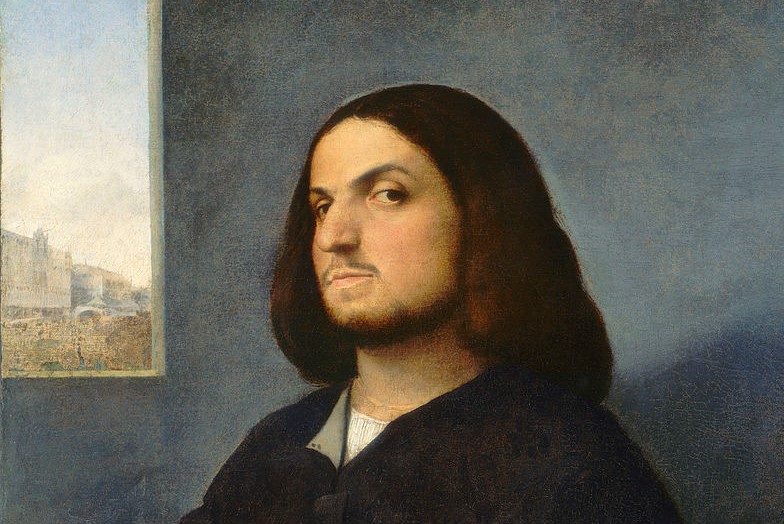
Prayer is about you and all your meanness too (Titian, Portrait of a Venetian Nobleman, 1507; Source: Wiki, PD-Old-100).
Prayer, modern people think it’s about God. ¯\_(ツ)_/¯
Praying is difficult to understand, because we are accustomed to using the wrong frames of mind to understand it. This is why critiques of modernity are so important in helping us gain access to realities, such as prayer, that have their roots in the premodern. Otherwise, what we do, and how we understand it, ends up looking like somebody trying to play American football using the rules of soccer (what the rest of the world calls “football”).
In the Protestant, and therefore secular, understanding of prayer the human doing the prayer is the subject, while God is a infinitely difficult object to reach object. God is Wholly Other, therefore the connection between him and sinful reality is extremely tenuous for the Protestant imagination. In the rare occasion when you get past God’s voicemail, you call that a miracle, which is something that’s by definition very rare.
But in God Still Matters Herbert McCabe not only reverses the subject and object in the standard equation of prayer, but, in a way typical for Thomism and the Catholic imagination, he removes the modern/Protestant/secular sense of rivalry between God, man, and the world:
But all of this is to forget that it is God who prays, that my prayer is the action of God’s grace in me. My prayer is not putting pressure on God, doing something to God, it is God doing something for me, raising me into the divine life or intensifying the divine life in me. As Thomas Aquinas puts it, we should not say: “In accordance with my prayer: God wills that it should be a fine day”; we should say “God wills: that it should be a fine days in accordance with my prayer.” God brings about the prayer just as much as he brings about the fine day, and what he wills, what he has willed from eternity is that this fine day should not be so to say, just an ordinary fine day, it should be for me a significant fine day, a sign, a communication from God . . .
Thus, prayer here isn’t so much about changing God, as if the mind of Christ were external to us. Something very different is going on here, communion in the widest sense. God’s mind isn’t being changed, our minds are being changed through participation in God’s life. This isn’t strictly speaking about God (even though in a certain sense, not the commonplace, it is), but about us. God saves us, rather than out prayers somehow making corrections to Divine Providence (the very definition of pride!).
This is the reason why in God, Christ, and Us McCabe recommends a practice so frequently denigrated in our “spiritually advanced age,” that is, he recommends petitionary prayer:
People often complain of “distractions” during prayer. Their mind goes wandering off on to other things. This is nearly always due to praying for something you do not really much want; you just think it would be proper and respectable and “religious” to want it. So you pray high-mindedly for big but distant things like peace in Northern Ireland or you pray that your aunt will get better from the flu–when in fact you do not much care about these things; perhaps you ought to, but you don’t. And so your prayer is rapidly invaded by distractions arising from what you really do want–promotion at work, let us say. Distractions are nearly always your real wants breaking in on your prayer for edifying but bogus wants. If you are distracted, trace your distraction back to the real desires it comes from and pray about these. When you are praying for what you really want you will not be distracted. People on sinking ships do not complain of distractions during their prayer.
The above advice seems to contradict what I said in my piece Don’t Give Up For Lent. But it doesn’t. McCabe’s advice goes against the grain of what we’d will to give up for Lent.
We tend to want to give up, and therefore obsess about, high minded “spiritual” things, rather than worldly stuff, since as good moderns we’ve always been told the two aren’t related.
Yet, what could be more contrary to that than instead turning to the humdrum desires of our everyday lives, which are actually where God wants to meet us–and save us from ourselves through ourselves? I can’t help but think this is related to a quip Walker Percy made in an interview with Robin Leary:
Personal goal: to survive my own bad habits.
Identifying the problem is the first step towards seeking help from the Divine Physician.
The Young Pope, which was reviewed in a guest post on this blog, really nailed this:
https://youtu.be/BIj_bNd2oew
For more on how the sacred and the profane intersect see: Why is the Catholic Experience of Sex so Different from the Protestant Experience of Sex?
Please consider making a donation to this blog through the donation button on the upper right side of its homepage, because those insurance costs are scary.
Stay in touch! Like Cosmos the in Lost on Facebook:
Previous Post
March 27, 2017
Wendell Berry and the Given Life
Next Post

April 7, 2017 Syrian Catholic Bishops Unequivocally Condemn American Bombing of Syria
Browse Our Archives
Select a Category #WhyRemainCatholic Abortion Advent Anti-Catholicism Arts Atheism Beauty Benedict XVI Bible Book Review Catholic Cinema Comedy Cosmos: A Space-Time Odyssey Czesław Miłosz Dariusz Karłowicz Devil Easter Eastern Orthodoxy Economics Environment Family Famous Atheists Who Weren't Atheists Guest Post Hans Urs von Balthasar HHS Mandate History Imagination Interview Islam Jean-Luc Marion John Paul II Judaism Just War Lent Literature Little Sisters of the Poor Liturgy Martyrdom Music News Paganism Patristics Phenomenology Philosophy Pierre Hadot Poetry Poland Pop Culture Pope Francis Poverty Prayer Protestantism Rabelais Race Remi Brague Rene Girard Russia Sam Rocha Science & Religion SCOTUS Secularization Sexual Abuse Sexuality Silence Solidarity Stratford Caldecott Synod14 Terrorism Top 10 Uncategorized Walker Percy War Weakened Edition World War II World Youth Day WYD Krakow
Select a Month July 2017 June 2017 May 2017 April 2017 March 2017 February 2017 January 2017 December 2016 October 2016 September 2016 August 2016 July 2016 June 2016 May 2016 April 2016 March 2016 February 2016 January 2016 December 2015 November 2015 October 2015 September 2015 August 2015 July 2015 June 2015 May 2015 April 2015 March 2015 February 2015 January 2015 December 2014 November 2014 October 2014 September 2014 August 2014 July 2014 May 2014 April 2014 March 2014 February 2014 January 2014 December 2013 November 2013 October 2013 September 2013 August 2013 July 2013 June 2013 May 2013
Follow Us!
TAKE THE
Religious Wisdom Quiz
What is the correct order for putting off the old self and putting on the new self as described in Colossians?
Select your answer to see how you score.
Clothe yourself with compassion, put on the new self, put to death earthly nature, rid yourself of anger Rid yourself of anger, take off the old self, put to death earthly nature, put on the new self Put to death earthly nature, rid yourself of anger/rage/malice, take off the old self, put on the new self, clothe yourself with compassion Put on the new self, put to death earthly nature, clothe yourself with compassion, rid yourself of anger
Related posts from Cosmos The In Lost

The Surprising Anti-Capitalist Logic Behind the Catholic Church's...

The Holy Family as an Icon of World...

How is Classical Philosophy is Like War?

Why Does the World's Leading Philosopher Remain a...
TRENDING AT PATHEOS Catholic

Rejecting Doom: Christian Hope And Human Action
Christianity is a religion of hope. We are to have hope and...

It’s What Comes From Within Which Matters
One of the most difficult things for us to understand is why...

Why I Choose the Eucharist Over the Sermon
Choose the Eucharist, Not the Sermon What are we supposed to get...

5 Design Elements Found in Spiritually Rooted Homes
Putting Spirituality Into Home Decor Our homes are more than our living...

Credo: A Story of God Told with the...
About 10 years ago, I began to imagine a personal "Credo" that...

The Anatomy of Divine Revelation in Catholic Thought
The claim that God has made Himself known to human beings is...
view all Catholic blogs
Ad-Free & Subscriber Log-In Subscription Support
- About Us
- 2026 Calendar
- Videos
- Podcasts
- Library of World Religions
- Faith In Media Tracker
- Advertise With Us
- Write for Us
- Privacy Policy
- Terms of Service
- Do Not Sell My Data
- Contact Us
- Radiant Digital
- Manage Newsletter Subscriptions
- Unsubscribe From Notifications
- Sitemap
Copyright 2008-2026, Patheos. All rights reserved.
Subscription Support Ad-Free & Subscriber Log-In
Follow Patheos