
BuddhistCatholicContemplativeEvangelicalGeneral ChristianHinduJewishLatter-day SaintMuslimNew VisionsProgressive Christian
Beliefs
- Buddhist
- Catholic
- Contemplative
- Evangelical
- General Christian
- Hindu
- Jewish
- Latter-day Saint
- More Voices
- Muslim
- New Visions
- Pagan
- Progressive Christian
Topics
- Religion News
- Food and Religion
- Sports and Religion
- Religious Art
- Religious Music and Entertainment
- Religious Events
- History and Religion
- Style and Religion
- Politics and Religion
- Women in Religion
- Recreation Outdoors and Religion
- Business Finance and Religion
- Careers Workplace and Religion
- Education and Religion
- Family Parenting and Religion
- Health Fitness and Religion
- Home and Religion
- Relationships and Religion
- Technology and Religion
- Travel and Religion
Columnists
- Buddhist Columnists
- Business Finance and Religion Columnists
- Careers Workplace and Religion Columnists
- Catholic Columnists
- Contemplative Columnists
- Education and Religion Columnists
- Evangelists Columnists
- Family Parenting and Religion Columnists
- General Christian Columnists
- Health Fitness and Religion Columnists
- Hindu Columnists
- History and Religion Columnists
- Home and Religion Columnists
- Jewish Columnists
- More Voices Columnists
- Latter Day Columnists
- Muslim Columnists
- New Visions Columnists
- Nonreligious Columnists
- Pagan Columnists
- Politics and Religion Columnists
- Progressive Columnists
- Recreation Outdoors and Religion Columnists
- Relationships and Religion Columnists
- Religion News Columnists
- Religious Art Columnists
- Religious Events Columnists
- Religious Music and Entertainment Columnists
- Sports and Religion Columnists
- Style and Religion Columnists
- Technology and Religion Columnists
- Travel and Religion Columnists
- Women in Religion Columnists
Resource Library
- 2026 Calendar
- Library of World Religions
- The 100 Most Holy Places on Earth
- Patheos Answers
- Podcasts
- Videos
- Faith Leaders Database
- Anglican Episcopalian
- Bahai
- Baptist
- Buddhism
- Christianity
- Confucianism
- Eastern Orthodoxy
- Hinduism
- Holiness and Pentecostal
- ISKCON
- Islam
- Judaism
- Lutheran
- Methodist
- The Church of Jesus Christ of Latter-day Saints
- New Age
- Paganism
- Presbytarian and Reformed
- Protestantism
- Religion Behind the Scenes
- Roman Catholic
- Scientology
- Shia Islam
- Sikhism
- Sufism
- Sunni Islam
- Taoism
- Zen
- See all religions
Research Tools
 Ad-Free & Subscriber Log-In Subscription Support
Ad-Free & Subscriber Log-In Subscription Support
Follow Patheos 

- Trending:
- Forgiveness
- |
- Marriage
- |
- Consciousness
- |
- Death Penalty
- |
- Election
- |
- Halloween
 Cosmos The In Lost
- Home
- Catholic
- Famous Atheists Who Aren’t Atheist: Facebook Creator Mark Zuckerberg and Desecularization
Famous Atheists Who Aren’t Atheist: Facebook Creator Mark Zuckerberg and Desecularization
Last updated on: March 15, 2017 at 5:04 pm by Artur Rosman
Famous Atheists Who Aren’t Atheist: Facebook Creator Mark Zuckerberg and Desecularization 2017-03-15T17:04:34-07:00 Artur Rosman
Patheos Explore the world's faith through different perspectives on religion and spirituality! Patheos has the views of the prevalent religions and spiritualities of the world.
![(Lukasz Porwol, Priscilla Chan and Mark Zuckerberg in Prague [detail], 23 May 2013; Source: Wikimedia Commons, CC BY 2.0)](https://commons.wikimedia.org/wiki/File:Mark_Zuckerberg_in_Prague_2013.jpg)
(Lukasz Porwol, Priscilla Chan and Mark Zuckerberg in Prague [detail], 23 May 2013; Source: Wikimedia Commons, CC BY 2.0)
Exposing the secret religious lives of famous personalities such as Jean-Paul Sartre, Albert Camus, Alfred Hitchcock, Luce Irigaray, and Martin Heidegger–frequently perceived as atheists–used to be a favorite pastime of mine. I’d like to get back into this habit a little bit. I think it’s important to document these lives, because it is one of the things that undermines the secularization thesis. This post also picks up on the thread I started while discussing the difference Catholic sexuality makes and how it deconstructs secularization.
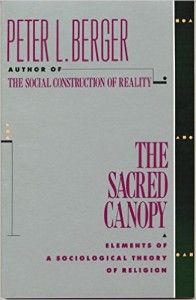 The secularization thesis was popular in the 60’s and 70’s when it seem inevitable that religion would soon wither away and vanish from the face of the world. By the 1990’s, one of its main proponents, Peter Berger, author of the still popular The Sacred Canopy took back all of the book’s secularizing conclusions in an essay featured in the pathbreaking collection The Desecularization of the World. An online interview on how Berger’s views have changed compresses his argument into just a few paragraphs:
Secularization theory is a term that was used in the fifties and sixties by a number of social scientists and historians. Basically, it had a very simple proposition. It could be stated in one sentence. Modernity inevitably produces a decline of religion. When I started out doing sociology of religion—like two hundred years ago—everyone else had the same idea. And I more or less assumed that it was correct. It wasn’t a completely crazy assumption; there were many reasons why people said that. But it took me about twenty years to come to the conclusion that the data doesn’t support this, and other people came to the same conclusion. I would say there are now some holdouts who I respect. I like people who say something else from what the majority has to say in the field. It shows character, but most people came to the same conclusion as I did. The world today is not heavily secularized, with two interesting exceptions that have to be explained. One is geographical, it’s Western and Central Europe, and the other is an international intellectual class that is heavily secularized. Why? This is something that can be studied. It has been studied, but I won’t go into this. The rest of the world is massively religious. In some areas of the world, more religious than ever. The theory is wrong. Now, to conclude that the theory is wrong is the beginning of a new process of thinking. I came to the conclusion some years ago that to replace secularization theory—to explain religion in the modern world—we need the theory of pluralism. Modernity does not necessarily produce secularity. It necessarily produces pluralism, by which I mean the coexistence in the same society of different worldviews and value systems.
That changes the status of religion. It’s a challenge for every religious tradition. But it’s not the challenge of secularity; it’s a different challenge. The problem with modernity is not that God is dead, as some people hoped and other people feared. There are too many gods, which is a challenge, but a different one. So this, in terms of my career as a sociologist of religion, has been my major change of mind. I think it’s very useful, and in intellectual history we’ve learned something from Thomas Kuhn, from his The Structure of Scientific Revolutions, that when one theoretical paradigm collapses under the weight of evidence, it opens up the possibility of new paradigms. And it’s very exciting. That’s what I and some other people have been much involved in in the last few years.
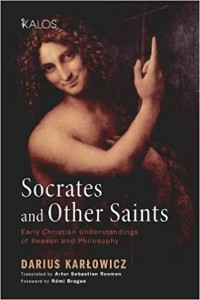 There are still some problems with the new theory, for example, the assertion that pluralism is a byproduct of the modern world, and that this is somehow a problem for traditional religion. My book translation, Socrates and Other Saints, demonstrates how the Ante-Nicene Fathers not only survived in the pluralistic world of Late Antiquity, but thrived, and marked all subsequent theology, by appropriating the thought of ancient Greek and Roman thinkers. This is also something that Robert Louis Wilken, another scholar of Late Antiquity, has written about, that is, the fact that religious pluralism is neither modern, nor radical.
If anything, homogenization of religious practices, is something that the early modern nation-state attempted to impose on its subjects–thereby making them easier to rule. Cavanaugh’s The Myth of Religious Violence and Bossy’s Christianity in the West 1400-1700 are both invaluable resources for understanding this very recent phenomenon.
All of these factors combined make me think that the head for the hills because of rampant secularization panic of books such as The Benedict Option is misplaced, because it puts too much faith in very outdated anti-religiously biased scholarship.
Now that we have laid down a little of the theory, here’s the Mark Zuckerberg news that flew mostly under the radar. Here it is as reported by the Washington Post . . .
Famous Atheists Who Weren't Atheists
Famous Atheists Who Weren't Atheists
Previous Post

March 14, 2017
2017: The Year Your Sperm Stopped Swimming and Started Drowning
Next Post
March 17, 2017 The Myth of Secularization
Browse Our Archives
Select a Category #WhyRemainCatholic Abortion Advent Anti-Catholicism Arts Atheism Beauty Benedict XVI Bible Book Review Catholic Cinema Comedy Cosmos: A Space-Time Odyssey Czesław Miłosz Dariusz Karłowicz Devil Easter Eastern Orthodoxy Economics Environment Family Famous Atheists Who Weren't Atheists Guest Post Hans Urs von Balthasar HHS Mandate History Imagination Interview Islam Jean-Luc Marion John Paul II Judaism Just War Lent Literature Little Sisters of the Poor Liturgy Martyrdom Music News Paganism Patristics Phenomenology Philosophy Pierre Hadot Poetry Poland Pop Culture Pope Francis Poverty Prayer Protestantism Rabelais Race Remi Brague Rene Girard Russia Sam Rocha Science & Religion SCOTUS Secularization Sexual Abuse Sexuality Silence Solidarity Stratford Caldecott Synod14 Terrorism Top 10 Uncategorized Walker Percy War Weakened Edition World War II World Youth Day WYD Krakow
Select a Month July 2017 June 2017 May 2017 April 2017 March 2017 February 2017 January 2017 December 2016 October 2016 September 2016 August 2016 July 2016 June 2016 May 2016 April 2016 March 2016 February 2016 January 2016 December 2015 November 2015 October 2015 September 2015 August 2015 July 2015 June 2015 May 2015 April 2015 March 2015 February 2015 January 2015 December 2014 November 2014 October 2014 September 2014 August 2014 July 2014 May 2014 April 2014 March 2014 February 2014 January 2014 December 2013 November 2013 October 2013 September 2013 August 2013 July 2013 June 2013 May 2013
Follow Us!
TAKE THE
Religious Wisdom Quiz
True or False: Rahab was a prostitute who helped the Israelite spies in Jericho.
Select your answer to see how you score.
TRUE FALSE
Related posts from Cosmos The In Lost

The Surprising Anti-Capitalist Logic Behind the Catholic Church's...

What is the Source of Our Culture of...


The Holy Family as an Icon of World...
TRENDING AT PATHEOS Catholic

Rejecting Doom: Christian Hope And Human Action
Christianity is a religion of hope. We are to have hope and...

It’s What Comes From Within Which Matters
One of the most difficult things for us to understand is why...

Why I Choose the Eucharist Over the Sermon
Choose the Eucharist, Not the Sermon What are we supposed to get...

5 Design Elements Found in Spiritually Rooted Homes
Putting Spirituality Into Home Decor Our homes are more than our living...

Credo: A Story of God Told with the...
About 10 years ago, I began to imagine a personal "Credo" that...

The Anatomy of Divine Revelation in Catholic Thought
The claim that God has made Himself known to human beings is...
view all Catholic blogs
Ad-Free & Subscriber Log-In Subscription Support
- About Us
- 2026 Calendar
- Videos
- Podcasts
- Library of World Religions
- Faith In Media Tracker
- Advertise With Us
- Write for Us
- Privacy Policy
- Terms of Service
- Do Not Sell My Data
- Contact Us
- Radiant Digital
- Manage Newsletter Subscriptions
- Unsubscribe From Notifications
- Sitemap
Copyright 2008-2026, Patheos. All rights reserved.
Subscription Support Ad-Free & Subscriber Log-In
Follow Patheos