
BuddhistCatholicContemplativeEvangelicalGeneral ChristianHinduJewishLatter-day SaintMuslimNew VisionsProgressive Christian
Beliefs
- Buddhist
- Catholic
- Contemplative
- Evangelical
- General Christian
- Hindu
- Jewish
- Latter-day Saint
- More Voices
- Muslim
- New Visions
- Pagan
- Progressive Christian
Topics
- Religion News
- Food and Religion
- Sports and Religion
- Religious Art
- Religious Music and Entertainment
- Religious Events
- History and Religion
- Style and Religion
- Politics and Religion
- Women in Religion
- Recreation Outdoors and Religion
- Business Finance and Religion
- Careers Workplace and Religion
- Education and Religion
- Family Parenting and Religion
- Health Fitness and Religion
- Home and Religion
- Relationships and Religion
- Technology and Religion
- Travel and Religion
Columnists
- Buddhist Columnists
- Business Finance and Religion Columnists
- Careers Workplace and Religion Columnists
- Catholic Columnists
- Contemplative Columnists
- Education and Religion Columnists
- Evangelists Columnists
- Family Parenting and Religion Columnists
- General Christian Columnists
- Health Fitness and Religion Columnists
- Hindu Columnists
- History and Religion Columnists
- Home and Religion Columnists
- Jewish Columnists
- More Voices Columnists
- Latter Day Columnists
- Muslim Columnists
- New Visions Columnists
- Nonreligious Columnists
- Pagan Columnists
- Politics and Religion Columnists
- Progressive Columnists
- Recreation Outdoors and Religion Columnists
- Relationships and Religion Columnists
- Religion News Columnists
- Religious Art Columnists
- Religious Events Columnists
- Religious Music and Entertainment Columnists
- Sports and Religion Columnists
- Style and Religion Columnists
- Technology and Religion Columnists
- Travel and Religion Columnists
- Women in Religion Columnists
Resource Library
- 2026 Calendar
- Library of World Religions
- The 100 Most Holy Places on Earth
- Patheos Answers
- Podcasts
- Videos
- Faith Leaders Database
- Anglican Episcopalian
- Bahai
- Baptist
- Buddhism
- Christianity
- Confucianism
- Eastern Orthodoxy
- Hinduism
- Holiness and Pentecostal
- ISKCON
- Islam
- Judaism
- Lutheran
- Methodist
- The Church of Jesus Christ of Latter-day Saints
- New Age
- Paganism
- Presbytarian and Reformed
- Protestantism
- Religion Behind the Scenes
- Roman Catholic
- Scientology
- Shia Islam
- Sikhism
- Sufism
- Sunni Islam
- Taoism
- Zen
- See all religions
Research Tools
 Ad-Free & Subscriber Log-In Subscription Support
Ad-Free & Subscriber Log-In Subscription Support
Follow Patheos 

- Trending:
- Forgiveness
- |
- Marriage
- |
- Consciousness
- |
- Death Penalty
- |
- Election
- |
- Halloween
 Cosmos The In Lost
- Home
- Catholic
- Is There a Way to Get Beyond Making the Best of a Bad Liturgy?
Is There a Way to Get Beyond Making the Best of a Bad Liturgy?
Last updated on: March 15, 2017 at 4:30 pm by Guest Contributor
Is There a Way to Get Beyond Making the Best of a Bad Liturgy? 2017-03-15T16:30:40-07:00 Guest Contributor
Patheos Explore the world's faith through different perspectives on religion and spirituality! Patheos has the views of the prevalent religions and spiritualities of the world.
The “Mass of All Ages” (itself a historical misnomer as any liturgical historian knows) can easily degenerate into the Mass of the aesthete, the Mass of those who grumble against the Pope, who see the Novus Ordo as spiritually vacuous.
 This latter attitude in particular is detrimental to the Church. The Novus Ordo, despite its sometimes-haphazard celebration, has generated spiritual vitality in the Church. On a personal note, it is the very celebration of the Mass that formed in the Eucharistic life of the Church, that convinced me to study theology, and that formed me to pray. It’s the Mass at my local parish (no matter where that might be) where I see the first fruits of the redemption of humanity, as men and women kneel in the presence of the living God. Anyone who calls it an abomination…well, cannot see.
That being said (and I had to say all of this before I make the following claim), not every dimension of the liturgical reforms of the Second Vatican Council was successful. Many of these reforms did depend upon a faulty epistemology, one that seemed to see ritual action as the communication of information from Church to the receiver participant. If the Mass were comprehensible, understandable, then it would end secularization, individualism, racism, and every modern malaise. That’s a lot for a Mass to do.
To me, the reformers of the Council did not adequately understand the aesthetic and contemplative dimensions of ritual activity in Catholicism. In reforming the liturgies, they did not attend, for example, to the importance of repetition in ritual prayer. They focused most of their attention upon texts, with little concern about music and architecture. They set up a chasm between public liturgy and personal piety. Today’s liturgy is the result of these biases.
 For me, the way forward is not a denial of the Second Vatican Council. But a fresh approach to Ressourcement. The Ressourcement of the 1960s liturgical reforms depended almost entirely upon the patristic era. Medieval Catholicism, in particular, was vilified. I get it. They hadn’t read Irenaeus, and Origen, and Nyssa, and Augustine. It was exciting stuff.
But medieval Catholicism was an authentic development of the patristic era. We didn’t look to this era for our renewal and thus avoided the liturgical creativity, aesthetics, festivity, and contemplation produced by this era.
We forgot, in the end, that the Mass is first and foremost a prayer. Not a way of passing on a culture from one generation to the next.
[NOTA BENE: If you have further questions, then post them in the comments. We’ll see if we can continue this conversation…]
Kevin L. Hughes is professor with a joint appointment to the Theology and Religious Studies and Humanities departments at Villanova University. He is the author of Constructing Antichrist and Church History: Faith Handed On, along with articles appearing in journals such as Modern Theology, Theological Studies, Franciscan Studies, and the Heythrop Journal. He lives in Media, PA with his wife Bridget, a ceramic artist, and their three daughters.
Timothy O’Malley is the director of the Notre Dame Center for Liturgy. He is the author of Liturgy and the New Evangelization: Practicing the Art of Self-Giving Love. He is presently working on a monograph entitled On Praise: Worship and the Eschatological Imagination. This book is a work of historical liturgical theology, unfolding the eschatological dimensions of Christian worship in Augustine, John Henry Newman, Joseph Ratzinger, Jean-Yves Lacoste, et al.
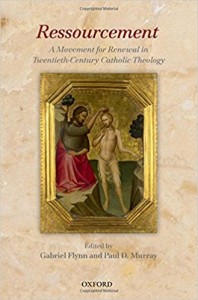
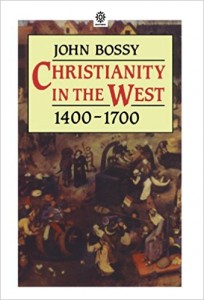
Suggested further reading: On Liturgical Asceticism by Fagerberg; The Spirit of the Liturgy by Guardini; Introduction to Liturgical Theology by Schmemann; The Spirit of the Liturgy by Ratzinger; Heresy of Formlessness by Mosebach; Church’s Liturgy by Kunzler; Ressourcement: A Movement for Renewal in Twentieth-Century Catholic Theology by various authors; Christianity in the West 1400-1700 by Bossy; Liturgy and the New Evangelization: Practicing the Art of Self-Giving Love by O’Malley.
Make sure you don’t miss the piece On a Middle Class Pilgrimage published previously on this blog by Kevin Hughes.
Please consider making a donation to this blog through the donation button on the upper right side of its homepage to help us with the rising costs of medical insurance. We’re barely making ends meet each month. It’s tough.
Stay in touch! Like Cosmos the in Lost on Facebook:
Next Post

March 14, 2017 2017: The Year Your Sperm Stopped Swimming and Started Drowning
Browse Our Archives
Select a Category #WhyRemainCatholic Abortion Advent Anti-Catholicism Arts Atheism Beauty Benedict XVI Bible Book Review Catholic Cinema Comedy Cosmos: A Space-Time Odyssey Czesław Miłosz Dariusz Karłowicz Devil Easter Eastern Orthodoxy Economics Environment Family Famous Atheists Who Weren't Atheists Guest Post Hans Urs von Balthasar HHS Mandate History Imagination Interview Islam Jean-Luc Marion John Paul II Judaism Just War Lent Literature Little Sisters of the Poor Liturgy Martyrdom Music News Paganism Patristics Phenomenology Philosophy Pierre Hadot Poetry Poland Pop Culture Pope Francis Poverty Prayer Protestantism Rabelais Race Remi Brague Rene Girard Russia Sam Rocha Science & Religion SCOTUS Secularization Sexual Abuse Sexuality Silence Solidarity Stratford Caldecott Synod14 Terrorism Top 10 Uncategorized Walker Percy War Weakened Edition World War II World Youth Day WYD Krakow
Select a Month July 2017 June 2017 May 2017 April 2017 March 2017 February 2017 January 2017 December 2016 October 2016 September 2016 August 2016 July 2016 June 2016 May 2016 April 2016 March 2016 February 2016 January 2016 December 2015 November 2015 October 2015 September 2015 August 2015 July 2015 June 2015 May 2015 April 2015 March 2015 February 2015 January 2015 December 2014 November 2014 October 2014 September 2014 August 2014 July 2014 May 2014 April 2014 March 2014 February 2014 January 2014 December 2013 November 2013 October 2013 September 2013 August 2013 July 2013 June 2013 May 2013
Follow Us!
TAKE THE
Religious Wisdom Quiz
What is the name for the Christian "day of rest and worship"?
Select your answer to see how you score.
Day of Prayer Sabbath Feast Seder
Related posts from Cosmos The In Lost

The Surprising Anti-Capitalist Logic Behind the Catholic Church's...

Where Does the Body of Christ Go After...

How is Classical Philosophy is Like War?

Why Does the World's Leading Philosopher Remain a...
TRENDING AT PATHEOS Catholic

Rejecting Doom: Christian Hope And Human Action
Christianity is a religion of hope. We are to have hope and...

It’s What Comes From Within Which Matters
One of the most difficult things for us to understand is why...

Why I Choose the Eucharist Over the Sermon
Choose the Eucharist, Not the Sermon What are we supposed to get...

5 Design Elements Found in Spiritually Rooted Homes
Putting Spirituality Into Home Decor Our homes are more than our living...

Credo: A Story of God Told with the...
About 10 years ago, I began to imagine a personal "Credo" that...

The Anatomy of Divine Revelation in Catholic Thought
The claim that God has made Himself known to human beings is...
view all Catholic blogs
Ad-Free & Subscriber Log-In Subscription Support
- About Us
- 2026 Calendar
- Videos
- Podcasts
- Library of World Religions
- Faith In Media Tracker
- Advertise With Us
- Write for Us
- Privacy Policy
- Terms of Service
- Do Not Sell My Data
- Contact Us
- Radiant Digital
- Manage Newsletter Subscriptions
- Unsubscribe From Notifications
- Sitemap
Copyright 2008-2026, Patheos. All rights reserved.
Subscription Support Ad-Free & Subscriber Log-In
Follow Patheos