
BuddhistCatholicContemplativeEvangelicalGeneral ChristianHinduJewishLatter-day SaintMuslimNew VisionsProgressive Christian
Beliefs
- Buddhist
- Catholic
- Contemplative
- Evangelical
- General Christian
- Hindu
- Jewish
- Latter-day Saint
- More Voices
- Muslim
- New Visions
- Pagan
- Progressive Christian
Topics
- Religion News
- Food and Religion
- Sports and Religion
- Religious Art
- Religious Music and Entertainment
- Religious Events
- History and Religion
- Style and Religion
- Politics and Religion
- Women in Religion
- Recreation Outdoors and Religion
- Business Finance and Religion
- Careers Workplace and Religion
- Education and Religion
- Family Parenting and Religion
- Health Fitness and Religion
- Home and Religion
- Relationships and Religion
- Technology and Religion
- Travel and Religion
Columnists
- Buddhist Columnists
- Business Finance and Religion Columnists
- Careers Workplace and Religion Columnists
- Catholic Columnists
- Contemplative Columnists
- Education and Religion Columnists
- Evangelists Columnists
- Family Parenting and Religion Columnists
- General Christian Columnists
- Health Fitness and Religion Columnists
- Hindu Columnists
- History and Religion Columnists
- Home and Religion Columnists
- Jewish Columnists
- More Voices Columnists
- Latter Day Columnists
- Muslim Columnists
- New Visions Columnists
- Nonreligious Columnists
- Pagan Columnists
- Politics and Religion Columnists
- Progressive Columnists
- Recreation Outdoors and Religion Columnists
- Relationships and Religion Columnists
- Religion News Columnists
- Religious Art Columnists
- Religious Events Columnists
- Religious Music and Entertainment Columnists
- Sports and Religion Columnists
- Style and Religion Columnists
- Technology and Religion Columnists
- Travel and Religion Columnists
- Women in Religion Columnists
Resource Library
- 2026 Calendar
- Library of World Religions
- The 100 Most Holy Places on Earth
- Patheos Answers
- Podcasts
- Videos
- Faith Leaders Database
- Anglican Episcopalian
- Bahai
- Baptist
- Buddhism
- Christianity
- Confucianism
- Eastern Orthodoxy
- Hinduism
- Holiness and Pentecostal
- ISKCON
- Islam
- Judaism
- Lutheran
- Methodist
- The Church of Jesus Christ of Latter-day Saints
- New Age
- Paganism
- Presbytarian and Reformed
- Protestantism
- Religion Behind the Scenes
- Roman Catholic
- Scientology
- Shia Islam
- Sikhism
- Sufism
- Sunni Islam
- Taoism
- Zen
- See all religions
Research Tools
 Ad-Free & Subscriber Log-In Subscription Support
Ad-Free & Subscriber Log-In Subscription Support
Follow Patheos 

- Trending:
- Forgiveness
- |
- Marriage
- |
- Consciousness
- |
- Death Penalty
- |
- Election
- |
- Halloween
 Cosmos The In Lost
- Home
- Catholic
- True Lent Humility Starts with the Realization That You’re Divine
True Lent Humility Starts with the Realization That You’re Divine
Last updated on: March 6, 2017 at 4:57 pm by Artur Rosman
True Lent Humility Starts with the Realization That You’re Divine 2017-03-06T16:57:55-07:00 Artur Rosman
Patheos Explore the world's faith through different perspectives on religion and spirituality! Patheos has the views of the prevalent religions and spiritualities of the world.
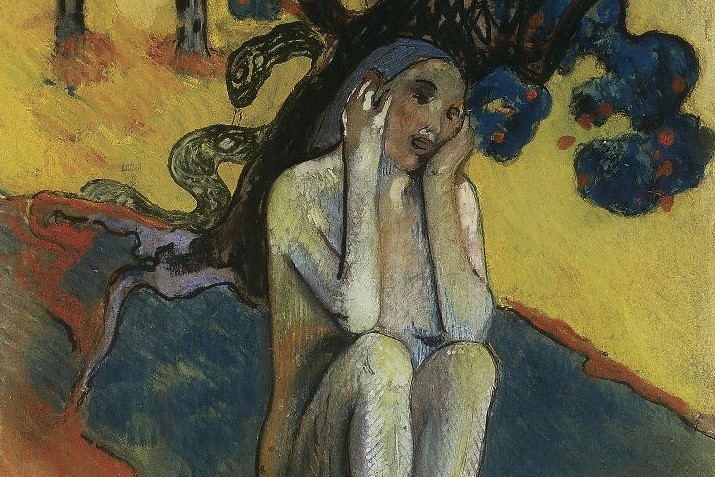
SURPRISE! (Paul Gaugin [detail, reversed], Breton Eve, 1889; Wiki Commons, PD-Old-100)
The first Sunday before Lent has an exotic name “Quinquagesima Sunday,” which only means it’s fifty days before Easter. As far as I know, correct me if I’m wrong, the first Sunday of Lent does not have a special name other than, maybe, “Quadragesima Sunday.”
This is strange, since all the readings on the first Sunday of Lent hone in on the mystery of Original Sin. The Gospel reading takes the dramatic crown by recounting Christ’s temptation in the desert (breathlessly retold in one of the most famous modern literary episodes in The Brothers Karamazov–something I’d like to return to later).
So, I’m surprised, and a little bit disappointed, that my crack research doesn’t indicate that the first Sunday of Lent is officially called “Original Sin Sunday.”
Can I claim copyright on that?
 I’ll concentrate upon the first reading from Genesis, which later became the backbone for the doctrine of Original Sin thanks to the prisms of St. Paul, the early Christians, Augustine, and pretty much the rest of the Western theological tradition after him. Just because the original authors, nor the Jewish theological tradition that emerged from them, doesn’t mean that it’s not there. It is a legitimate theological example of the Jews of the New Testament doing what Richard B. Hayes calls reading backwards, in order to see insights that weren’t originally apparent in the divine text. Or, to put it in the words of The Four Quartets:
We had the experience but missed the meaning.
And approach to the meaning restores the experience
In a different form.
I should add that even though Eastern Orthodoxies (there is no one single uniform “Eastern Orthodoxy”) don’t necessarily articulate Original Sin, that doesn’t mean, as argued by John Panteleimon Manousskis, that it doesn’t exist implicitly in the Eastern tradition(s).
The text from Genesis that was read on Original Sin Sunday is generally read as demonstrating the sin of pride, the original sin:
But the serpent said to the woman:
“You certainly will not die!
No, God knows well that the moment you eat of it
your eyes will be opened and you will be like gods
who know what is good and what is evil.”
The woman saw that the tree was good for food,
pleasing to the eyes, and desirable for gaining wisdom.
So she took some of its fruit and ate it;
and she also gave some to her husband, who was with her,
and he ate it . . .
The standard interpretation, at least in the Western Protestant world, would have us believe that the pride consists in grasping for divinity. On this reading humanity loses God by wanting to become gods.
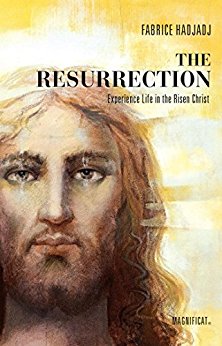 The French Catholic philosopher Fabrice Hadjadj, who is something like the second coming of Walker Percy, starts from this standard interpretation and quickly demolishes it in his The Resurrection: Experience Life in the Risen Christ. I make this comparison, because the self-help book sound of his book title, and his tongue-in-cheek approach using paradoxical examples culled from life in the ordinary, remind me of Percy’s Lost in the Cosmos: The Last Self-Help Book. Furthermore, I think the following makes Hadjadj’sThe Resurrection perfect Lent reading, but you be the judge:
We would think that the worst possible thing would be “to make oneself out to be God,” whereas one psalm declares: You are gods, sons of the Most High, all of you (Ps 82:6). The danger is not to make oneself to be God, but to consider this name without the biblical key for understanding.
The following is the linchpin:
For is we take this name [you’re gods] according to the interpretation it gives, the real tragedy is instead that we do not make ourselves out sufficiently to be gods or messiahs, that is, sons of the Most High.
The statement above from Hadjadj seems to intentionally take a statement frequently attributed Leon Bloy–author of the influential fauvist novel The Woman Who Was Poor, and a major influence upon Hadjadj himself–up one notch . . .
Browse Our Archives
Select a Category #WhyRemainCatholic Abortion Advent Anti-Catholicism Arts Atheism Beauty Benedict XVI Bible Book Review Catholic Cinema Comedy Cosmos: A Space-Time Odyssey Czesław Miłosz Dariusz Karłowicz Devil Easter Eastern Orthodoxy Economics Environment Family Famous Atheists Who Weren't Atheists Guest Post Hans Urs von Balthasar HHS Mandate History Imagination Interview Islam Jean-Luc Marion John Paul II Judaism Just War Lent Literature Little Sisters of the Poor Liturgy Martyrdom Music News Paganism Patristics Phenomenology Philosophy Pierre Hadot Poetry Poland Pop Culture Pope Francis Poverty Prayer Protestantism Rabelais Race Remi Brague Rene Girard Russia Sam Rocha Science & Religion SCOTUS Secularization Sexual Abuse Sexuality Silence Solidarity Stratford Caldecott Synod14 Terrorism Top 10 Uncategorized Walker Percy War Weakened Edition World War II World Youth Day WYD Krakow
Select a Month July 2017 June 2017 May 2017 April 2017 March 2017 February 2017 January 2017 December 2016 October 2016 September 2016 August 2016 July 2016 June 2016 May 2016 April 2016 March 2016 February 2016 January 2016 December 2015 November 2015 October 2015 September 2015 August 2015 July 2015 June 2015 May 2015 April 2015 March 2015 February 2015 January 2015 December 2014 November 2014 October 2014 September 2014 August 2014 July 2014 May 2014 April 2014 March 2014 February 2014 January 2014 December 2013 November 2013 October 2013 September 2013 August 2013 July 2013 June 2013 May 2013
Follow Us!
TAKE THE
Religious Wisdom Quiz
Where was Jesus Born?
Select your answer to see how you score.
Bethlehem Shiloh Jerusalem Nazareth
Related posts from Cosmos The In Lost

The Surprising Anti-Capitalist Logic Behind the Catholic Church's...

How is Classical Philosophy is Like War?

Why Does the World's Leading Philosopher Remain a...

It's a Good Friday to Leave Calypso's Island
TRENDING AT PATHEOS Catholic

Creation, Preservation, and Teleology in Catholic Theology
As I write this, it is very early Monday morning. Like millions...

The Parable Of The Sower And The Word...
One of Christ’s most famous parables is that of the sower who...

Rejecting Doom: Christian Hope And Human Action
Christianity is a religion of hope. We are to have hope and...

Why I Choose the Eucharist Over the Sermon
Choose the Eucharist, Not the Sermon What are we supposed to get...

5 Design Elements Found in Spiritually Rooted Homes
Putting Spirituality Into Home Decor Our homes are more than our living...

Credo: A Story of God Told with the...
About 10 years ago, I began to imagine a personal "Credo" that...
view all Catholic blogs
Ad-Free & Subscriber Log-In Subscription Support
- About Us
- 2026 Calendar
- Videos
- Podcasts
- Library of World Religions
- Faith In Media Tracker
- Advertise With Us
- Write for Us
- Privacy Policy
- Terms of Service
- Do Not Sell My Data
- Contact Us
- Radiant Digital
- Manage Newsletter Subscriptions
- Unsubscribe From Notifications
- Sitemap
Copyright 2008-2026, Patheos. All rights reserved.
Subscription Support Ad-Free & Subscriber Log-In
Follow Patheos