
BuddhistCatholicContemplativeEvangelicalGeneral ChristianHinduJewishLatter-day SaintMuslimNew VisionsProgressive Christian
Beliefs
- Buddhist
- Catholic
- Contemplative
- Evangelical
- General Christian
- Hindu
- Jewish
- Latter-day Saint
- More Voices
- Muslim
- New Visions
- Pagan
- Progressive Christian
Topics
- Religion News
- Food and Religion
- Sports and Religion
- Religious Art
- Religious Music and Entertainment
- Religious Events
- History and Religion
- Style and Religion
- Politics and Religion
- Women in Religion
- Recreation Outdoors and Religion
- Business Finance and Religion
- Careers Workplace and Religion
- Education and Religion
- Family Parenting and Religion
- Health Fitness and Religion
- Home and Religion
- Relationships and Religion
- Technology and Religion
- Travel and Religion
Columnists
- Buddhist Columnists
- Business Finance and Religion Columnists
- Careers Workplace and Religion Columnists
- Catholic Columnists
- Contemplative Columnists
- Education and Religion Columnists
- Evangelists Columnists
- Family Parenting and Religion Columnists
- General Christian Columnists
- Health Fitness and Religion Columnists
- Hindu Columnists
- History and Religion Columnists
- Home and Religion Columnists
- Jewish Columnists
- More Voices Columnists
- Latter Day Columnists
- Muslim Columnists
- New Visions Columnists
- Nonreligious Columnists
- Pagan Columnists
- Politics and Religion Columnists
- Progressive Columnists
- Recreation Outdoors and Religion Columnists
- Relationships and Religion Columnists
- Religion News Columnists
- Religious Art Columnists
- Religious Events Columnists
- Religious Music and Entertainment Columnists
- Sports and Religion Columnists
- Style and Religion Columnists
- Technology and Religion Columnists
- Travel and Religion Columnists
- Women in Religion Columnists
Resource Library
- 2026 Calendar
- Library of World Religions
- The 100 Most Holy Places on Earth
- Patheos Answers
- Podcasts
- Videos
- Faith Leaders Database
- Anglican Episcopalian
- Bahai
- Baptist
- Buddhism
- Christianity
- Confucianism
- Eastern Orthodoxy
- Hinduism
- Holiness and Pentecostal
- ISKCON
- Islam
- Judaism
- Lutheran
- Methodist
- The Church of Jesus Christ of Latter-day Saints
- New Age
- Paganism
- Presbytarian and Reformed
- Protestantism
- Religion Behind the Scenes
- Roman Catholic
- Scientology
- Shia Islam
- Sikhism
- Sufism
- Sunni Islam
- Taoism
- Zen
- See all religions
Research Tools
 Ad-Free & Subscriber Log-In Subscription Support
Follow Patheos 

- Trending:
- Advent
- |
- Forgiveness
- |
- Thanksgiving
- |
- Election
- |
- Seasonal Holidays
- |
- Marriage
 Cosmos The In Lost
- Home
- Catholic
- The Orthodox Believer’s Tale of Jesus’s Wife
The Orthodox Believer’s Tale of Jesus’s Wife
Last updated on: June 17, 2016 at 12:09 pm by Artur Rosman
The Orthodox Believer’s Tale of Jesus’s Wife 2016-06-17T12:09:47-07:00 Artur Rosman
Patheos Explore the world's faith through different perspectives on religion and spirituality! Patheos has the views of the prevalent religions and spiritualities of the world.
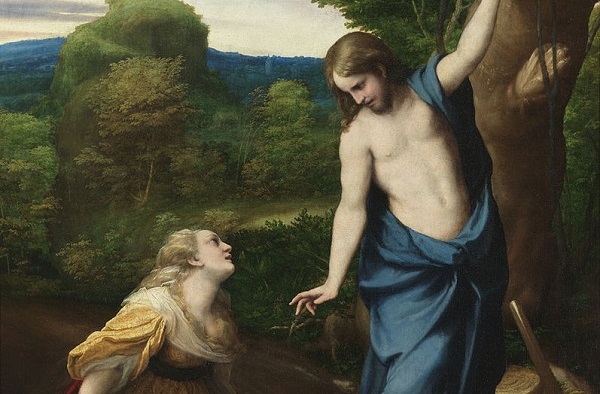
Like husband and wife? (Correggio, Noli Me Tangere, 1525; Wikimedia, PD-Old-100).
Was Jesus married?
Shocking news pieces attempting to debunk the orthodox version of the life of Jesus are an annual festival, but The Atlantic’s piece “The Unbelievable Tale of Jesus’s Wife” turns the tables on the demythologizers. It is no doubt the most riveting piece of investigative reporting I’ve read in the recent past. The Atlantic’s blurb doesn’t do justice to the essay’s psychological depth, it’s spellbinding tale of confirmation bias:
Where did that papyrus that mentions Jesus’s wife come from? And is it a credible source? We investigate in our latest issue.
Oh, there’s more, so much more! Here’s how it starts:
On a humid afternoon this past November, I pulled off Interstate 75 into a stretch of Florida pine forest tangled with runaway vines. My GPS was homing in on the house of a man I thought might hold the master key to one of the strangest scholarly mysteries in recent decades: a 1,300-year-old scrap of papyrus that bore the phrase “Jesus said to them, My wife.” The fragment, written in the ancient language of Coptic, had set off shock waves when an eminent Harvard historian of early Christianity, Karen L. King, presented it in September 2012 at a conference in Rome.
Never before had an ancient manuscript alluded to Jesus’s being married. The papyrus’s lines were incomplete, but they seemed to describe a dialogue between Jesus and the apostles over whether his “wife”—possibly Mary Magdalene—was “worthy” of discipleship. Its main point, King argued, was that “women who are wives and mothers can be Jesus’s disciples.” She thought the passage likely figured into ancient debates over whether “marriage or celibacy [was] the ideal mode of Christian life” and, ultimately, whether a person could be both sexual and holy . . .
But then the story of how celebrated Harvard scholar Karen King, author of books such as The Gospel of Mary of Magdala, was duped really gets thick. It involves East Germany, BMW brakes, porno films, antiquities scholarship, and an academic fitting the evidence to her prejudices. Really, it’s a story worthy of Werner Herzog. I’m not giving away too much when I say that the papyrus is clearly a fake and proves nothing about Jesus’s marital status.
The Catholic Church puts an enormous amount of emphasis upon marriage. Isn’t this odd for a tradition that was founded upon the teachings of a celibate Messiah? What could celibates know about marriage and sexuality?
Most Catholics have probably heard a millions versions of these questions from people with smug looks on their faces. It is the sort of look that says “I’ve caught the simpletons in a massive contradiction. Let’s watch them squirm.”
My preliminary surveys indicate some, not all, Catholics might be surprised that the perfectly orthodox (small “O”) answer to this question is that there’s nothing odd about the Catholic obsession with marriage, because Jesus is married as well. No, I’m not talking about Swedenborg’s The Delights Of Wisdom Pertaining To Conjugial Love where people get married in heaven. This is different and decidedly not heterodox.
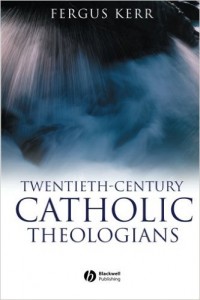 If anything, the emphasis upon the fundamental importance married state and the nuptial metaphor has increased in Catholic theology over the past 100 years. Prominent 20th century theologians almost unanimously picked up on this favorite medieval, patristic, and biblical theme in opposition to the poetic dryness of early modern Neo-Scholasticism. Fergus Kerr charts this epochal shift in his Twentieth-Century Catholic Theologians. Its subtitle, From Neoscholasticism to Nuptial Mysticism, highlights it.
I should stop teasing you the reader and get to the heart of the matter. Addison Hodges Hart’s little study, The Woman, the Hour, and the Garden: A Study of Imagery in the Gospel of John, quickly resolves the apparent contradiction of the heavy emphasis upon marriage in a religion founded by a celibate Messiah. He does so on the book’s first page:
This short book was born partly out of a reaction to the canard that Jesus was married to Mary Magdalene. It is an assertion we have heard repeated in recent decades, and at the time of this writing it is yet again in the news, and doubtless it will crop up again. I have no interest in addressing the topic directly, however. I bring it up only to confess what moved me to write this brief study in the first place, and to say that the idea that Jesus was (or, rather, is ) “wed” is a metaphor as old as Christianity itself. Where the sensationalists who claim that Jesus was a married man make their primary mistake is to misread early Christian metaphors as being historically suggestive of some long- buried facts, usually purported to be long buried by a conniving, conspiratorial church hierarchy. What it shows is that literalism is not merely a fault of believers; it can also be detected among those who regard belief as naïve. The latter can be as deaf and blind to metaphor and symbol as any literalist believer.
As we have seen with Jeremiah, marriage is a metaphor as old, if not older than Israel. Jeremiah’s extension of it is very problematic, but that doesn’t change the metaphor’s centrality.
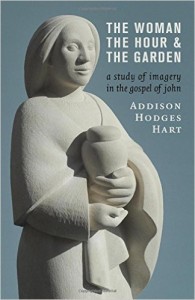 The fact that unbelievers frequently misread this crucial metaphor is not surprising. What’s surprising is how few believers are aware of their own heritage and how it permits them to turn the tables on their critics. The state of things is such, The Woman, the Hour, and the Garden suggests, because of the way the Church is organized much differently today than it was in Early Christianity:
We should assume that John’s church was, in fact, a community of mystical participation, not merely a “church” as we usually think of it today — no pews, vestments, administrative headquarters, and so on. A community of disciples, united under the spiritual oversight of wise elders (think rabbis, or even “gurus”), with a liturgy rich in mystical symbolism, would not have been unusual for a religious association in that age. Mystical practices were likely part of his church’s life. (Both contemporary Jewish and Greek mysticism influenced early Christianity.) The language of “rebirth” and “eternal life” would have meant more than simple doctrinal assent. It was something that the community experienced in their shared life, and that life would have been rigorous in its moral guidelines, commitment, and forms of worship. A “loose” community in matters of faith and practice could not have endured for long.
The Woman, the Hour, and the Garden: A Study of Imagery in the Gospel of John is the next best thing to instruction by such an elder. Hart is a sure guide who takes you through the thickets of the New Testament’s use of bridal, garden, and temporal metaphors. The book reads a bit like a great crime or mystery novel.
When the context is totally fleshed out the scales fall from your eyes. You are then emboldened to go back into the New Testament with new eyes and make sense of previously confusing episodes–including the ones that feature Mary Magdalene as their chief protagonist. It’s also just damn good reading.
I couldn’t recommend The Woman, the Hour, and the Garden more enthusiastically, especially to those who have read The Atlantic piece. Familiarize yourself with the orthodox believer’s tale of Jesus’s wife, because you are part of it.
https://www.youtube.com/watch?v=9VCX-pcDz-o
By the way, did you know that Jesus Didn’t Call God Daddy, or that Difference, Disharmony, and Drama Are the Essence of Marriage? Or, did you ever wonder . . Does Catholic Monasticism Have a Sexual Orientation?
Please consider making a donation to this blog through the donation button on the upper right side of its homepage.
Stay in touch! Like Cosmos the in Lost on Facebook:
The Unbelievable Tale of Jesus’s Wife
Previous Post

June 16, 2016
Sources Close to Orlando Shooter Confirm Omar Mateen Was Gay

Browse Our Archives
Select a Category #WhyRemainCatholic Abortion Advent Anti-Catholicism Arts Atheism Beauty Benedict XVI Bible Book Review Catholic Cinema Comedy Cosmos: A Space-Time Odyssey Czesław Miłosz Dariusz Karłowicz Devil Easter Eastern Orthodoxy Economics Environment Family Famous Atheists Who Weren't Atheists Guest Post Hans Urs von Balthasar HHS Mandate History Imagination Interview Islam Jean-Luc Marion John Paul II Judaism Just War Lent Literature Little Sisters of the Poor Liturgy Martyrdom Music News Paganism Patristics Phenomenology Philosophy Pierre Hadot Poetry Poland Pop Culture Pope Francis Poverty Prayer Protestantism Rabelais Race Remi Brague Rene Girard Russia Sam Rocha Science & Religion SCOTUS Secularization Sexual Abuse Sexuality Silence Solidarity Stratford Caldecott Synod14 Terrorism Top 10 Uncategorized Walker Percy War Weakened Edition World War II World Youth Day WYD Krakow
Select a Month July 2017 June 2017 May 2017 April 2017 March 2017 February 2017 January 2017 December 2016 October 2016 September 2016 August 2016 July 2016 June 2016 May 2016 April 2016 March 2016 February 2016 January 2016 December 2015 November 2015 October 2015 September 2015 August 2015 July 2015 June 2015 May 2015 April 2015 March 2015 February 2015 January 2015 December 2014 November 2014 October 2014 September 2014 August 2014 July 2014 May 2014 April 2014 March 2014 February 2014 January 2014 December 2013 November 2013 October 2013 September 2013 August 2013 July 2013 June 2013 May 2013
Follow Us!
TAKE THE
Religious Wisdom Quiz
Who cried at the tomb of Lazarus?
Select your answer to see how you score.
Jesus Peter John David
Related posts from Cosmos The In Lost
The Surprising Anti-Capitalist Logic Behind the Catholic Church's...
The Holy Family as an Icon of World...
Biblical Authority After Babel Cannot Be Built Upon...
Western Civ Doesn't Need Tenured Radicals to Ruin...
TRENDING AT PATHEOS Catholic

How Discretion Guides Us Away From Extremes
Prudence is an important virtue for all of us. While we should...

Bad Survey Questions Distort Eucharistic Theology
It seems to be the newest thing: someone conducts a bad survey...

If Baptism Washes Away Sin, Why Do Catholics...
The seven sacraments stand as the foundation of Catholic ecclesial life. The...

The Power of Setting a Good Example
Remember last August when the Chicago White Sox hosted a "Pope Hat...

A Catholic Critique of Biblical Unitarianism
If the statistics are to be believed, Unitarianism is rising worldwide. Although...

How Grandma Tourism Helps Grandparents Live Their Vocation
Grandma, The New Travel Influencer What started as a nostalgia-inspired social media...
view all Catholic blogs
Ad-Free & Subscriber Log-In Subscription Support
- About Us
- 2026 Calendar
- Videos
- Podcasts
- Library of World Religions
- Faith In Media Tracker
- Advertise With Us
- Write for Us
- Privacy Policy
- Terms of Service
- Do Not Sell My Data
- Contact Us
- Radiant Digital
- Manage Newsletter Subscriptions
- Unsubscribe From Notifications
- Sitemap
Copyright 2008-2026, Patheos, part of the Radiant Digital network of media brands. All rights reserved.
Subscription Support Ad-Free & Subscriber Log-In
Follow Patheos