
BuddhistCatholicContemplativeEvangelicalGeneral ChristianHinduJewishLatter-day SaintMuslimNew VisionsProgressive Christian
Beliefs
- Buddhist
- Catholic
- Contemplative
- Evangelical
- General Christian
- Hindu
- Jewish
- Latter-day Saint
- More Voices
- Muslim
- New Visions
- Pagan
- Progressive Christian
Topics
- Religion News
- Food and Religion
- Sports and Religion
- Religious Art
- Religious Music and Entertainment
- Religious Events
- History and Religion
- Style and Religion
- Politics and Religion
- Women in Religion
- Recreation Outdoors and Religion
- Business Finance and Religion
- Careers Workplace and Religion
- Education and Religion
- Family Parenting and Religion
- Health Fitness and Religion
- Home and Religion
- Relationships and Religion
- Technology and Religion
- Travel and Religion
Columnists
- Buddhist Columnists
- Business Finance and Religion Columnists
- Careers Workplace and Religion Columnists
- Catholic Columnists
- Contemplative Columnists
- Education and Religion Columnists
- Evangelists Columnists
- Family Parenting and Religion Columnists
- General Christian Columnists
- Health Fitness and Religion Columnists
- Hindu Columnists
- History and Religion Columnists
- Home and Religion Columnists
- Jewish Columnists
- More Voices Columnists
- Latter Day Columnists
- Muslim Columnists
- New Visions Columnists
- Nonreligious Columnists
- Pagan Columnists
- Politics and Religion Columnists
- Progressive Columnists
- Recreation Outdoors and Religion Columnists
- Relationships and Religion Columnists
- Religion News Columnists
- Religious Art Columnists
- Religious Events Columnists
- Religious Music and Entertainment Columnists
- Sports and Religion Columnists
- Style and Religion Columnists
- Technology and Religion Columnists
- Travel and Religion Columnists
- Women in Religion Columnists
Resource Library
- 2026 Calendar
- Library of World Religions
- The 100 Most Holy Places on Earth
- Patheos Answers
- Podcasts
- Videos
- Faith Leaders Database
- Anglican Episcopalian
- Bahai
- Baptist
- Buddhism
- Christianity
- Confucianism
- Eastern Orthodoxy
- Hinduism
- Holiness and Pentecostal
- ISKCON
- Islam
- Judaism
- Lutheran
- Methodist
- The Church of Jesus Christ of Latter-day Saints
- New Age
- Paganism
- Presbytarian and Reformed
- Protestantism
- Religion Behind the Scenes
- Roman Catholic
- Scientology
- Shia Islam
- Sikhism
- Sufism
- Sunni Islam
- Taoism
- Zen
- See all religions
Research Tools
 Ad-Free & Subscriber Log-In Subscription Support
Ad-Free & Subscriber Log-In Subscription Support
Follow Patheos 

- Trending:
- Forgiveness
- |
- Marriage
- |
- Consciousness
- |
- Death Penalty
- |
- Election
- |
- Halloween
 Cosmos The In Lost
- Home
- Catholic
- Big Win for Little Sisters is a Huge Loss for Catholicism
Big Win for Little Sisters is a Huge Loss for Catholicism
Last updated on: May 24, 2016 at 9:31 pm by Artur Rosman
Big Win for Little Sisters is a Huge Loss for Catholicism 2016-05-24T21:31:30-07:00 Artur Rosman
Patheos Explore the world's faith through different perspectives on religion and spirituality! Patheos has the views of the prevalent religions and spiritualities of the world.
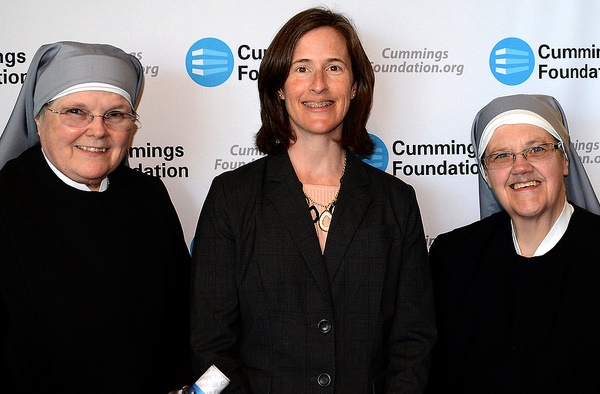
Who’s going to have the last laugh? (Author: Cummings Properties; Title: Little Sisters of the Poor of Greater Boston; Source: Flickr, CC by 2.0).
Is religious freedom really free? The big Supreme Court religious freedom win for the Little Sisters of the Poor might be a Pyrrhic victory.
As I’ve explained in American Idol: Religious Freedom, religious freedom is the problem itself. Before we get to that here’s the WSJ’s rundown, “Big Win for Little Sisters,” of what went down with the SCOTUS:
First the good news: Though it was more a TKO than a straight-up ruling, the Little Sisters of the Poor prevailed at the Supreme Court on Monday in their fight against the ObamaCare contraceptive mandate.
True, the justices made clear that they were not ruling on the merits, which is why so many headlines speak of the court’s having “punted” on the case. Even so, in a unanimous decision they made the path forward much easier for the sisters and much more difficult for the Obama administration.
To begin with, the justices vacated the lower-court rulings the sisters were fighting. The parties, the court said, should have another opportunity to work out a way to deliver contraceptives that doesn’t violate the religious objections of the Little Sisters and their co-plaintiffs.
Most important, the Supreme Court took away the administration’s tool for bullying: The government, it said, “may not impose taxes or penalties” on those who refuse to authorize their plans to provide the contested coverage.
This is the standard line for conservative defenders of religious freedom; and it is well and good.
However, things get a little bit more complicated, without the author noticing all the intricacies, in the following paragraph:
The bad news is the larger picture. For the main threat to religious liberty these days isn’t the Obama administration or even this noxious mandate. It’s an aggressive federal government intruding into areas of life previously left unmolested, coupled with an increasingly larger proportion of Americans who have no idea what religious liberty is and why we have it.
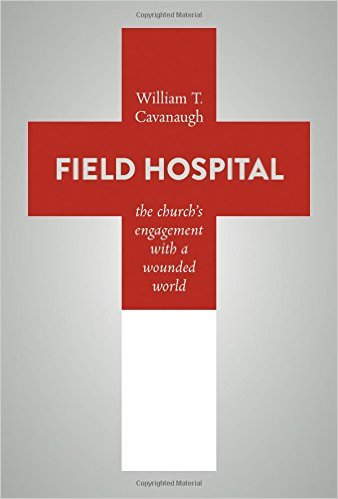 The anti-government line might be pragmatically useful, but the Little Sisters also take the standard Catholic line of protecting life in the womb. After all, combating abortion will take a lot of government intervention if the pro-life side ever gets the upper hand.
Strategically negotiating the American political scene, playing American habits against so as to have freedom for getting important things accomplished, is not even the biggest problem.
William T. Cavanaugh’s timely recent publication Field Hospital: The Church’s Engagement with a Wounded World argues that the concept of “religion” (and not only as it is used in various “religious freedom” court cases) is the real problem:
On the face of it, the question I’m raising seems ridiculous. Of course Christianity is a religion. A deeper look at the recent government arguments about the free exercise of religion, however, makes clear that what does and what does not count as religion is at the heart of the matter. The HHS mandate has been framed by its protagonists not as a restriction of religious liberty but is a clarification about what counts as religion and what does not. Churches, synagogues, mosques, etc., are entitled as always to exemption from having to provide insurance coverage for services that violate their principles, based on the concept of free exercise of religion. But schools, hospitals, charities, and other agencies that are affiliated with such congregations have been redefined as not essentially religious, and therefore not exempt from the mandates under the principle of religious freedom, because they do not “serve primarily persons who share their religious tenets,” according to the HHS . . . The government’s position makes a distinction between church agencies that serve a religious function and those that serve a social function. The implication is that ‘religion’ is not something that is essentially social.
Redefining Catholicism as a “religion,” even if it results small short-term gains in the courts, might potentially lead to a huge disaster in the long run:
Religion is defined in liberal society as a matter of beliefs about the otherworldly and only indirectly applies to the social and political. In Thomas Jefferson’s words, belief in one God or twenty neither picks my pocket nor breaks my legs; in other words, religion has no immediate social effect. The very modern Western concept of religion was born out of the desire to identify religion as precisely that which has to do with otherworldly concerns and not with the application of public power in “secular” matters such as politics and economics . . . To resist the confinement of Christianity to concern with the otherworldly, we need a robust defense of the idea that our God is the God of all creation, and that the gospel is concerned with caring for the flourishing of the whole human person, body and soul. We need more than an appeal to freedom of belief and freedom of conscience; we need to question the modern terms under which Christianity is consigned to one side of the religious/secular dichotomy that has been constructed in liberal society. We need to ask, as Robert Shedinger puts it, “whether the concern so often expressed over the politicization of Islam in the contemporary world ought to be replaced by concern with the ‘religionization’ of Christianity.”
If you think this scenario is unlikely and such remedies too apocalyptic for nice decent Americans like us . . . then Field Hospital goes into great detail of how one the first uses of “religious freedom” by the Pueblo Indians went. They won their religious freedom battle, but, in a big way, lost the war to maintain their identity as a public tradition, which, like Catholicism, incorporates (well, incorporated) both the “religious” and the “secular.”
No biggie. What looks like semantic nitpicking from Cavanaugh is only about the soul of Catholicism.
The war is about preventing American Catholicism from turning into a country club with congregating on Sunday and committee meetings. Oh wait…
==============================
The thoughts in this here post are extended in Freedom of Religion Isn’t Free
Small book, big punch.
See also: TOP10 Books to Build Upon Trinity Sunday
Stay in touch! Like Cosmos the in Lost on Facebook:
Please consider making a donation to this blog through the donation button on the upper right side of its homepage.
Previous Post

May 16, 2016
Uber Atheist Nietzsche Liked his Christianity STRONG!
Next Post
May 20, 2016 This is How Corrupt Our Political System Is
Browse Our Archives
Select a Category #WhyRemainCatholic Abortion Advent Anti-Catholicism Arts Atheism Beauty Benedict XVI Bible Book Review Catholic Cinema Comedy Cosmos: A Space-Time Odyssey Czesław Miłosz Dariusz Karłowicz Devil Easter Eastern Orthodoxy Economics Environment Family Famous Atheists Who Weren't Atheists Guest Post Hans Urs von Balthasar HHS Mandate History Imagination Interview Islam Jean-Luc Marion John Paul II Judaism Just War Lent Literature Little Sisters of the Poor Liturgy Martyrdom Music News Paganism Patristics Phenomenology Philosophy Pierre Hadot Poetry Poland Pop Culture Pope Francis Poverty Prayer Protestantism Rabelais Race Remi Brague Rene Girard Russia Sam Rocha Science & Religion SCOTUS Secularization Sexual Abuse Sexuality Silence Solidarity Stratford Caldecott Synod14 Terrorism Top 10 Uncategorized Walker Percy War Weakened Edition World War II World Youth Day WYD Krakow
Select a Month July 2017 June 2017 May 2017 April 2017 March 2017 February 2017 January 2017 December 2016 October 2016 September 2016 August 2016 July 2016 June 2016 May 2016 April 2016 March 2016 February 2016 January 2016 December 2015 November 2015 October 2015 September 2015 August 2015 July 2015 June 2015 May 2015 April 2015 March 2015 February 2015 January 2015 December 2014 November 2014 October 2014 September 2014 August 2014 July 2014 May 2014 April 2014 March 2014 February 2014 January 2014 December 2013 November 2013 October 2013 September 2013 August 2013 July 2013 June 2013 May 2013
Follow Us!
TAKE THE
Religious Wisdom Quiz
Who was Elijah's successor, receiving a double portion of his spirit?
Select your answer to see how you score.
Micaiah Obadiah Elisha Samuel
Related posts from Cosmos The In Lost

The Surprising Anti-Capitalist Logic Behind the Catholic Church's...

What is the Source of Our Culture of...


The Holy Family as an Icon of World...
TRENDING AT PATHEOS Catholic

Creation, Preservation, and Teleology in Catholic Theology
As I write this, it is very early Monday morning. Like millions...

The Parable Of The Sower And The Word...
One of Christ’s most famous parables is that of the sower who...

Rejecting Doom: Christian Hope And Human Action
Christianity is a religion of hope. We are to have hope and...

Why I Choose the Eucharist Over the Sermon
Choose the Eucharist, Not the Sermon What are we supposed to get...

5 Design Elements Found in Spiritually Rooted Homes
Putting Spirituality Into Home Decor Our homes are more than our living...

Credo: A Story of God Told with the...
About 10 years ago, I began to imagine a personal "Credo" that...
view all Catholic blogs
Ad-Free & Subscriber Log-In Subscription Support
- About Us
- 2026 Calendar
- Videos
- Podcasts
- Library of World Religions
- Faith In Media Tracker
- Advertise With Us
- Write for Us
- Privacy Policy
- Terms of Service
- Do Not Sell My Data
- Contact Us
- Radiant Digital
- Manage Newsletter Subscriptions
- Unsubscribe From Notifications
- Sitemap
Copyright 2008-2026, Patheos. All rights reserved.
Subscription Support Ad-Free & Subscriber Log-In
Follow Patheos