
BuddhistCatholicContemplativeEvangelicalGeneral ChristianHinduJewishLatter-day SaintMuslimNew VisionsProgressive Christian
Beliefs
- Buddhist
- Catholic
- Contemplative
- Evangelical
- General Christian
- Hindu
- Jewish
- Latter-day Saint
- More Voices
- Muslim
- New Visions
- Pagan
- Progressive Christian
Topics
- Religion News
- Food and Religion
- Sports and Religion
- Religious Art
- Religious Music and Entertainment
- Religious Events
- History and Religion
- Style and Religion
- Politics and Religion
- Women in Religion
- Recreation Outdoors and Religion
- Business Finance and Religion
- Careers Workplace and Religion
- Education and Religion
- Family Parenting and Religion
- Health Fitness and Religion
- Home and Religion
- Relationships and Religion
- Technology and Religion
- Travel and Religion
Columnists
- Buddhist Columnists
- Business Finance and Religion Columnists
- Careers Workplace and Religion Columnists
- Catholic Columnists
- Contemplative Columnists
- Education and Religion Columnists
- Evangelists Columnists
- Family Parenting and Religion Columnists
- General Christian Columnists
- Health Fitness and Religion Columnists
- Hindu Columnists
- History and Religion Columnists
- Home and Religion Columnists
- Jewish Columnists
- More Voices Columnists
- Latter Day Columnists
- Muslim Columnists
- New Visions Columnists
- Nonreligious Columnists
- Pagan Columnists
- Politics and Religion Columnists
- Progressive Columnists
- Recreation Outdoors and Religion Columnists
- Relationships and Religion Columnists
- Religion News Columnists
- Religious Art Columnists
- Religious Events Columnists
- Religious Music and Entertainment Columnists
- Sports and Religion Columnists
- Style and Religion Columnists
- Technology and Religion Columnists
- Travel and Religion Columnists
- Women in Religion Columnists
Resource Library
- 2026 Calendar
- Library of World Religions
- The 100 Most Holy Places on Earth
- Patheos Answers
- Podcasts
- Videos
- Faith Leaders Database
- Anglican Episcopalian
- Bahai
- Baptist
- Buddhism
- Christianity
- Confucianism
- Eastern Orthodoxy
- Hinduism
- Holiness and Pentecostal
- ISKCON
- Islam
- Judaism
- Lutheran
- Methodist
- The Church of Jesus Christ of Latter-day Saints
- New Age
- Paganism
- Presbytarian and Reformed
- Protestantism
- Religion Behind the Scenes
- Roman Catholic
- Scientology
- Shia Islam
- Sikhism
- Sufism
- Sunni Islam
- Taoism
- Zen
- See all religions
Research Tools
 Ad-Free & Subscriber Log-In Subscription Support
Ad-Free & Subscriber Log-In Subscription Support
Follow Patheos 

- Trending:
- Forgiveness
- |
- Marriage
- |
- Consciousness
- |
- Death Penalty
- |
- Election
- |
- Halloween
 Cosmos The In Lost
- Home
- Catholic
- 7 Year-Old Theology: Hating Jesus is Easy, Divine Mercy Hard
7 Year-Old Theology: Hating Jesus is Easy, Divine Mercy Hard
Last updated on: April 4, 2016 at 6:15 am by Artur Rosman
7 Year-Old Theology: Hating Jesus is Easy, Divine Mercy Hard 2016-04-03T22:44:56-07:00 Artur Rosman
Patheos Explore the world's faith through different perspectives on religion and spirituality! Patheos has the views of the prevalent religions and spiritualities of the world.

(Master of Messkirch, Mocking of Christ, 1538; Source: Wikimedia Commons, PD-Old-100).
Too much thinking about the family’s key role in the New Evangelization makes family life look like a saccharine utopia of spiritual progress without wounds.
It’s hard to believe how much water has flowed under the bridge since Dominik came into the world. He is now seven years old. I’ve been doing my best to get him to actively participate in Mass and prayer. It’s not as easy for him as it was for me.
Even though I grew up in an officially communist Poland, the country was unofficially permeated by the Catholic faith. What’s more, that Catholic faith seemed exciting and subversive thanks to the remarkable witnesses of not only St. John Paul II (especially late in his pontificate), but also Fr. Jerzy Popieluszko (a martyr) and Fr. Jozef Tischner (a phenomenologist).
Yesterday was Divine Mercy Sunday. Divine Mercy plays a special part in Dominik’s life, because he was born not far from Krakow’s Lagiewniki. The Sanctuary of Divine Mercy is located there. (I should add that the church is ugly as hell on the outside, colloquially called “the ashtray” by locals, but surprisingly beautiful on the inside). It is the de facto center of devotion to Divine Mercy. Sister Faustyna spent the better part of her religious life in the old convent which is still on the grounds and in use. We used to walk to Mass to Lagiewniki, with tiny Dominik in a stroller, when we couldn’t make it to the Dominican parish downtown.
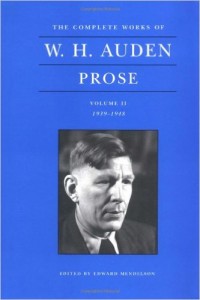
A passage from Auden’s prose has a plausible explanation for why we need Divine Mercy.
The now seven-year-old Dominik is starting to develop his own tastes about many things. As a rule he does not like going to Mass. It doesn’t matter whether it’s high, low, or middlebrow liturgy (sorry liturgical fetishists!). The thought of going to church is repellent to him. However, once he’s there he does make an attempt to participate actively and I help him along with pointers and explanations. His exploding reading skills (he’s a math whiz too) also give him plenty to engage while at Mass.
Today’s initial resistance was stronger than usual. When he expressed his disapproval I tried to budge him along by saying we were going to see Jesus who loves him. To which he replied, “But I hate Jesus.” This response immediately turned me into a fundamentalist. The words came out of my mouth, but strangely, against my will. I knew I wasn’t supposed to say what I was saying, but I still said the following anyway, “But Jesus died for you and you don’t want to see him?” The inflection of my voice added an unintentional measure of outrage to the whole spectacle. How dare he?!
I immediately thought, “What the hell am I doing? How do I undo this? This sort of thing never worked on me when I was a kid.”
Somewhere on the drive to Mass past Walmart, McDonalds, the garbage dump, and the golf course, the words of W.H. Auden’s prose piece “Symposium” (from the 2nd volume of his collected prose) came back to me as a strange answer to my conundrum:
If a man who professes himself a Christian is asked why he believes Jesus to be the Christ . . . he can give a no more objective answer than the lover: “I believe because He fulfills none of my dreams, because He is in every respect the opposite of what He would be if I could have made Him in my own image.” Thus, if a Christian is asked: “Why Jesus and not Socrates or Buddha or Confucius or Mahomet?” perhaps all he can say is: “None of the others arouse all sides of my being to cry ‘Crucify Him.’”
Some version of this should’ve been my answer to Dominik. After all, didn’t we say precisely that just a few weeks ago as a congregation during the Gospel reading? I will probably beat myself up over missing this teaching moment. It’s not the first time nor the last that the weirdness of Christianity will stump both myself and those whom I love most in my life.
Alexander Pope, who, to my surprise, was a Catholic (but it’s no surprise that the greatest English poet of The Age of Reason was a Catholic) wrote a great line in his Essay on Man about this human tendency to screw up. The line is frequently erroneously attributed to Shakespeare (probably a Catholic too):
To err is human; to forgive, divine.
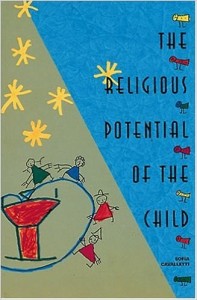
The spiritual lives of children are much more colorful than we suppose.
I’ve recently began reading The Religious Potential of the Child: Experiencing Scripture and Liturgy With Young Children. In it Sofia Cavaletti argues avant la lettre against the New Atheists (curiously, echoing Jean-Luc Marion’s The Erotic Phenomenon) who say religious education is tantamount to child abuse:
The manifestations of serene and peaceful joy the children [many of them from non-religious homes] display in the meeting with the world of God lead us to maintain that the religious experience responds to a deep “hunger” in the child. The religious experience is fundamentally an experience of love, and for the human person, love is essential to life. Man is not satisfied with merely living, but living as one who is love and loving.
This is still part of Dominik’s experience, but his critical spirit adds a new set of hurdles. He has finally arrived the age of reason. I’m a little late reaching for the book above and suspect that I’ll need to delve into The Religious Potential of the Child, 6 to 12 Years Old to fit my son’s very different needs.
Reason and responsibility will need to supplement Dominik’s faith (and boredom and anger and hate) now. There’s nothing profound in all this, because the same goes for me. We’ll both need heavy doses of Divine Mercy to heal the wounds of stymied progress.
As Pope Francis said, the God of Mercy seeks out shattered hearts who have something–like boredom, anger, and hate, which all come too easy–to be saved from. I’m also reminded of Fabrice Hadjadj for whom difference, disharmony, and conflict are the essence of the family. The Cross remains close.
Appropriately enough Divine Mercy Sunday is also Doubting Thomas Sunday. 11 Most Important Critiques of Modernity According to Thomas Pfau is a list of the best books for the Doubting Thomases in your family who can’t bring themselves to believe modernity is all about progress and no wounds.
Please consider making a donation to this blog through the donation button on the upper right side of its homepage.
* * * * * * * * * * * * * * * * * * * * * * * * * * * *
Stay in touch! Like Cosmos the in Lost on Facebook:
Previous Post

March 1, 2016
Mount St. Mary's President Pulls Glock on University, Gets Fired
Next Post

April 5, 2016 Uncanned Abortion Activism: New Wave Feminists Interviewed
Browse Our Archives
Select a Category #WhyRemainCatholic Abortion Advent Anti-Catholicism Arts Atheism Beauty Benedict XVI Bible Book Review Catholic Cinema Comedy Cosmos: A Space-Time Odyssey Czesław Miłosz Dariusz Karłowicz Devil Easter Eastern Orthodoxy Economics Environment Family Famous Atheists Who Weren't Atheists Guest Post Hans Urs von Balthasar HHS Mandate History Imagination Interview Islam Jean-Luc Marion John Paul II Judaism Just War Lent Literature Little Sisters of the Poor Liturgy Martyrdom Music News Paganism Patristics Phenomenology Philosophy Pierre Hadot Poetry Poland Pop Culture Pope Francis Poverty Prayer Protestantism Rabelais Race Remi Brague Rene Girard Russia Sam Rocha Science & Religion SCOTUS Secularization Sexual Abuse Sexuality Silence Solidarity Stratford Caldecott Synod14 Terrorism Top 10 Uncategorized Walker Percy War Weakened Edition World War II World Youth Day WYD Krakow
Select a Month July 2017 June 2017 May 2017 April 2017 March 2017 February 2017 January 2017 December 2016 October 2016 September 2016 August 2016 July 2016 June 2016 May 2016 April 2016 March 2016 February 2016 January 2016 December 2015 November 2015 October 2015 September 2015 August 2015 July 2015 June 2015 May 2015 April 2015 March 2015 February 2015 January 2015 December 2014 November 2014 October 2014 September 2014 August 2014 July 2014 May 2014 April 2014 March 2014 February 2014 January 2014 December 2013 November 2013 October 2013 September 2013 August 2013 July 2013 June 2013 May 2013
Follow Us!
TAKE THE
Religious Wisdom Quiz
What did Jesus say about judging people?
Select your answer to see how you score.
Judge fairly Judge not Judge justly Judge yourself only
Related posts from Cosmos The In Lost


The Holy Family as an Icon of World...

Where Does the Body of Christ Go After...

Why Does the World's Leading Philosopher Remain a...
TRENDING AT PATHEOS Catholic

Creation, Preservation, and Teleology in Catholic Theology
As I write this, it is very early Monday morning. Like millions...

The Parable Of The Sower And The Word...
One of Christ’s most famous parables is that of the sower who...

Rejecting Doom: Christian Hope And Human Action
Christianity is a religion of hope. We are to have hope and...

Why I Choose the Eucharist Over the Sermon
Choose the Eucharist, Not the Sermon What are we supposed to get...

5 Design Elements Found in Spiritually Rooted Homes
Putting Spirituality Into Home Decor Our homes are more than our living...

Credo: A Story of God Told with the...
About 10 years ago, I began to imagine a personal "Credo" that...
view all Catholic blogs
Ad-Free & Subscriber Log-In Subscription Support
- About Us
- 2026 Calendar
- Videos
- Podcasts
- Library of World Religions
- Faith In Media Tracker
- Advertise With Us
- Write for Us
- Privacy Policy
- Terms of Service
- Do Not Sell My Data
- Contact Us
- Radiant Digital
- Manage Newsletter Subscriptions
- Unsubscribe From Notifications
- Sitemap
Copyright 2008-2026, Patheos. All rights reserved.
Subscription Support Ad-Free & Subscriber Log-In
Follow Patheos