
BuddhistCatholicContemplativeEvangelicalGeneral ChristianHinduJewishLatter-day SaintMuslimNew VisionsProgressive Christian
Beliefs
- Buddhist
- Catholic
- Contemplative
- Evangelical
- General Christian
- Hindu
- Jewish
- Latter-day Saint
- More Voices
- Muslim
- New Visions
- Pagan
- Progressive Christian
Topics
- Religion News
- Food and Religion
- Sports and Religion
- Religious Art
- Religious Music and Entertainment
- Religious Events
- History and Religion
- Style and Religion
- Politics and Religion
- Women in Religion
- Recreation Outdoors and Religion
- Business Finance and Religion
- Careers Workplace and Religion
- Education and Religion
- Family Parenting and Religion
- Health Fitness and Religion
- Home and Religion
- Relationships and Religion
- Technology and Religion
- Travel and Religion
Columnists
- Buddhist Columnists
- Business Finance and Religion Columnists
- Careers Workplace and Religion Columnists
- Catholic Columnists
- Contemplative Columnists
- Education and Religion Columnists
- Evangelists Columnists
- Family Parenting and Religion Columnists
- General Christian Columnists
- Health Fitness and Religion Columnists
- Hindu Columnists
- History and Religion Columnists
- Home and Religion Columnists
- Jewish Columnists
- More Voices Columnists
- Latter Day Columnists
- Muslim Columnists
- New Visions Columnists
- Nonreligious Columnists
- Pagan Columnists
- Politics and Religion Columnists
- Progressive Columnists
- Recreation Outdoors and Religion Columnists
- Relationships and Religion Columnists
- Religion News Columnists
- Religious Art Columnists
- Religious Events Columnists
- Religious Music and Entertainment Columnists
- Sports and Religion Columnists
- Style and Religion Columnists
- Technology and Religion Columnists
- Travel and Religion Columnists
- Women in Religion Columnists
Resource Library
- 2026 Calendar
- Library of World Religions
- The 100 Most Holy Places on Earth
- Patheos Answers
- Podcasts
- Videos
- Faith Leaders Database
- Anglican Episcopalian
- Bahai
- Baptist
- Buddhism
- Christianity
- Confucianism
- Eastern Orthodoxy
- Hinduism
- Holiness and Pentecostal
- ISKCON
- Islam
- Judaism
- Lutheran
- Methodist
- The Church of Jesus Christ of Latter-day Saints
- New Age
- Paganism
- Presbytarian and Reformed
- Protestantism
- Religion Behind the Scenes
- Roman Catholic
- Scientology
- Shia Islam
- Sikhism
- Sufism
- Sunni Islam
- Taoism
- Zen
- See all religions
Research Tools
 Ad-Free & Subscriber Log-In Subscription Support
Ad-Free & Subscriber Log-In Subscription Support
Follow Patheos 

- Trending:
- Forgiveness
- |
- Marriage
- |
- Consciousness
- |
- Death Penalty
- |
- Election
- |
- Halloween
 Cosmos The In Lost
- Home
- Catholic
- Catholic Historian Takes Back “Secular” Enlightenment
Catholic Historian Takes Back “Secular” Enlightenment
Last updated on: February 9, 2016 at 7:47 pm by Artur Rosman
Catholic Historian Takes Back “Secular” Enlightenment 2016-02-09T19:47:13-07:00 Artur Rosman
Patheos Explore the world's faith through different perspectives on religion and spirituality! Patheos has the views of the prevalent religions and spiritualities of the world.
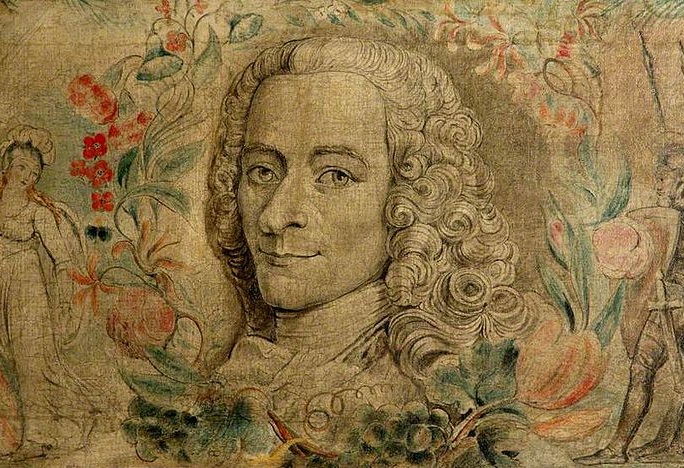
Voltaire, hero of the Enlightenment, painted by one of his greatest opponents (William Blake, Voltaire, c 1800; Source: Wikimedia Commons, PD-Old-100).
The 18th century worldwide intellectual movement known as the Enlightenment spawned what’s called a Republic of Letters. It was a heated debate, all through snail mail, about all the hottest issues of the day. Some say it was a precursor to the internet, others disagree. The Enlightenment continues to be controversial today.
For example, the Enlightenment (a.k.a. “Age of Reason“) is commonly used by atheists as a blunt tool against religious people. They claim themselves to be its heirs, thereby claiming reason exclusively for themselves. Atheists paint paint a pretty picture of radical thinkers promoting scientific progress, improved education, women’s rights, tolerance, global exploration, and fighting against superstition. There’s some truth to that.
On the other hand, Catholics tend to see the Enlightenment as a period of sinful darkness and secular fanaticism. For them this secular ideology fueled the apocalyptic destruction of the French Revolution and 20th century totalitarianism.The most interesting irony of this view is how much its critique shares the views of the Bible of Cultural Marxism, Adorno’s and Horkheimer’s The Dialectic of Enlightenment. There’s some truth to it too.
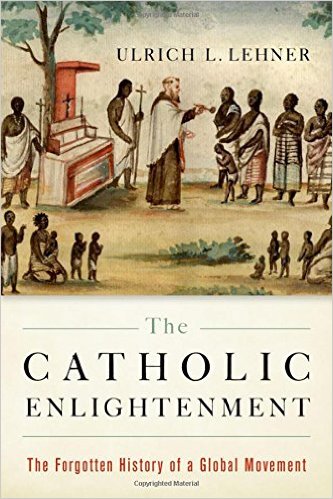
The history of the Enlightenment is incomplete without the Catholic side of the story.
According to Marquette historian Ulrich Lehner’s The Catholic Enlightenment, the historical truth of the matter is much more like the mix of light and darkness in Anthony Hecht’s poem “The Darkness and the Light,” because it is difficult to separate the two in Enlightenment history:
Like the elderly and frail
Who’ve lasted through the night,
Cold brows and silent lips,
For whom the rising light Entails their own eclipse,
Brightening as they fail.
The rising light of the Enlightenment did indeed bring its own eclipse because the brightness blinded its participants to some elementary truths that we, in retrospect, take for granted as given.
But how does this play itself out in the Catholic version of the Enlightenment?
The Catholic Enlightenment begins by re-appropriating the positive achievements of the Enlightenment, its light, for the Catholic side. Lehner argues that Catholics were active and creative participants in the movement. They were by no means epigones, but rather front-line participants in the movement from the get-go.
Most interestingly, Catholics got a jump start on many Enlightenment reforms thanks to the reforms of Trent. The Council, much like Vatican II, aimed to improve the quality of Catholic practice by stressing active participation and social involvement (through the Works of Mercy). This is definitely not how many Catholics remember Trent–if they are at all familiar with it. Yet, The Catholic Enlightenment convincingly shows how much the Council of Trent’s intellectual and historical achievements are in line with the reformist spirit of the Enlightenment, Vatican II, and, more recently, the papacy of Pope Francis.
The surprises continue as the first two-thirds of The Catholic Enlightenment is shrewdly (you’ll see why I use this ambiguous adverb later in this review) devoted to demonstrating how much Catholics were at the forefront of real human progress during this period. For example, Catholics were an integral part of the Republic of Letters; they didn’t just hide their heads in the sand crying “MODERNISM!” They participated in deciding what modernity would mean. Catholic rulers also helped to quell the violence that followed upon the Reformation and the so-called “Wars of Religion” that followed it. These efforts put Catholics at the forefront of the Enlightenment reforms. Yet, Catholics were also sometimes ahead of their contemporaries in terms of real progress. For example, Catholic monks and priests were greatly concerned about protecting the indigenous populations of South America. Conversely, most of the secular Enlighteners thought indigenous people were subhumans who should prop up the emerging nation-states and its capitalist economies–the new glories of triumphant Europe and Western Civilization.
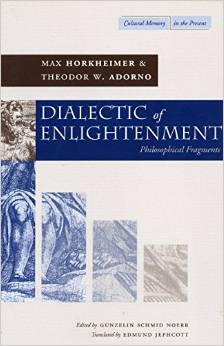
The Enlightenment wasn’t only secular, nor only progressive.
Furthermore, Feminism, the move to liberate women from oppression, is frequently thought to be the enemy of Catholicism par excellence. However, Catholics were arguably ahead of their secular contemporaries during the Enlightenment. Following upon the urgings of Jean-Jacques Rousseau’s Emile: Or on Education, many of the early secular Enlightenment thinkers saw women merely as breeders who should help fuel the growth of the nation-state by providing fodder for its ever-expanding economies. On the other hand, Catholics, expanding upon the reforms of Trent, encouraged voluntary marriages between spouses who compliment each other. For Catholic teaching marriage was not about animal husbandry, but about mutuality between wife and husband. Women also gained in prestige because it was believed (probably correctly) that the emerging capitalist economy turned men into immoral animals only concerned with profit. Women were expected to humanize society by educating themselves, their spouses, and their children in Christian charity. This was a feminization of the Church in the most positive sense.
So far I’ve discussed some of the instances where Catholics were in line with the positive progress of the Enlightenment, then where Catholics were even more progressive than their Enlightenment contemporaries, so now comes the time to finish with the prejudices the Catholic and secular Enlightenment’s perpetuated together.
The progress toward human rights of the indigenous population of South America was not matched by Catholics (and the secularists) when it came to rights for slaves from Africa. The secular Enlighteners used racist arguments, precursors to Social Darwinism, to advocate for cheap slave labor from both Africa and South America to power the developing global economy. Catholics, given their commitment to seeing all humans as the image and likeness of God, were forced to practice casuistry to defend the same for Africans. Because of this their arguments for slavery depended upon a bizarre Just War justification. To make things even worse, Catholic colleges and monastic communities used these justifications to maintain themselves financially. You would never know it, but liberal post-Jesuit Georgetown University ran on profits from slave labor for the better part of its history. Catholic religious communities in the South maintained themselves by holding slaves.
There are plenty more positive and negative developments documented in The Catholic Enlightenment. There’s something new to learn on almost every page. It is a book of surprises about a totally ignored aspect of history. By recovering the Catholic aspect of history Lehner also gives us the key to seeing the Enlightenment in a much fuller light than even recent much-discussed accounts of the period, such as Jonathan I. Israel’s Radical Enlightenment: Philosophy and the Making of Modernity 1650-1750, which would have us believe only the anti-religious contributed to the emergence of modernity.
The real story is much more complicated and much less glorious than any of the sides would like us to believe. The Catholic Enlightenment is a much-needed revised view upon a historical period whose complexities are frequently ironed out in the name of shallow contemporary polemics. The Enlightenment was both a more positive period than many Catholics believe, and a more negative period than most secularists believe. Catholics participated in both the good and the bad.
The Catholic Enlightenment gets this across wonderfully by starting out with the good, and then keeping the bad as a surprise conclusion. The reader doesn’t expect it. It comes down upon them like an Act of God. This sobering narrative structure makes The Catholic Enlightenment unexpected, but spiritually enriching Lent reading. From dust we come and to dust does history return us, both Catholics and secularists. Lent is a time of repentance, of victoriously admitting our guilt. It is an admittance that leads us toward the Good. This is what taking back the Enlightenment should mean for Catholics.
By the way, according to Voltaire’s Bastards: The Dictatorship of Reason in the West, Voltaire, the emblem of Enlightenment rationalism, never stopped attending Mass during his lifetime, and he got the Catholic burial he requested.
If this take on the ambivalence of the Enlightenment has piqued your interest then you will want to take a look at Ulrich Lehner’s Monastic Prisons and Torture Chambers: Crime and Punishment in Central European Monasteries, 1600-1800 and a volume he edited Enlightenment and Catholicism in Europe: A Transnational History.
For excerpts from The Catholic Enlightenment see: 1) The Roots of Protecting Life From Conception in the Catholic Enlightenment and 2) What’s History’s Most Unjust “Just War” Justification?
* * * * * * * * * * * * * * * * * * * * * * * * * * * * * * * * * * * * * * * * * * * * *
Stay in touch! Like Cosmos the in Lost on Facebook:

Next Post
February 10, 2016 God is with Humankind Right Down to the Cellar of Creaturely Existence
Browse Our Archives
Select a Category #WhyRemainCatholic Abortion Advent Anti-Catholicism Arts Atheism Beauty Benedict XVI Bible Book Review Catholic Cinema Comedy Cosmos: A Space-Time Odyssey Czesław Miłosz Dariusz Karłowicz Devil Easter Eastern Orthodoxy Economics Environment Family Famous Atheists Who Weren't Atheists Guest Post Hans Urs von Balthasar HHS Mandate History Imagination Interview Islam Jean-Luc Marion John Paul II Judaism Just War Lent Literature Little Sisters of the Poor Liturgy Martyrdom Music News Paganism Patristics Phenomenology Philosophy Pierre Hadot Poetry Poland Pop Culture Pope Francis Poverty Prayer Protestantism Rabelais Race Remi Brague Rene Girard Russia Sam Rocha Science & Religion SCOTUS Secularization Sexual Abuse Sexuality Silence Solidarity Stratford Caldecott Synod14 Terrorism Top 10 Uncategorized Walker Percy War Weakened Edition World War II World Youth Day WYD Krakow
Select a Month July 2017 June 2017 May 2017 April 2017 March 2017 February 2017 January 2017 December 2016 October 2016 September 2016 August 2016 July 2016 June 2016 May 2016 April 2016 March 2016 February 2016 January 2016 December 2015 November 2015 October 2015 September 2015 August 2015 July 2015 June 2015 May 2015 April 2015 March 2015 February 2015 January 2015 December 2014 November 2014 October 2014 September 2014 August 2014 July 2014 May 2014 April 2014 March 2014 February 2014 January 2014 December 2013 November 2013 October 2013 September 2013 August 2013 July 2013 June 2013 May 2013
Follow Us!
TAKE THE
Religious Wisdom Quiz
What does Proverbs 23:4-5 warn against pursuing too much?
Select your answer to see how you score.
Wealth Power Knowledge Status
Related posts from Cosmos The In Lost

The Surprising Anti-Capitalist Logic Behind the Catholic Church's...

The Holy Family as an Icon of World...

How is Classical Philosophy is Like War?

Why Does the World's Leading Philosopher Remain a...
TRENDING AT PATHEOS Catholic

Rejecting Doom: Christian Hope And Human Action
Christianity is a religion of hope. We are to have hope and...

It’s What Comes From Within Which Matters
One of the most difficult things for us to understand is why...

Why I Choose the Eucharist Over the Sermon
Choose the Eucharist, Not the Sermon What are we supposed to get...

5 Design Elements Found in Spiritually Rooted Homes
Putting Spirituality Into Home Decor Our homes are more than our living...

Credo: A Story of God Told with the...
About 10 years ago, I began to imagine a personal "Credo" that...

The Anatomy of Divine Revelation in Catholic Thought
The claim that God has made Himself known to human beings is...
view all Catholic blogs
Ad-Free & Subscriber Log-In Subscription Support
- About Us
- 2026 Calendar
- Videos
- Podcasts
- Library of World Religions
- Faith In Media Tracker
- Advertise With Us
- Write for Us
- Privacy Policy
- Terms of Service
- Do Not Sell My Data
- Contact Us
- Radiant Digital
- Manage Newsletter Subscriptions
- Unsubscribe From Notifications
- Sitemap
Copyright 2008-2026, Patheos. All rights reserved.
Subscription Support Ad-Free & Subscriber Log-In
Follow Patheos