
BuddhistCatholicContemplativeEvangelicalGeneral ChristianHinduJewishLatter-day SaintMuslimNew VisionsProgressive Christian
Beliefs
- Buddhist
- Catholic
- Contemplative
- Evangelical
- General Christian
- Hindu
- Jewish
- Latter-day Saint
- More Voices
- Muslim
- New Visions
- Pagan
- Progressive Christian
Topics
- Religion News
- Food and Religion
- Sports and Religion
- Religious Art
- Religious Music and Entertainment
- Religious Events
- History and Religion
- Style and Religion
- Politics and Religion
- Women in Religion
- Recreation Outdoors and Religion
- Business Finance and Religion
- Careers Workplace and Religion
- Education and Religion
- Family Parenting and Religion
- Health Fitness and Religion
- Home and Religion
- Relationships and Religion
- Technology and Religion
- Travel and Religion
Columnists
- Buddhist Columnists
- Business Finance and Religion Columnists
- Careers Workplace and Religion Columnists
- Catholic Columnists
- Contemplative Columnists
- Education and Religion Columnists
- Evangelists Columnists
- Family Parenting and Religion Columnists
- General Christian Columnists
- Health Fitness and Religion Columnists
- Hindu Columnists
- History and Religion Columnists
- Home and Religion Columnists
- Jewish Columnists
- More Voices Columnists
- Latter Day Columnists
- Muslim Columnists
- New Visions Columnists
- Nonreligious Columnists
- Pagan Columnists
- Politics and Religion Columnists
- Progressive Columnists
- Recreation Outdoors and Religion Columnists
- Relationships and Religion Columnists
- Religion News Columnists
- Religious Art Columnists
- Religious Events Columnists
- Religious Music and Entertainment Columnists
- Sports and Religion Columnists
- Style and Religion Columnists
- Technology and Religion Columnists
- Travel and Religion Columnists
- Women in Religion Columnists
Resource Library
- 2026 Calendar
- Library of World Religions
- The 100 Most Holy Places on Earth
- Patheos Answers
- Podcasts
- Videos
- Faith Leaders Database
- Anglican Episcopalian
- Bahai
- Baptist
- Buddhism
- Christianity
- Confucianism
- Eastern Orthodoxy
- Hinduism
- Holiness and Pentecostal
- ISKCON
- Islam
- Judaism
- Lutheran
- Methodist
- The Church of Jesus Christ of Latter-day Saints
- New Age
- Paganism
- Presbytarian and Reformed
- Protestantism
- Religion Behind the Scenes
- Roman Catholic
- Scientology
- Shia Islam
- Sikhism
- Sufism
- Sunni Islam
- Taoism
- Zen
- See all religions
Research Tools
 Ad-Free & Subscriber Log-In Subscription Support
Ad-Free & Subscriber Log-In Subscription Support
Follow Patheos 

- Trending:
- Forgiveness
- |
- Marriage
- |
- Consciousness
- |
- Death Penalty
- |
- Election
- |
- Halloween
 Cosmos The In Lost
- Home
- Catholic
- What’s History’s Most Unjust “Just War” Justification?
What’s History’s Most Unjust “Just War” Justification?
Last updated on: January 27, 2016 at 11:37 am by Artur Rosman
What’s History’s Most Unjust “Just War” Justification? 2016-01-27T11:37:04-07:00 Artur Rosman
Patheos Explore the world's faith through different perspectives on religion and spirituality! Patheos has the views of the prevalent religions and spiritualities of the world.
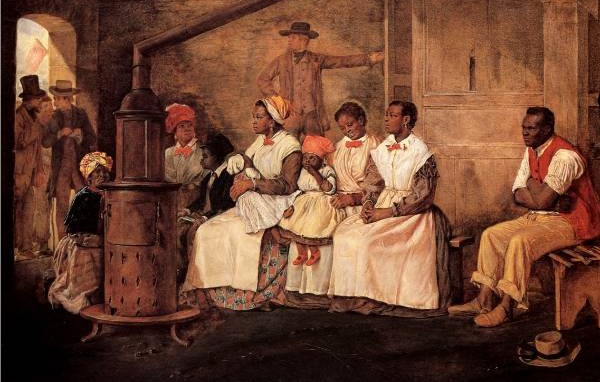
(Eyer Crowe, Slaves Waiting for Sale – Richmond, Virginia, 1861; Source: Wikimedia Commons, PD-Old-100)
The concept of “Just War” originates in the writings of St. Augustine. He was perhaps the first Christian theologian to argue for active Christian participation in the military. The three centuries of theologians who came before him were highly skeptical about Christian participation in armed conflict. Some soldiers had to undergo extended penance (as in several months or even years) before they could enter back into full communion with the Church. This was fairly standard.
There was always something strange about the Just War Doctrine. Just look at how Jesuitical Augustine sounds in The City of God some 1000 years before there were any Jesuits:
They who have waged war in obedience to the divine command, or in conformity with His laws, have represented in their persons the public justice or the wisdom of government, and in this capacity have put to death wicked men; such persons have by no means violated the commandment, “Thou shalt not kill.”

Love and cane if you will, says Augustine.
If this logic sounds highly suspicious then you might be really surprised where the frequently cited Augustinian dictum “Love and do what you will” comes from. It comes from the 7th Homily on First John and is preceded by, “If you mark the persons, it is charity that beats, iniquity that caresses.” Is it a stretch to call this a physical work of mercy? Will you still use the popular quote for your pet political causes or Valentine’s Day cards?
Recent years have seen sustained criticisms of such Just War argumentation. This comes after the theory reached its zenith of popularity during the Catholic grab for the American naked public square.
Just War’s biggest defeat, its nadir, came at the hands of John Paul II and Benedict XVI who prophetically rejected the Gulf Wars so enthusiastically embraced by certain influential Catholics. St. John Paul II, who no doubt knew what went into the catechism he helped to shepherd into being, went so far as suggesting war is obsolete.
Now, I’ve been wrapping up my reading of Ulrich Lehner’s The Catholic Enlightenment: The Forgotten History of a Global Movement (I wrote earlier about the pro-life movement roots in Catholic Enlightenment reasoning). Lehner’s aim is to recover the Catholic contributions to the Enlightenment, which is erroneously thought to be a purely secular movement. One should give Lehner credit for not only owing up to the bright and cheerful part of the story (Catholic science, feminism, and heroic charity), but also documenting how Catholics reflected the darker trends of that time as well. One of them was slavery and prejudice.
Here’s a passage from The Catholic Enlightenment that captures the good and the bad in almost dizzying fashion, from one sentence to the next:
While in the 16th century Dominican friars such as Bartolomeo de las Casas voiced concern about the enslavement of the Indians, the enslavement of Africans was condoned. One reason was that Africans were usually identified as idolaters or infidels who had lost the proper purpose of religion–to elevate the human mind toward God. Even for radical materialist Enlightener Diderot, a critic of slavery, Africans were intellectually “limited to the present life, with no inkling of a future state.” Moreover, by the reasoning of theologians Africans and Asians could be enslaved because they had lost their freedom when they resisted in a “just war” that the West had waged against them. This idea was key to almost universal enslavement because, of course,most nations resisted European attempts at mission or colonization.
Now if you can imagine Just War was flexible enough to justify slavery, then perhaps it is so flexible as to be almost useless, at least in our times, as some scholars argue?
Catholic history can be really depressing. If you think we live in an age of crisis, then you really have no idea, no perspective.
Previous Post

January 25, 2016
St. Kateri Relic Rescue: The Most Catholic GoFundMe Campaign Ever

Browse Our Archives
Select a Category #WhyRemainCatholic Abortion Advent Anti-Catholicism Arts Atheism Beauty Benedict XVI Bible Book Review Catholic Cinema Comedy Cosmos: A Space-Time Odyssey Czesław Miłosz Dariusz Karłowicz Devil Easter Eastern Orthodoxy Economics Environment Family Famous Atheists Who Weren't Atheists Guest Post Hans Urs von Balthasar HHS Mandate History Imagination Interview Islam Jean-Luc Marion John Paul II Judaism Just War Lent Literature Little Sisters of the Poor Liturgy Martyrdom Music News Paganism Patristics Phenomenology Philosophy Pierre Hadot Poetry Poland Pop Culture Pope Francis Poverty Prayer Protestantism Rabelais Race Remi Brague Rene Girard Russia Sam Rocha Science & Religion SCOTUS Secularization Sexual Abuse Sexuality Silence Solidarity Stratford Caldecott Synod14 Terrorism Top 10 Uncategorized Walker Percy War Weakened Edition World War II World Youth Day WYD Krakow
Select a Month July 2017 June 2017 May 2017 April 2017 March 2017 February 2017 January 2017 December 2016 October 2016 September 2016 August 2016 July 2016 June 2016 May 2016 April 2016 March 2016 February 2016 January 2016 December 2015 November 2015 October 2015 September 2015 August 2015 July 2015 June 2015 May 2015 April 2015 March 2015 February 2015 January 2015 December 2014 November 2014 October 2014 September 2014 August 2014 July 2014 May 2014 April 2014 March 2014 February 2014 January 2014 December 2013 November 2013 October 2013 September 2013 August 2013 July 2013 June 2013 May 2013
Follow Us!
TAKE THE
Religious Wisdom Quiz
What city was Jesus born in?
Select your answer to see how you score.
Bethlehem Nazareth Jerusalem Capernaum
Related posts from Cosmos The In Lost

The Surprising Anti-Capitalist Logic Behind the Catholic Church's...

The Holy Family as an Icon of World...

Where Does the Body of Christ Go After...

How is Classical Philosophy is Like War?
TRENDING AT PATHEOS Catholic

Rejecting Doom: Christian Hope And Human Action
Christianity is a religion of hope. We are to have hope and...

It’s What Comes From Within Which Matters
One of the most difficult things for us to understand is why...

Why I Choose the Eucharist Over the Sermon
Choose the Eucharist, Not the Sermon What are we supposed to get...

5 Design Elements Found in Spiritually Rooted Homes
Putting Spirituality Into Home Decor Our homes are more than our living...

Credo: A Story of God Told with the...
About 10 years ago, I began to imagine a personal "Credo" that...

The Anatomy of Divine Revelation in Catholic Thought
The claim that God has made Himself known to human beings is...
view all Catholic blogs
Ad-Free & Subscriber Log-In Subscription Support
- About Us
- 2026 Calendar
- Videos
- Podcasts
- Library of World Religions
- Faith In Media Tracker
- Advertise With Us
- Write for Us
- Privacy Policy
- Terms of Service
- Do Not Sell My Data
- Contact Us
- Radiant Digital
- Manage Newsletter Subscriptions
- Unsubscribe From Notifications
- Sitemap
Copyright 2008-2026, Patheos. All rights reserved.
Subscription Support Ad-Free & Subscriber Log-In
Follow Patheos