
BuddhistCatholicContemplativeEvangelicalGeneral ChristianHinduJewishLatter-day SaintMuslimNew VisionsProgressive Christian
Beliefs
- Buddhist
- Catholic
- Contemplative
- Evangelical
- General Christian
- Hindu
- Jewish
- Latter-day Saint
- More Voices
- Muslim
- New Visions
- Pagan
- Progressive Christian
Topics
- Religion News
- Food and Religion
- Sports and Religion
- Religious Art
- Religious Music and Entertainment
- Religious Events
- History and Religion
- Style and Religion
- Politics and Religion
- Women in Religion
- Recreation Outdoors and Religion
- Business Finance and Religion
- Careers Workplace and Religion
- Education and Religion
- Family Parenting and Religion
- Health Fitness and Religion
- Home and Religion
- Relationships and Religion
- Technology and Religion
- Travel and Religion
Columnists
- Buddhist Columnists
- Business Finance and Religion Columnists
- Careers Workplace and Religion Columnists
- Catholic Columnists
- Contemplative Columnists
- Education and Religion Columnists
- Evangelists Columnists
- Family Parenting and Religion Columnists
- General Christian Columnists
- Health Fitness and Religion Columnists
- Hindu Columnists
- History and Religion Columnists
- Home and Religion Columnists
- Jewish Columnists
- More Voices Columnists
- Latter Day Columnists
- Muslim Columnists
- New Visions Columnists
- Nonreligious Columnists
- Pagan Columnists
- Politics and Religion Columnists
- Progressive Columnists
- Recreation Outdoors and Religion Columnists
- Relationships and Religion Columnists
- Religion News Columnists
- Religious Art Columnists
- Religious Events Columnists
- Religious Music and Entertainment Columnists
- Sports and Religion Columnists
- Style and Religion Columnists
- Technology and Religion Columnists
- Travel and Religion Columnists
- Women in Religion Columnists
Resource Library
- 2026 Calendar
- Library of World Religions
- The 100 Most Holy Places on Earth
- Patheos Answers
- Podcasts
- Videos
- Faith Leaders Database
- Anglican Episcopalian
- Bahai
- Baptist
- Buddhism
- Christianity
- Confucianism
- Eastern Orthodoxy
- Hinduism
- Holiness and Pentecostal
- ISKCON
- Islam
- Judaism
- Lutheran
- Methodist
- The Church of Jesus Christ of Latter-day Saints
- New Age
- Paganism
- Presbytarian and Reformed
- Protestantism
- Religion Behind the Scenes
- Roman Catholic
- Scientology
- Shia Islam
- Sikhism
- Sufism
- Sunni Islam
- Taoism
- Zen
- See all religions
Research Tools
 Ad-Free & Subscriber Log-In Subscription Support
Ad-Free & Subscriber Log-In Subscription Support
Follow Patheos 

- Trending:
- Forgiveness
- |
- Marriage
- |
- Consciousness
- |
- Death Penalty
- |
- Election
- |
- Halloween
 Cosmos The In Lost
- Home
- Catholic
- TOP10 SciFi Book & Film Resources for a Judgmental Prophetic Theology
TOP10 SciFi Book & Film Resources for a Judgmental Prophetic Theology
Last updated on: November 18, 2015 at 3:18 pm by Artur Rosman
TOP10 SciFi Book & Film Resources for a Judgmental Prophetic Theology 2015-11-18T15:18:45-07:00 Artur Rosman
Patheos Explore the world's faith through different perspectives on religion and spirituality! Patheos has the views of the prevalent religions and spiritualities of the world.
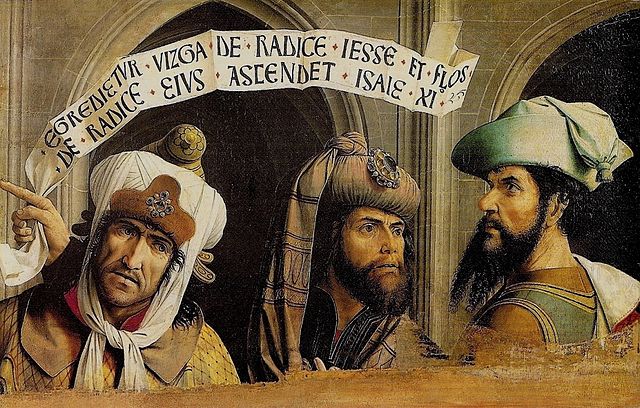
(Jean Changenet, Three Prophets, 1490; Source: Wikimedia Commons, PD-Old=100).
The SciFi genre is today’s incarnation of the prophetic tradition’s harsh and judgmental sayings of love.
Yesterday’s post on the prophetic tradition in our times can be summarized as asking the following question:
What happens when science and technology outstrip philosophy and ethics?
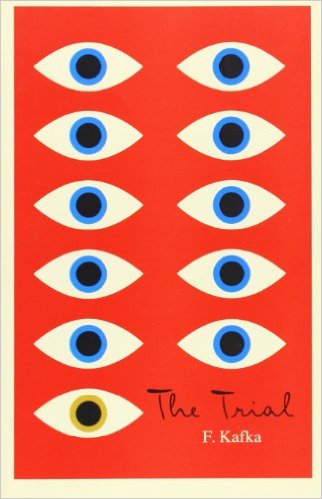
What if we’re all on trial, but it’s not what we think it is?
The prophetic is the answer. Or, to be more precise, what the Girardian philosopher Jean-Pierre Dupuy calls the Jonah Paradox in The Mark of the Sacred. This concept is coextensive with what Anna Wierzbicka identifies in What Did Jesus Mean? as the Jewish speech convention of “Drohrede”:
In recent times, a number of biblical scholars and theologians have pointed out that Jesus’ parables cannot be properly interpreted if one is unaware of the “Drohrede.” The parallels between Jesus’ apocalyptic warnings and the warnings of the Old Tstament prophets are indeed very striking. Fro exaple, in the book of Jeremiah God urges his “beloved people” Israel to abandon their iniquities and to come back to him, but he tells them that he has abaondoned them and “hates” them. He declares that he will not forgive them and, virtually in the same breath, expresses his never ending love and forgiveness.
The linguist Wierzbicka cites a striking example from Matisoff’s Blessings, Curses, Hopes, and Fears: Psycho-Ostensive Expressions in Yiddish to further explain what she means:
The are as many types of curses as there are people cursing, but the hardest to explain is the mother cursing her child. The child may by crying because he is hungry. The mother bursts out, “East, eat, eat. All you want to do is eat. May the worms eat you. May the earth open up and swallow you alive.” This mother loves her child, she is only pouring out the bitterness that’s in her heart in the only way she knows. But in translation she sounds like a monster.
The SciFi genre in both literature and film is the continuation of this long tradition of qualified condemnation and judgement. Science fiction authors do not concoct end-time scenarios because they want to see them come true, well, most of them don’t. Their works, just like the writings of the prophets, are warnings against dystopian futures humanity should desire to avoid, like nuclear escalation. This is also clearly the context in which we should understand the “God damn America” Jeremiads of both Pat Robertson and Jeremiah Wright, whether they intend it or not.
With that in mind here is my list of SciFi works that can augment a truly prophetic imagination. I have avoided obvious choices like Philip K. Dick, H.P. Lovecraft, Lost in the Cosmos, Gene Wolfe, and any number of my movie favorites such as Blade Runner, La Jetée, Metropolis, and 12 Monkeys in order to keep this list interesting even for experts in the genre.

Life’s no picnic for the characters in this book.
1. The Roadside Picnic by Strugatsky Brothers
Amazing. . . . The Strugatskys’ deft and supple handling of loyalty and greed, of friendship and love, of despair and frustration and loneliness [produces] a truly superb tale. . . . You won’t forget it -Theodore Sturgeon Red Schuhart is a stalker, one of those young rebels who are compelled, in spite of the extreme danger, to venture illegally into the Zone to collect the mysterious artifacts that the alien visitors left scattered around. But when he and his friend Kirill go into the Zone together to pick up a “full empty” something goes terribly wrong. . . . First published in 1972 and immediately acclaimed as a science-fiction classic, Roadside Picnic is included on almost every list of the hundred greatest science-fiction novels, despite the fact that it has been out of print in the United States for almost thirty years. It was the basis for Andrei Tarkovsky’s filmic masterpiece Stalker and the S.T.A.L.K.E.R. video games that have proven immensely popular.
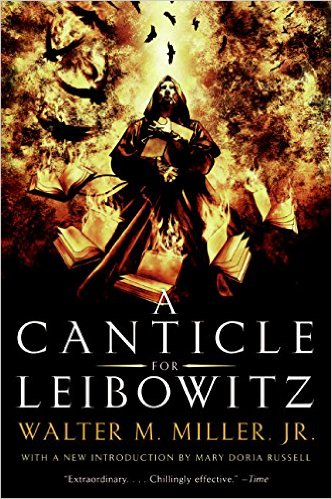
MacIntyre’s After Virtue stole the basic narrative tool of passing on a broken tradition from this book.
2. A Canticle for Liebowitz by Walter M. Miller, Jr.
In a nightmarish ruined world slowly awakening to the light after sleeping in darkness, the infant rediscoveries of science are secretly nourished by cloistered monks dedicated to the study and preservation of the relics and writings of the blessed Saint Isaac Leibowitz. From here the story spans centuries of ignorance, violence, and barbarism, viewing through a sharp, satirical eye the relentless progression of a human race damned by its inherent humanness to recelebrate its grand foibles and repeat its grievous mistakes. Seriously funny, stunning, and tragic, eternally fresh, imaginative, and altogether remarkable, A Canticle for Leibowitz retains its ability to enthrall and amaze. It is now, as it always has been, a masterpiece.
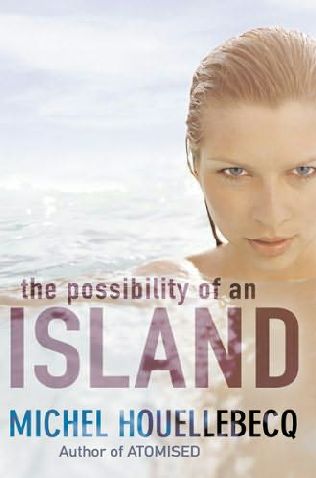
Will humans remain sexy after they lose their humanity?
3. The Possibility of an Island by Michel Houellebecq
A worldwide phenomenon and the most important French novelist since Camus, Michel Houellebecq now delivers his magnum opus–a tale of our present circumstances told from the future, when humanity as we know it has vanished into a post-human future. Daniel is a successful comedian who can’t seem to enjoy life despite his wealth. He gets bored with his hedonist lifestyle, but can’t escape from it either. In the meanwhile he is disgruntled with the state of current society, and philosophizes about the nature of sex and love. His two clones live an uneventful life as hermits, in a post-apocalyptic future. They live in a time where the human species is on its last legs (alternatively, on its first legs: hunter-gatherer tribes), destroyed by climate change and nuclear war. The two clones are confronted with the life of the first Daniel and have different views about their predecessor. Scattered around are the remnants of tourist resorts, cities and consumer items and some natural humans living in small tribes without any knowledge of the past or of civilization.
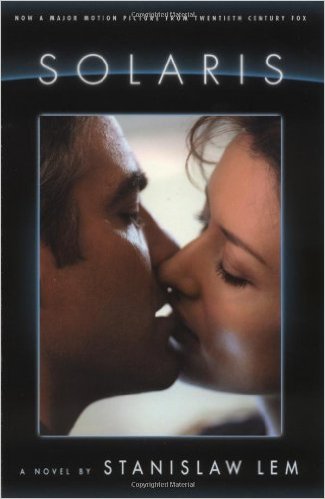
The original movie adaptation (not pictured on cover) of this novel drove Lem to consider suing Tarkovsky!
4. Solaris by Stanislaw Lem
When psychologist Kris Kelvin arrives at the planet Solaris to study the ocean that covers its surface, he finds himself confronting a painful memory embodied in the physical likeness of a past lover. Kelvin learns that he is not alone in this and that other crews examining the planet are plagued with their own repressed and newly real memories. Could it be, as Solaris scientists speculate, that the ocean may be a massive neural center creating these memories, for a reason no one can identify? Long considered a classic, Solaris asks the question: Can we understand the universe around us without first understanding what lies within?
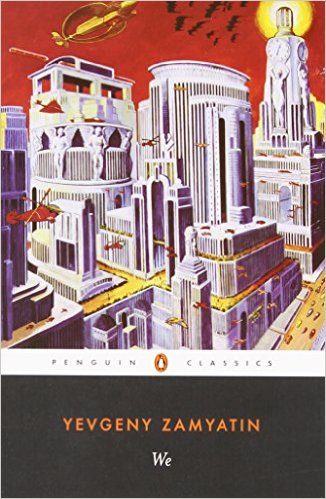
I don’t think anybody knows about this one. The Russians do seem to have cornered the SciFi market, BTW.
5. We by Yevgeny Zamyatin
A seminal work of dystopian fiction that foreshadowed the worst excesses of Soviet Russia, Yevgeny Zamyatin’s We is a powerfully inventive vision that has influenced writers from George Orwell to Ayn Rand. This Penguin Classics edition is translated from the Russian with an introduction by Clarence Brown. In a glass-enclosed city of absolute straight lines, ruled over by the all-powerful ‘Benefactor’, the citizens of the totalitarian society of OneState live out lives devoid of passion and creativity – until D-503, a mathematician who dreams in numbers, makes a discovery: he has an individual soul. Set in the twenty-sixth century AD, We is the classic dystopian novel and was the forerunner of works such as George Orwell’s 1984 and Aldous Huxley’s Brave New World.
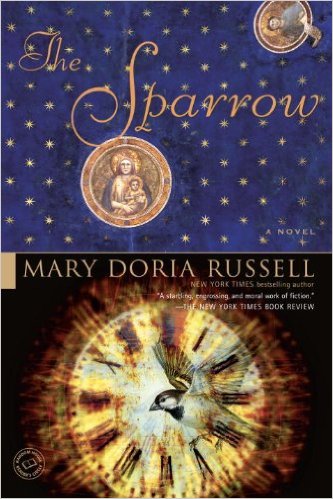
SciFi is not for the birds.
6. The Sparrow by Mary Doria Russell
In 2019, humanity finally finds proof of extraterrestrial life when a listening post in Puerto Rico picks up exquisite singing from a planet which will come to be known as Rakhat. While United Nations diplomats endlessly debate a possible first contact mission, the Society of Jesus quietly organizes an eight-person scientific expedition of its own. What the Jesuits find is a world so beyond comprehension that it will lead them to question the meaning of being “human.” When the lone survivor of the expedition, Emilio Sandoz, returns to Earth in 2059, he will try to explain what went wrong… Words like “provocative” and “compelling” will come to mind as you read this shocking novel about first contact with a race that creates music akin to both poetry and prayer.

7. The Sacrifice by Andrei Tarkovsky
In The Sacrifice, Alexander’s (Erland Josephson) birthday party is interrupted by news that World War III has begun and mankind is hours away from annihilation. To avoid war, Alexander promises to God that he’ll sacrifice all he has — even his son. This new remastered edition of Tarkovsky’s final film features a new, much improved transfer of the film in anamorphic widescreen! Special features include the feature length documentary ‘Directed by Andrei Tarkovsky’, a behind the scenes look at one of the most influential directors of our time, photo gallery, trailers and more.

What if Kafka and Monty Python had a SciFi baby?
8. Brazil by Terry Gilliam
If Franz Kafka had been an animator and film director–oh, and a member of Monty Python’s Flying Circus–this is the sort of outrageously dystopian satire one could easily imagine him making. However, Brazil was made by Terry Gilliam, who is all of the above except, of course, Franz Kafka. Be that as it may, Gilliam sure captures the paranoid-subversive spirit of Kafka’s The Trial (along with his own Python animation) in this bureaucratic nightmare-comedy about a meek governmental clerk named Sam Lowry (Jonathan Pryce) whose life is destroyed by a simple bug. Not a software bug, a real bug (no doubt related to Kafka’s famous Metamorphosis insect) that gets smooshed in a printer and causes a typographical error unjustly identifying an innocent citizen, one Mr. Buttle, as suspected terrorist Harry Tuttle (Robert De Niro). When Sam becomes enmeshed in unraveling this bureaucratic glitch, he himself winds up labeled as a miscreant.

Sweet dreams are made of these . . .
9. Sleep Dealer by Alex Rivera
The place: Mexico. The time: The near future. Memo Cruz has always dreamed of leaving his tiny village and heading north to a big city where he can work in a modern, high-tech factory. Finally, his dream becomes a reality…and his reality becomes a nightmare! Memo finds himself in a terrifyingly bizarre world of border walls, shanty towns, high-tech factories, remote control drones and aqua-terrorists a world of tomorrow that will soon be today! Winner of two prestigious awards at the Sundance Film Festival, and nominated for both the Gotham Awards and Independent Spirit Awards, this groundbreaking film has been praised by critics and audiences alike.

The comedy of engineering away male aggression.
10. Sexmission by Juliusz Machulski
Two scientists are chosen as guinea pigs for a time experiment: they are placed in hibernation and should be brought back to life after three years. In the meantime, however, the World War III breaks out and life have been wiped out of the surface of the Earth. When they wake up, it turns out that not only 50 years have passed but also that they are the only living specimens of the male sex in a new, underground society composed exclusively of women. Max used to be woman-chaser so he finds himself in heaven. Albert, on the other hand, forgot all about love and sex as a serious scientist, but is willing to learn. So are the Amazons, who after a kiss turn into pliant kittens. The Council of Women is going to decide their fate, so they are trying to win more time.
There are also strictly philosophy and theology books that employ science fiction dystopian prophecies. I’m thinking of volumes such as After Virtue (directly inspired by A Canticle for Liebowitz), The Technological Society, Medical Nemesis, and, of course, The Mark of the Sacred.
I welcome more recommendations in the comment box of this post.
Here’s a video of Jeremiah Wright’s jeremiad in context (see: transcript).
If you’ve gotten this far, then you will want to take a look at Timothy Snyder’s prophetic warnings in A New Springtime for Hitler?
I’m also in a financial bind until my first paycheck. If I were a prophet I’d tell you to help me avoid a financial apocalypse with donations through the PayPal button on my homepage . . .
Previous Post
November 17, 2015
The Jonah Paradox: Is Humanity Living on Borrowed Time?

Browse Our Archives
Select a Category #WhyRemainCatholic Abortion Advent Anti-Catholicism Arts Atheism Beauty Benedict XVI Bible Book Review Catholic Cinema Comedy Cosmos: A Space-Time Odyssey Czesław Miłosz Dariusz Karłowicz Devil Easter Eastern Orthodoxy Economics Environment Family Famous Atheists Who Weren't Atheists Guest Post Hans Urs von Balthasar HHS Mandate History Imagination Interview Islam Jean-Luc Marion John Paul II Judaism Just War Lent Literature Little Sisters of the Poor Liturgy Martyrdom Music News Paganism Patristics Phenomenology Philosophy Pierre Hadot Poetry Poland Pop Culture Pope Francis Poverty Prayer Protestantism Rabelais Race Remi Brague Rene Girard Russia Sam Rocha Science & Religion SCOTUS Secularization Sexual Abuse Sexuality Silence Solidarity Stratford Caldecott Synod14 Terrorism Top 10 Uncategorized Walker Percy War Weakened Edition World War II World Youth Day WYD Krakow
Select a Month July 2017 June 2017 May 2017 April 2017 March 2017 February 2017 January 2017 December 2016 October 2016 September 2016 August 2016 July 2016 June 2016 May 2016 April 2016 March 2016 February 2016 January 2016 December 2015 November 2015 October 2015 September 2015 August 2015 July 2015 June 2015 May 2015 April 2015 March 2015 February 2015 January 2015 December 2014 November 2014 October 2014 September 2014 August 2014 July 2014 May 2014 April 2014 March 2014 February 2014 January 2014 December 2013 November 2013 October 2013 September 2013 August 2013 July 2013 June 2013 May 2013
Follow Us!
TAKE THE
Religious Wisdom Quiz
Who is the "friend at midnight" in one of Jesus' parables?
Select your answer to see how you score.
A fisherman A neighbor seeking bread A soldier An angel
Related posts from Cosmos The In Lost

The Surprising Anti-Capitalist Logic Behind the Catholic Church's...

Biblical Authority After Babel Cannot Be Built Upon...
Liberal Theologian's Lenient Easter Sermon Makes a Mockery...

TRENDING AT PATHEOS Catholic

Creation, Preservation, and Teleology in Catholic Theology
As I write this, it is very early Monday morning. Like millions...

The Parable Of The Sower And The Word...
One of Christ’s most famous parables is that of the sower who...

Rejecting Doom: Christian Hope And Human Action
Christianity is a religion of hope. We are to have hope and...

Why I Choose the Eucharist Over the Sermon
Choose the Eucharist, Not the Sermon What are we supposed to get...

5 Design Elements Found in Spiritually Rooted Homes
Putting Spirituality Into Home Decor Our homes are more than our living...

Credo: A Story of God Told with the...
About 10 years ago, I began to imagine a personal "Credo" that...
view all Catholic blogs
Ad-Free & Subscriber Log-In Subscription Support
- About Us
- 2026 Calendar
- Videos
- Podcasts
- Library of World Religions
- Faith In Media Tracker
- Advertise With Us
- Write for Us
- Privacy Policy
- Terms of Service
- Do Not Sell My Data
- Contact Us
- Radiant Digital
- Manage Newsletter Subscriptions
- Unsubscribe From Notifications
- Sitemap
Copyright 2008-2026, Patheos. All rights reserved.
Subscription Support Ad-Free & Subscriber Log-In
Follow Patheos