
BuddhistCatholicContemplativeEvangelicalGeneral ChristianHinduJewishLatter-day SaintMuslimNew VisionsProgressive Christian
Beliefs
- Buddhist
- Catholic
- Contemplative
- Evangelical
- General Christian
- Hindu
- Jewish
- Latter-day Saint
- More Voices
- Muslim
- New Visions
- Pagan
- Progressive Christian
Topics
- Religion News
- Food and Religion
- Sports and Religion
- Religious Art
- Religious Music and Entertainment
- Religious Events
- History and Religion
- Style and Religion
- Politics and Religion
- Women in Religion
- Recreation Outdoors and Religion
- Business Finance and Religion
- Careers Workplace and Religion
- Education and Religion
- Family Parenting and Religion
- Health Fitness and Religion
- Home and Religion
- Relationships and Religion
- Technology and Religion
- Travel and Religion
Columnists
- Buddhist Columnists
- Business Finance and Religion Columnists
- Careers Workplace and Religion Columnists
- Catholic Columnists
- Contemplative Columnists
- Education and Religion Columnists
- Evangelists Columnists
- Family Parenting and Religion Columnists
- General Christian Columnists
- Health Fitness and Religion Columnists
- Hindu Columnists
- History and Religion Columnists
- Home and Religion Columnists
- Jewish Columnists
- More Voices Columnists
- Latter Day Columnists
- Muslim Columnists
- New Visions Columnists
- Nonreligious Columnists
- Pagan Columnists
- Politics and Religion Columnists
- Progressive Columnists
- Recreation Outdoors and Religion Columnists
- Relationships and Religion Columnists
- Religion News Columnists
- Religious Art Columnists
- Religious Events Columnists
- Religious Music and Entertainment Columnists
- Sports and Religion Columnists
- Style and Religion Columnists
- Technology and Religion Columnists
- Travel and Religion Columnists
- Women in Religion Columnists
Resource Library
- 2026 Calendar
- Library of World Religions
- The 100 Most Holy Places on Earth
- Patheos Answers
- Podcasts
- Videos
- Faith Leaders Database
- Anglican Episcopalian
- Bahai
- Baptist
- Buddhism
- Christianity
- Confucianism
- Eastern Orthodoxy
- Hinduism
- Holiness and Pentecostal
- ISKCON
- Islam
- Judaism
- Lutheran
- Methodist
- The Church of Jesus Christ of Latter-day Saints
- New Age
- Paganism
- Presbytarian and Reformed
- Protestantism
- Religion Behind the Scenes
- Roman Catholic
- Scientology
- Shia Islam
- Sikhism
- Sufism
- Sunni Islam
- Taoism
- Zen
- See all religions
Research Tools
 Ad-Free & Subscriber Log-In Subscription Support
Ad-Free & Subscriber Log-In Subscription Support
Follow Patheos 

- Trending:
- Forgiveness
- |
- Marriage
- |
- Consciousness
- |
- Death Penalty
- |
- Election
- |
- Halloween
 Cosmos The In Lost
- Home
- Catholic
- René Girard: The Papacy Defeated the West
René Girard: The Papacy Defeated the West
Last updated on: November 5, 2015 at 3:50 pm by Artur Rosman
René Girard: The Papacy Defeated the West 2015-11-05T15:50:14-07:00 Artur Rosman
Patheos Explore the world's faith through different perspectives on religion and spirituality! Patheos has the views of the prevalent religions and spiritualities of the world.
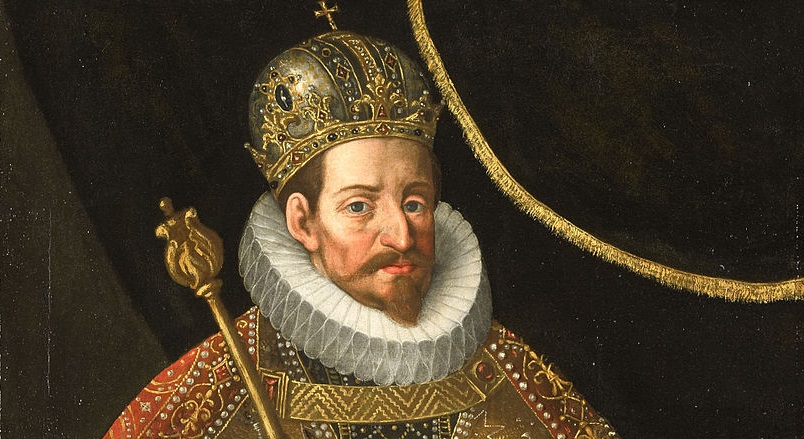
Neither holy, nor Roman, nor emperor (Hans von Aachen, Matthias, Holy Roman Emperor, 1625; Source: Wikimedia Commons, PD-Old-100).
The medieval West is frequently identified with Christendom. Girard sets the record straight in Battling to the End by reminding his readers of the battles between pope and emperor, Church and state, characteristic of the period starting with the 9th c. until, basically, now.
Then he surprisingly says:
Between the papacy and the empire, it is the papacy that won.
But what could that possibly mean?
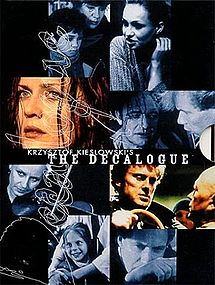
The Decalogue is perhaps the one contemporary film that comes closest to rendering a God’s eye view of our times.
Sometimes the connections between my readings pile up like the connections between characters in Kieslowski’s Decalogue. That’s when I need to unload here to see whether they actually make sense.
Unbeknownst to me the Wall Street article parading as a defense of Christendom was the start of one pile. It was clear to me that it was not a defense of Christianity. Nor was it really a defense of the Pax Christi of the Middle Ages, but a defense the decay of Christendom. It was a defense of the indefensible, *machtpolitik (*or Nietzsche), not Benedict XVI whom it claimed wrongly as its patron saint.
Right around the same time I wrote that piece I started Houellebecq’s controversial novel Submission. I finished it yesterday sometime after I received news of Rene Girard’s passing. The plot of the novel revolves around the “takeover” of France by the Muslim Brotherhood, which then transforms the country along subtly Islamic lines, but the party’s real goal is to revive medieval Christendom. What’s more, Houellebecq seems to suggest that Islam is a religion better suited to a revived Christendom or Roman Empire (read: machtpolitik) because it is not burdened by the embarrassing weakness (kenosis) of the second person of the Trinity:
The idea of Christ’s divinity, Rediger went on, led directly to humanism and the “rights of man.” This too Nietzsche had already said, and in harsher terms, and for the same reasons he would certainly have signed on to the idea that Islam had a mission to rid the world of their pernicious doctrine of the incarnation.
As I got older, I also found myself agreeing more with Nietzsche, as is no doubt inevitable once your plumbing starts to fail. And I found myself more interested in Elohim, the sublime organizer of the constellations, than in his insipid offspring. Jesus had loved men too much, that was the problem; to let himself be crucified for their sake showed, at the very least, a lack of taste . . .
This brings me back to Rene Girard and his claims in Battling to the End about the papacy’s victory over the West and Empire, its reclamation of the idea of Christendom on theologically-authentic terms:
Battling to the End is one of the most thorough and fearless reflections on the post-9/11 world.
Of course that war [between papacy and the empire] was not always glorious, and naturally temporal concerns played a part in it. However, we have to understand it with a view to what John Paul II’s action [his various apologies, especially for the persecution of Jews], which closed the second millennium of the Christian era. When I say that the papacy won, I am thinking immediately of this repentance, by which the papacy triumphed over itself and acquired worldwide significance. Before our eyes, it succeeded in expelling all imperial ideas [unlike Byzantine Christianity as Girard says elsewhere in the book], at the very point when its temporal power disappeared. It has thus indeed been a struggle in which both sides put everything on the line, and the empire lost.

Girard is clearly making connections between John Paul II’s papacy and the essentially Pauline paradox of power in weakness. This is what the theologians call a theology of kenosis, that is, self-emptying to make space for the other instead of using force–as Christ did on the Cross in loving us too much (Houellebecq).
There is also an interesting connection between this and Remi Brague’s idea of Europe (something I explore in The West Was Never Western) as an eccentric culture whose strength lies in the weakness of borrowing its core principles from the cultural Other. I’ll have to think about this more.
Here’s something from John Paul II’s friend Bono on the need for repentance:
Girard is not the only outstanding recent Catholic or Christian thinker. There are still plenty of very influential living figures working in philosophy, poetry, science, and fiction about whom believers who obsess about bygone Golden Ages and returning to the catacombs know nothing about. It is a real shame.
See also: How the speech Pope Francis gave in Congress was a Girardian moment.
Previous Post
November 4, 2015
Lux Aeterna: RIP René Girard (December 25, 1923 - Nov 4, 2015)
Next Post

November 6, 2015 Girard: Islamic Extremism is Symmetrically Related to Western Wealth
Browse Our Archives
Select a Category #WhyRemainCatholic Abortion Advent Anti-Catholicism Arts Atheism Beauty Benedict XVI Bible Book Review Catholic Cinema Comedy Cosmos: A Space-Time Odyssey Czesław Miłosz Dariusz Karłowicz Devil Easter Eastern Orthodoxy Economics Environment Family Famous Atheists Who Weren't Atheists Guest Post Hans Urs von Balthasar HHS Mandate History Imagination Interview Islam Jean-Luc Marion John Paul II Judaism Just War Lent Literature Little Sisters of the Poor Liturgy Martyrdom Music News Paganism Patristics Phenomenology Philosophy Pierre Hadot Poetry Poland Pop Culture Pope Francis Poverty Prayer Protestantism Rabelais Race Remi Brague Rene Girard Russia Sam Rocha Science & Religion SCOTUS Secularization Sexual Abuse Sexuality Silence Solidarity Stratford Caldecott Synod14 Terrorism Top 10 Uncategorized Walker Percy War Weakened Edition World War II World Youth Day WYD Krakow
Select a Month July 2017 June 2017 May 2017 April 2017 March 2017 February 2017 January 2017 December 2016 October 2016 September 2016 August 2016 July 2016 June 2016 May 2016 April 2016 March 2016 February 2016 January 2016 December 2015 November 2015 October 2015 September 2015 August 2015 July 2015 June 2015 May 2015 April 2015 March 2015 February 2015 January 2015 December 2014 November 2014 October 2014 September 2014 August 2014 July 2014 May 2014 April 2014 March 2014 February 2014 January 2014 December 2013 November 2013 October 2013 September 2013 August 2013 July 2013 June 2013 May 2013
Follow Us!
TAKE THE
Religious Wisdom Quiz
Where was Jesus Born?
Select your answer to see how you score.
Bethlehem Shiloh Jerusalem Nazareth
Related posts from Cosmos The In Lost

How is Classical Philosophy is Like War?
How Did the Resurrection Historically Affect Reason?
Lent Blockbuster: John Paul II's Private Spiritual Diaries...

Childlike Wonder in a Misbegotten World
TRENDING AT PATHEOS Catholic

Creation, Preservation, and Teleology in Catholic Theology
As I write this, it is very early Monday morning. Like millions...

The Parable Of The Sower And The Word...
One of Christ’s most famous parables is that of the sower who...

Rejecting Doom: Christian Hope And Human Action
Christianity is a religion of hope. We are to have hope and...

Why I Choose the Eucharist Over the Sermon
Choose the Eucharist, Not the Sermon What are we supposed to get...

5 Design Elements Found in Spiritually Rooted Homes
Putting Spirituality Into Home Decor Our homes are more than our living...

Credo: A Story of God Told with the...
About 10 years ago, I began to imagine a personal "Credo" that...
view all Catholic blogs
Ad-Free & Subscriber Log-In Subscription Support
- About Us
- 2026 Calendar
- Videos
- Podcasts
- Library of World Religions
- Faith In Media Tracker
- Advertise With Us
- Write for Us
- Privacy Policy
- Terms of Service
- Do Not Sell My Data
- Contact Us
- Radiant Digital
- Manage Newsletter Subscriptions
- Unsubscribe From Notifications
- Sitemap
Copyright 2008-2026, Patheos. All rights reserved.
Subscription Support Ad-Free & Subscriber Log-In
Follow Patheos