
BuddhistCatholicContemplativeEvangelicalGeneral ChristianHinduJewishLatter-day SaintMuslimNew VisionsProgressive Christian
Beliefs
- Buddhist
- Catholic
- Contemplative
- Evangelical
- General Christian
- Hindu
- Jewish
- Latter-day Saint
- More Voices
- Muslim
- New Visions
- Pagan
- Progressive Christian
Topics
- Religion News
- Food and Religion
- Sports and Religion
- Religious Art
- Religious Music and Entertainment
- Religious Events
- History and Religion
- Style and Religion
- Politics and Religion
- Women in Religion
- Recreation Outdoors and Religion
- Business Finance and Religion
- Careers Workplace and Religion
- Education and Religion
- Family Parenting and Religion
- Health Fitness and Religion
- Home and Religion
- Relationships and Religion
- Technology and Religion
- Travel and Religion
Columnists
- Buddhist Columnists
- Business Finance and Religion Columnists
- Careers Workplace and Religion Columnists
- Catholic Columnists
- Contemplative Columnists
- Education and Religion Columnists
- Evangelists Columnists
- Family Parenting and Religion Columnists
- General Christian Columnists
- Health Fitness and Religion Columnists
- Hindu Columnists
- History and Religion Columnists
- Home and Religion Columnists
- Jewish Columnists
- More Voices Columnists
- Latter Day Columnists
- Muslim Columnists
- New Visions Columnists
- Nonreligious Columnists
- Pagan Columnists
- Politics and Religion Columnists
- Progressive Columnists
- Recreation Outdoors and Religion Columnists
- Relationships and Religion Columnists
- Religion News Columnists
- Religious Art Columnists
- Religious Events Columnists
- Religious Music and Entertainment Columnists
- Sports and Religion Columnists
- Style and Religion Columnists
- Technology and Religion Columnists
- Travel and Religion Columnists
- Women in Religion Columnists
Resource Library
- 2026 Calendar
- Library of World Religions
- The 100 Most Holy Places on Earth
- Patheos Answers
- Podcasts
- Videos
- Faith Leaders Database
- Anglican Episcopalian
- Bahai
- Baptist
- Buddhism
- Christianity
- Confucianism
- Eastern Orthodoxy
- Hinduism
- Holiness and Pentecostal
- ISKCON
- Islam
- Judaism
- Lutheran
- Methodist
- The Church of Jesus Christ of Latter-day Saints
- New Age
- Paganism
- Presbytarian and Reformed
- Protestantism
- Religion Behind the Scenes
- Roman Catholic
- Scientology
- Shia Islam
- Sikhism
- Sufism
- Sunni Islam
- Taoism
- Zen
- See all religions
Research Tools
 Ad-Free & Subscriber Log-In Subscription Support
Ad-Free & Subscriber Log-In Subscription Support
Follow Patheos 

- Trending:
- Forgiveness
- |
- Marriage
- |
- Consciousness
- |
- Death Penalty
- |
- Election
- |
- Halloween
 Cosmos The In Lost
- Home
- Catholic
- TOP10 Books on Religion and Ecology
TOP10 Books on Religion and Ecology
Last updated on: April 24, 2016 at 2:20 pm by Artur Rosman
TOP10 Books on Religion and Ecology 2016-04-24T14:20:33-07:00 Artur Rosman
Patheos Explore the world's faith through different perspectives on religion and spirituality! Patheos has the views of the prevalent religions and spiritualities of the world.
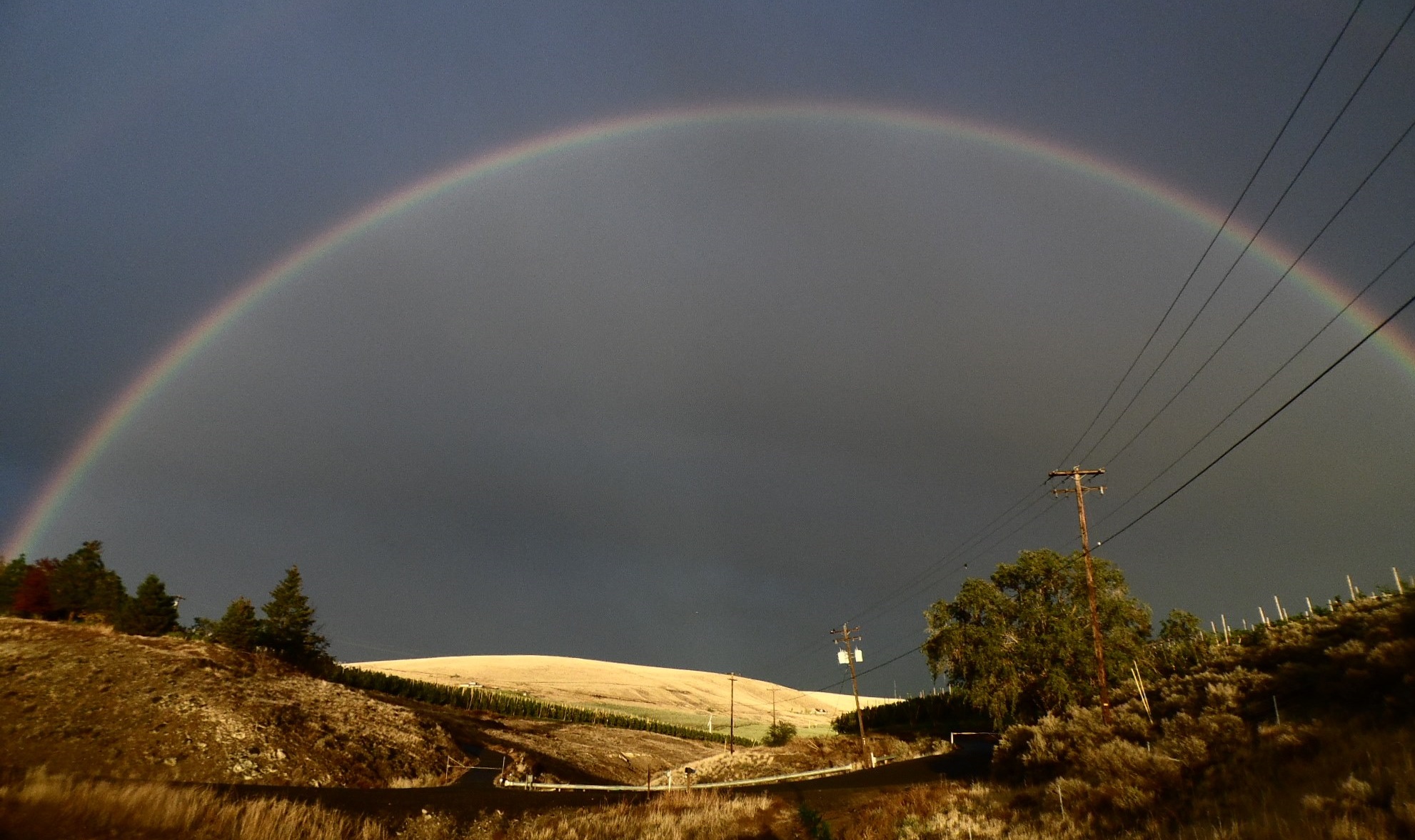
Michel Serres asks, can we make peace with Creation, or must we wage war upon the very environment that ensures our survival? (©Artur Rosman, 2014, all rights reserved).
I have put together this list as a distraction, or better yet, a refocusing of attention on first things, away from the post-synodal sniping between liberal and conservative Catholics. I have rubbernecked too many times on those mostly uselessly hypothetical debates. What I’ve been missing in between is the real impact of the Francis Effect upon my colleagues. Theology is neither liberal, nor conservative, and we shirk our responsibilities if we ignore the real questions our contemporaries ask us.
For example, one of my best friends, who teaches the first business school to entirely commit itself to sustainability, recently asked me about what books I might recommend for a class on spirituality and ecology. He’s considering putting such a class together. I told him, “Well, I can write a post about it!”
This turned out to be a tougher task than I anticipated, because there is an overwhelming amount of great books on the topic, which are sadly not read nor applied by people who are involved in sideshow debates. I mean, what could be more important to us than the relationship we have with the creation given to us (and things like climate change)? Anyone who honestly takes in their First or Third World environment can gather that we have spent more time laying waste to this gift than anything else. I live right off a strip mall, across the from a municipal airport, and about ten blocks from a garbage dump, so I notice this daily.
Pope Francis spoke in praise of an “integral ecology” in Laudato Si’. Therefore, I have taken the liberty of choosing a collection of books that covers a wide range of theological-spiritual-philosophical-literary (it’s not easy to separate those four) angles on our environmental crisis.
Small is Beautiful was written by a Catholic and it has shaped environmentalism as we know it as its mini-Bible. On Earth As In Heaven: Ecological Vision and Initiatives shows how the Ecumenical Patriarch was at the forefront of ecological thinking long before it was cool to do such things. Creation: A Biblical Vision for the Environment connects these concerns with a robustly biblical vision, showing how the much different concerns of that world can be correlated to the concerns of our times and . . . It’s written by an innovative scholar of First Temple Judaism. Our Only World: Ten Essays comes from a leading Baptist voice who has long transcended fake divisions into liberal or conservative. Pilgrim at Tinker Creek is a somewhat fictionalized memoir with the power to focus your attention upon the marks of transcendence within the environment. On the other hand, The Natural Contract is a rare book of philosophy written with an intense poetic and novelistic flair by one of Rene Girard’s closest associates. Faith in Nature: Environmentalism as Religious Quest is an alternative history of environmentalism that sets the movement within a properly theological context. The Paradise of God: Renewing Religion in an Ecological Age once again goes back to the biblical setting, but focuses upon how late modern capitalism divorces us from that fount of wisdom. Just Water: Theology, Ethics an the Global Water Crisis focuses upon one specific and overlooked problem, the distribution of water, and all of its profound implications for the future. Finally, the novel The Elementary Particles is a savage satire of the consequences humanity will suffer if it succeeds in divorcing itself from nature.
All of these books together have me thinking about Timothy Snyder’s latest book, Black Earth: Holocaust as History and Warning, which argues that the start of the 21st century, with all of its environmental concerns and apocalyptic fears, greatly resembles the start of the 20th century, which gave us Hitler. Environmentalism is a serious matter, rather than hippies hugging trees (even if it is that sometimes Faith in Nature suggests that’s not an entirely bad thing). History has a perverse way of repeating itself, but let’s hope it doesn’t come to that.
Here are some resources:
Catholics can be psychedelic too.
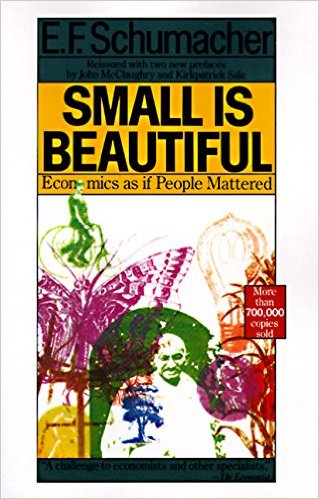
1. Small is Beautiful by E.F. Schumacher
Hailed as an “eco-bible” by Time magazine, E.F. Schumacher’s riveting, richly researched statement on sustainability has become more relevant and vital with each year since its initial groundbreaking publication during the 1973 energy crisis. A landmark statement against “bigger is better” industrialism, Schumacher’s Small Is Beautiful paved the way for twenty-first century books on environmentalism and economics, like Jeffrey Sachs’s The End of Poverty, Paul Hawken’s Natural Capitalism, Mohammad Yunis’s Banker to the Poor, and Bill McKibben’s Deep Economy. This timely reissue offers a crucial message for the modern world struggling to balance economic growth with the human costs of globalization.
If hell is hot maybe heaven is cooler?
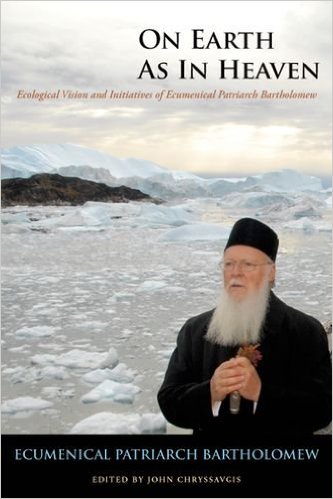
2. On Earth As In Heaven: Ecological Vision and Initiatives by Patriarch Bartholomew
Over the past two decades, the world has witnessed alarming environmental degradation–climate change, the loss of biodiversity, and the pollution of natural resources–together with a failure to implement environmental policies and an ever-widening gap between rich and poor. During this same period, one religious leader has discerned the signs of the times and called people’s attention to our dire ecological and social situation: His All Holiness Ecumenical Patriarch Bartholomew, the worldwide leader of the Orthodox Churches. As this new volume of his writings reveals, Patriarch Bartholomew has continually proclaimed the primacy of spiritual values in determining environmental ethics and action. For him, the predicament we face is not primarily ecological but in fact spiritual: The ultimate
aim is to see all things in God, and God in all things.On Earth as in Heaven demonstrates just why His All Holiness has been dubbed the “Green Patriarch” by former Vice President Al Gore (recipient of the Nobel Peace Prize for his environmental activism) and the media. This third and final volume of the spiritual leader’s selected writings showcases his statements on environmental
degradation, global warming, and climate change. It contains numerous speeches and interviews in various circumstances, including ecological symposia, academic seminars, and regional and international events, over the first twenty years of his ministry. This volume also encompasses a selection of pastoral letters and exhortations–ecclesiastical, ecumenical, and academic–by His All Holiness for occasions such as Easter and Christmas, honorary doctorates, and academic awards.
It probably involves the Second Temple.
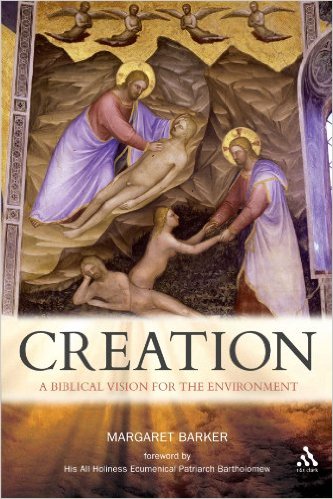
3. Creation: A Biblical Vision for the Environment by Margaret Barker
Margaret Barker contributes a characteristically Christian voice to contemporary theological debates on the environment. Most of the issues we face today were not those that faced the early Christian community and so there are often no directly relevant biblical teachings. Barker’s starting point is the question of what Jesus himself would have believed about the Creation? What could the early Church have believed about the Creation? She then shows how much of this belief is embedded, often unrecognised, in the New Testament and early Christian texts. It was what people assumed as the norm, the worldview within which they lived and expressed their faith. Barker establishes the general principles of a Christian view of Creation. Some of what she says will show how current teaching would have been unfamiliar to the first Christians, not just in application but in basic principles.
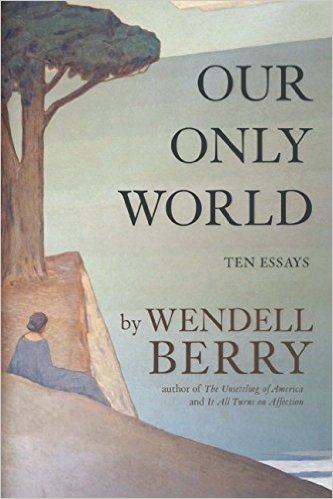
Only and hence best. Take that, Voltaire!
4. Our Only World: Ten Essays by Wendell Berry
Since the Second World War ended, America has performed like a gyroscope losing its balance, wobbling this way and that, unable to settle into itself and its own great promise. Wendell Berry has been a voice for that promise, a voice for reason and hope and urgent concern.
As the United States prepares to leave its long war in Afghanistan, it now must contemplate the necessity of sending troops back to Iraq, recalling General Colin Powell’s advice to President Bush: “If you break it, you own it,” as the world’s hot spots threaten to spread over the globe with the ferocity of a war of holy terror and desperation.
The planet’s environmental problems respect no national boundaries. From soil erosion and population displacement to climate change and failed energy policies, American governing classes are paid by corporations to pretend that debate is the only democratic necessity and that solutions are capable of withstanding endless delay. Late Capitalism goes about its business of finishing off the planet. And we citizens are left with a shell of what was once proudly described as The American Dream.
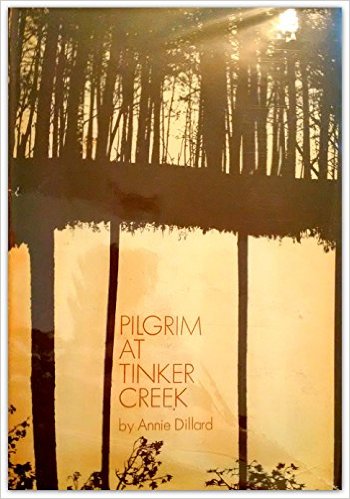
It’s all about the sun tree.
5. Pilgrim at Tinker Creek by Annie Dillard
Her personal narrative highlights one year’s exploration on foot in the Virginia region through which Tinker Creek runs. In the summer, Dillard stalks muskrats in the creek and contemplates wave mechanics; in the fall, she watches a monarch butterfly migration and dreams of Arctic caribou. She tries to con a coot; she collects pond water and examines it under a microscope. She unties a snake skin, witnesses a flood, and plays King of the Meadow with a field of grasshoppers. The result is an exhilarating tale of nature and its seasons.

If we don’t want things to blow up in our faces . . . Let’s Laudato Si’
6. The Natural Contract by Michel Serres
Global environmental change, argues Michel Serres, has forced us to reconsider our relationship to nature. In this translation of his influential 1990 book Le Contrat Naturel, Serres calls for a natural contract to be negotiated between Earth and its inhabitants.
World history is often referred to as the story of human conflict. Those struggles that are seen as our history must now include the uncontrolled violence that humanity perpetrates upon the earth, and the uncontrollable menace to human life posed by the earth in reaction to this violence. Just as a social contract once brought order to human relations, Serres believes that we must now sign a “natural contract” with the earth to bring balance and reciprocity to our relations with the planet that gives us life. Our survival depends on the extent to which humans join together and act globally, on an earth now conceived as an entity.
Tracing the ancient beginnings of modernity, Serres examines the origins and possibilities of a natural contract through an extended meditation on the contractual foundations of law and science. By invoking a nonhuman, physical world, Serres asserts, science frees us from the oppressive confines of a purely social existence, but threatens to become a totalitarian order in its own right. The new legislator of the natural contract must bring science and law into balance.
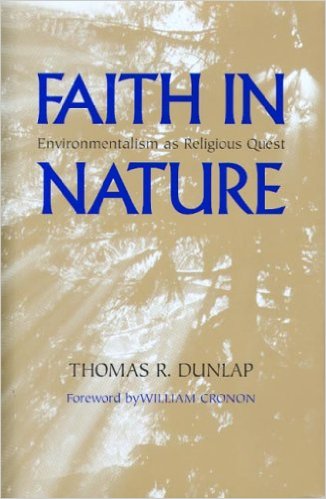
The roots of environmentalism overlap with theology.
7. Faith in Nature: Environmentalism as Religious Quest by Thomas Dunlap
The human impulse to religion–the drive to explain the world, humans, and humans’ place in the universe – can be seen to encompass environmentalism as an offshoot of the secular, material faith in human reason and power that dominates modern society. Faith in Nature traces the history of environmentalism–and its moral thrust–from its roots in the Enlightenment and Romanticism through the Progressive Era to the present. Drawing astonishing parallels between religion and environmentalism, the book examines the passion of the movement’s adherents and enemies alike, its concern with the moral conduct of daily life, and its attempt to answer fundamental questions about the underlying order of the world and of humanity’s place within it. Thomas Dunlap is among the leading environmental historians and historians of science in the United States. Originally trained as a chemist, he has a rigorous understanding of science and appreciates its vital importance to environmental thought. But he is also a devout Catholic who believes that the insights of religious revelation need not necessarily be at odds with the insights of scientific investigation. This book grew from his own religious journey and his attempts to understand human ethical obligations and spiritual debts to the natural world.
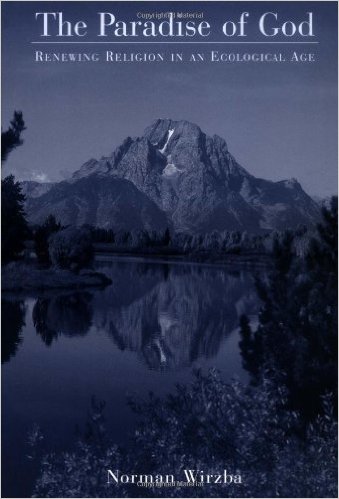
That looks like Mt. Rainier on the cover.
8. The Paradise of God: Renewing Religion in an Ecological Age by Norman Wirzba
In this provocative book, however, Norman Wirzba argues that the doctrine of creation, when understood as a statement about the moral and spiritual meaning of the world, actually holds the key to a true understanding of our place in the environment and our responsibility toward it. Wirzba contends that an adequate response to environmental destruction depends on a new formulation of ourselves as part of a created whole, rather than as autonomous, unencumbered individuals. Drawing on the work of biblical scholars, ecologists, agrarians, philosophers, theologians, and cultural critics, Wirzba develops a comprehensive worldview that grows out of the idea that the world is God’s creation. While the text of Genesis has historically encouraged a vision of persons as masters of creation, a more theologically and ecologically sensitive rendering, he says, would be to say that we are servants of creation. Our present culture, Wirzba believes, results from a denial of creation that has caused modern problems as diverse as rootlessness, individualism, careerism, boredom, and consumerism. The recovery of the meaning of creation can lead to a renewed sense of human identity and vocation, and happier, more peaceful lives. He concludes by offering practical advice for individuals who wish to begin the work of transformation and renewal.
Only that? Or is there more to it?
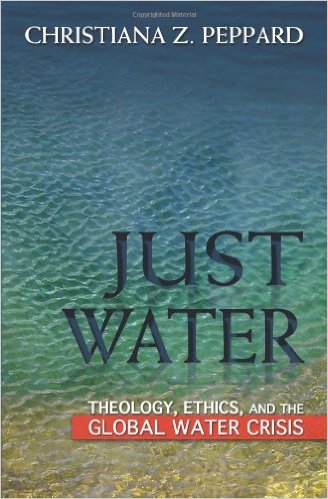
9. Just Water: Theology, Ethics an the Global Water Crisis by Christiana Peppard
A gripping analysis of the value of fresh water at the intersection of hydrology, ecology, ethics, theology, and Catholic social thought.
Do we truly understand the significance of fresh water in an era of economic globalization? Aimed at the educated non-specialist as well as scholars, Just Water explores important aspects of the global fresh water crisis while also providing ethical analysis and principled recommendations about fresh water use and scarcity in the twenty-first century.
Ultimately, Just Water invites us to expand global discourse about the value of fresh–unique, non-substitutable substance that serves as a baseline for human existence. At the same time offering tools for understanding and appreciating contemporary ethical problems posed by looming fresh water scarcity in the twenty first century.
The breakdown of humanity will naturally follow upon the cutting of our ties with nature.
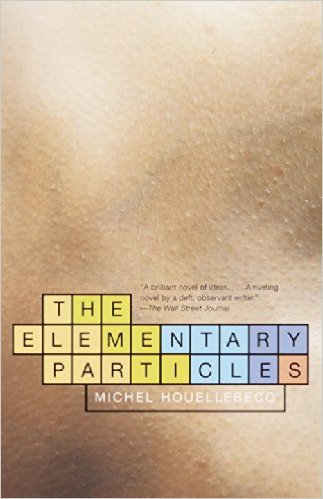
10. The Elementary Particles by Michel Houellebecq
An international literary phenomenon, The Elementary Particles is a frighteningly original novel–part Marguerite Duras and part Bret Easton Ellis-that leaps headlong into the malaise of contemporary existence.
Bruno and Michel are half-brothers abandoned by their mother, an unabashed devotee of the drugged-out free-love world of the sixties. Bruno, the older, has become a raucously promiscuous hedonist himself, while Michel is an emotionally dead molecular biologist wholly immersed in the solitude of his work. Each is ultimately offered a final chance at genuine love, and what unfolds is a brilliantly caustic and unpredictable tale.
Here is a list of books that would’ve made it onto to the list on most days: The Noetics of Nature: Environmental Philosophy and the Holy Beauty of the Visible, Bruce Foltz; The Sacred Universe: Earth, Spirituality, and Religion in the Twenty-first Century, Thomas Berry; The Submerged Reality: Sophiology and the Turn to a Poetic Metaphysics, Michael Martin; The Politics of Nature; Inheriting Paradise: Meditations on Gardening, Vigen Guroian; Burno Latour; This Changes Everything: Capitalism vs. the Climate by Naomi Klein (now a Pope Francis adviser the climate); Being-in-Creation: Human Responsibility in an Endangered World, Brian Treanor, ed.; Following St. Francis: John Paul II’s Call for Ecological Action by Marybeth Lorbiecki; The Environment by Pope Benedict XVI; and, of course, Laudato Si’ (link to Marxist publisher edition) by Pope Francis.
BONUS: The Ister is an unclassifiable meditation on Heidegger’s reading of a Holderein poem. What it really is about is Europe’s relationship to technology, the Danube, and its environs as told by Europe’s leading intellectuals. You haven’t seen anything like it. Here is a sampling from a segment where Bernard Stiegler speaks about a fundamentally important myth. This French philosopher, recycled from the French prison system, where he earned his PhD, is undoubtedly the star of this film.
You should also read about how cultivating silence is also an important part of a fully developed ecology.
Please help cultivate this blog, and its destitute proprietor, by making a donation through the PayPal button on its homepage.
Previous Post

October 28, 2015
Famous Atheists Who Weren't Atheist: Sartre Eulogizes Merleau-Ponty
Next Post

October 31, 2015 Halloween Special: Catholics for Extreme Metal?
Browse Our Archives
Select a Category #WhyRemainCatholic Abortion Advent Anti-Catholicism Arts Atheism Beauty Benedict XVI Bible Book Review Catholic Cinema Comedy Cosmos: A Space-Time Odyssey Czesław Miłosz Dariusz Karłowicz Devil Easter Eastern Orthodoxy Economics Environment Family Famous Atheists Who Weren't Atheists Guest Post Hans Urs von Balthasar HHS Mandate History Imagination Interview Islam Jean-Luc Marion John Paul II Judaism Just War Lent Literature Little Sisters of the Poor Liturgy Martyrdom Music News Paganism Patristics Phenomenology Philosophy Pierre Hadot Poetry Poland Pop Culture Pope Francis Poverty Prayer Protestantism Rabelais Race Remi Brague Rene Girard Russia Sam Rocha Science & Religion SCOTUS Secularization Sexual Abuse Sexuality Silence Solidarity Stratford Caldecott Synod14 Terrorism Top 10 Uncategorized Walker Percy War Weakened Edition World War II World Youth Day WYD Krakow
Select a Month July 2017 June 2017 May 2017 April 2017 March 2017 February 2017 January 2017 December 2016 October 2016 September 2016 August 2016 July 2016 June 2016 May 2016 April 2016 March 2016 February 2016 January 2016 December 2015 November 2015 October 2015 September 2015 August 2015 July 2015 June 2015 May 2015 April 2015 March 2015 February 2015 January 2015 December 2014 November 2014 October 2014 September 2014 August 2014 July 2014 May 2014 April 2014 March 2014 February 2014 January 2014 December 2013 November 2013 October 2013 September 2013 August 2013 July 2013 June 2013 May 2013
Follow Us!
TAKE THE
Religious Wisdom Quiz
Who said, "The battle is not yours, but God's"?
Select your answer to see how you score.
Joshua Jehoshaphat Moses David
Related posts from Cosmos The In Lost

The Surprising Anti-Capitalist Logic Behind the Catholic Church's...

What is the Source of Our Culture of...

How is Classical Philosophy is Like War?

Why Does the World's Leading Philosopher Remain a...
TRENDING AT PATHEOS Catholic

Rejecting Doom: Christian Hope And Human Action
Christianity is a religion of hope. We are to have hope and...

It’s What Comes From Within Which Matters
One of the most difficult things for us to understand is why...

Why I Choose the Eucharist Over the Sermon
Choose the Eucharist, Not the Sermon What are we supposed to get...

5 Design Elements Found in Spiritually Rooted Homes
Putting Spirituality Into Home Decor Our homes are more than our living...

Credo: A Story of God Told with the...
About 10 years ago, I began to imagine a personal "Credo" that...

The Anatomy of Divine Revelation in Catholic Thought
The claim that God has made Himself known to human beings is...
view all Catholic blogs
Ad-Free & Subscriber Log-In Subscription Support
- About Us
- 2026 Calendar
- Videos
- Podcasts
- Library of World Religions
- Faith In Media Tracker
- Advertise With Us
- Write for Us
- Privacy Policy
- Terms of Service
- Do Not Sell My Data
- Contact Us
- Radiant Digital
- Manage Newsletter Subscriptions
- Unsubscribe From Notifications
- Sitemap
Copyright 2008-2026, Patheos. All rights reserved.
Subscription Support Ad-Free & Subscriber Log-In
Follow Patheos